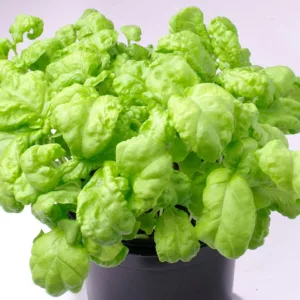
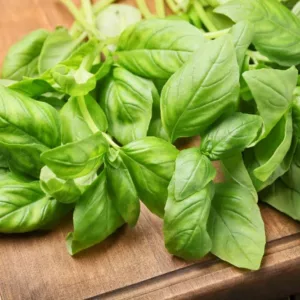
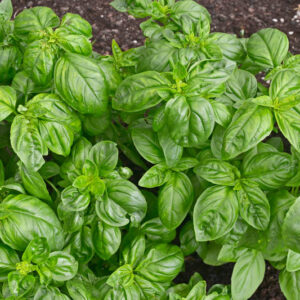
This raised bed tomato garden mixes tall tomato plants with lush basil, bright marigolds, crisp lettuce, and tidy clumps of chives. The combination is simple, colorful, and productive, giving you a kitchen garden that looks full and inviting while still being practical, easy to harvest, and realistic for home gardeners.
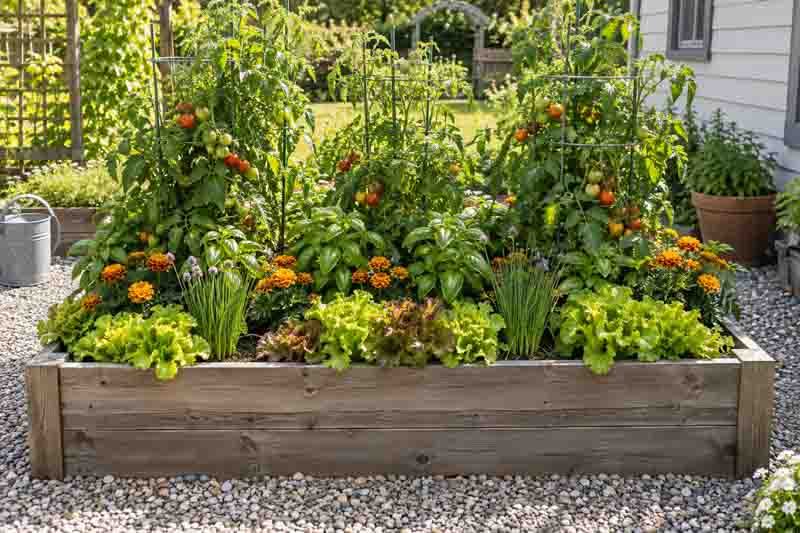


This colorful raised bed is designed around tomatoes, with basil, lettuce, chives, and French marigolds filling selected spaces below. It is productive without trying to squeeze a plant into every gap, and everything can be reached easily from the edge of the bed.
The tomatoes provide the height and main summer harvest. Basil forms leafy clumps beneath them, lettuce makes good use of the lower edge early in the season, and chives add slim upright leaves between broader foliage. French marigolds bring small flashes of orange and gold without taking over the planting.
The garden should look slightly open when first planted. That extra room becomes valuable once tomatoes and basil reach summer size, and it leaves enough space for watering, tying, harvesting, and air movement around the tomato plants.
Main plants used: Tomato ‘Early Girl’, Tomato ‘Sungold’, Tomato ‘Roma’, Genovese Basil (Ocimum basilicum), French Marigold (Tagetes patula), Leaf Lettuce (Lactuca sativa), and Chives (Allium schoenoprasum).
Aim for a bed that feels generous rather than packed. A little visible soil or mulch around the tomatoes is useful, not wasted space.
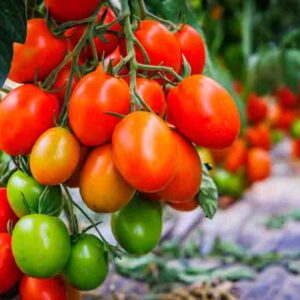
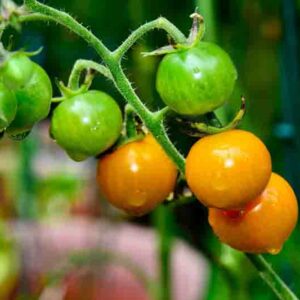
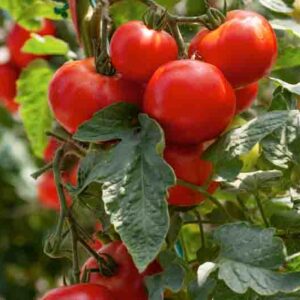
The tomatoes give the bed its structure. ‘Early Girl’ produces familiar round red fruit, ‘Sungold’ adds golden-orange cherries, and ‘Roma’ brings elongated red plum tomatoes. Together, they offer different fruit shapes and uses without changing the overall character of the garden.
Basil fills the middle once warm weather arrives, while lettuce is most valuable earlier in the season, before the tomatoes have reached full size. Chives fit neatly into smaller gaps and add a fine upright texture among all the broader leaves.
French marigolds provide concentrated spots of orange and gold around the lower edge. Their flowers can also attract visiting insects, but they should be treated as part of a diverse planting rather than as guaranteed protection against tomato pests.
Garden note: Lettuce prefers cooler conditions than tomatoes and basil. In a hot summer, harvest it as temperatures rise. The space it leaves behind comes just when the warm-season plants are beginning to need more room.
Build the bed around well-spaced tomatoes, then use basil, lettuce, chives, and marigolds as a lighter lower layer. Keep the immediate bases of the tomatoes open enough for watering, mulch, tying, and inspection.
Planted allocation: 70%. The remaining 30% is intentionally left open for mulch, airflow, access, and the considerable growth tomatoes and basil make through summer.
Gardenia quantity note: Treat tomatoes as one planting category when calculating quantities. ‘Early Girl’, ‘Sungold’, and ‘Roma’ are cultivar choices within that tomato allocation. The number that will fit comfortably matters more than trying to include every variety in a small bed.
These quantities are practical starting points for a single raised bed. They intentionally favor an open, workable planting rather than maximum capacity.
| Garden Size | Tomatoes | Basil | Lettuce | Chives | Marigolds |
|---|---|---|---|---|---|
| 4 × 4 ft | 1 | 2 | 2 | 1-2 | 1-2 |
| 2 × 6 ft | 1 | 2 | 2 | 1-2 | 1-2 |
| 3 × 6 ft | 1-2 | 2-3 | 2-3 | 2 | 2 |
| 4 × 6 ft | 2 | 3 | 3 | 2 | 2 |
You do not need all three cultivars in every bed. In a smaller garden, choose the tomato you most want to grow. A larger bed may accommodate two varieties if they can be spaced properly.
‘Early Girl’ gives you a classic medium red tomato. ‘Sungold’ is a vigorous indeterminate cherry tomato with golden-orange fruit, so give it particularly strong support and plenty of room. ‘Roma’ brings elongated red plum tomatoes that are useful for cooking and sauces.
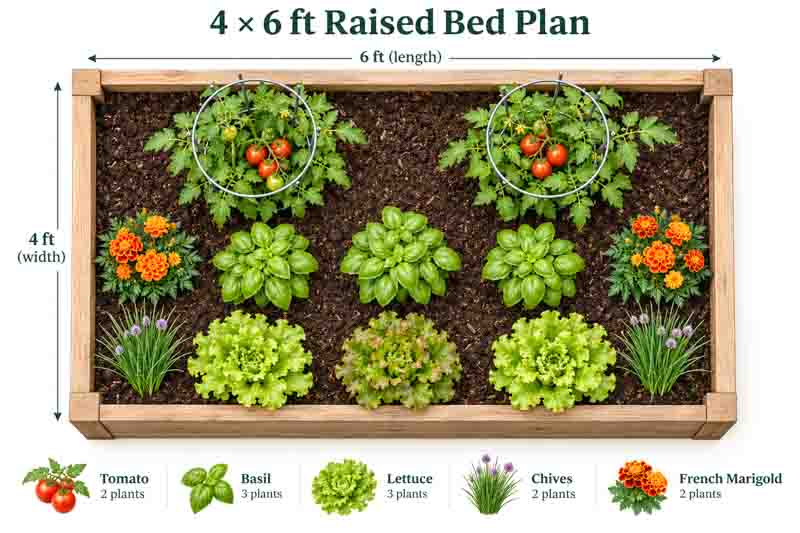
Install the tomato cages or stakes before planting, then position the tomatoes first because they determine how much usable space remains.
Tuck basil into selected gaps, but avoid surrounding every tomato stem with a solid ring of plants. Keep enough open ground for watering and inspection.
Plant lettuce nearer the front or outer edge where it is easy to harvest. Chives work well in compact clumps between lettuce and basil, while French marigolds are best repeated in a few small groups rather than planted as a continuous border.
Do not worry if the bed looks open at first. It will not stay that way for long.
Tomatoes are much larger in August than they are when transplanted in spring. Basil also expands quickly once nights are warm. Leaving a little room at planting time means fewer branches tangled together later.
Keep enough space around the tomatoes to reach the stems, check leaves, tie new growth, and pick fruit without pushing through a dense understory. There is no need to strip healthy foliage simply to make the bed look tidy.
Late spring is when the lettuce earns its place. It fills the lower edge and provides an early harvest while the tomatoes and basil are still small.
By midsummer, the balance changes. Tomatoes rise above the bed, basil becomes much fuller, chives hold their narrow shape, and marigolds add orange and gold around the edges.
In hotter climates, lettuce may have been harvested by then. That is useful timing: the tomatoes and basil gain extra room just when they need it most.
| Hardiness |
3 - 11 |
|---|---|
| Climate Zones | 1, 1A, 1B, 2, 2A, 2B, 3, 3A, 3B, 4, 5, 6, 7, 8, 9, 10, 11, 12, 13, 14, 15, 16, 17, 18, 19, 20, 21, 22, 23, 24 |
| Exposure | Full Sun |
| Season of Interest | Summer (Early, Mid, Late), Fall |
| Maintenance | High |
| Water Needs | Average |
| Soil Type | Loam, Sand |
| Soil pH | Acid, Neutral |
| Soil Drainage | Moist but Well-Drained |
| Attracts | Bees, Butterflies |
| Landscaping Ideas | Beds And Borders |
| Garden Styles | City and Courtyard, Informal and Cottage, Pollinator Garden |


| Hardiness |
3 - 11 |
|---|---|
| Climate Zones | 1, 1A, 1B, 2, 2A, 2B, 3, 3A, 3B, 4, 5, 6, 7, 8, 9, 10, 11, 12, 13, 14, 15, 16, 17, 18, 19, 20, 21, 22, 23, 24 |
| Exposure | Full Sun |
| Season of Interest | Summer (Early, Mid, Late), Fall |
| Maintenance | High |
| Water Needs | Average |
| Soil Type | Loam, Sand |
| Soil pH | Acid, Neutral |
| Soil Drainage | Moist but Well-Drained |
| Attracts | Bees, Butterflies |
| Landscaping Ideas | Beds And Borders |
| Garden Styles | City and Courtyard, Informal and Cottage, Pollinator Garden |
Recreate this garden. Specify the percentages you would like to have of each plant and input the dimensions of your garden space.We'll give you a shopping list so you know how many plants you need.
| Plant | Quantity | |
|---|---|---|
| Tagetes patula (French Marigold) | N/A | Buy Plants |
| Ocimum basilicum 'Genovese' (Sweet Basil) | N/A | Buy Plants |
| Lactuca sativa (Lettuce) | N/A | Buy Plants |
| Allium schoenoprasum (Chives) | N/A | Buy Plants |
| Solanum lycopersicum 'Roma' (Tomato) | N/A | Buy Plants |
| Solanum lycopersicum 'Sungold' (Tomato) | N/A | Buy Plants |
| Solanum lycopersicum 'Early Girl' (Tomato) | N/A | Buy Plants |
Create a membership account to save your garden designs and to view them on any device.
Becoming a contributing member of Gardenia is easy and can be done in just a few minutes. If you provide us with your name, email address and the payment of a modest $25 annual membership fee, you will become a full member, enabling you to design and save up to 25 of your garden design ideas.
Join now and start creating your dream garden!
Create a membership account to save your garden designs and to view them on any device.
Becoming a contributing member of Gardenia is easy and can be done in just a few minutes. If you provide us with your name, email address and the payment of a modest $25 annual membership fee, you will become a full member, enabling you to design and save up to 25 of your garden design ideas.
Join now and start creating your dream garden!