Tomato 'Early Girl'
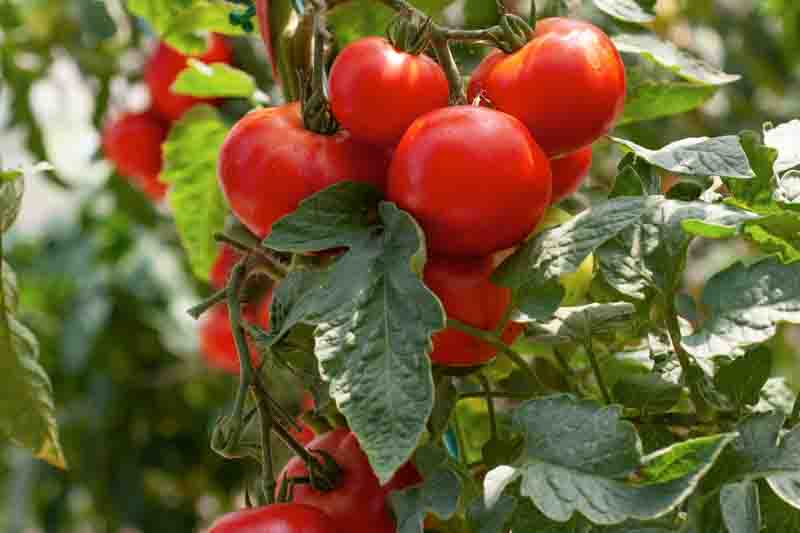


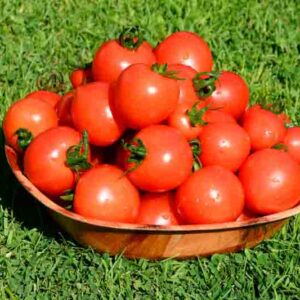
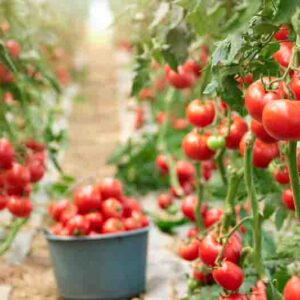
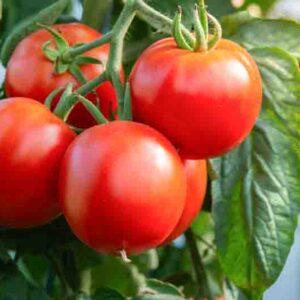
Solanum lycopersicum ‘Early Girl’ is a widely grown F1 hybrid tomato valued for one defining quality: it produces useful, medium-sized slicing tomatoes remarkably early in the season. The vigorous indeterminate vines bear firm red fruits with classic tomato flavor, often beginning harvest less than two months after transplanting under favorable conditions.
Unlike many very early tomatoes, ‘Early Girl’ does not stop after its first crop. Its indeterminate vines continue flowering and producing fruit through the growing season, combining an early first harvest with extended production. This makes it especially useful in short-season gardens and for growers who simply want ripe slicing tomatoes as soon as possible.
Gardenia cultivar insight: “Early” describes when ‘Early Girl’ begins producing, not the size or duration of the plant. Standard ‘Early Girl’ is a vigorous indeterminate tomato, not a compact bush. Do not confuse it with ‘Bush Early Girl’, a separate determinate cultivar with very different plant architecture.
| Botanical Name | Solanum lycopersicum ‘Early Girl’ |
|---|---|
| Family | Solanaceae |
| Common Name | Early Girl tomato |
| Modern History | Developed from short-season European material and commercialized in the United States in the mid-1970s by seed companies including PetoSeed |
| Plant Type and Habit | Warm-season fruiting annual; vigorous, indeterminate vine requiring support |
| Size | Commonly about 4½-6 ft. tall (1.4-1.8 m) when supported, potentially taller in a long growing season; Burpee currently lists about 55 in. (140 cm) |
| Growth Habit | Indeterminate; continues flowering and producing fruit through the growing season |
| Tomato Type | F1 hybrid early-season red slicing tomato |
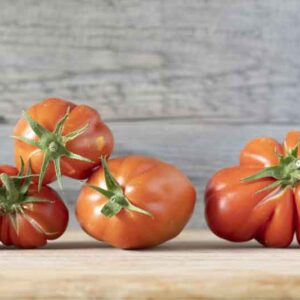
| Fruit | Firm red, globe to slightly flattened tomatoes, typically about 4-6 oz. (115-170 g) |
| Flavor | Classic, balanced fresh-tomato flavor suited to slicing, salads, sandwiches, burgers, and everyday fresh eating |
| Days to Maturity | Approximately 57-63 days from transplanting; Burpee currently lists 59 days |
| Sun and Exposure | Full sun; at least 6 hours of direct sunlight, preferably 8 or more |
| Soil | Fertile, organically rich, moist but well-drained clay, loam, or sandy soil; slightly acidic to neutral, ideally around pH 6.0-6.8 |
| Spacing | 24-36 in. (60-90 cm); use the wider end for large cages or multi-stem plants |
| Harvest | Very early and continuous; harvest when fruits reach full red color and firm-ripe texture, or after breaker stage if weather or pests threaten |
| Best Uses | Fresh slicing, sandwiches, burgers, salads, tomato toast, salsa, and everyday fresh cooking |
| Disease Resistance | Resistance listings vary by source. Cornell documents resistance to Verticillium wilt and Fusarium wilt races 1 and 2; broader listings may include root-knot nematodes, Tobacco mosaic virus, or other resistances depending on source |
| Container Suitability | Possible in a large container with strong support, but standard ‘Early Girl’ is indeterminate and should not be confused with compact ‘Bush Early Girl’ |
‘Early Girl’ combines two traits that do not always occur together: a genuinely early first harvest and continued indeterminate production. Cornell places maturity at roughly 57-63 days after transplanting, while Burpee currently lists 59 days.
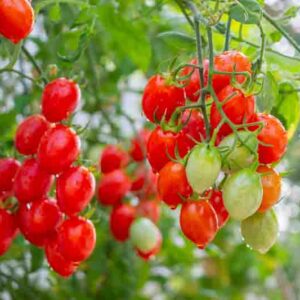
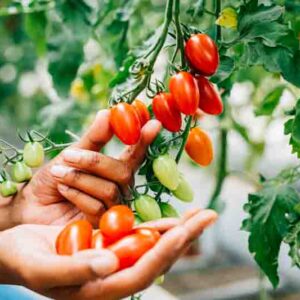
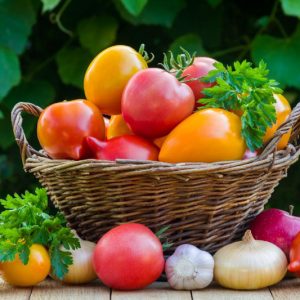
The fruits are not tiny “extra-early” tomatoes. They are useful medium-sized slicers, typically around 4-6 oz., with firm red flesh and a familiar tomato flavor suited to sandwiches, salads, burgers, and fresh eating.
Once the first tomatoes begin ripening, the vines continue flowering and setting additional fruit rather than ending production after a concentrated crop.
Best reason to grow ‘Early Girl’: Choose it when the first meaningful slicing-tomato harvest matters. It begins producing much earlier than many full-sized slicers without requiring you to give up season-long indeterminate production.
The two names sound almost interchangeable, but the plants are fundamentally different.
‘Early Girl’ is an indeterminate F1 hybrid. It keeps extending, flowering, and producing tomatoes through the season.
‘Bush Early Girl’ is a separate determinate cultivar bred for compact growth. Cornell describes Bush Early Girl as an approximately 18-inch plant with a much more compact growth habit.
Gardenia identity rule: Do not shorten ‘Bush Early Girl’ to ‘Early Girl’ when recording plant traits. The extra word changes the growth habit completely. Standard Early Girl is indeterminate; Bush Early Girl is determinate and compact.
For a broader explanation of these growth habits, see Gardenia’s Determinate vs. Indeterminate Tomatoes.
‘Early Girl’ reached American gardeners in the mid-1970s after short-season tomato material developed in Europe attracted the attention of U.S. seed companies. Joe Howland, associated with Pan American Seed and PetoSeed, was searching for a tomato capable of producing quickly in shorter or cooler growing seasons.
The promising material was adapted and commercialized in the United States as ‘Early Girl’, where it became popular with home gardeners looking for a dependable early slicing tomato.
The cultivar succeeded because it offered more than simple earliness. It produced useful medium-sized slicing tomatoes while retaining an indeterminate habit capable of continuing through the season.
Gardenia history note: The defensible modern story begins with short-season European breeding material and its U.S. commercialization in the 1970s. Avoid assigning an exact European parent or repeating a more detailed origin story unless the underlying breeding record supports it.
‘Early Girl’ is a vigorous indeterminate tomato. Early maturity does not make it determinate or compact.
Burpee currently lists a mature height of about 55 in. (140 cm), or roughly 4½ ft. In actual gardens, vigorous indeterminate vines can extend beyond a published catalog height depending on support, pruning, fertility, climate, and the length of the growing season.
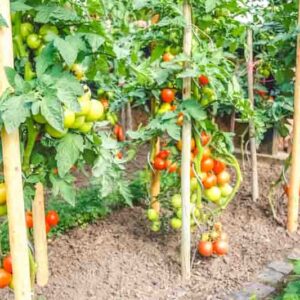
For practical garden planning, expect approximately 4½-6 ft. (1.4-1.8 m) with support, potentially taller where the season is long. Install a sturdy cage, stake, string system, or trellis early.
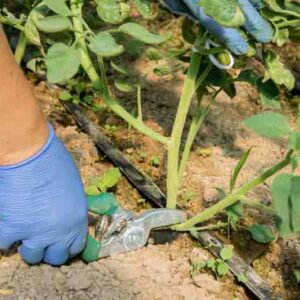
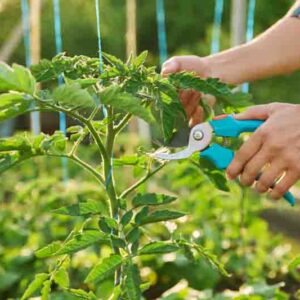
Pruning rule: Earliness is already built into the cultivar. You do not need to remove every sucker in an attempt to “make” Early Girl ripen early. Prune according to support, spacing, airflow, and the number of productive stems you can manage.
For detailed pruning guidance, see Gardenia’s How and When to Prune Tomatoes.
Grow ‘Early Girl’ in full sun, with at least 6 hours of direct sunlight and preferably 8 or more for strong flowering, fruit production, and ripening.
Plant in fertile, organically rich, moist but well-drained soil. Clay, loam, or sandy soil can work when fertility and drainage are suitable. Aim for a slightly acidic to neutral soil pH around 6.0-6.8.
Allow about 24-36 inches (60-90 cm) between plants. Use the wider end for large cages, multi-stem plants, or humid conditions where additional airflow is useful.
Maintain reasonably even soil moisture during establishment, flowering, and fruit development. Deep, well-established roots make a tomato more resilient, but deliberate drought stress is not required for ordinary home-garden success.
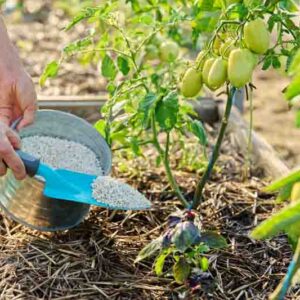
Use balanced fertility and avoid excessive nitrogen. Too much nitrogen can encourage vigorous leafy growth while delaying flowering or ripening.
For the earliest crop: Start with a healthy transplant, plant after frost danger has passed, provide full sun, and avoid growth checks from cold soil, severe drought, or excessive nitrogen. A cultivar bred for earliness still needs uninterrupted establishment to express that advantage.
For complete tomato care, see Gardenia’s Tomato (Solanum lycopersicum) profile.
‘Early Girl’ has become strongly associated with dry-farmed tomato production in parts of California. Under suitable conditions, growers establish the plants while soil moisture is available and then rely heavily on moisture stored deeper in the soil rather than routine summer irrigation.
The approach can produce smaller fruit with concentrated flavor, but it requires the right combination of soil depth, stored winter moisture, climate, plant establishment, and grower technique.
“Dry-farmed Early Girl” is therefore not a separate cultivar. It is standard Early Girl grown under a particular water-management system.
Gardenia dry-farming rule: “Dry-farmed Early Girl” describes how the tomato was grown, not a different Early Girl cultivar. Do not simply stop watering a container tomato or a shallow-rooted garden plant and expect the same result. Successful dry farming depends on stored soil moisture, deep rooting, suitable soil, climate, and careful establishment.
‘Early Girl’ has useful disease resistance, but resistance descriptions are not identical across authoritative and commercial sources.
Cornell’s cultivar record documents resistance to Verticillium wilt and Fusarium wilt races 1 and 2. Cornell’s disease-resistance database additionally lists root-knot nematodes and Tobacco mosaic virus. Current commercial listings may use still different resistance codes.
Gardenia resistance rule: Do not merge every published Early Girl resistance claim into one universal package. Treat Verticillium wilt and Fusarium wilt races 1 and 2 as well-established baseline resistance, then check the actual seed source for additional resistance codes such as nematodes, Tobacco mosaic virus, bacterial speck, or other traits.
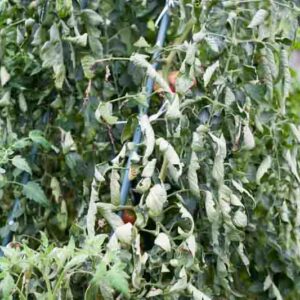
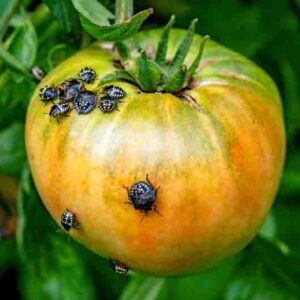
Resistance does not mean immunity. Plants may still encounter early blight, late blight, Septoria leaf spot, blossom-end rot, fruit cracking, and pests such as tomato hornworms.
If symptoms are unclear, use Gardenia’s Tomato Problems: What Is Wrong With My Plant?. For infectious diseases, see Tomato Diseases: Identification, Treatment & Prevention.
Harvest when the fruits are fully red and firm-ripe for the best combination of flavor and handling quality. Because ‘Early Girl’ is indeterminate, tomatoes mature progressively rather than all at once.
If cracking, pests, heavy rain, or extreme heat threaten, mature fruit can be picked after ripening has begun and allowed to finish indoors.
Gardenia harvest cue: The value of ‘Early Girl’ is the early first harvest, not a single early crop. Keep picking ripe tomatoes and supporting healthy new growth, because an indeterminate Early Girl can continue producing well beyond its first flush.
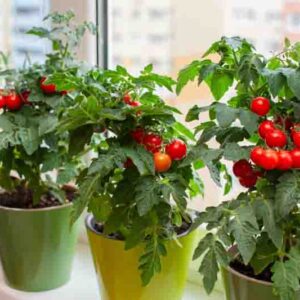
‘Early Girl’ can grow successfully in a container, but standard Early Girl is not a compact patio tomato.
Use a large container, preferably around 10 gallons or more, together with sturdy support. More root volume provides a larger moisture reserve and makes watering easier to manage during hot weather.
Container-grown plants may need frequent moisture checks during heat or wind. Pruning can help fit the vine to its support, but pruning cannot turn a vigorous indeterminate tomato into a compact patio plant.
Container reality: If you specifically want the Early Girl name in a compact plant, look for ‘Bush Early Girl’. Standard ‘Early Girl’ is indeterminate and should be given the root volume and support of a full-sized vine tomato.
Choose companion plants that share full sun, fertile soil, good drainage, and regular moisture without crowding the tomato canopy.
Basil (Ocimum basilicum) shares similar sun, drainage, and moisture requirements and fits naturally into an edible tomato bed.
French Marigold (Tagetes patula) thrives in full sun and well-drained soil while adding long-season flowers.
Nasturtium (Tropaeolum majus) can trail around bed edges without competing for vertical canopy space.
Garlic (Allium sativum) shares a preference for sun and good drainage and can occupy space before tomato vines reach full summer size.
For more ideas based on compatible growing conditions rather than folklore, see Gardenia’s Companion Plants for Tomatoes.
‘Early Girl’ is indeterminate. Its vines continue flowering and producing tomatoes throughout the growing season rather than ripening one concentrated crop.
‘Early Girl’ typically reaches maturity about 57-63 days after transplanting under favorable conditions. Burpee currently lists 59 days.
The firm red fruits generally weigh about 4-6 ounces (115-170 g), making them useful medium-sized slicing tomatoes rather than small extra-early fruit.
A practical supported height is about 4½-6 feet (1.4-1.8 m), although vigorous indeterminate vines may grow taller in a long season. Burpee currently lists about 55 inches (140 cm).
No. Standard ‘Early Girl’ is a vigorous indeterminate hybrid. ‘Bush Early Girl’ is a separate determinate cultivar bred for much more compact growth.
No. ‘Early Girl’ is an F1 hybrid. Seeds saved from its fruit may germinate, but they will not reliably reproduce the original cultivar.
Verticillium wilt and Fusarium wilt races 1 and 2 are well-established resistance claims for Early Girl. Some authoritative and commercial sources also list additional resistance, including root-knot nematodes, Tobacco mosaic virus, or bacterial speck, so check the resistance codes attached to the specific seed source.
It is an Early Girl tomato produced using a dry-farming system that relies heavily on moisture stored in the soil after establishment. “Dry-farmed Early Girl” describes the growing method, not a separate cultivar.
Yes. Use a large container, preferably around 10 gallons or more, with full sun, consistent moisture, and sturdy support. For a genuinely compact plant, ‘Bush Early Girl’ is the more natural choice.
You can save the seeds and they may germinate, but Early Girl is an F1 hybrid, so the next generation will not reliably reproduce the characteristics of the original cultivar.
| Hardiness |
2 - 11 |
|---|---|
| Climate Zones | 1, 1A, 1B, 2, 2A, 2B, 3, 3A, 3B, 4, 5, 6, 7, 8, 9, 10, 11, 12, 13, 14, 15, 16, 17, 18, 19, 20, 21, 22, 23, 24, A1, A2, A3, H1, H2 |
| Plant Type | Annuals, Fruits, Perennials |
| Plant Family | Solanaceae |
| Genus | Solanum, Tomatoes |
| Common names | Tomato |
| Exposure | Full Sun |
| Season of Interest | Summer (Early, Mid, Late), Fall |
| Height | 4' - 6' (120cm - 180cm) |
| Spread | 2' - 3' (60cm - 90cm) |
| Spacing | 24" - 36" (60cm - 90cm) |
| Maintenance | High |
| Water Needs | Average |
| Soil Type | Clay, Loam, Sand |
| Soil pH | Acid, Neutral |
| Soil Drainage | Moist but Well-Drained |
| Tolerance | Rabbit, Clay Soil |
| Attracts | Bees |
| Garden Uses | Beds And Borders, Patio And Containers, Wall-Side Borders |
| Garden Styles | City and Courtyard, Informal and Cottage, Pollinator Garden |


| Hardiness |
2 - 11 |
|---|---|
| Climate Zones | 1, 1A, 1B, 2, 2A, 2B, 3, 3A, 3B, 4, 5, 6, 7, 8, 9, 10, 11, 12, 13, 14, 15, 16, 17, 18, 19, 20, 21, 22, 23, 24, A1, A2, A3, H1, H2 |
| Plant Type | Annuals, Fruits, Perennials |
| Plant Family | Solanaceae |
| Genus | Solanum, Tomatoes |
| Common names | Tomato |
| Exposure | Full Sun |
| Season of Interest | Summer (Early, Mid, Late), Fall |
| Height | 4' - 6' (120cm - 180cm) |
| Spread | 2' - 3' (60cm - 90cm) |
| Spacing | 24" - 36" (60cm - 90cm) |
| Maintenance | High |
| Water Needs | Average |
| Soil Type | Clay, Loam, Sand |
| Soil pH | Acid, Neutral |
| Soil Drainage | Moist but Well-Drained |
| Tolerance | Rabbit, Clay Soil |
| Attracts | Bees |
| Garden Uses | Beds And Borders, Patio And Containers, Wall-Side Borders |
| Garden Styles | City and Courtyard, Informal and Cottage, Pollinator Garden |
How many Solanum lycopersicum ‘Early Girl’ (Tomato) do I need for my garden?
| Plant | Quantity | |
|---|---|---|
| Solanum lycopersicum ‘Early Girl’ (Tomato) | N/A | Buy Plants |
Create a membership account to save your garden designs and to view them on any device.
Becoming a contributing member of Gardenia is easy and can be done in just a few minutes. If you provide us with your name, email address and the payment of a modest $25 annual membership fee, you will become a full member, enabling you to design and save up to 25 of your garden design ideas.
Join now and start creating your dream garden!
Create a membership account to save your garden designs and to view them on any device.
Becoming a contributing member of Gardenia is easy and can be done in just a few minutes. If you provide us with your name, email address and the payment of a modest $25 annual membership fee, you will become a full member, enabling you to design and save up to 25 of your garden design ideas.
Join now and start creating your dream garden!