Canadian Serviceberry, Canadian Service-berry, Serviceberry, Juneberry, Grape Pear, Shadblow, Shadbush, Junebush, Amelanchier botryapium, Amelanchier intermedia, Amelanchier oblongifolia


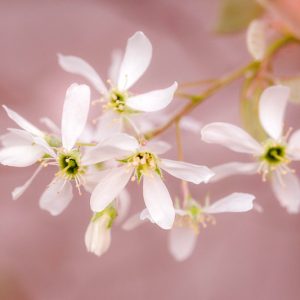
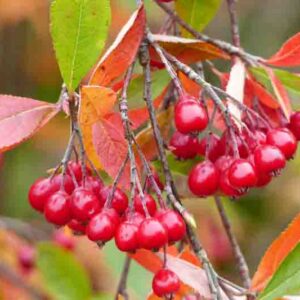
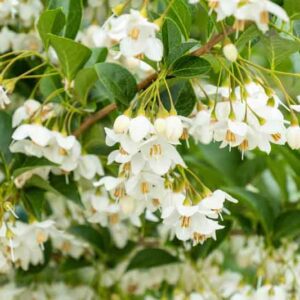
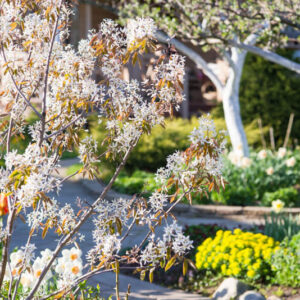
Amelanchier canadensis (Canadian Serviceberry) is a dense, upright, multi-stemmed large shrub or small tree with a delicate, dome-shaped crown. In mid-spring, attractive erect sprays of small, slightly fragrant, white, star-shaped flowers emerge just before the leaves. The blooms provide an early-season source of nectar and pollen for pollinators and other insects. They are followed by small, edible, blue-black berries in early summer. The fruits are used in jams, jellies, and pies and are also eagerly eaten by birds and other wildlife.
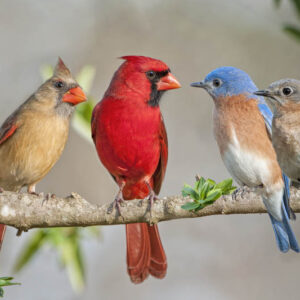
Serviceberry trees attract a diverse range of birds, including the American Robin, Baltimore Oriole, Cedar Waxwing, Eastern Bluebird, Mourning Dove, Northern Cardinal, Northern Mockingbird, and various warblers. Their nutritious berries are also eaten by small and large mammals, while the branching structure provides useful cover and habitat.
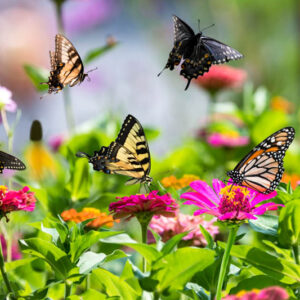
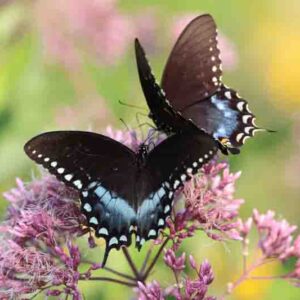
Canadian Serviceberry also serves as a larval host plant for the Red-spotted Purple (Limenitis arthemis astyanax) and the Viceroy (Limenitis archippus). By supporting butterfly larvae, early-spring pollinators, fruit-eating birds, and mammals, Amelanchier canadensis can play several ecological roles in native gardens and naturalistic landscapes.
The foliage of mid-green, finely toothed, oval leaves turns to brilliant shades of yellow, orange, and red in the fall. The plant remains attractive even after the leaves drop, thanks to its elegant growth habit and light gray bark adorned with charcoal-gray striations. A terrific plant with four seasons of interest, Canadian Serviceberry is especially well suited to ponds, lakes, streams, wet woodland edges, and boggy or marshy ground.
| Hardiness |
4 - 8 |
|---|---|
| Heat Zones |
1 - 7 |
| Climate Zones | 1, 1A, 1B, 2, 2A, 2B, 3, 3A, 3B, 4, 5, 6 |
| Plant Type | Shrubs, Trees |
| Plant Family | Rosaceae |
| Genus | Amelanchier |
| Common names | Juneberry, Serviceberry |
| Exposure | Full Sun, Partial Sun |
| Season of Interest | Spring (Mid, Late), Summer (Early, Mid, Late), Fall, Winter |
| Height | 25' - 30' (7.6m - 9.1m) |
| Spread | 15' - 20' (4.6m - 6.1m) |
| Spacing | 180" - 240" (4.6m - 6.1m) |
| Maintenance | Low |
| Water Needs | Low, Average, High |
| Soil Type | Clay, Loam, Sand |
| Soil pH | Acid, Neutral |
| Soil Drainage | Moist but Well-Drained, Well-Drained |
| Characteristics | Fragrant, Showy, Fruit & Berries |
| Native Plants | Alabama, Connecticut, Delaware, Georgia, Maine, Maryland, Massachusetts, Mississippi, New Hampshire, New Jersey, New York, North Carolina, Northeast, Pennsylvania, Rhode Island, South Carolina, Southeast, Tennessee, United States, Virginia, West Virginia |
| Tolerances | Dry Soil, Clay Soil, Wet Soil, Fire, Erosion |
| Attracts | Birds, Bees |
| Garden Uses | Banks And Slopes, Hedges And Screens, Ponds And Streams |
| Garden Styles | City and Courtyard, Informal and Cottage, Pollinator Garden, Prairie and Meadow |
| Toxic to Humans | No known toxicity |
| Toxic to Cats | No known toxicity |
| Toxic to Dogs | No known toxicity |
| Toxic to Horses | No known toxicity |


| Hardiness |
4 - 8 |
|---|---|
| Heat Zones |
1 - 7 |
| Climate Zones | 1, 1A, 1B, 2, 2A, 2B, 3, 3A, 3B, 4, 5, 6 |
| Plant Type | Shrubs, Trees |
| Plant Family | Rosaceae |
| Genus | Amelanchier |
| Common names | Juneberry, Serviceberry |
| Exposure | Full Sun, Partial Sun |
| Season of Interest | Spring (Mid, Late), Summer (Early, Mid, Late), Fall, Winter |
| Height | 25' - 30' (7.6m - 9.1m) |
| Spread | 15' - 20' (4.6m - 6.1m) |
| Spacing | 180" - 240" (4.6m - 6.1m) |
| Maintenance | Low |
| Water Needs | Low, Average, High |
| Soil Type | Clay, Loam, Sand |
| Soil pH | Acid, Neutral |
| Soil Drainage | Moist but Well-Drained, Well-Drained |
| Characteristics | Fragrant, Showy, Fruit & Berries |
| Native Plants | Alabama, Connecticut, Delaware, Georgia, Maine, Maryland, Massachusetts, Mississippi, New Hampshire, New Jersey, New York, North Carolina, Northeast, Pennsylvania, Rhode Island, South Carolina, Southeast, Tennessee, United States, Virginia, West Virginia |
| Tolerances | Dry Soil, Clay Soil, Wet Soil, Fire, Erosion |
| Attracts | Birds, Bees |
| Garden Uses | Banks And Slopes, Hedges And Screens, Ponds And Streams |
| Garden Styles | City and Courtyard, Informal and Cottage, Pollinator Garden, Prairie and Meadow |
| Toxic to Humans | No known toxicity |
| Toxic to Cats | No known toxicity |
| Toxic to Dogs | No known toxicity |
| Toxic to Horses | No known toxicity |
How many Amelanchier canadensis (Canadian Serviceberry) do I need for my garden?
| Plant | Quantity | |
|---|---|---|
| Amelanchier canadensis (Canadian Serviceberry) | N/A | Buy Plants |
Create a membership account to save your garden designs and to view them on any device.
Becoming a contributing member of Gardenia is easy and can be done in just a few minutes. If you provide us with your name, email address and the payment of a modest $25 annual membership fee, you will become a full member, enabling you to design and save up to 25 of your garden design ideas.
Join now and start creating your dream garden!