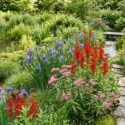
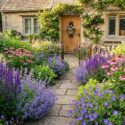
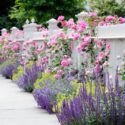
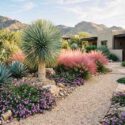
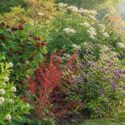
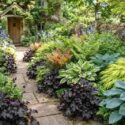
Welcome hummingbirds with a colorful garden of Texas native plants. Flame Acanthus produces fiery tubular flowers from summer into fall, while pink Rock Rose, blue Mealycup Sage, and vibrant Texas Lantana extend the display from spring through autumn. This heat-loving, drought-tolerant combination also attracts bees and butterflies throughout the season.
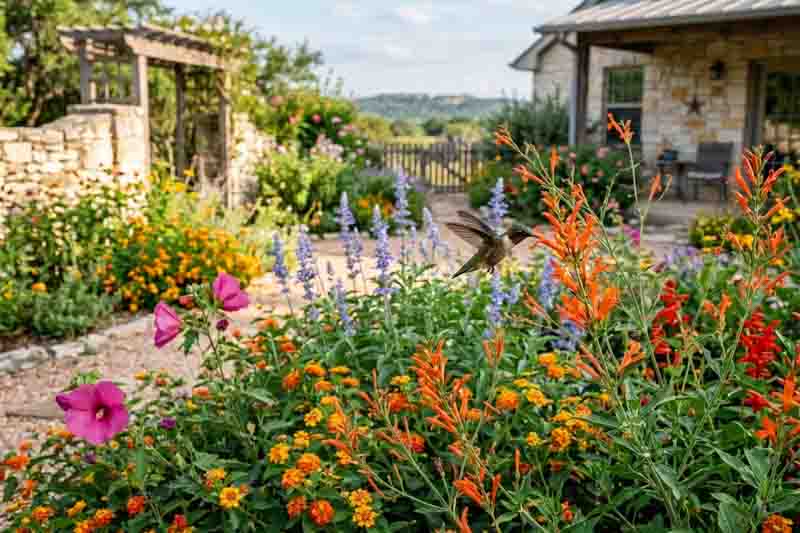


Imagine a garden where fiery orange flowers, rosy pink blossoms, and brilliant blue spikes surround a winding limestone path, with hummingbirds darting from flower to flower. Inspired by the natural beauty of Texas, this colorful planting combines drought-tolerant native shrubs and flowering perennials for a welcoming garden that comes alive in the warmer months.
Four Texas natives create the display: Anisacanthus quadrifidus var. wrightii (Flame Acanthus), Pavonia lasiopetala (Rock Rose), Salvia farinacea (Mealycup Sage), and Lantana urticoides (Texas Lantana). Their contrasting flower shapes, generous blooming seasons, and modest water requirements make this combination particularly appealing for sunny, wildlife-friendly landscapes.
Main plants used: Anisacanthus quadrifidus var. wrightii, Pavonia lasiopetala, Salvia farinacea, and Lantana urticoides.
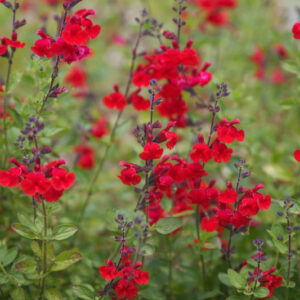
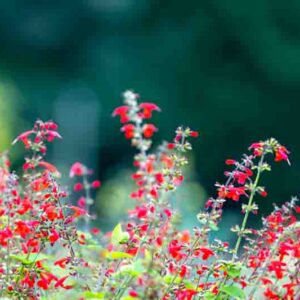
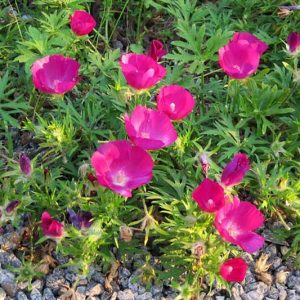
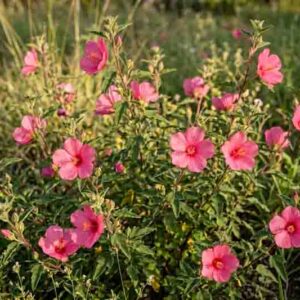
The garden’s strongest feature is its generous succession of flowers. Flame Acanthus rises above the planting with slender, orange-red tubular blooms that are particularly attractive to hummingbirds. Below it, Rock Rose adds a softer contrast, producing cheerful pink flowers reminiscent of miniature hibiscus blooms.
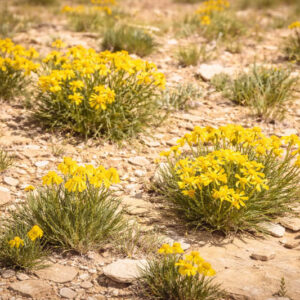
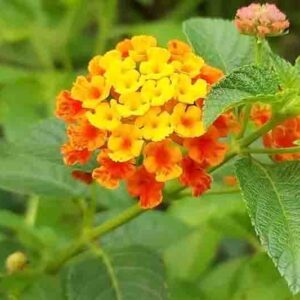
Mealycup Sage introduces upright violet-blue spikes, bringing structure and a cooler color to the warm palette. Texas Lantana completes the planting with clusters of yellow, orange, and red flowers that attract butterflies and other nectar-feeding insects.
Combining these four plants creates a lively but harmonious border. The airy Flame Acanthus provides height, the rounded shrubs fill the middle, and repeated Salvia and Lantana connect the planting to the limestone path.
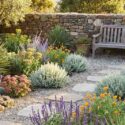
The open gravel and natural stone are important design elements. They provide contrast with the flowers and give the plants room to reach their natural size without making the garden feel crowded.
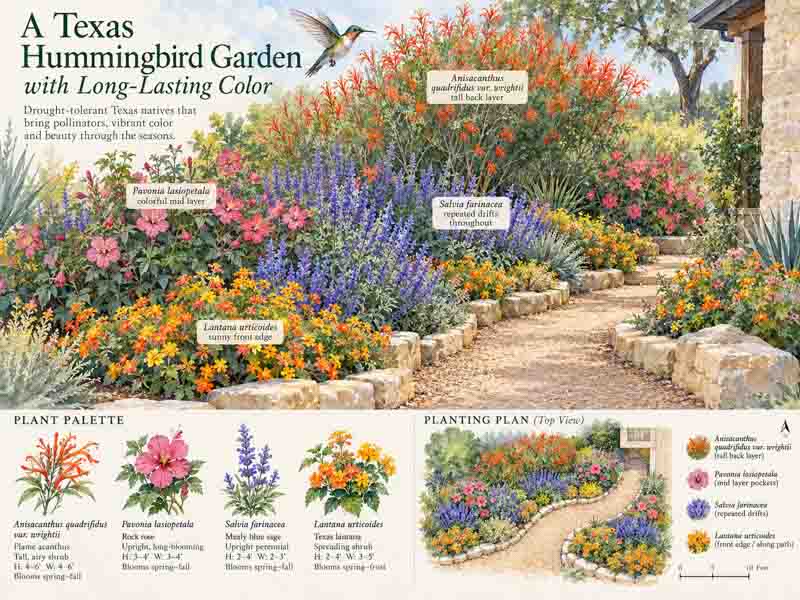
Create a colorful, drought-tolerant Texas garden with flowering shrubs, blue Salvia, and a succession of blooms that support hummingbirds and pollinators.
Approximate visual proportions, not exact plant quantities.
Begin with Flame Acanthus at the back, where its arching branches can develop naturally. Position Rock Rose in the middle layer and repeat Mealycup Sage between the shrubs for contrasting blue spikes. Place Texas Lantana in wider pockets beside the limestone path, leaving generous clearance for its spreading branches and access for maintenance.
Rock Rose and Texas Lantana can begin flowering in spring, followed by the blue spikes of Mealycup Sage. Flame Acanthus becomes particularly valuable from summer into fall, providing nectar when hummingbirds are active. Warm autumn weather often extends the display, although flowering may slow during extreme heat or drought.
| Hardiness |
8 - 10 |
|---|---|
| Exposure | Full Sun |
| Season of Interest | Spring (Late), Summer (Early, Mid, Late), Fall |
| Maintenance | Low |
| Water Needs | Low, Average |
| Soil Type | Loam, Sand |
| Soil pH | Alkaline, Neutral |
| Soil Drainage | Well-Drained |
| Characteristics | Cut Flowers, Showy |
| Native Plants | United States, Southwest, Texas |
| Tolerances | Drought |
| Attracts | Bees, Butterflies, Hummingbirds, Birds |
| Landscaping Ideas | Beds And Borders |
| Garden Styles | Butterfly Garden, Informal and Cottage, Pollinator Garden |

| Hardiness |
8 - 10 |
|---|---|
| Exposure | Full Sun |
| Season of Interest | Spring (Late), Summer (Early, Mid, Late), Fall |
| Maintenance | Low |
| Water Needs | Low, Average |
| Soil Type | Loam, Sand |
| Soil pH | Alkaline, Neutral |
| Soil Drainage | Well-Drained |
| Characteristics | Cut Flowers, Showy |
| Native Plants | United States, Southwest, Texas |
| Tolerances | Drought |
| Attracts | Bees, Butterflies, Hummingbirds, Birds |
| Landscaping Ideas | Beds And Borders |
| Garden Styles | Butterfly Garden, Informal and Cottage, Pollinator Garden |
Recreate this garden. Specify the percentages you would like to have of each plant and input the dimensions of your garden space.We'll give you a shopping list so you know how many plants you need.
| Plant | Quantity | |
|---|---|---|
| Salvia farinacea (Mealy Sage) | N/A | Buy Plants |
| Pavonia lasiopetala (Texas Rock Rose) | N/A | Buy Plants |
| Anisacanthus quadrifidus var. wrightii (Desert Honeysuckle) | N/A | Buy Plants |
| Lantana urticoides (Texas Lantana) | N/A | Buy Plants |
Create a membership account to save your garden designs and to view them on any device.
Becoming a contributing member of Gardenia is easy and can be done in just a few minutes. If you provide us with your name, email address and the payment of a modest $25 annual membership fee, you will become a full member, enabling you to design and save up to 25 of your garden design ideas.
Join now and start creating your dream garden!