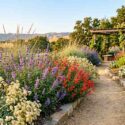
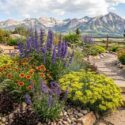
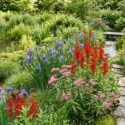
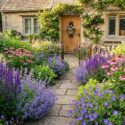
Bring the beauty of a Texas prairie home with four native plants. Gaillardia pulchella and Ratibida columnifera produce cheerful red-and-yellow flowers from late spring through summer, while Salvia farinacea adds vivid blue spikes. Little Bluestem contributes graceful foliage and coppery fall color, creating a lively haven for pollinators.
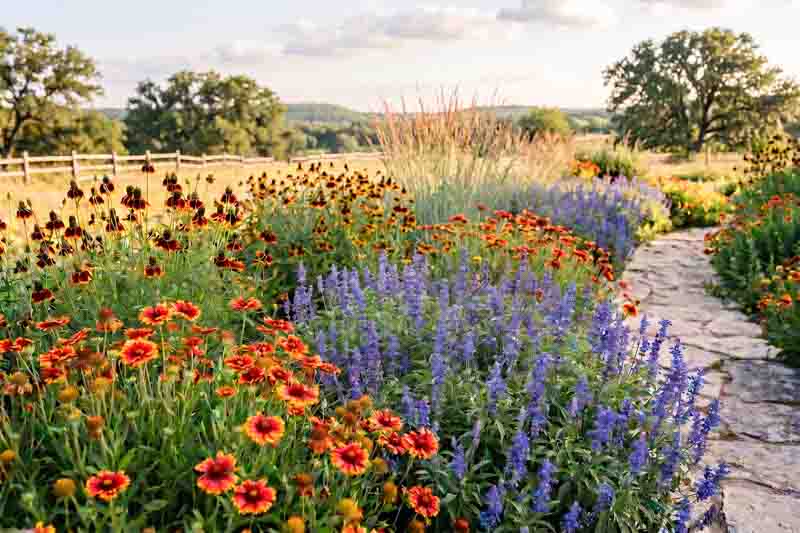


Imagine stepping outside to a garden alive with color and movement. Red-and-gold blanketflowers mingle with cheerful Mexican Hats, tall blue Salvia spikes attract busy bees, and graceful Little Bluestem grasses sway above the flowers. Inspired by the wild beauty of the Texas prairie, this planting brings a wonderfully natural, sun-drenched character to an ordinary garden border.
Four native species create the display: Gaillardia pulchella (Indian Blanket), Ratibida columnifera (Mexican Hat), Salvia farinacea (Mealycup Sage), and Schizachyrium scoparium (Little Bluestem). Their contrasting flower shapes, warm and cool colors, and long seasonal interest make this an appealing choice for sunny, pollinator-friendly landscapes.
Main plants used: Gaillardia pulchella, Ratibida columnifera, Salvia farinacea, and Schizachyrium scoparium.
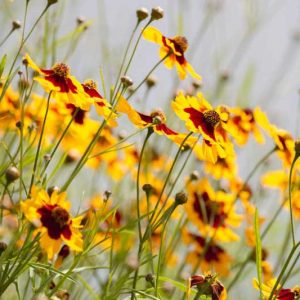
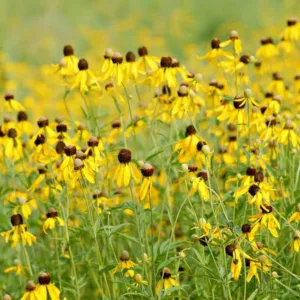
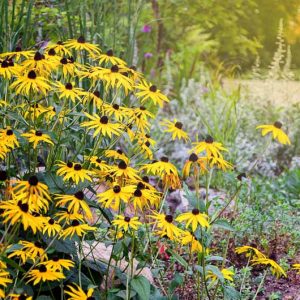
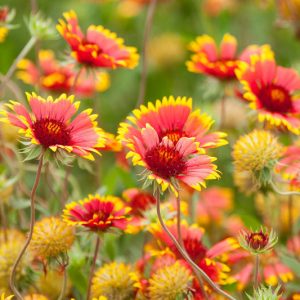
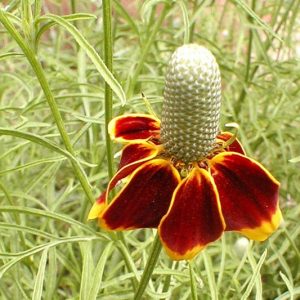
This planting combines the informality of a prairie meadow with the clarity of a designed border. Indian Blanket provides a lively foreground with its red-and-yellow daisies, while Mexican Hat rises above the lower flowers with distinctive elongated cones and drooping petals.
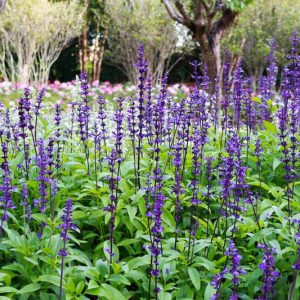
Mealycup Sage introduces upright violet-blue spikes that cool the warm palette and create rhythm throughout the planting. The flowers attract bees, butterflies, and other pollinators, turning the border into a lively feeding ground during the growing season.
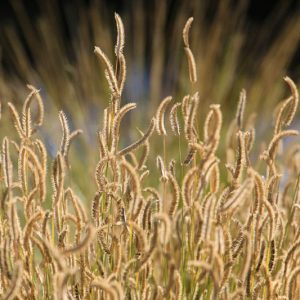
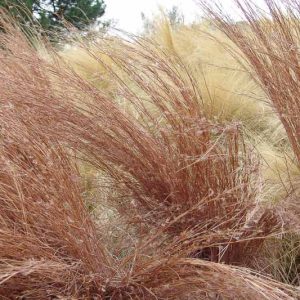
Little Bluestem provides the essential framework. Its fine, upright foliage brings texture through summer, then develops beautiful copper, russet, and reddish tones in fall. Placing the grass behind and between the flowering plants creates a natural prairie effect without hiding the lower blooms.
The gravel path and limestone edging reinforce the Texas landscape. They provide a simple setting for the flowers while keeping this exuberant planting visually organized.
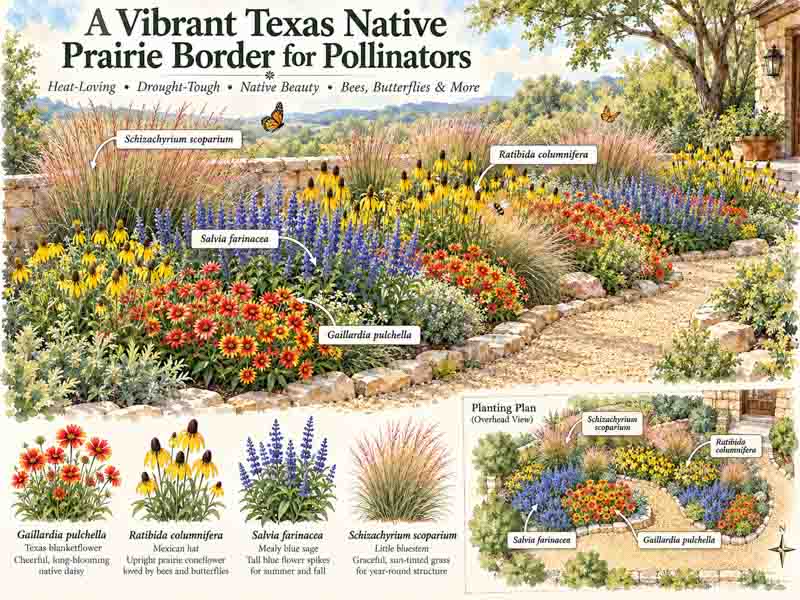
Create a colorful, wildlife-friendly prairie border with summer wildflowers, upright blue accents, and ornamental grasses for fall interest.
Approximate visual proportions, not exact plant quantities.
Place Little Bluestem in staggered groups toward the back, allowing its mature clumps room to develop. Thread Mexican Hat through the middle, where its airy stems rise above neighboring flowers. Repeat Mealycup Sage in groups of 3-5 for strong blue accents, then fill the foreground with Indian Blanket, leaving occasional openings for natural reseeding.
Indian Blanket and Mexican Hat begin flowering in late spring or early summer, joined by the violet-blue spikes of Mealycup Sage. Flowering may continue into fall with favorable weather. As temperatures cool, Little Bluestem develops coppery tones and attractive seedheads that provide texture through winter.
| Hardiness |
8 - 9 |
|---|---|
| Climate Zones | 7, 8, 9, 10, 12, 13, 14, 15, 16, 17, 18, 19, 20, 21, 22, 23, 24 |
| Exposure | Full Sun |
| Season of Interest | Spring (Late), Summer (Early, Mid, Late), Fall |
| Maintenance | Low |
| Water Needs | Low, Average |
| Soil Type | Loam, Sand |
| Soil pH | Alkaline, Neutral |
| Soil Drainage | Well-Drained |
| Characteristics | Cut Flowers, Showy |
| Native Plants | United States, Southwest, Texas, New Mexico |
| Tolerances | Drought, Dry Soil |
| Attracts | Bees, Butterflies, Hummingbirds, Birds |
| Landscaping Ideas | Beds And Borders |
| Garden Styles | Butterfly Garden, Informal and Cottage, Pollinator Garden, Prairie and Meadow |
| Hardiness |
8 - 9 |
|---|---|
| Climate Zones | 7, 8, 9, 10, 12, 13, 14, 15, 16, 17, 18, 19, 20, 21, 22, 23, 24 |
| Exposure | Full Sun |
| Season of Interest | Spring (Late), Summer (Early, Mid, Late), Fall |
| Maintenance | Low |
| Water Needs | Low, Average |
| Soil Type | Loam, Sand |
| Soil pH | Alkaline, Neutral |
| Soil Drainage | Well-Drained |
| Characteristics | Cut Flowers, Showy |
| Native Plants | United States, Southwest, Texas, New Mexico |
| Tolerances | Drought, Dry Soil |
| Attracts | Bees, Butterflies, Hummingbirds, Birds |
| Landscaping Ideas | Beds And Borders |
| Garden Styles | Butterfly Garden, Informal and Cottage, Pollinator Garden, Prairie and Meadow |
Recreate this garden. Specify the percentages you would like to have of each plant and input the dimensions of your garden space.We'll give you a shopping list so you know how many plants you need.
| Plant | Quantity | |
|---|---|---|
| Gaillardia pulchella (Firewheel) | N/A | Buy Plants |
| Salvia farinacea (Mealy Sage) | N/A | Buy Plants |
| Ratibida columnifera (Mexican Hat Plant) | N/A | Buy Plants |
| Schizachyrium scoparium (Little Bluestem) | N/A | Buy Plants |
Create a membership account to save your garden designs and to view them on any device.
Becoming a contributing member of Gardenia is easy and can be done in just a few minutes. If you provide us with your name, email address and the payment of a modest $25 annual membership fee, you will become a full member, enabling you to design and save up to 25 of your garden design ideas.
Join now and start creating your dream garden!