Grow two tomatoes with Genovese basil, blue borage, and a French marigold in a sunny 3 × 6 ft raised bed. Staked tomatoes provide height and summer harvests, while basil fills the middle and flowers brighten the edges. Open spacing keeps this compact garden productive, colorful, accessible, and manageable.
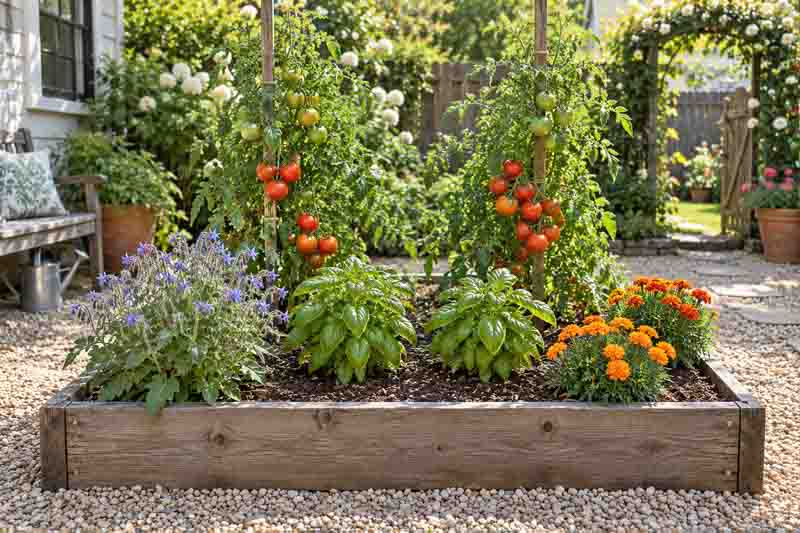


This sunny 3 × 6 ft raised bed is built around two staked tomato plants, with just a handful of companions filling the lower layer. Two Genovese basil plants sit through the front-middle of the bed, one borage brings loose blue flowers to the left corner, and two French marigolds add bright orange and gold on the opposite side.
The planting is compact but not crowded. The tomatoes provide most of the height and summer harvest, while the basil, borage, and marigolds occupy distinct pockets below rather than forming a continuous understory.
That open arrangement is important in a small vegetable bed. Visible mulch between the plants leaves room for growth and makes it easier to water, tie tomato stems, inspect foliage, and reach the fruit as it ripens.
Main plants used: 2 Tomato plants – choose from ‘Sungold’, ‘Super Sweet 100’, and ‘Black Cherry’ – 2 Genovese Basil (Ocimum basilicum), 1 Borage (Borago officinalis), and 2 French Marigolds (Tagetes patula).
The garden should still show some mulch when first planted. By midsummer, the tomato foliage, basil, and borage will occupy considerably more space.
The two tomatoes give this small bed a strong vertical structure without overwhelming it. Positioned across the back half, they rise above the companions and leave the front of the garden accessible for harvesting and maintenance.
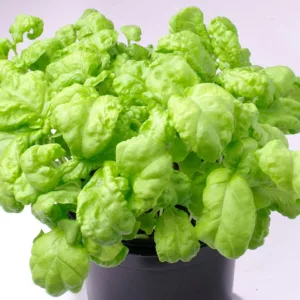
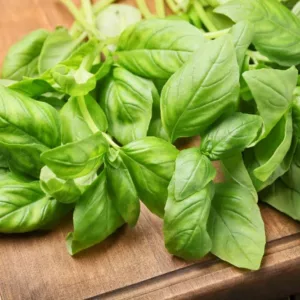
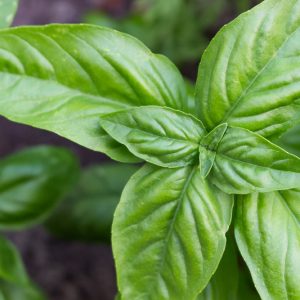
Two basil plants are enough to create a generous green middle layer. Their broad, glossy leaves contrast nicely with the finer tomato foliage, but they remain low enough that they do not hide the fruit or interfere with the supports.
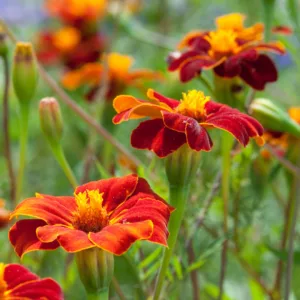
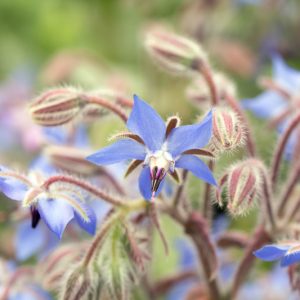
Borage is used as a single substantial accent. Its coarse foliage and blue star-shaped flowers give the left side of the bed a looser, more informal character and provide a striking contrast to the warm-colored marigolds.
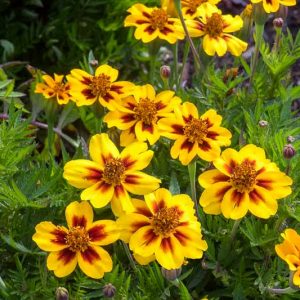
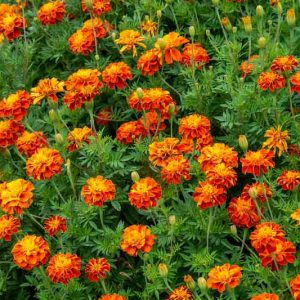
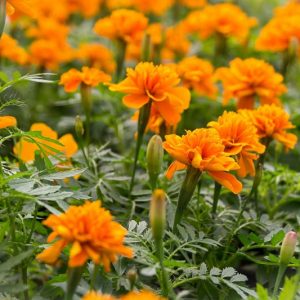
On the opposite side, two French marigolds provide repeated patches of orange and gold. Keeping them together on the right gives the bed visual balance without creating an artificial flower border around the entire planting.
Garden note: Borage can become broad and somewhat sprawling as summer progresses. Keeping the single plant at the front-left corner gives it somewhere to expand without growing directly through the tomato stems.
Use two staked tomatoes as the main anchors across the back of the bed. Plant two basil plants through the front-middle, place one borage at the front-left corner, and group two French marigolds along the right side. Leave visible mulch between the main plants rather than filling every gap.
Total quantity allocation: 80%. The remaining 20% is intentionally unallocated for mulch, access, airflow, and room for the plants to expand during summer.
Gardenia quantity note: Tomatoes are treated as one planting category when quantities are calculated. For this 3 × 6 ft garden, use two tomato plants. Choose two of ‘Sungold’, ‘Super Sweet 100’, and ‘Black Cherry’, or grow two plants of the same favorite variety.
The quantities below match the featured 3 × 6 ft garden image and planting plan.
| Garden Size | Tomatoes | Basil | Borage | French Marigolds |
|---|---|---|---|---|
| 3 × 6 ft | 2 | 2 | 1 | 2 |
The featured garden has room for two tomato plants, so choose two cultivars rather than trying to fit all three into the bed.
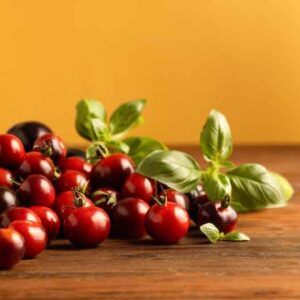
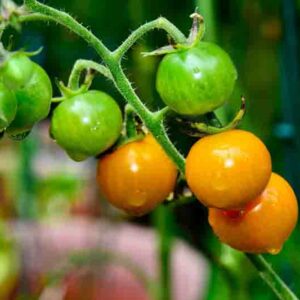
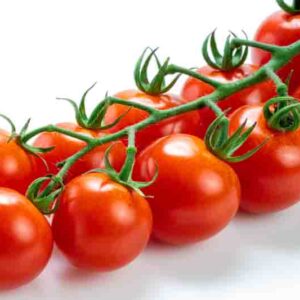
‘Sungold’ produces abundant golden-orange cherry tomatoes on vigorous indeterminate vines. It adds especially bright color and needs a sturdy stake or other support.
‘Super Sweet 100’ produces long clusters of small red cherry tomatoes and grows vigorously through summer.
‘Black Cherry’ offers darker mahogany-red fruit, creating a strong color contrast with either of the brighter cherry varieties.
A pairing of ‘Sungold’ and ‘Super Sweet 100’ gives you orange and red fruit, while ‘Sungold’ and ‘Black Cherry’ creates an even stronger color contrast.
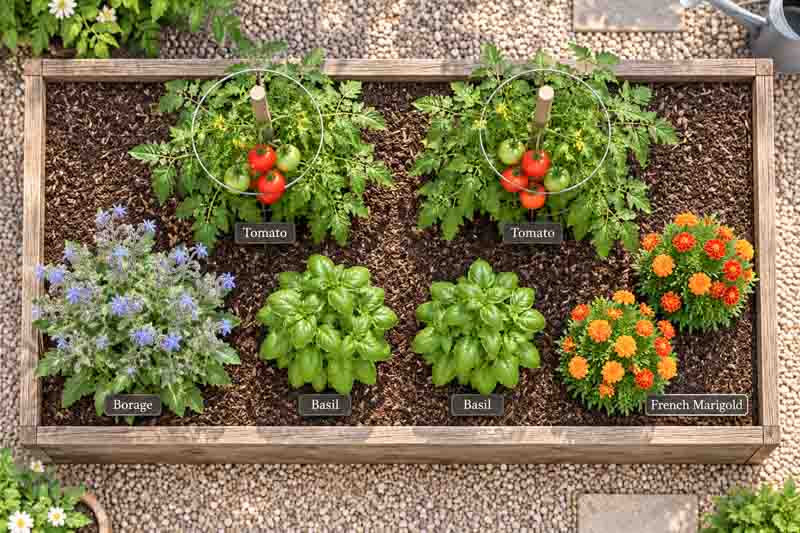
Begin with the two tomato supports. Position the tomatoes across the back half of the bed, one toward the left and one toward the right. This gives each plant its own vertical space while keeping the center open enough for airflow and access.
Place the two Genovese basil plants through the front-middle. They sit below and slightly between the tomatoes rather than directly against their stems.
Plant the single borage at the front-left corner. Its broad habit and blue flowers make it visually substantial enough to occupy that corner by itself.
Place the two French marigolds along the right side, with one slightly farther back and the other closer to the front edge. Their repeated orange flowers balance the mass of blue borage on the opposite side without making the layout perfectly symmetrical.
Leave mulch visible through the center and around the tomato bases. The garden should look relaxed and well spaced rather than packed from edge to edge.
Install the stakes when the tomatoes are planted rather than waiting until the roots and stems are well developed.
As the vines grow, secure the main stems loosely with soft ties. Check them regularly because tomato stems become considerably thicker as the season progresses.
These are vigorous indeterminate tomatoes, so some branching and leaning is normal. Regular tying helps keep the vines above the lower planting instead of allowing them to fall across the basil, borage, or marigolds.
The visible mulch in this garden is part of the design, not unfinished space. Keeping the tomato bases relatively open makes watering, tying, inspecting leaves, and harvesting much easier.
The two basil plants will become broad in warm weather, and a single borage can eventually occupy a considerable part of the front-left corner. The open areas allow those plants to mature without immediately colliding with their neighbors.
If the borage begins leaning heavily toward the nearest tomato, trim back a few stems. Likewise, basil can be harvested frequently to keep the plants compact and productive.
Early in summer, the tomato stakes create most of the vertical structure. The basil plants are still relatively compact, the borage is beginning to spread, and the two marigolds provide bright color along the right side.
By midsummer, the tomato vines rise well above the lower planting. The two basil plants have developed into rounded leafy clumps, borage flowers are opening on the left, and orange marigolds provide a warm counterpoint on the right.
Once the tomatoes start ripening, the fruit becomes the main attraction. Red, gold, or dark mahogany tomatoes hang above glossy basil foliage, blue borage flowers, and orange marigolds.
| Hardiness |
3 - 11 |
|---|---|
| Climate Zones | 1, 1A, 1B, 2, 2A, 2B, 3, 3A, 3B, 4, 5, 6, 7, 8, 9, 10, 11, 12, 13, 14, 15, 16, 17, 18, 19, 20, 21, 22, 23, 24 |
| Exposure | Full Sun |
| Season of Interest | Summer (Early, Mid, Late), Fall |
| Maintenance | High |
| Water Needs | Average |
| Soil Type | Loam, Sand |
| Soil pH | Acid, Neutral |
| Soil Drainage | Moist but Well-Drained |
| Attracts | Bees, Butterflies |
| Landscaping Ideas | Beds And Borders |
| Garden Styles | City and Courtyard, Informal and Cottage, Pollinator Garden |

| Hardiness |
3 - 11 |
|---|---|
| Climate Zones | 1, 1A, 1B, 2, 2A, 2B, 3, 3A, 3B, 4, 5, 6, 7, 8, 9, 10, 11, 12, 13, 14, 15, 16, 17, 18, 19, 20, 21, 22, 23, 24 |
| Exposure | Full Sun |
| Season of Interest | Summer (Early, Mid, Late), Fall |
| Maintenance | High |
| Water Needs | Average |
| Soil Type | Loam, Sand |
| Soil pH | Acid, Neutral |
| Soil Drainage | Moist but Well-Drained |
| Attracts | Bees, Butterflies |
| Landscaping Ideas | Beds And Borders |
| Garden Styles | City and Courtyard, Informal and Cottage, Pollinator Garden |
Recreate this garden. Specify the percentages you would like to have of each plant and input the dimensions of your garden space.We'll give you a shopping list so you know how many plants you need.
| Plant | Quantity | |
|---|---|---|
| Tagetes patula (French Marigold) | N/A | Buy Plants |
| Ocimum basilicum 'Genovese' (Sweet Basil) | N/A | Buy Plants |
| Borago officinalis (Borage) | N/A | Buy Plants |
| Solanum lycopersicum 'Sungold' (Tomato) | N/A | Buy Plants |
| Solanum lycopersicum 'Super Sweet 100' (Tomato) | N/A | Buy Plants |
Create a membership account to save your garden designs and to view them on any device.
Becoming a contributing member of Gardenia is easy and can be done in just a few minutes. If you provide us with your name, email address and the payment of a modest $25 annual membership fee, you will become a full member, enabling you to design and save up to 25 of your garden design ideas.
Join now and start creating your dream garden!
Create a membership account to save your garden designs and to view them on any device.
Becoming a contributing member of Gardenia is easy and can be done in just a few minutes. If you provide us with your name, email address and the payment of a modest $25 annual membership fee, you will become a full member, enabling you to design and save up to 25 of your garden design ideas.
Join now and start creating your dream garden!