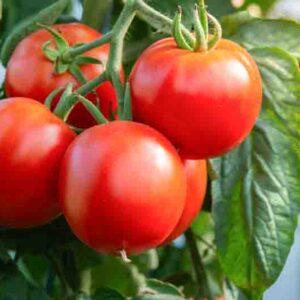
Tomato 'Super Sweet 100', Tomato 'Supersweet 100', Solanum lycopersicum 'Supersweet 100'
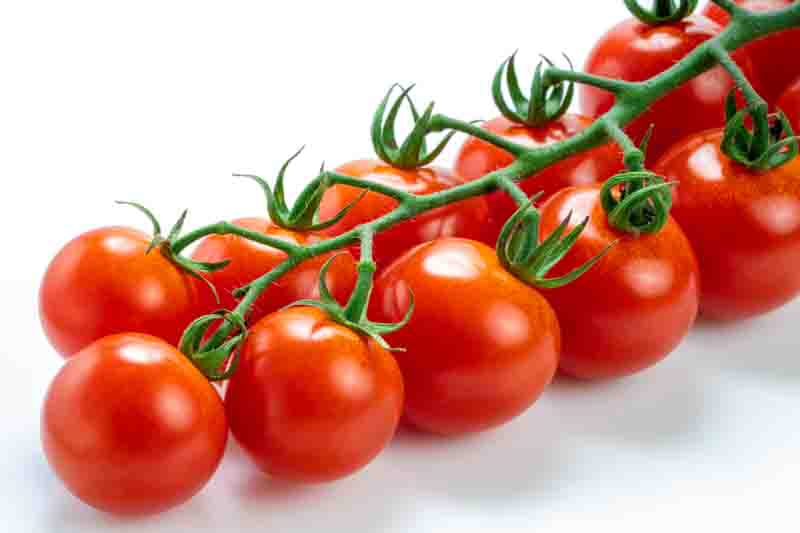


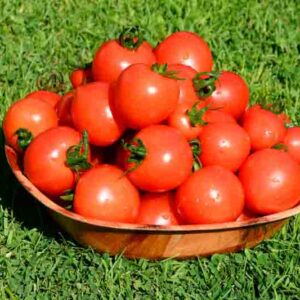
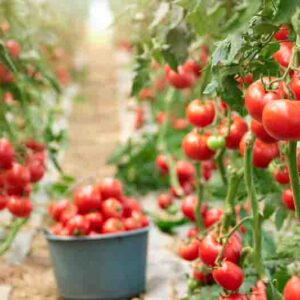
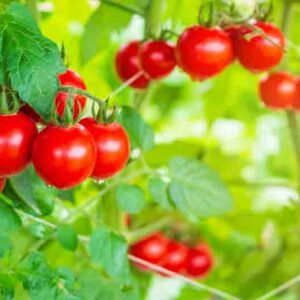
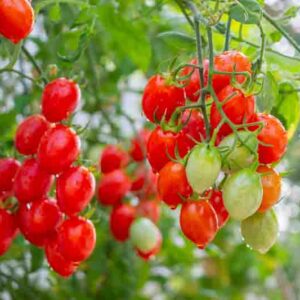
Solanum lycopersicum ‘Super Sweet 100’, also sold as ‘Supersweet 100’, is a vigorous F1 hybrid cherry tomato prized for its long, branching clusters of glossy scarlet-red fruits, very sweet flavor, and sustained productivity. Its indeterminate vines continue flowering and fruiting through the growing season, producing abundant bite-sized tomatoes for snacking, salads, lunchboxes, and fresh summer cooking.
‘Super Sweet 100’ is especially valuable to gardeners who want a classic red cherry tomato with strong flavor, heavy yields, and useful wilt resistance. The vines need substantial support, but once established they can carry impressive trusses of fruit over a long harvest period.
Gardenia cultivar insight: ‘Super Sweet 100’ is not simply another name for ‘Sweet 100’. It was developed as a separate F1 hybrid, retaining the prolific sweet cherry habit while adding documented disease resistance. Compare the exact cultivar name and resistance codes rather than transferring traits automatically between Sweet 100 and Super Sweet 100.
| Botanical Name | Solanum lycopersicum ‘Super Sweet 100’ |
|---|---|
| Family | Solanaceae |
| Common Names | Super Sweet 100 tomato, Supersweet 100 tomato |
| Origin | F1 hybrid bred by Northrup King as selection NVH 4353 and introduced in 1986 |
| Plant Type and Habit | Warm-season fruiting annual; vigorous, indeterminate vine requiring sturdy support |
| Size | Commonly about 5-6 ft. tall (1.5-1.8 m) when supported, potentially taller in a long growing season |
| Growth Habit | Indeterminate; continues producing new stems, flowers, and fruit until frost, disease, or unfavorable conditions end growth |
| Tomato Type | F1 hybrid red cherry tomato |
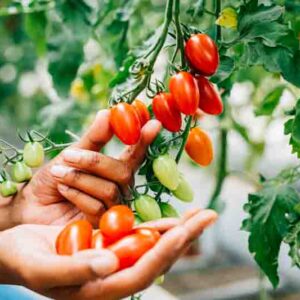
| Fruit | Glossy scarlet-red, round cherry tomatoes about 1 in. (2.5 cm) across, commonly around ½-1 oz. (14-28 g) each, depending on source and growing conditions |
| Flavor | Very sweet, bright, classic red-cherry tomato flavor |
| Days to Maturity | Approximately 70-78 days from transplanting under favorable conditions |
| Sun and Exposure | Full sun; at least 6 hours of direct sunlight, with 8 or more hours preferable |
| Soil | Fertile, organically rich, moist but well-drained clay, loam, or sandy soil; slightly acidic to neutral, ideally around pH 6.0-6.8 |
| Spacing | 24-36 in. (60-90 cm); use extra room for large cages or multi-stem plants |
| Harvest | Main-season and continuous; harvest individual fruits as they become fully scarlet-red and firm-ripe |
| Best Uses | Fresh snacking, salads, lunchboxes, skewers, roasting, fresh sauces, and mixed tomato dishes |
| Disease Resistance | Historically documented resistance to Verticillium wilt race 1 and Fusarium wilt race 1; some current seed sellers list additional resistance, so check supplier-specific codes |
| Container Suitability | Good in a large container with strong support, but this is a vigorous indeterminate tomato rather than a compact patio cultivar |
‘Super Sweet 100’ is famous for abundance. Its vigorous vines develop long, often multiple-branched trusses carrying numerous glossy red cherry tomatoes. The original cultivar description states that well-supported plants can produce clusters containing 100 or more fruits.
The “100” is therefore more than a catchy marketing number. It reflects the cultivar’s documented potential to carry exceptionally large fruiting clusters under good growing conditions.
The tomatoes themselves are small, juicy, and notably sweet, making them ideal for eating directly from the plant. Because the vines are indeterminate, production continues through the season rather than arriving in one concentrated flush.
Best reason to grow ‘Super Sweet 100’: Choose it when you want a classic red cherry tomato that combines sweetness, enormous fruiting trusses, sustained production, and useful wilt resistance. If compact growth is the priority, choose a determinate or dwarf cherry instead.
‘Super Sweet 100’ and ‘Sweet 100’ have closely related names and produce similar sweet red cherry tomatoes, but they should not be treated as interchangeable cultivars.
Super Sweet 100 was bred by Northrup King as a separate F1 hybrid, recorded as NVH 4353 and introduced in 1986. It retained the prolific cherry habit associated with Sweet 100 while adding documented resistance to Verticillium wilt and Fusarium wilt race 1.
Gardenia identity rule: If the seed packet says ‘Super Sweet 100’, record and compare it as ‘Super Sweet 100’. Do not automatically substitute traits listed for ‘Sweet 100’. Similar names and similar fruit do not make two hybrid cultivars genetically identical.
Like other F1 hybrids, ‘Super Sweet 100’ does not reliably reproduce true from home-saved seed. Seeds may germinate, but the next generation can segregate and should not be assumed to have the same traits as genuine Super Sweet 100 F1.
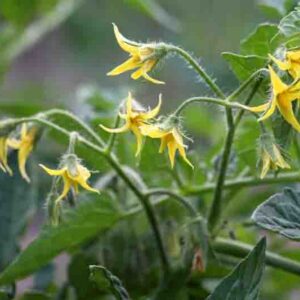
‘Super Sweet 100’ is a vigorous indeterminate tomato. It continues extending, flowering, and producing fruit throughout the growing season rather than terminating after one concentrated crop.
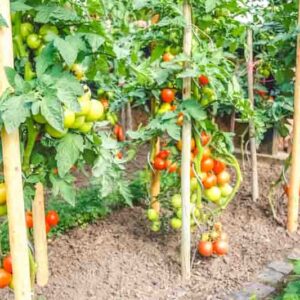
Plants commonly reach about 5-6 ft. (1.5-1.8 m) when supported, although vigorous vines can grow taller during a long season. The long, fruit-heavy trusses add considerable weight, so install a sturdy cage, trellis, stake, or string support early.
For more on tomato growth habits, see Gardenia’s Determinate vs. Indeterminate Tomatoes.
Pruning rule: A sucker is a potentially productive stem, not automatically wasted growth. Prune according to the support system, available space, airflow, and the number of stems you can manage.
For detailed pruning guidance, see Gardenia’s How and When to Prune Tomatoes.
Grow ‘Super Sweet 100’ in full sun, with at least 6 hours of direct sunlight and preferably 8 or more for vigorous growth, flowering, and fruit production.
Plant in fertile, organically rich, moist but well-drained soil. Clay, loam, or sandy soil can work when drainage and fertility are suitable. Aim for a slightly acidic to neutral pH around 6.0-6.8.
Allow about 24-36 inches (60-90 cm) between plants. Use the wider end of the range for large cages, multi-stem plants, or humid conditions where greater airflow is useful.
Maintain reasonably even root-zone moisture. Abrupt shifts from dry soil to heavy rain or irrigation can encourage cherry tomatoes to split.
Use balanced fertility and avoid excessive nitrogen. A huge leafy vine is not automatically a more productive vine, and excessive nitrogen can favor foliage over balanced flowering and fruiting.
For the best crop: Give ‘Super Sweet 100’ strong support, steady moisture, full sun, and regular harvesting. The plant is naturally vigorous and productive, so sound canopy support and consistent root-zone conditions matter more than aggressive feeding.
For complete tomato care, see Gardenia’s Tomato (Solanum lycopersicum) profile.
The original cultivar record documents resistance to Verticillium wilt race 1 and Fusarium wilt race 1.
Current commercial seed sellers do not always list exactly the same resistance package. Some advertise additional Fusarium races or nematode resistance.
Gardenia resistance rule: Separate the historically documented cultivar resistance from supplier-specific modern resistance codes. For ‘Super Sweet 100’, Verticillium wilt race 1 and Fusarium wilt race 1 are historically established. Treat additional resistance claims as seed-source specific unless independently confirmed for the cultivar.
Fruit can also split during wet weather or following abrupt changes in soil moisture. Even a disease-resistant tomato is not automatically resistant to physiological problems caused by changing root-zone conditions.
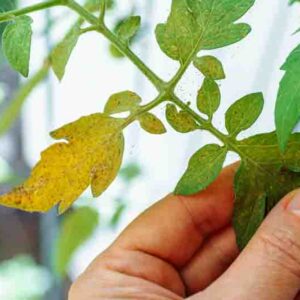
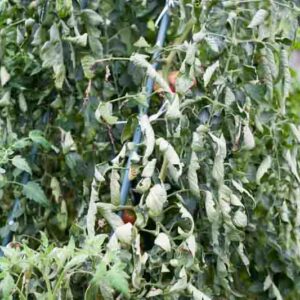
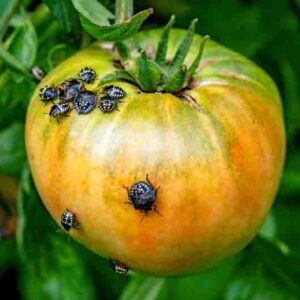
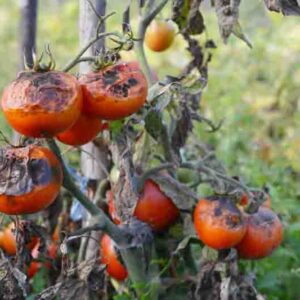
Plants may still encounter early blight, late blight, Septoria leaf spot, blossom-end rot, and pests such as tomato hornworms.
If symptoms are unclear, use Gardenia’s Tomato Problems: What Is Wrong With My Plant?. For infectious diseases, see Tomato Diseases: Identification, Treatment & Prevention.
Harvest individual fruits when they are fully scarlet-red and firm-ripe. The long trusses do not ripen every tomato simultaneously, so there is no reason to wait for the entire cluster to turn red.
Pick frequently during peak production. Regular harvesting helps prevent overripe fruit from splitting or dropping and makes it easier to keep up with the cultivar’s heavy production.
If prolonged rain is forecast, mature fruits that have already begun coloring can be harvested and allowed to finish ripening indoors.
Gardenia harvest cue: Do not wait for every tomato on a Super Sweet 100 truss to ripen before picking. Harvest individual fruits as they reach full red color. This reduces losses from cracking and overripeness while keeping heavily loaded trusses easier to manage.
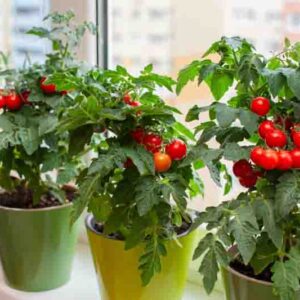
‘Super Sweet 100’ can perform very well in a container, but its small fruit should not be mistaken for compact plant growth.
Use a large container, preferably around 10 gallons or more, together with tall, sturdy support. Greater soil volume gives the roots a larger moisture reserve and makes watering easier to manage during hot weather.
Container-grown vines may need frequent moisture checks during heat or wind. Pruning can help fit the vine to its support, but pruning cannot compensate for an undersized root zone.
Container reality: ‘Super Sweet 100’ is a prolific cherry tomato, not a patio tomato. Give it the same serious root space and structural support you would provide to other vigorous indeterminate cultivars.
Choose companions that share full sun, fertile soil, good drainage, and regular moisture without crowding the vigorous tomato canopy.
Basil (Ocimum basilicum) enjoys full sun, well-drained soil, and regular moisture and fits naturally into an edible tomato bed.
French Marigold (Tagetes patula) thrives in full sun and well-drained soil while adding long-season flowers around vegetable beds.
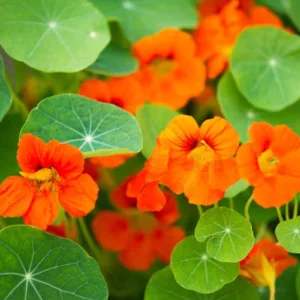
Nasturtium (Tropaeolum majus) can trail around bed edges without competing for vertical canopy space.
Garlic (Allium sativum) shares a preference for sun and good drainage and can use garden space before the tomato reaches full summer size.
For more ideas based on compatible growing conditions and practical garden functions rather than folklore, see Gardenia’s Companion Plants for Tomatoes.
‘Super Sweet 100’ is indeterminate. Its vigorous vines continue flowering and fruiting through the growing season and need sturdy support.
No. They have closely related names and produce similar sweet red cherry fruit, but Super Sweet 100 was bred as a separate hybrid with documented wilt resistance.
‘Super Sweet 100’ commonly reaches about 5-6 feet (1.5-1.8 m) when supported, although vigorous indeterminate vines can grow taller during a long season.
‘Super Sweet 100’ generally reaches maturity about 70-78 days after transplanting under favorable conditions, although some commercial sources list approximately 65-70 days.
The glossy red cherry tomatoes are about 1 inch (2.5 cm) across. Cultivar references commonly place them around ½-1 ounce (14-28 g) each, with some variation among sources and growing conditions.
The original cultivar description states that supported plants can produce long, multiple-branched clusters containing 100 or more fruits. The name reflects the cultivar’s exceptional cluster productivity.
They can. Fruit may split during wet weather or after abrupt changes in soil moisture. Maintaining steadier moisture and harvesting ripe fruit frequently can reduce losses.
Yes. Use a large container, preferably around 10 gallons or more, with full sun, reliable moisture, and strong support for the vigorous indeterminate vine.
The original cultivar record documents resistance to Verticillium wilt race 1 and Fusarium wilt race 1. Some current seed suppliers list additional resistance, so check the resistance codes attached to the specific seed source.
No. ‘Super Sweet 100’ is an F1 hybrid. Seeds saved from its fruit may grow, but they will not reliably reproduce the original cultivar.
| Hardiness |
2 - 11 |
|---|---|
| Climate Zones | 1, 1A, 1B, 2, 2A, 2B, 3, 3A, 3B, 4, 5, 6, 7, 8, 9, 10, 11, 12, 13, 14, 15, 16, 17, 18, 19, 20, 21, 22, 23, 24, A1, A2, A3, H1, H2 |
| Plant Type | Annuals, Fruits, Perennials |
| Plant Family | Solanaceae |
| Genus | Solanum, Tomatoes |
| Common names | Tomato |
| Exposure | Full Sun |
| Season of Interest | Summer (Early, Mid, Late), Fall |
| Height | 5' - 6' (150cm - 180cm) |
| Spread | 2' - 3' (60cm - 90cm) |
| Spacing | 24" - 36" (60cm - 90cm) |
| Maintenance | High |
| Water Needs | Average |
| Soil Type | Clay, Loam, Sand |
| Soil pH | Acid, Neutral |
| Soil Drainage | Moist but Well-Drained |
| Tolerance | Rabbit, Clay Soil |
| Attracts | Bees |
| Garden Uses | Beds And Borders, Patio And Containers, Wall-Side Borders |
| Garden Styles | City and Courtyard, Informal and Cottage, Pollinator Garden |


| Hardiness |
2 - 11 |
|---|---|
| Climate Zones | 1, 1A, 1B, 2, 2A, 2B, 3, 3A, 3B, 4, 5, 6, 7, 8, 9, 10, 11, 12, 13, 14, 15, 16, 17, 18, 19, 20, 21, 22, 23, 24, A1, A2, A3, H1, H2 |
| Plant Type | Annuals, Fruits, Perennials |
| Plant Family | Solanaceae |
| Genus | Solanum, Tomatoes |
| Common names | Tomato |
| Exposure | Full Sun |
| Season of Interest | Summer (Early, Mid, Late), Fall |
| Height | 5' - 6' (150cm - 180cm) |
| Spread | 2' - 3' (60cm - 90cm) |
| Spacing | 24" - 36" (60cm - 90cm) |
| Maintenance | High |
| Water Needs | Average |
| Soil Type | Clay, Loam, Sand |
| Soil pH | Acid, Neutral |
| Soil Drainage | Moist but Well-Drained |
| Tolerance | Rabbit, Clay Soil |
| Attracts | Bees |
| Garden Uses | Beds And Borders, Patio And Containers, Wall-Side Borders |
| Garden Styles | City and Courtyard, Informal and Cottage, Pollinator Garden |
How many Solanum lycopersicum ‘Super Sweet 100’ (Tomato) do I need for my garden?
| Plant | Quantity | |
|---|---|---|
| Solanum lycopersicum ‘Super Sweet 100’ (Tomato) | N/A | Buy Plants |
Create a membership account to save your garden designs and to view them on any device.
Becoming a contributing member of Gardenia is easy and can be done in just a few minutes. If you provide us with your name, email address and the payment of a modest $25 annual membership fee, you will become a full member, enabling you to design and save up to 25 of your garden design ideas.
Join now and start creating your dream garden!
Create a membership account to save your garden designs and to view them on any device.
Becoming a contributing member of Gardenia is easy and can be done in just a few minutes. If you provide us with your name, email address and the payment of a modest $25 annual membership fee, you will become a full member, enabling you to design and save up to 25 of your garden design ideas.
Join now and start creating your dream garden!