Grape juice is more than a sweet drink - it is packed with antioxidants, heart-supporting nutrients, and powerful plant compounds. Discover how this vibrant fruit juice supports brain health, immunity, and cellular protection while delivering natural flavor and refreshing hydration.



Grape juice has a healthier reputation than many sweet drinks, and in one important sense, that reputation is deserved. When you choose 100% grape juice made from real grapes, you get a beverage that contains naturally occurring polyphenols, flavonoids, and antioxidant compounds that have been studied for their effects on vascular health and oxidative stress. Still, the most trustworthy way to talk about grape juice is with balance. It can be a smart addition to a healthy diet, but it is not a miracle drink, and it is not nutritionally identical to eating whole grapes.
If you want the short version, here it is. The best-supported health benefits of grape juice center on polyphenol intake, antioxidant activity, and support for healthy blood vessel function, especially with darker purple grape juice. At the same time, grape juice is still a concentrated source of natural sugar and contains very little fiber compared with whole grapes. That means quality, serving size, and context matter.
Jump to: Why Grape Juice Can Be Beneficial | Heart and Circulation | Antioxidant Protection | Brain and Healthy Aging | A Better Beverage Choice | Hydration and Practical Use | Whole Grapes vs Grape Juice | What Type Is Healthiest | Serving Size and Sugar | Who Should Be More Cautious | FAQ
Grapes come from the Vitis genus, a group of fruiting vines valued for fresh eating, juice, jelly, and wine. The same natural compounds that give grapes their color, taste, and aroma also help explain why grape products – especially purple grape juice – continue to attract interest in nutrition and cardiovascular research.
Best Grapes for Fresh Eating – Top Varieties Ranked
The nutritional value of grape juice comes less from headline vitamins and more from its phytonutrients. In particular, grape juice contains polyphenols such as flavonoids and anthocyanins. Purple grape juice is especially notable because anthocyanins are the pigments that give dark grapes their rich red-purple color, and those pigments are also associated with antioxidant activity.
Darker grape juices may also contain small amounts of resveratrol, although the exact amount varies widely depending on grape variety, processing, and how much contact the juice has with grape skins. That variability matters. It is more accurate to say grape juice can contribute beneficial grape polyphenols than to suggest every glass contains a large or standardized dose of any one compound.
These plant compounds matter because they help the body respond to oxidative stress. Oxidative stress happens when free radicals outnumber the body’s normal antioxidant defenses. Over time, that imbalance can contribute to cellular wear and tear. Grape juice does not cancel out poor diet or lifestyle habits, but it can contribute useful compounds to an overall eating pattern built around plants, whole foods, and smart beverage choices.
This is the strongest and most defensible health benefit of grape juice. Human studies and reviews on grape polyphenols have looked at endothelial function, vascular reactivity, oxidative stress, and other cardiovascular markers. The endothelium is the thin inner lining of blood vessels, and keeping it functioning well is important for healthy blood flow and circulation.
Purple grape juice and grape-derived polyphenols have been associated with improvements in vascular function in clinical research. That does not mean grape juice is a treatment for heart disease, and it certainly does not replace medication, exercise, or medical care. What it does mean is that if you want to make a serious, evidence-aware health claim about grape juice, the heart-and-circulation angle is the one with the best support.
In practical terms, grape juice may fit into a heart-conscious eating pattern when it replaces less nutritious sugary drinks and when portions stay moderate. That is a much stronger message than simply calling it a “heart healthy superdrink.”
Grape juice is widely valued for its antioxidant content, and this part of its reputation is fair. Polyphenols, flavonoids, and anthocyanins can help neutralize free radicals and contribute to the body’s antioxidant defenses. This is one reason grapes and grape products are often discussed in connection with healthy aging and cellular protection.
Dark purple grape juice is usually the standout option here because darker grapes tend to contain more pigment-based compounds than pale varieties. Those pigments are not just cosmetic. They are part of what makes purple grapes nutritionally interesting.
That said, antioxidant-rich foods and beverages are not magic bullets. The real value comes when they are part of a larger dietary pattern rich in fruits, vegetables, legumes, nuts, and other plant foods. Grape juice works best as one contributor in that pattern, not as the whole strategy.
This is an area where careful wording matters. It is reasonable to say grape polyphenols may support healthy aging and may contribute to a diet that supports normal cognitive function. It is not responsible to present grape juice as a proven memory enhancer or as protection against neurological disease.
The likely logic is indirect. Healthy circulation matters to the brain just as it does to the rest of the body, and antioxidant protection is relevant to long-term cellular health. For that reason, grape juice can be discussed as a supportive part of a plant-rich diet associated with healthy aging.
Grape juice still contains a lot of sugar, so this benefit needs context. The point is not that grape juice is low in sugar. It is not. The point is that 100% grape juice is usually a more nutrient-dense option than a soda-like fruit drink or sweetened beverage that provides added sugars with little nutritional value.
Pure grape juice at least delivers naturally occurring polyphenols along with its sweetness. For some people, that makes it a better beverage choice than heavily sweetened drinks, especially if it is used intentionally rather than poured thoughtlessly into oversized glasses.
The most accurate framing is this: grape juice can be a better choice than many sugary drinks, but it is still best treated as a concentrated fruit beverage, not as unlimited everyday hydration.
Grape juice is not unique as a hydration drink, but it does contribute fluids. For people who struggle to drink enough, a modest serving of grape juice can make healthy routines easier, especially when it is diluted with water or sparkling water.
Its natural sweetness also gives it practical value in smoothies, mocktails, frozen pops, and fruit-forward drinks where you want flavor without relying entirely on added sugar. In other words, part of grape juice’s real-world benefit is that it can make better choices easier and more enjoyable.
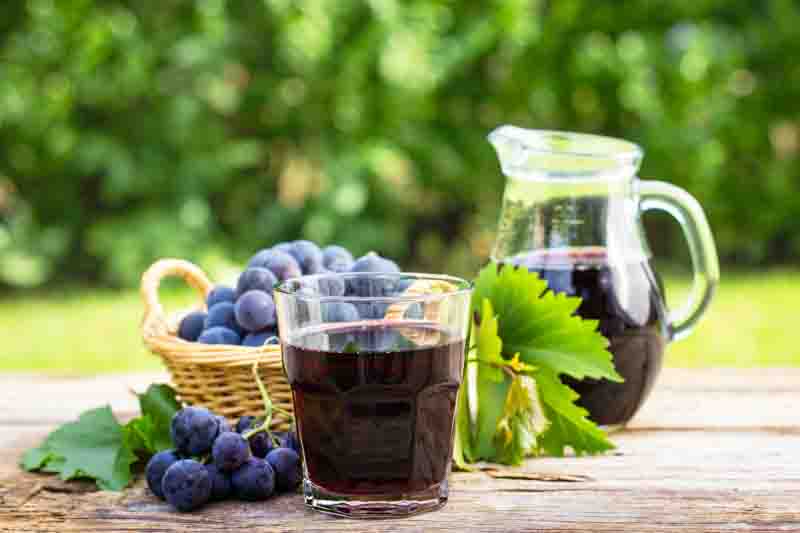
Whole grapes and grape juice are related, but they are not nutritionally interchangeable.
Whole grapes usually have the advantage because they contain fiber, which helps with fullness and slows digestion. Juice removes or reduces most of that fiber, which makes it easier to consume more sugar quickly without the same satiety. This is one reason whole fruit is generally preferred over juice in everyday nutrition guidance.
That does not make grape juice unhealthy. It simply means whole grapes are usually the stronger default choice, while grape juice can still have value as a complementary option when used in sensible amounts.
| Compound | Main Role | Why It Matters |
|---|---|---|
| Polyphenols | Plant protection compounds | These are the main reason grape juice is discussed in cardiovascular and antioxidant research. |
| Flavonoids | Antioxidant activity | They help support the body’s normal defense systems against oxidative stress. |
| Anthocyanins | Color-rich antioxidants | These pigments are especially abundant in dark purple grapes and contribute both color and antioxidant value. |
| Potassium | Fluid and muscle balance | A useful mineral found in many fruit juices, including grape juice. |
If health is your priority, the best option is usually 100% grape juice with no added sugars. Dark purple grape juice is often favored because darker grapes tend to contain more anthocyanins and related polyphenols than lighter varieties.
Look for labels that clearly say 100% juice rather than juice drink, juice beverage, or cocktail. Those products can sound similar on the shelf while being very different nutritionally. If the ingredient list is longer than expected or includes added sugars, you are no longer getting the cleanest version of grape juice’s potential benefits.
Homemade juice can also be a strong option because it gives you more control over sweetness and ingredients. If you want to make your own, keep your related content connected naturally, as in this guide on how to make grape juice at home.
A typical cup of 100% grape juice contains roughly 36 to 38 grams of naturally occurring sugar and very little fiber. That does not automatically make it unhealthy, but it does explain why portion size matters so much. Juice is easy to drink quickly, and many people consume much more than a standard serving without noticing.
For everyday use, a modest serving is usually the smartest approach. Many people do well with about 4 to 8 ounces at a time, especially when grape juice is paired with a meal, diluted with sparkling water, or used as part of a smoothie rather than consumed in large glasses throughout the day.
Because grape juice is concentrated in natural sugar, some people should be more deliberate with portion size. That includes people managing blood sugar, those trying to reduce calorie intake, and parents serving juice regularly to children.
It is also helpful to clear up a common confusion point. Grape juice is not the same as grapefruit juice. Grapefruit juice is the one known for interacting with a range of medications. Grape juice does not carry that same level of routine medication concern, although anyone with a specific medical condition or dietary restriction should still follow personalized advice from a clinician.
For many people, the best middle ground is simple. Choose pure grape juice, keep portions moderate, and treat it as part of a meal or snack rather than as an all-day beverage.
Grape juice deserves a place in the conversation about nutrient-rich beverages, but it deserves precise language too. Its strongest benefits come from antioxidant and polyphenol content, especially in purple grape juice. Its most credible health story centers on vascular support, oxidative stress protection, and overall dietary quality.
At the same time, grape juice is still juice. It is naturally high in sugar, low in fiber compared with whole grapes, and best used with intention rather than excess. That balanced truth is exactly what makes grape juice worth recommending in a serious, professional nutrition article.
Yes, 100% grape juice can be a healthy beverage in moderation. Its strongest nutritional advantage is its polyphenol and antioxidant content, especially in darker grape juices. However, it is also naturally high in sugar and very low in fiber compared with whole grapes.
The main health benefits of grape juice are related to its polyphenols and antioxidants. These compounds are most strongly discussed in connection with vascular support, antioxidant protection, and overall dietary quality.
Purple grape juice is often considered the better choice for health-focused nutrition because darker grapes usually contain more anthocyanins and other pigment-based polyphenols than lighter varieties.
Not necessarily. Whole grapes usually provide more fiber and better fullness, while grape juice offers convenience and concentrated grape polyphenols. Whole grapes are generally the stronger everyday choice, but grape juice can still fit into a balanced diet.
A modest serving is usually the smartest approach. About 4 to 8 ounces of 100% grape juice can fit into a healthy diet, but because it contains concentrated natural sugars, it is best consumed in moderation rather than in large daily amounts.
The healthiest option is usually 100% grape juice with no added sugars. Dark purple grape juice is often preferred because it tends to contain more antioxidant-rich anthocyanins and grape polyphenols.
Updated: April 2026 • Reviewed by Gardenia Editors
| Hardiness |
3 - 10 |
|---|---|
| Plant Type | Climbers, Fruits |
| Plant Family | Vitaceae |
| Genus | Vitis |
| Exposure | Full Sun |
| Maintenance | High |
| Water Needs | Average |
| Soil Type | Chalk, Loam, Sand |
| Soil pH | Alkaline, Neutral |
| Soil Drainage | Well-Drained, Moist but Well-Drained |
| Attracts | Bees, Birds |
| Hardiness |
3 - 10 |
|---|---|
| Plant Type | Climbers, Fruits |
| Plant Family | Vitaceae |
| Genus | Vitis |
| Exposure | Full Sun |
| Maintenance | High |
| Water Needs | Average |
| Soil Type | Chalk, Loam, Sand |
| Soil pH | Alkaline, Neutral |
| Soil Drainage | Well-Drained, Moist but Well-Drained |
| Attracts | Bees, Birds |
Create a membership account to save your garden designs and to view them on any device.
Becoming a contributing member of Gardenia is easy and can be done in just a few minutes. If you provide us with your name, email address and the payment of a modest $25 annual membership fee, you will become a full member, enabling you to design and save up to 25 of your garden design ideas.
Join now and start creating your dream garden!
Create a membership account to save your garden designs and to view them on any device.
Becoming a contributing member of Gardenia is easy and can be done in just a few minutes. If you provide us with your name, email address and the payment of a modest $25 annual membership fee, you will become a full member, enabling you to design and save up to 25 of your garden design ideas.
Join now and start creating your dream garden!