

Legumes is a food group most people recognize and many eat often, yet few can clearly define. Are they vegetables? Are they grains? Are beans and peas the same thing? And why do nutrition experts keep praising them as nutrition all-stars?
Let’s clear it all up. This guide explains what they are, the main types you’ll see, how they compare to vegetables and grains, and why they deserve a regular spot on your plate.
Legumes are edible seeds from pod-producing plants in the Fabaceae family, valued worldwide for their nutrition and versatility.
What Are Legumes?
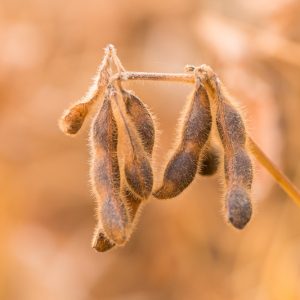
Botanically, these foods come from plants in the Fabaceae family. What makes this family distinctive is its fruit: a pod that typically splits open when mature, revealing seeds inside. Those seeds are what we eat.
In simple terms:
- The plant belongs to the Fabaceae family.
- The pod is the fruit.
- The seeds inside are the edible part.
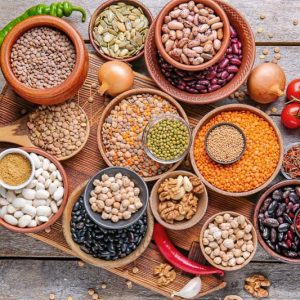
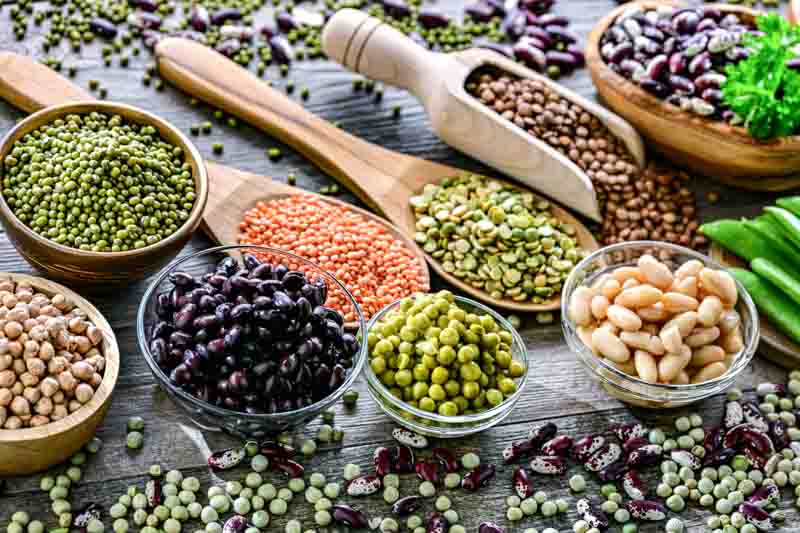
Beans, lentils, peas, chickpeas, and peanuts all come from this same plant family. They may look and cook differently, but they’re closely related in botanical terms.
If it’s an edible seed from a Fabaceae pod, it’s a legume.
Different Types of Legumes
This family is large, so grouping the most common foods makes it much easier to understand. While botanists classify species by structure, culinary and nutritional categories are usually more helpful in everyday life.
1. Beans
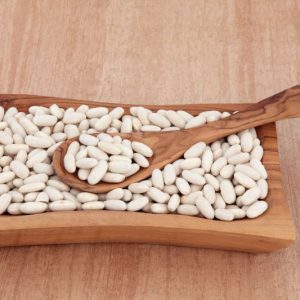
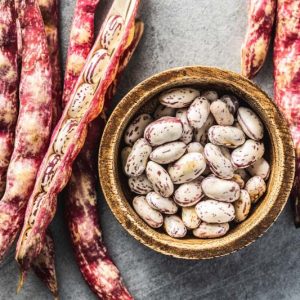
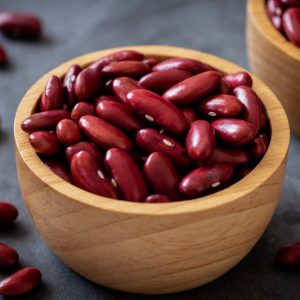
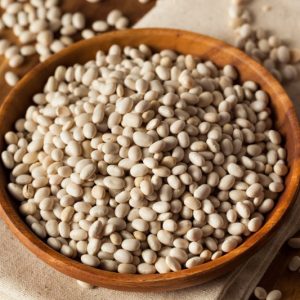
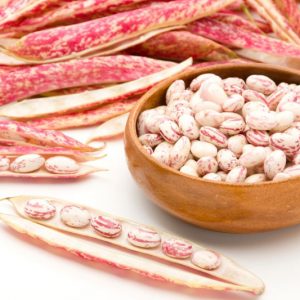
Beans are the most familiar category. They’re typically eaten dried and cooked, and they show up in soups, stews, salads, and main dishes.
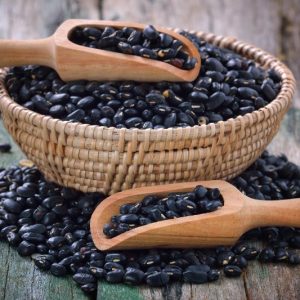
- Black beans
- Kidney beans
- Pinto beans
- Navy beans
- Cannellini beans
- Adzuki beans
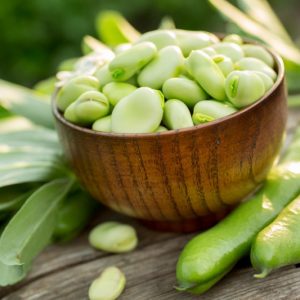
- Fava beans
2. Lentils
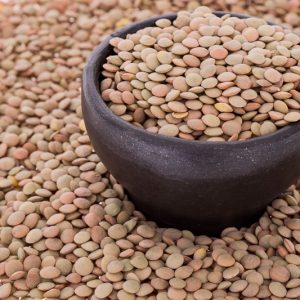
Lentils are small, lens-shaped seeds that cook quickly and usually don’t require soaking. They’re staples in many global cuisines.
- Green lentils
- Brown lentils
- Red lentils
- Yellow lentils
- Black lentils
3. Peas
Peas can be eaten fresh or dried. When dried, they behave more like beans nutritionally and are often used in hearty soups and stews.
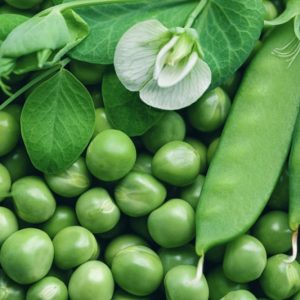
- Green peas
- Split peas
- Snow peas
- Sugar snap peas
4. Chickpeas
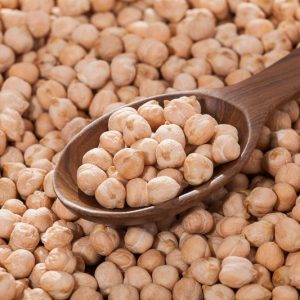
Chickpeas, also called garbanzo beans, are often treated as a category of their own because of their popularity and versatility in everyday cooking.
5. Peanuts
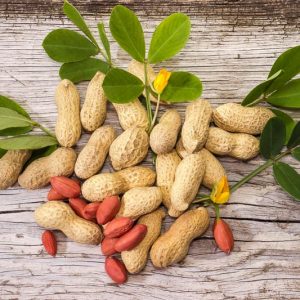
Surprisingly to many people, peanuts are not nuts. They develop underground in pods, unlike tree nuts.
List of Common Legumes
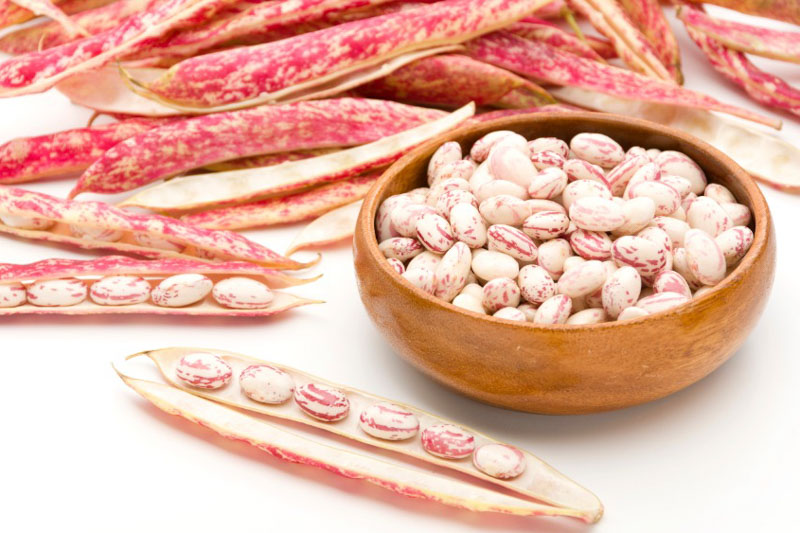
Here is a broad, practical list of varieties commonly eaten around the world:
- Black beans
- Kidney beans
- Pinto beans
- Navy beans
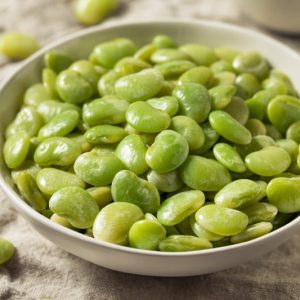
- Lima beans
- Fava beans
- Chickpeas
- Lentils (all types)
- Green peas
- Split peas
- Peanuts
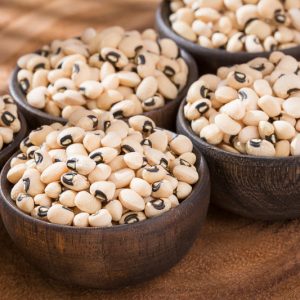
- Black-eyed peas
- Mung beans
- Soybeans
- Edamame
This covers the vast majority found in grocery stores and everyday cooking.
Cultivation
How are legumes grown and harvested?
These crops are cultivated across the globe, from small home gardens to vast agricultural systems, because they’re adaptable, productive, and uniquely beneficial to the soil. While specific practices vary by species, climate, and scale, most share similar biological needs and growth stages.
What truly sets this plant family apart is its relationship with soil-dwelling bacteria known as Rhizobium. These bacteria colonize nodules on the roots and enable the plant to convert atmospheric nitrogen into a usable form – a process called
nitrogen fixation.
This natural ability reduces the need for synthetic fertilizers and can improve soil health for future crops.
Climate and Growing Conditions
They’re grown in both temperate and tropical regions, with different species adapted to different conditions:
- Cool-season types: Peas and lentils thrive in cooler temperatures and are often planted early in spring.
- Warm-season types: Beans, soybeans, peanuts, and cowpeas require warmer soil and are planted after frost danger has passed.
Most prefer:
- Full sun exposure
- Well-drained soil
- Moderate moisture without waterlogging
Excessively wet soils can cause root rot, while prolonged drought during flowering and pod formation can significantly reduce yields.
Soil Preparation and Planting
They generally perform best in loose, well-aerated soils with good drainage. Unlike many crops, they require little to no nitrogen fertilizer, and excess nitrogen can reduce pod production by encouraging leaf growth instead.
Seeds are typically sown directly into the soil rather than transplanted, since many do not tolerate root disturbance well.
- Row planting: Common in commercial fields for dry beans, soybeans, and lentils.
- Hill or trellis planting: Used for climbing beans and peas in gardens.
In commercial agriculture, seeds may be inoculated with beneficial bacteria before planting to support effective nitrogen fixation, especially in soils where this family has not been grown recently.
Growth Stages
Most follow a predictable growth cycle:
- Germination: Seeds sprout once soil temperatures are suitable.
- Vegetative growth: The plant develops leaves and stems.
- Flowering: Flowers appear and are pollinated, often by insects.
- Pod set: Flowers develop into pods containing seeds.
- Maturation: Seeds fill out and either remain tender or dry fully.
Stress during flowering or pod formation, such as heat, drought, or nutrient imbalance, can sharply reduce yields.
Harvesting
Harvest methods depend on whether the crop is grown for fresh eating or for dry storage:
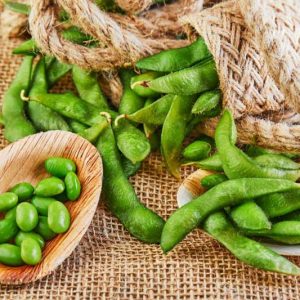
- Fresh: Green beans, snap peas, and edamame are harvested while pods are tender and seeds are immature.
- Dry: Lentils, chickpeas, dry beans, and peanuts are left on the plant until pods mature and dry.
In small-scale settings, dry harvests are often gathered by hand and air-dried before shelling. In commercial production, crops are mechanically cut, dried, and threshed to separate seeds from pods.
Crop Rotation and Sustainability
This family plays a key role in sustainable agriculture systems. Because it can leave behind nitrogen-rich residues in the soil, it is
frequently rotated
with nitrogen-hungry crops such as wheat, corn, or rice.
This practice:
- Reduces fertilizer needs
- Improves soil structure
- Helps break pest and disease cycles
This dual role, producing food while supporting soil fertility, is a major reason these plants have been cultivated for thousands of years and remain essential to both traditional and modern farming systems.
Vegetables vs Legumes
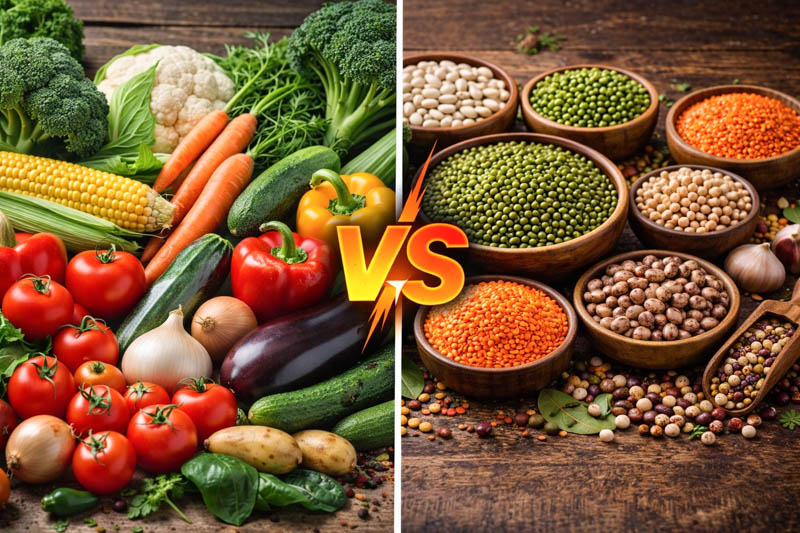
One of the most common questions is whether these foods count as vegetables. The short answer is: sometimes.
In cooking, they’re often treated like vegetables. Nutritionally, however, they behave differently, especially when eaten as dried beans, lentils, or split peas.
Compared with many vegetables, they tend to be higher in:
- Protein
- Complex carbohydrates
- Dietary fiber
- Iron and folate
Because of this, many dietary guidelines allow them to count in more than one category, depending on portion and how they’re used in a meal.
Culinary Uses
How are legumes used in cooking?
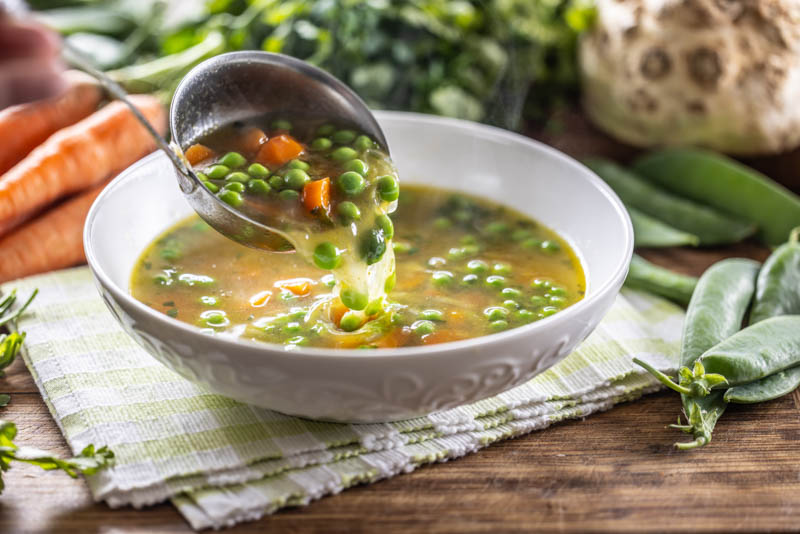
These are true kitchen workhorses. They can be creamy, hearty, crisp, blended, mashed, roasted, or simmered into silky soups. The key is knowing whether you’re working with fresh or dried forms.
- Fresh (green beans, snap peas, edamame) cook quickly: sautéed, steamed, stir-fried, or tossed into salads.
- Dried (lentils, chickpeas, dry beans, split peas) cook longer and often become the base for filling meals.
Here are common ways they show up in everyday cooking:
- Soups and stews: Lentil soup, split pea soup, bean chili.
- Salads and bowls: Chickpea salads, black bean bowls, lentil grain salads.
- Dips and spreads: Hummus, white bean dip, refried beans.
- Meatless mains: Bean burgers, lentil “meat” sauce, chickpea curry.
- Snacks: Roasted chickpeas, boiled edamame, peanuts.
Practical tip: many dried beans benefit from soaking, but lentils and split peas usually do not. If you want speed, canned beans are a great shortcut – just rinse them to reduce sodium and improve texture.
High Protein Legumes
They’re famous for protein content, especially in plant-based diets.
Some of the highest-protein options include:
- Soybeans and edamame
- Lentils
- Chickpeas
- Black beans
- Kidney beans
- Peanuts
While many do not contain all essential amino acids in perfect balance on their own, pairing them with grains makes this easy (for example, beans with rice or lentils with bread).
Nutritional Profile
What is the nutritional profile of legumes?
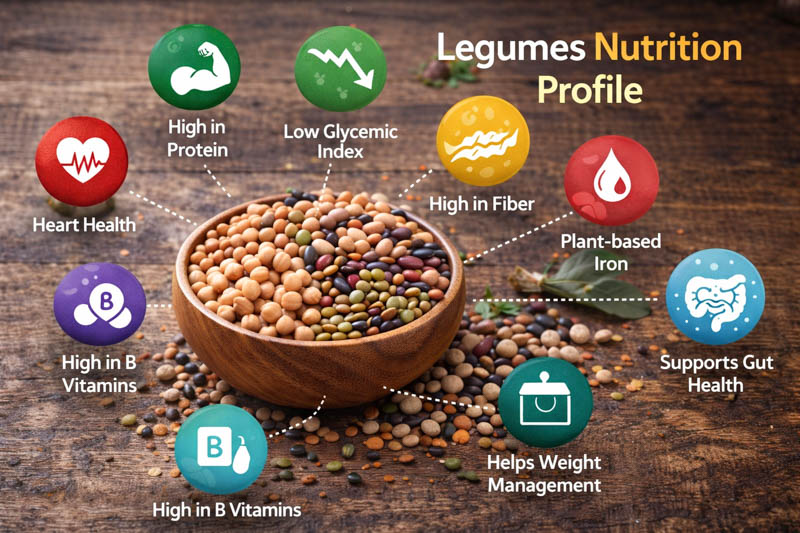
One reason they’re so widely recommended is a rare pairing: high protein and high fiber in the same food. That combination is a big reason they’re filling and supportive of balanced eating.
Most provide:
- Plant protein: Helps support muscle maintenance and satiety.
- Dietary fiber: Supports digestion and helps you feel full longer.
- Complex carbohydrates: A steady energy source compared with refined carbs.
- Key minerals: Often including iron, magnesium, potassium, and zinc.
- B vitamins: Especially folate, important for cell growth and metabolism.
Another helpful detail: these foods tend to be naturally low in saturated fat and often have a lower glycemic impact than many refined carbohydrate foods, especially when eaten as whole beans, lentils, or peas.
What is the healthiest legume to eat?
If you’re looking for a single “healthiest” option, the most accurate answer is:
the healthiest legume is the one you’ll eat consistently.
Different varieties shine in different ways.
That said, a few options often rise to the top nutritionally:
- Lentils: Quick cooking, high fiber, and a strong nutrient profile, an easy everyday choice.
- Chickpeas: Versatile and satisfying, great in salads, curries, and hummus.
- Soybeans (edamame): Higher protein than many and strong amino acid balance.
- Black beans: High fiber and rich in beneficial plant compounds.
What Is the Difference Between a Bean and a Legume?
This question comes up constantly, and the answer is refreshingly simple.
Legume is the broad category. A bean is one type within that category.
Think of it this way:
- Legume = the family name
- Bean = a specific member of that family
Lentils, peas, and peanuts belong to the larger group, but they are not beans. All beans, however, do belong to the legume family.
Peas Versus Beans
Peas and beans are closely related, but they differ in use and nutrition depending on how they’re eaten.
Fresh peas (like green peas or snap peas) are often treated as vegetables. Dried peas (like split peas) behave more like beans nutritionally.
Beans are most often eaten dried and cooked, making them denser in calories, protein, and fiber.
In short:
- Fresh peas = lighter, more vegetable-like
- Dried peas = nutritionally similar to beans
- Beans = denser, heartier
Are Legumes Grains?
No – these foods are not grains.
Grains come from grasses and include wheat, rice, oats, and corn. In contrast, legumes come from pod-producing plants with a different structure and nutrient profile.
While both can be rich in carbohydrates, this group typically provides much more protein and fiber than most grains.
Why Legumes Matter
They’re affordable, shelf-stable, environmentally friendly, and highly nutritious. They can support heart and digestive health and contribute to more sustainable agriculture thanks to nitrogen fixation in the soil.
From ancient civilizations to modern nutrition science, this food group has earned its place as a foundational staple.
Legumes are not a trend – they are a timeless cornerstone of healthy diets worldwide.