Create year-round privacy without choosing plants deer routinely destroy. Compare 10 deer-resistant evergreen shrubs for tall screens, narrow spaces, shade, moist soil, coastal gardens, and formal hedges. Use mature height, width, climate, growing conditions, and browsing risk to find a privacy screen that actually fits your garden.
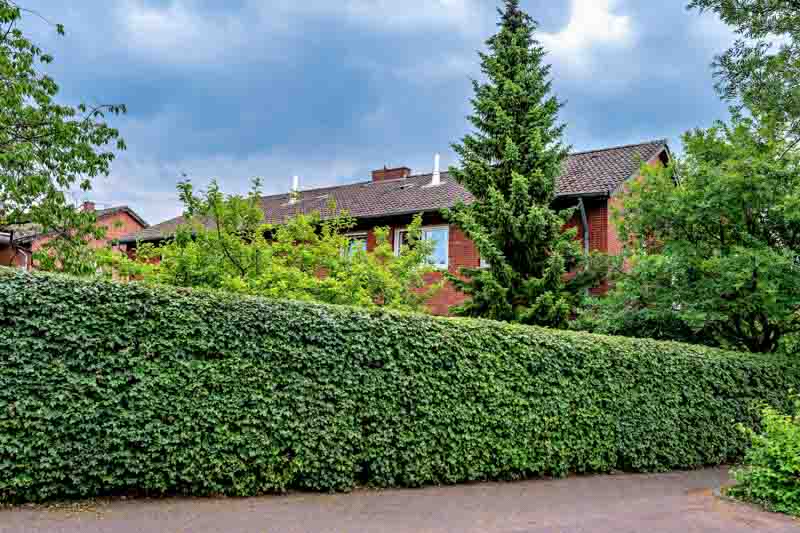


Good deer-resistant evergreen shrubs for privacy include holly osmanthus, Fortune’s osmanthus, Burkwood osmanthus, fragrant olive, Japanese plum yew, Chinese podocarpus, Dragon Lady holly, Chinese holly, upright Chinese junipers, inkberry holly, Japanese pieris, wax myrtle, Japanese false cypress, tall boxwoods, and Nevin’s barberry. The right choice depends on the height and width you need, your climate and growing conditions, and the level of deer pressure in your garden.
A shrub can be highly deer resistant and still make a poor privacy screen.
To work well for privacy, an evergreen needs enough mature height to block the view, enough foliage density to provide year-round coverage, a width that fits the available space, and growing requirements that match the site.
Deer resistance is therefore only one part of the decision.
This is why some familiar screening plants do not make the cut. American arborvitae and narrow cultivars such as ‘Emerald Green’ can create beautiful screens where deer pressure is low, but they are vulnerable to serious browsing where deer are common.
Gardenia’s 3 Tests for a Deer-Resistant Privacy Screen
1. Browse Test: Does the plant have an acceptably low risk of serious deer damage?
2. Space Test: Will its mature height and width provide the privacy you need without overwhelming the site?
3. Site Test: Will your climate, sun, soil, drainage, and moisture conditions support it?
Once a plant passes all three, choose among the suitable candidates by foliage, flowers, fragrance, texture, color, and garden style.
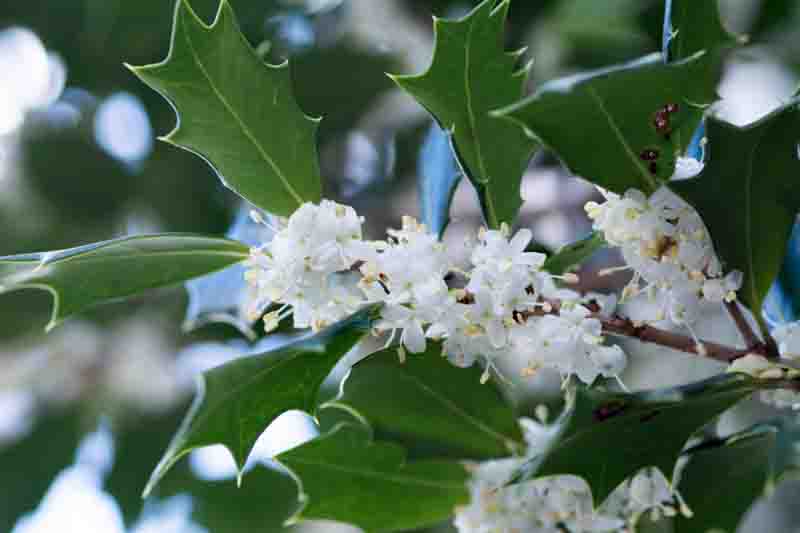
Holly osmanthus is an excellent broadleaf evergreen for mild-climate gardens. Its dense, leathery foliage is generally unattractive to deer and forms an effective year-round screen.
Depending on cultivar and growing conditions, plants can reach roughly 8-20 feet. Small white flowers add powerful fragrance in fall, making holly osmanthus especially attractive near patios, paths, and outdoor living areas.
Best fit: dense screens in sun to partial shade where fragrance and broadleaf evergreen foliage are desirable.
Fortune’s osmanthus develops into a substantial evergreen shrub or small tree and is a useful alternative to conifers when a tall broadleaf screen is preferred.
It typically reaches about 15-20 feet, develops dense evergreen foliage, and produces fragrant white flowers. Its size makes it especially useful where a screen needs to rise above head height rather than simply mark a boundary.
Best fit: tall broadleaf screens in sun or partial shade in relatively mild climates.
Burkwood osmanthus combines strong deer resistance with dense evergreen foliage and fragrant spring flowers. It is also more tolerant of dry shade than many conventional screening shrubs.
That combination makes it particularly useful along woodland edges, beside mature trees, or in partly shaded areas where sun-loving junipers and similar evergreens may struggle.
Best fit: dry shade, woodland edges, fragrant evergreen hedges, and difficult partly shaded sites.

Fragrant olive combines good deer resistance with exceptionally fragrant flowers. Its tiny blooms can perfume a surprisingly large area.
Growing roughly 10-20 feet tall, it develops dense, leathery evergreen foliage and can be used as an informal hedge or substantial privacy screen in climates with mild winters.
Best fit: fragrant tall screens near patios, entrances, paths, and outdoor living areas.

Chinese podocarpus is particularly useful where privacy is needed but planting width is limited. Its narrow, upright habit can reach roughly 8-15 feet tall while remaining only about 2-4 feet wide.
It has good deer resistance and also tolerates partial shade, drought, and salt once established. Its fine-textured evergreen foliage gives it a softer appearance than many narrow conifers.
Best fit: narrow warm-climate screens, side yards, partial shade, and coastal gardens.
Dragon Lady holly provides substantial height without requiring a very wide planting strip. It can reach approximately 10-20 feet tall while remaining about 4-6 feet wide.
Its dense, prickly evergreen foliage creates a strong visual barrier and makes it useful along property lines, beside patios, or wherever vertical privacy is needed without excessive spread.
Best fit: narrow property lines and vertical screens in sun to partial shade.
Chinese juniper includes everything from spreading shrubs to tall, narrow screening plants. Upright cultivars combine good deer resistance with excellent tolerance of sun, drought, and well-drained soils.
For tight spaces, ‘Spartan’ can reach about 15-20 feet while remaining only around 4-5 feet wide.
Best fit: narrow sunny screens, dry sites, and lower-maintenance landscapes.
Chinese holly is a tough broadleaf evergreen with dense, often spiny foliage and good resistance to deer, heat, and drought once established.
Mature size varies considerably by cultivar. ‘Needlepoint’, for example, can develop into a substantial screening shrub in warm climates.
Chinese holly has escaped cultivation and is considered invasive in some parts of the southeastern United States, so check local invasive-plant guidance before planting.
Best fit: tough broadleaf screens in hot climates where deer and summer heat are recurring challenges.
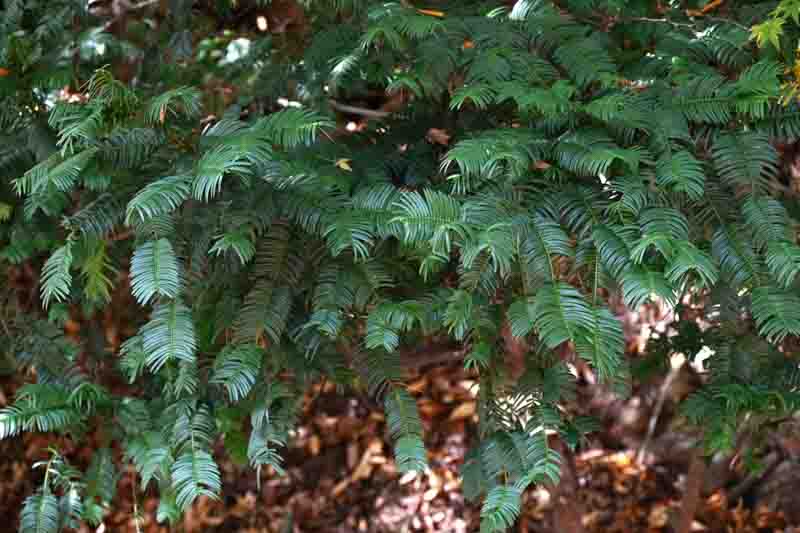
Japanese plum yew is particularly valuable where shade rules out many junipers and other screening conifers. It offers strong deer resistance along with soft, dark evergreen foliage.
For screening, choose an upright form. ‘Fastigiata’ can reach roughly 10-12 feet and provides a conifer-like appearance without the heavy deer browsing associated with true yews.
Best fit: shaded or partly shaded screens, woodland gardens, and warm, humid climates.
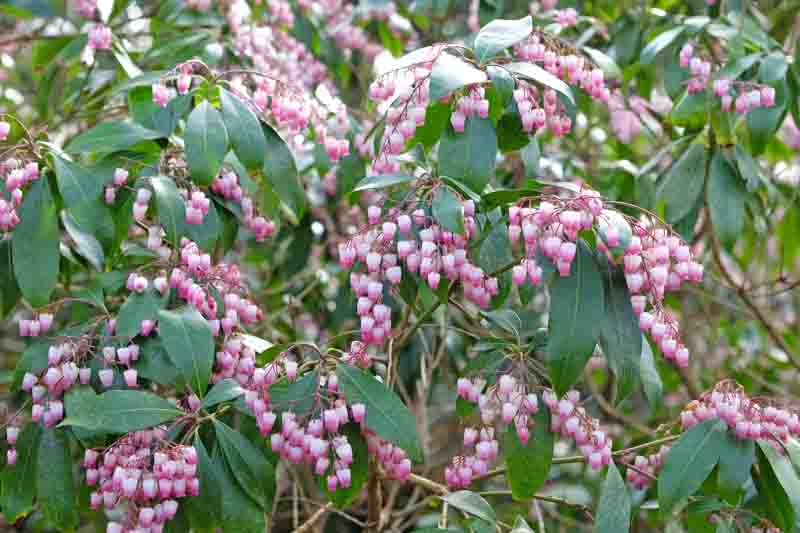
Japanese pieris is a broadleaf evergreen with good deer resistance, glossy foliage, colorful new growth, and graceful clusters of bell-shaped flowers in early spring.
The species can reach roughly 6-10 feet tall, although many cultivars stay considerably smaller. It performs best in partial shade and acidic, humus-rich, moist but well-drained soil. It is less suited to hot, exposed, dry sites.
Because cultivar size varies so widely, choose a full-size form if privacy is the goal rather than one of the many compact cultivars intended for containers or small gardens.
Best fit: medium-height screens in partial shade, woodland gardens, and acidic soils.
Inkberry is a North American native broadleaf evergreen useful for medium-height hedges and informal screens. Its deer resistance is generally favorable, although browsing pressure can vary by location.
It usually reaches about 5-8 feet and performs particularly well in acidic soils that stay moist. Cultivar choice matters: many newer selections have been bred to remain compact and are too short for meaningful privacy.
Best fit: native medium screens, acidic soils, and moist sites.

Wax myrtle is an excellent informal evergreen screen for warmer regions. It has strong deer resistance and tolerates wind, salt, heat, and a range of landscape conditions.
Mature height varies considerably with climate. Plants may reach 10-20 feet or more in warm regions, while colder conditions can make the foliage less reliably evergreen.
Fire-risk caution: Wax myrtle has highly flammable foliage and stems. Avoid planting it within the defensible space immediately around homes in wildfire-prone landscapes.
Best fit: warm-climate informal screens, coastal exposure, wind, salt, and wildlife-oriented landscapes where fire risk is not a concern.
Japanese false cypress offers softer evergreen texture than many junipers and generally has a favorable deer-resistance record.
Choose the cultivar, not simply the species. Some selections remain compact mounds, while others become substantial shrubs or trees. A dwarf cultivar will never provide meaningful privacy, while a large-growing selection may overwhelm a small garden.
Best fit: mixed screens and gardens where a softer conifer texture is preferred.
Boxwoods are usually associated with low formal hedges, but taller selections can create effective medium-height screening and have a strong deer-resistance record.
‘Dee Runk’ and ‘Graham Blandy’ are useful narrow upright forms. Boxwood blight risk should be considered where the disease is prevalent.
Best fit: formal 5-8 foot hedges, architectural planting, and narrow spaces.
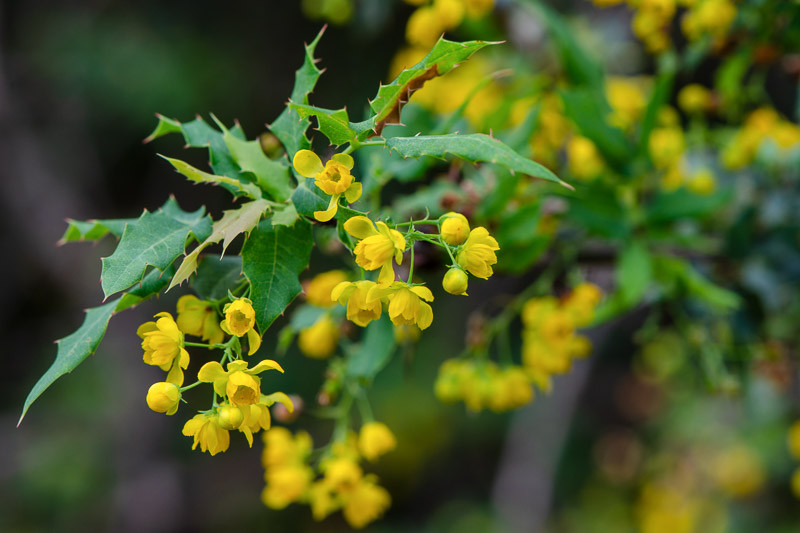
Nevin’s barberry is an evergreen California native with pale blue-green, spiny foliage, yellow spring flowers, and red berries that attract birds.
It grows roughly 8-12 feet tall and wide, tolerates drought once established, and can form a dense, almost impenetrable informal hedge or screen. Its combination of deer resistance, evergreen foliage, and low water needs makes it particularly valuable in dry western landscapes.
Because this is a broad shrub as well as a tall one, it needs enough room to develop naturally. It is not the right choice for a narrow side yard or tightly clipped formal hedge.
Best fit: dry California gardens, native landscapes, wildlife gardens, slopes, and broad informal screens.

Loropetalum combines evergreen foliage, good deer resistance, and colorful flowers. The species can reach 6-8 feet, but many modern cultivars have been bred to stay much smaller, so mature size needs to be checked carefully.
‘Ever Red’, for example, combines burgundy foliage with vivid red flowers and works well where a lower ornamental screen is sufficient.
Best fit: approximately 5-6 foot flowering screens in warm climates.

Oleander is an exceptionally tough screening shrub for hot climates. It combines strong deer resistance with tolerance of heat, drought, salt, and coastal exposure.
‘Hardy Red’, for example, forms a dense flowering evergreen shrub in mild climates.
Toxicity caution: All parts of oleander are highly poisonous if eaten, and burning the plant can produce harmful smoke. Consider this carefully around children, pets, livestock, and areas where cut material may be burned.
Best fit: hot, dry, coastal, or Mediterranean-climate screens where its toxicity can be safely managed.
Want more choices? Gardenia’s Plant Finder includes many additional evergreen, deer-resistant shrubs suitable for hedges and screens. The plants above are a curated shortlist selected not simply because deer tend to avoid them, but because their mature height, density, and growth habit can also provide useful privacy.
One of the most common screening mistakes is choosing an attractive shrub first and worrying about mature dimensions later. Reverse that process.
Width can be even more limiting than height. A shrub that naturally grows 10 feet across is a poor choice for a 3-foot planting strip, regardless of how resistant it is to deer.
Choose mature size, not nursery size. A successful privacy screen should fill the space when mature without requiring constant pruning simply to keep it away from a path, driveway, window, or neighboring property.
Passing the Browse Test and Space Test is not enough. The shrub also has to pass the Site Test.
For full sun and relatively dry conditions: upright Chinese junipers are among the strongest choices once established.
For shade: Japanese plum yew and Burkwood osmanthus deserve particular attention.
For partial shade and acidic soil: Japanese pieris is especially useful where the soil stays moist but drains well.
For partial shade and a narrow space: Chinese podocarpus is particularly useful in warmer climates.
For acidic, moist soil: inkberry is a strong native choice.
For hot, humid climates: Japanese plum yew, Chinese podocarpus, wax myrtle, Chinese holly, and osmanthus are worth considering.
For dry California gardens: Nevin’s barberry combines native value, low water needs, and evergreen screening, provided there is room for its broad mature spread.
For coastal exposure: wax myrtle, Chinese podocarpus, and suitable junipers tolerate salt better than many conventional evergreen shrubs.
For a very narrow strip: Dragon Lady holly, Chinese podocarpus, ‘Spartan’ juniper, or a columnar boxwood make more sense than continually shearing a naturally broad shrub.
A plant that survives deer but struggles with your soil, drainage, winter temperatures, summer heat, or available light will still fail as a privacy screen.
A continuous row of one cultivar can look elegant, but it also concentrates risk. If disease, insects, extreme weather, or unsuitable growing conditions affect that one plant, the entire screen can decline at once.
A mixed screen spreads that risk among several plants. It can also create a more natural-looking boundary, with changes in foliage texture, height, fragrance, flowers, and seasonal interest.
It does not have to look chaotic. Repeat two or three compatible evergreens, place taller plants toward the back or where the greatest screening is required, and use medium shrubs to fill gaps and soften the foreground.
The important word is compatible. Combining plants with very different light, soil, drainage, or moisture requirements does not create a resilient planting.
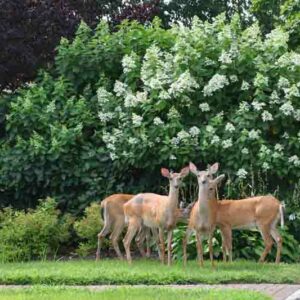
Several excellent privacy plants are poor choices where deer pressure is consistently high.
American arborvitae (Thuja occidentalis), including ‘Emerald Green’, can suffer substantial browsing, particularly during winter when other food is scarce.
Yews (Taxus) are classic evergreen hedge plants, but deer readily browse them.
Evergreen foliage alone is therefore not evidence of deer resistance.
If you particularly want arborvitae, deer response varies among Thuja. Gardenia’s arborvitae and deer guide explains the important differences between American arborvitae and alternatives such as Green Giant.
Rather than looking for the single “most deer-resistant” evergreen, narrow the choices in this order:
Use Gardenia’s 3 Tests: first pass the Browse Test, then the Space Test, then the Site Test. The best deer-resistant screening plant is not simply the plant deer dislike most. It is the plant that remains functional, fits its allotted space, and thrives in the conditions you actually have.
Explore Gardenia’s Deer-Resistant Plants to browse plants with lower browsing risk.
Use the Gardenia Plant Finder to combine deer resistance with evergreen foliage, hardiness, sun exposure, soil, drainage, water needs, mature height, mature spread, and other requirements. This is the easiest way to move from a general shortlist to plants suited to your own garden.
Browse Gardenia’s Plants for Hedges and Screens when privacy is the primary design goal.
Then use the Gardenia Design Tool to check whether plants in a mixed screen share compatible growing conditions and whether their mature dimensions fit the available space.
Strong choices include osmanthus, Japanese plum yew, Chinese podocarpus, Dragon Lady holly, Chinese holly, upright Chinese junipers, inkberry holly, Japanese pieris, wax myrtle, Japanese false cypress, tall boxwoods, and Nevin’s barberry. The best choice depends on required height, available width, climate, light, soil, drainage, and local deer pressure.
Japanese plum yew is one of the strongest choices for shade because it tolerates lower light than many screening conifers. Burkwood osmanthus is useful for dry shade, while Japanese pieris is a good choice for partial shade with acidic, moist but well-drained soil.
Chinese podocarpus, Dragon Lady holly, Spartan Chinese juniper, and narrow upright boxwoods are useful choices where planting width is limited. Compare mature width carefully before planting.
American arborvitae and Emerald Green arborvitae are vulnerable to deer browsing and are risky choices where deer pressure is high. Other Thuja types, including Green Giant, have more favorable resistance records, so the exact species or hybrid matters.
Yes. Boxwood has a strong deer-resistance record, but cultivar choice matters for privacy because many boxwoods remain low. Upright cultivars can provide useful medium-height evergreen screening in narrow spaces.
Inkberry holly is a useful native choice for acidic soils that stay moist. Japanese pieris also performs well in acidic, moist but well-drained soil, especially in partial shade.
Nevin’s barberry is a California native evergreen that reaches roughly 8-12 feet, tolerates drought once established, and can form a broad informal screen or hedge. It needs more width than a narrow columnar screening shrub.
A single-species hedge can work, but mixed screens can reduce the risk that one pest, disease, weather event, or site problem damages the entire planting. Choose species with compatible climate, light, soil, drainage, and moisture requirements.
No. Deer resistance describes relative browsing risk, not immunity. Hungry deer may sample normally resistant plants, and young plants can be especially vulnerable. Temporary protection may still be useful where deer pressure is severe.
Updated: September 2026 – Reviewed by Gardenia Editors
| Plant Type | Shrubs |
|---|---|
| Genus | Buxus, Chamaecyparis, Ilex, Juniperus, Loropetalum, Nerium, Osmanthus |
| Characteristics | Evergreen |
| Tolerances | Deer |
| Landscaping Ideas | Hedges And Screens |
| Plant Type | Shrubs |
|---|---|
| Genus | Buxus, Chamaecyparis, Ilex, Juniperus, Loropetalum, Nerium, Osmanthus |
| Characteristics | Evergreen |
| Tolerances | Deer |
| Landscaping Ideas | Hedges And Screens |
Create a membership account to save your garden designs and to view them on any device.
Becoming a contributing member of Gardenia is easy and can be done in just a few minutes. If you provide us with your name, email address and the payment of a modest $25 annual membership fee, you will become a full member, enabling you to design and save up to 25 of your garden design ideas.
Join now and start creating your dream garden!