Learn exactly what grows best in your Minnesota garden. Explore USDA planting zones 3–5, key frost dates, and an interactive planting calendar that walks you month by month. From hardy vegetables to native perennials, this guide helps you plan, plant, and protect a beautiful, cold-climate landscape with confidence.


Gardening in Minnesota is a true four-season experience. From long, snowy winters to the burst of warm summer sunshine, Minnesota planting zones cover a surprisingly varied range of USDA hardiness zones, running roughly from zone 3a to zone 5a, with small pockets of zone 5b in the warmest southern areas. This guide helps you understand your local Minnesota growing zone, choose the right plants, and time your garden perfectly for the Upper Midwest climate.
Minnesota may be known for cold winters, but its planting zones vary widely from the Canadian border down to the Mississippi River valley. In general, Minnesota hardiness zones range from about zone 3a in the far north to zone 5b in the warmer Twin Cities metro and southeastern corner.
The USDA Plant Hardiness Zone Map for Minnesota shows how winter temperatures shift from frigid northern counties to more temperate southern farmland and river valleys. This map helps you determine which perennials, shrubs, and trees can reliably survive a Minnesota winter.
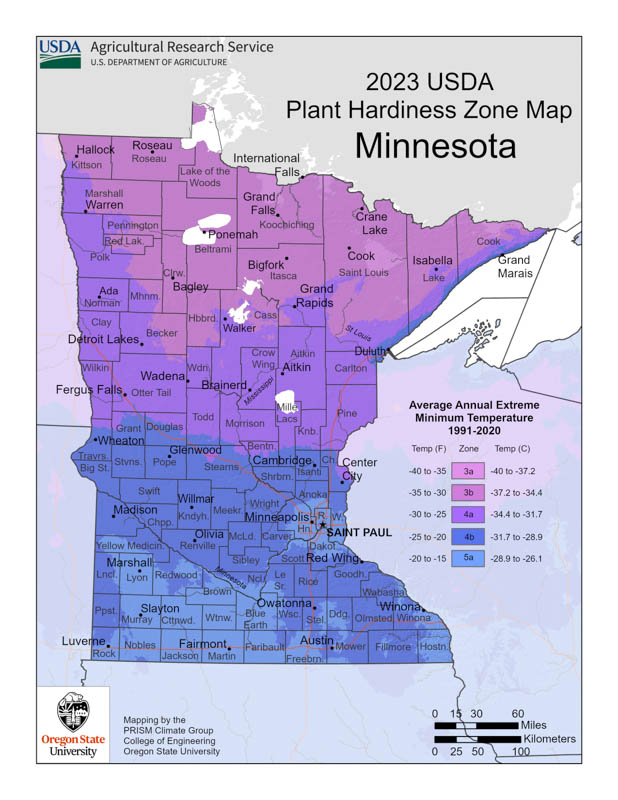
A simplified Minnesota planting zone map based on the USDA 2023 Hardiness Zone Map, using 1991–2020 climate data.
Use it together with your ZIP code to find your exact Minnesota garden zone. Look up your Minnesota planting zone by ZIP code using the USDA tool, then return here or visit our Plant Finder for zone-friendly plant suggestions.
Minnesota’s climate shifts quickly as you move south, so viewing the state in regions makes understanding its garden zones easier.
This is the coldest region, including areas around International Falls, Ely, and Grand Rapids. Winters are long, frost arrives early, and only the hardiest plants survive outdoors. Gardeners often rely on short-season vegetables and cold-tolerant perennials.
Stretching from St. Cloud to Brainerd and the lakes region, central Minnesota offers a classic northern gardening climate. Summers are warm, winters cold but manageable, and a wide variety of vegetables, ornamentals, and hardy fruit trees thrive.
This region includes Rochester, Mankato, and surrounding farmland. Winters are milder, frost dates shift later, and gardeners enjoy a longer growing season. Many fruit trees, perennial flowers, and productive vegetable gardens thrive here.
Minneapolis–St. Paul and the driftless region near Winona and Red Wing experience the state’s mildest winters. A rich variety of vegetables, ornamentals, shrubs, and fruit trees flourish here, including many that struggle farther north.
Frost dates are crucial in Minnesota, where even southern regions can see surprise cold snaps. The averages below help you plan seed starting, transplanting, and fall garden timing.
| Region / City | Average Last Spring Frost | Average First Fall Frost | Approx. Frost-Free Days |
|---|---|---|---|
| International Falls (North) | Late May | Mid-September | ~115 days |
| Duluth (Northeast) | Mid-May | Early October | ~140 days |
| St. Cloud (Central) | Early May | Early October | ~150 days |
| Minneapolis–St. Paul (Metro) | Late April | Mid-October | ~165 days |
| Rochester (Southeast) | Late April | Late October | ~170 days |
Use these frost dates as a starting point—your microclimate may be warmer or colder depending on elevation, lakes, forests, and urban heat influences.
Once you know your Minnesota planting zone, choosing the right plants becomes easy. Focus on cold-hardy varieties, short-season crops, and natives adapted to winter chill.
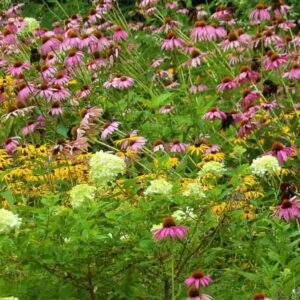
Minnesota native plants are perfectly adapted to cold winters and short summers. Consider native perennials, wildflowers, and shrubs to create a low-maintenance, pollinator-friendly landscape.
Tap a month to see what to plant in Minnesota by zone. Use the quick filters below as a guide—always adjust for your local frost dates and microclimate.
Gardening in Minnesota means working with short seasons, unpredictable springs, and cold winters. These tips apply statewide:
Now that you understand your Minnesota planting zone, you’re ready to choose plants that match your climate, plan around frost dates, and build a thriving Upper Midwest garden. Want to compare Minnesota to other states? Visit our national USDA planting zone guide to explore growing zones across the United States.
Most of Minnesota falls between USDA hardiness zones 3b and 4b. Northern counties are significantly colder, while the Twin Cities and southeastern Minnesota experience milder zone 4b–5a conditions.
Minneapolis–St. Paul is generally classified as USDA zone 4b, with some urban microclimates reaching zone 5a due to heat retention from buildings and pavement.
Duluth is typically in USDA zone 4a. Its proximity to Lake Superior moderates temperatures slightly, reducing extreme winter lows compared to inland areas of similar latitude.
Rochester falls within USDA zones 4b to 5a. It has a longer frost-free period than much of the state, providing favorable conditions for many vegetables and fruit trees.
Northern Minnesota, including cities like International Falls, Ely, and Roseau, lies in USDA zones 3a to 3b. These are the coldest zones in the state, with the shortest growing seasons.
Yes. Many cold-hardy fruit trees thrive in Minnesota, including apples, plums, pears, cherries, and apricots. Success depends on selecting varieties rated for zones 3–5 and ensuring proper winter protection.
Yes. Frost dates are essential for timing planting and harvesting, as Minnesota has one of the shortest growing seasons in the United States. Frost can occur into May in many regions and can return as early as September in the north.
Yes. Lakes, forests, hills, valleys, and urban heat islands all create microclimates that can make a location warmer or colder by a half-zone or more. These variations affect plant survival and frost timing.
Cold-hardy perennials, fast-maturing vegetables, and native species grow especially well. Common reliable choices include coneflower, black-eyed Susan, daylilies, hostas, radishes, peas, kale, and hardy apple varieties.
Use the USDA Plant Hardiness Zone Lookup Tool and enter your ZIP code. Combine the zone information with local frost dates and observations of sunlight, wind, and soil conditions to determine the most accurate picture of your garden’s climate.
Updated: December 2025 • Reviewed by Gardenia Editors
| Hardiness |
3 - 5 |
|---|---|
| Native Plants | United States, Minnesota |
Photo: 123rf
Create a membership account to save your garden designs and to view them on any device.
Becoming a contributing member of Gardenia is easy and can be done in just a few minutes. If you provide us with your name, email address and the payment of a modest $25 annual membership fee, you will become a full member, enabling you to design and save up to 25 of your garden design ideas.
Join now and start creating your dream garden!
Create a membership account to save your garden designs and to view them on any device.
Becoming a contributing member of Gardenia is easy and can be done in just a few minutes. If you provide us with your name, email address and the payment of a modest $25 annual membership fee, you will become a full member, enabling you to design and save up to 25 of your garden design ideas.
Join now and start creating your dream garden!