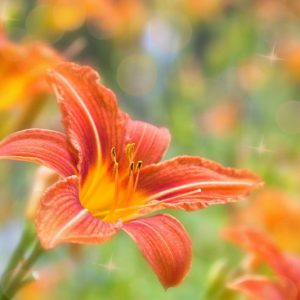
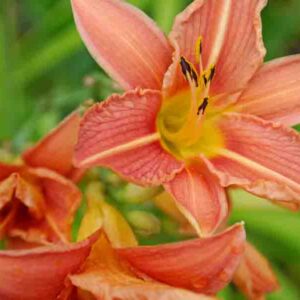
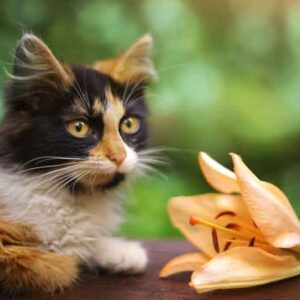
Daylilies may be beautiful, but they can cause severe, potentially fatal kidney injury in cats. Learn which Hemerocallis are dangerous, what parts pose a risk, how poisoning symptoms develop, what to do after suspected exposure, and how to keep cats safe around daylilies in gardens and homes.
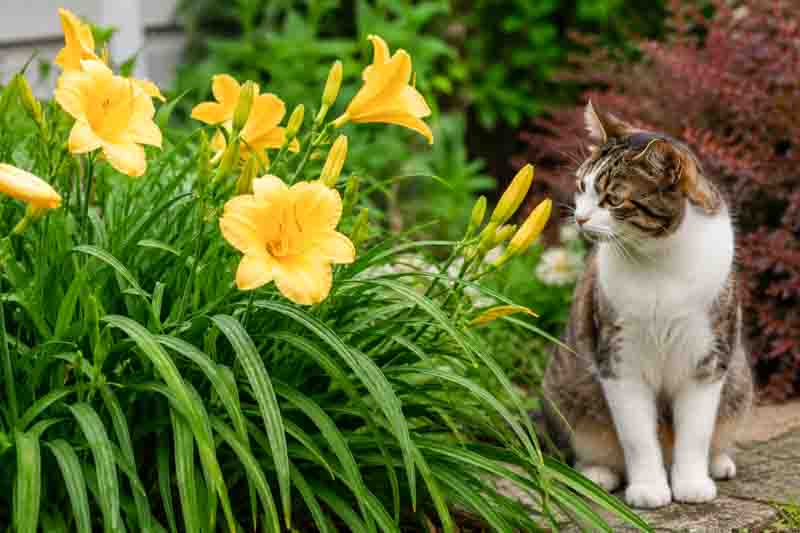


If you have a cat, daylilies (Hemerocallis) are one garden plant you need to take seriously. Although daylilies are easy-care perennials and enormously popular in summer borders, they can cause severe, potentially fatal acute kidney injury in cats.
The danger is easy to underestimate because daylilies are not true lilies. Botanically, Hemerocallis is entirely different from true lilies (Lilium). For cats, however, that distinction does not make them safer. Both groups are associated with the same life-threatening form of kidney toxicity.
Exposure does not have to involve a cat eating a large portion of the plant. Even small amounts of daylily material can be dangerous, and pollen exposure should also be taken seriously. If you suspect your cat has chewed a daylily, licked pollen from its coat, or otherwise contacted the plant, seek veterinary care immediately rather than waiting for symptoms.
This is a veterinary emergency: A cat that may have chewed, licked, or otherwise been exposed to a daylily should receive prompt veterinary assessment even if it appears completely normal. Early treatment offers the best chance of preventing irreversible kidney damage.
Daylilies belong to the genus Hemerocallis. Veterinary poison-control sources treat Hemerocallis species as dangerous to cats, so there is no sound basis for assuming that a particular species, flower color, registered cultivar, or modern hybrid is safe.
This includes familiar garden daylilies such as:
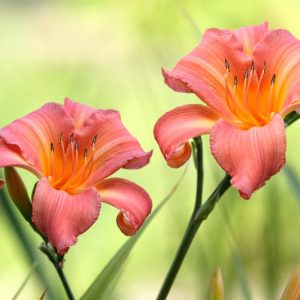
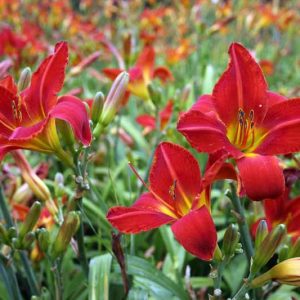
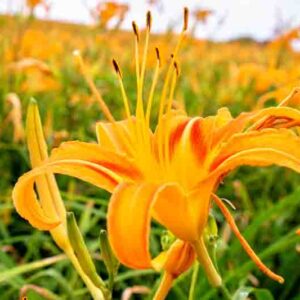
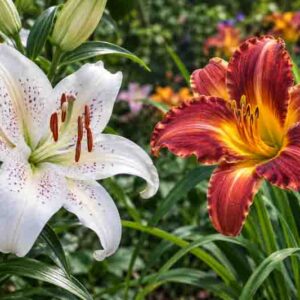
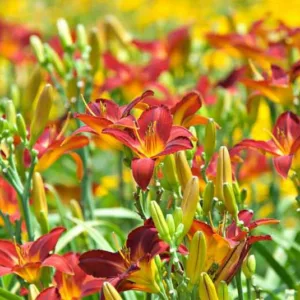
Flower form and color also do not provide a safety clue. Yellow, orange, pink, red, purple, near-white, double, spider, and other daylily types should all be kept away from cats.
Do not use cultivar names to judge safety: A daylily sold under a familiar ornamental name is still a Hemerocallis. When cat safety is involved, the botanical genus matters more than the cultivar name.
For practical cat safety, treat the entire daylily as hazardous. Leaves, stems, flowers, roots, and other plant material should not be available for chewing.
Pollen also deserves attention. A curious cat may brush against an open flower, collect pollen on its face or coat, and then swallow it while grooming. Visible daylily pollen on a cat should therefore be treated as a possible exposure rather than dismissed because the cat was not seen eating the plant.
Outdoor exposure is especially easy to overlook. Cats that roam through perennial beds may chew grass-like daylily leaves, investigate flowers, or walk through clumps without an owner witnessing the contact.
Do not wait for proof of ingestion. If your cat has been around a daylily and you find chewed foliage, damaged flowers, pollen on the coat, or other evidence of possible contact, call a veterinarian promptly.
The toxic principle responsible for lily and daylily poisoning has not been fully identified, but the clinical effect is well established. Cats are unusually susceptible, and exposure can damage renal tubular cells – cells that are essential to normal kidney function.
As kidney damage progresses, the kidneys lose their ability to regulate fluids and remove waste products from the bloodstream. Without prompt treatment, acute kidney injury can progress to severe kidney failure and death.
This sensitivity appears to be particularly important in cats. Dogs are not known to develop the characteristic severe kidney failure associated with Hemerocallis exposure in cats, although eating unfamiliar plant material can still cause gastrointestinal problems and any concerning exposure should be discussed with a veterinarian.
The dangerous part is that a cat may appear relatively well immediately after exposure. Kidney injury can begin before an owner realizes how serious the situation has become.
Early signs can begin within hours and may initially look like an ordinary stomach upset. Because the most serious consequence is developing kidney injury, known or suspected exposure should trigger veterinary care before severe symptoms appear.
| Approximate Stage | Possible Signs |
|---|---|
| First few hours | Vomiting, drooling or salivation, loss of appetite, reduced activity, and lethargy |
| About 12-30 hours | Ongoing vomiting, dehydration, lethargy, and increased urination as kidney injury develops |
| As kidney failure progresses | Weakness and worsening illness; urine production may eventually fall sharply or stop in severe cases |
Do not use the absence of symptoms as reassurance. A cat exposed recently to a daylily may still look completely normal while the window for the most effective treatment is narrowing.
Apparent improvement can be misleading: Early vomiting may lessen while kidney damage continues to develop. Never cancel or delay veterinary care simply because a cat seems better after a suspected daylily exposure.
If daylily exposure is possible, treat the situation as an emergency even if your cat has no symptoms.
Do not induce vomiting or give home remedies unless a veterinarian specifically instructs you to do so. Prompt professional assessment and appropriate decontamination are far safer than attempting treatment at home.
Treatment depends heavily on how recently the exposure occurred and whether kidney injury has already begun. Cats presented soon after exposure may undergo veterinary decontamination designed to limit absorption, followed by supportive care and close monitoring.
Veterinarians may perform blood chemistry and urine testing to establish baseline kidney function and repeat those tests during hospitalization. Intravenous fluids are commonly used to maintain hydration and support kidney function while the cat is monitored for changes in urine production and renal values.
If severe kidney injury has already developed, treatment becomes considerably more difficult. Cats producing very little urine or no urine may require advanced treatment, including dialysis where available.
FDA guidance emphasizes that treatment should begin as soon as possible after exposure because the likelihood of irreversible kidney failure rises sharply once treatment is delayed.
Timing is critical: The prognosis is far better when veterinary treatment begins early, before severe kidney injury develops. Waiting until a cat becomes obviously ill can dramatically reduce the chance of a good outcome.
Yes. This is one of the most important points for cat owners to understand.
A daylily and a true lily are botanically very different plants:
For the gardener, those differences matter enormously. For a cat exposed to either plant, however, both should be treated as veterinary emergencies because both can cause severe acute kidney injury.
Not sure what kind of “lily” you have? Use the plant’s growth habit, foliage, and flowers as identification clues – but if a cat may have contacted either Hemerocallis or Lilium, seek veterinary care immediately rather than waiting for a definitive identification.
| What You See | Likely Plant | Cat Risk |
|---|---|---|
| Long, strap-shaped leaves forming fans at ground level; no leafy upright flower stem; fleshy roots and crown | Daylily – Hemerocallis | Emergency – severe acute kidney injury |
| Upright stem carrying leaves along its length; plant grows from a scaly bulb; flowers often last several days | True lily – Lilium | Emergency – severe acute kidney injury |
| Broad, glossy leaves from the base; white or cream hood-like spathe surrounding a central spike | Peace lily – Spathiphyllum | Toxic, but different mechanism – painful oral and gastrointestinal irritation |
| Arrow- or heart-shaped leaves; funnel-shaped colorful or white spathe around a central spike | Calla lily – Zantedeschia | Toxic, but different mechanism – oral and gastrointestinal irritation |
| Low-growing plant with broad leaves and arching flower stems carrying small, nodding white bell-shaped flowers | Lily of the valley – Convallaria | Potentially serious – cardiac glycosides can affect heart rhythm |
Gardenia’s safety rule: Identification helps explain the risk, but it should never delay treatment. If the plant could be a true lily or daylily and a cat may have been exposed, contact a veterinarian immediately.
Remember: Plants called “lilies” are not necessarily botanically related and do not all cause the same type of poisoning. Peace lilies, calla lilies, and lily of the valley are also toxic to cats, but their toxic effects differ from the severe acute kidney injury associated with Hemerocallis and Lilium.
For a closer visual comparison of the two kidney-toxic groups, see Lily or Daylily? How to Tell the Difference.
Yes. Unlike true lilies, which are especially common in florist arrangements, daylilies are overwhelmingly familiar as landscape plants. They may grow in perennial borders, cottage gardens, roadside colonies, around mailboxes, or along property boundaries.
Outdoor cats can therefore encounter daylilies without an owner ever bringing the plant into the house. The long, arching leaves may also resemble grasses that some cats like to chew.
Risk is not limited to your own garden. A roaming cat may encounter daylilies in a neighbor’s yard or in naturalized patches of Hemerocallis fulva.
For gardeners with outdoor cats: Removing daylilies from your own beds reduces one source of exposure, but it cannot control plants beyond your property. Limiting unsupervised roaming provides much more reliable protection from toxic plants and other outdoor hazards.
If a cat can reach the plants, the safest choice is not to grow daylilies in that accessible area. Barriers, raised beds, and placement at the back of a border are not dependable protection for a determined or free-roaming cat.
Indoor-only cats have much less opportunity to contact garden daylilies, but cut flowers should still not be brought into areas they can access. Gardeners should also take care not to carry flowers or pollen indoors on clothing or cut stems where a cat might investigate them.
If you want summer color without the daylily risk, choose plants with a better-established safety profile for cats and verify the exact species before planting.
The safest approach: If your cat has access to a planting area, choose something other than Hemerocallis. Prevention is far simpler than trying to determine how much plant material a cat may have swallowed after an unnoticed garden encounter.
You do not have to give up summer color. Explore flowers with a better-established safety profile for cat-accessible gardens and bouquets.
Yes. Daylilies in the genus Hemerocallis can cause severe acute kidney injury and potentially fatal kidney failure in cats. Any suspected exposure should be treated as a veterinary emergency, even if the cat appears normal.
Veterinary poison-control guidance treats Hemerocallis species as toxic to cats. Do not assume a particular cultivar, flower color, dwarf variety, reblooming daylily, or hybrid is safe unless reliable veterinary evidence specifically establishes otherwise.
For safety, treat the entire daylily as toxic to cats. Flowers, leaves, stems, roots, and pollen should all be considered hazardous, and cats should not be allowed to chew or play with any part of a Hemerocallis plant.
Daylilies are included among the kidney-toxic lilies of concern to cats, and small pollen exposures should be taken seriously. If daylily pollen is visible on a cat’s face, paws, or coat, contact a veterinarian promptly rather than waiting for symptoms.
There is no amount of daylily exposure that should be assumed to be safe. Severe poisoning can follow small exposures, so veterinary assessment is recommended whenever ingestion or significant contact is suspected.
Vomiting, drooling, reduced appetite, and lethargy can begin within the first few hours. Over the following 12-30 hours, dehydration and changes in urination may develop as kidney injury progresses. Treatment should begin before symptoms appear whenever possible.
Yes, particularly when veterinary treatment begins soon after exposure and before severe kidney injury develops. Prognosis becomes much worse once urine production falls sharply or severe acute kidney failure is established.
Yes. Orange or tawny daylily, Hemerocallis fulva, belongs to the toxic Hemerocallis genus and should be treated as dangerous to cats. Its common roadside occurrence can create additional exposure risk for outdoor cats.
‘Stella de Oro’ is a hybrid daylily belonging to Hemerocallis. There is no veterinary basis for treating it as a cat-safe exception to the genus, so it should be kept away from cats.
Dogs do not appear to develop the characteristic severe acute kidney failure caused by Hemerocallis exposure in cats. However, dogs should not be encouraged to eat ornamental plants, and concerning ingestion should be discussed with a veterinarian.
No. Daylilies belong to the genus Hemerocallis and grow from crowns with fleshy roots. True lilies belong to the genus Lilium and grow from bulbs. Despite this botanical difference, both groups can cause severe acute kidney injury in cats.
Contact a veterinarian or emergency veterinary clinic immediately. Do not wait for symptoms and do not induce vomiting or give home remedies unless specifically directed by a veterinary professional. If possible, bring photographs or identification of the plant.
Daylilies are among the toughest and most rewarding summer perennials for gardeners, but they are a poor choice anywhere cats can reach them. Plants in the genus Hemerocallis can cause severe acute kidney injury in cats, and even small exposures deserve urgent attention.
The fact that daylilies are botanically different from true lilies can create a dangerous false sense of security. For cat owners, the important botanical names to remember are Hemerocallis and Lilium. Exposure to either should be treated as a veterinary emergency.
If you believe your cat has chewed a daylily, encountered pollen, or otherwise had meaningful contact with the plant, seek veterinary care immediately rather than watching for symptoms. The earlier treatment begins, the better the chance of preventing irreversible kidney damage.
Updated: August 2026 • Reviewed by Gardenia Editors
| Hardiness |
3 - 9 |
|---|---|
| Heat Zones |
2 - 11 |
| Climate Zones | 2, 3, 4, 5, 6, 7, 8, 9, 10, 11, 12, 13, 14, 15, 16, 17, 18, 19, 20, 21, 22, 23, 24, H1, H2 |
| Plant Type | Perennials |
| Genus | Hemerocallis |
| Exposure | Full Sun, Partial Sun |
| Season of Interest | Summer (Early, Mid, Late), Fall |
| Maintenance | Low |
| Water Needs | Average |
| Soil Type | Chalk, Clay, Loam, Sand |
| Soil pH | Acid, Alkaline, Neutral |
| Soil Drainage | Moist but Well-Drained, Well-Drained |
| Characteristics | Showy |
| Tolerances | Drought, Rabbit, Dry Soil, Salt |
| Attracts | Butterflies, Hummingbirds |
| Landscaping Ideas | Banks And Slopes, Beds And Borders, Patio And Containers |
| Garden Styles | City and Courtyard, Coastal Garden, Informal and Cottage, Traditional Garden |
| Hardiness |
3 - 9 |
|---|---|
| Heat Zones |
2 - 11 |
| Climate Zones | 2, 3, 4, 5, 6, 7, 8, 9, 10, 11, 12, 13, 14, 15, 16, 17, 18, 19, 20, 21, 22, 23, 24, H1, H2 |
| Plant Type | Perennials |
| Genus | Hemerocallis |
| Exposure | Full Sun, Partial Sun |
| Season of Interest | Summer (Early, Mid, Late), Fall |
| Maintenance | Low |
| Water Needs | Average |
| Soil Type | Chalk, Clay, Loam, Sand |
| Soil pH | Acid, Alkaline, Neutral |
| Soil Drainage | Moist but Well-Drained, Well-Drained |
| Characteristics | Showy |
| Tolerances | Drought, Rabbit, Dry Soil, Salt |
| Attracts | Butterflies, Hummingbirds |
| Landscaping Ideas | Banks And Slopes, Beds And Borders, Patio And Containers |
| Garden Styles | City and Courtyard, Coastal Garden, Informal and Cottage, Traditional Garden |
Create a membership account to save your garden designs and to view them on any device.
Becoming a contributing member of Gardenia is easy and can be done in just a few minutes. If you provide us with your name, email address and the payment of a modest $25 annual membership fee, you will become a full member, enabling you to design and save up to 25 of your garden design ideas.
Join now and start creating your dream garden!
Create a membership account to save your garden designs and to view them on any device.
Becoming a contributing member of Gardenia is easy and can be done in just a few minutes. If you provide us with your name, email address and the payment of a modest $25 annual membership fee, you will become a full member, enabling you to design and save up to 25 of your garden design ideas.
Join now and start creating your dream garden!