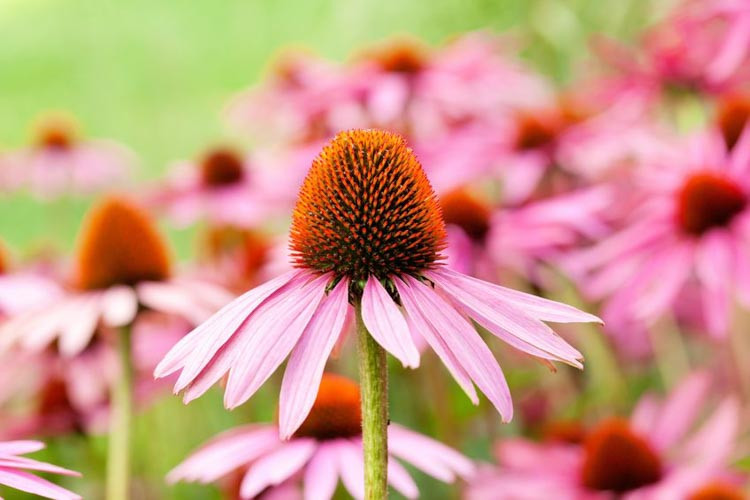
Echinacea (Coneflower)
Echinacea is known for showy petals, spiny central cones, sturdy stems, heat tolerance, drought tolerance once established, and excellent value for bees, butterflies, and seed-eating birds. It is a natural fit for pollinator gardens, drought-tolerant gardens, and native plant gardens.
Popular Varieties
Classic Echinacea purpurea remains a dependable favorite, but modern coneflowers now come in pink, purple, white, green, yellow, orange, coral, and red. For reliable choices, explore coneflower varieties that actually come back, including trial-backed and award-winning selections for long-lived garden performance.
Growing Tips
Plant coneflowers in full sun and well-drained soil. Water during establishment, then avoid keeping the crown constantly wet. Leave some seed heads for birds, cut back in late winter or early spring, and watch for problems such as green, distorted, or deformed blooms using this guide to green or deformed coneflowers.
Best Uses
Use Echinacea in native gardens, sunny borders, butterfly gardens, prairie-style beds, and wildflower plantings. Compare it with Rudbeckia, combine it with wildflowers for sun, or feature it among the best perennial flowers.
Colorful, wildlife-friendly, and wonderfully resilient, Echinacea is one of the best perennials for gardeners who want beauty, biodiversity, and lasting summer impact with relatively little fuss.