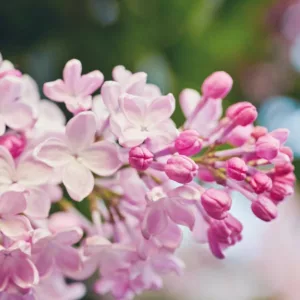
Pruning lilacs at the wrong time can remove next spring's flowers. Learn exactly when and how to prune lilacs, thin crowded branches, renew old stems, rejuvenate overgrown shrubs, manage suckers, and prune reblooming lilacs - while preserving as much of the next fragrant flower display as possible.



Lilac pruning has an unfortunate reputation for being complicated. In reality, the basic rule is simple: if you want flowers next spring, do routine pruning shortly after this spring’s flowers fade. The complication begins when an old lilac has become 12 ft tall, flowers only at the top, is crowded with thick stems, or needs more than a light tidy-up.
That is where timing and purpose have to be separated. Trimming a healthy lilac (Syringa) after flowering is one job. Gradually renewing an aging common lilac is another. Rebuilding a severely neglected shrub almost from the ground is something else entirely. Treat all three situations with the same pruning advice and you either remove next year’s flowers unnecessarily or fail to solve the real structural problem.
The best pruning therefore starts before the first cut. Decide why you are pruning, how much wood needs to come out, and whether preserving the next flower display is more important than rebuilding the shrub. Once those questions are answered, the calendar becomes much easier to understand.
Before pruning a lilac, answer three questions:
Gardenia’s pruning rule: The more aggressively you rebuild a lilac, the less useful the simple phrase “prune after flowering” becomes. Match pruning intensity to the problem first, then choose the timing.
Most familiar spring-flowering lilacs produce their next flower buds on growth that develops after the current season’s bloom. Those buds are already present long before winter.
If you wait until fall, winter, or early spring to shorten healthy flowering branches, you may be removing perfectly good buds that were waiting for spring. The lilac usually survives the pruning without difficulty. It simply has fewer flowers because the flowering wood was cut away.
This is why healthy common lilacs (Syringa vulgaris) and many other spring-flowering Syringa are routinely pruned immediately after bloom.
Wait until the flowers fade, then make any necessary shaping, thinning, or height-control cuts reasonably soon afterward. This gives the lilac the rest of the growing season to make new shoots and prepare flower buds for the following spring.
Do not postpone routine pruning until fall simply because the plant is easier to see without flowers. By then, next year’s flower buds may already be on the branches you are about to remove.
No. In fact, a healthy lilac planted where it has enough room may need surprisingly little routine pruning.
Pruning should solve a problem rather than satisfy the calendar. Young shrubs often need little more than removal of damaged growth. Established lilacs may need occasional thinning. An older common lilac may eventually benefit from renewal as its oldest stems become thick and increasingly shade younger growth.
Repeatedly cutting a lilac simply because it has finished flowering can create more work, not less. It may encourage dense branching, spoil the natural shape, and turn a graceful flowering shrub into a plant that requires constant size control.
Before pruning, ask why: “It is June” is not a pruning reason. Dead stems, poor structure, excessive size, congestion, or an aging framework are reasons.
Instead of treating lilac pruning as either “prune” or “don’t prune,” Gardenia uses five levels of intervention. Start at the lowest level that actually solves the problem.
| Level | What the Lilac Needs | Best Approach | Effect on Bloom |
|---|---|---|---|
| 1 | Nothing is wrong | Leave it alone | None |
| 2 | Dead, damaged, rubbing, or awkward growth | Selective cleanup | Usually minimal |
| 3 | Too dense or slightly oversized | Selective thinning after bloom | Usually small if done promptly |
| 4 | Old stems dominate, flowers are high up | Gradual renewal | Some bloom may be sacrificed |
| 5 | Severely overgrown or neglected shrub | Hard renovation | Major bloom loss while rebuilding |
The advantage of this approach is simple: many lilacs never need Levels 4 or 5. Do not rejuvenate a shrub that merely needs one crossing branch removed.
Begin by standing back. Lilacs look different from six feet away than they do with your face inside the branches. Decide which growth is actually interfering with the plant’s shape before making cuts.
Then work selectively rather than shearing the exterior into a tight geometric shell.
Dead branches contribute nothing to flowering or structure. Damaged stems that cannot recover should also be removed. Where disease is suspected, cut into healthy tissue and follow appropriate sanitation practices for the problem involved.
Branches that continually rub can damage bark and create unnecessary congestion. Where two branches compete for the same space, keep the better-positioned one.
Selective thinning opens the shrub without turning it into a hollow skeleton. Remove individual stems or branches back to their point of origin rather than clipping every shoot to the same height.
If the lilac has grown slightly beyond its space, shorten specific branches to a strong side branch rather than cutting the whole top flat. A lilac naturally capable of growing 10 or 12 ft tall should not be repeatedly sheared to 5 ft. If the plant fundamentally does not fit, replacement with a smaller cultivar may eventually be the more sensible solution.
Gardenia’s Pretty Lilacs for Small Gardens includes compact choices for spaces where a full-size common lilac is simply too large.
Deadheading means removing the faded flower clusters after bloom. It can make a young or compact lilac look neater and prevents the plant from developing seed in those clusters.
What it should not become is a compulsory annual marathon. A large established lilac can remain healthy without every faded panicle being removed.
If you deadhead, cut immediately below the spent flower cluster and avoid unnecessarily shortening the fresh shoot below it. That new growth is important because it will carry future flower buds.
Deadheading removes spent flowers.
Pruning changes the shrub’s framework by removing stems or branches.
Do not confuse the two. Removing faded flowers from an otherwise well-shaped lilac is not the same as thinning or renovating the shrub.
Old common lilacs tend to tell you when renewal is needed. Flowers become concentrated near the top and outer edges. Thick gray stems dominate the center. Lower branches become bare, while numerous younger shoots emerge around the base.
Rather than cutting the entire shrub down, gradually replace the oldest framework.
Remove roughly one-third of the oldest, thickest stems at or near ground level. Keep vigorous, well-positioned younger stems that can replace them.
Continue over several seasons until much of the old framework has been replaced by younger wood.
Avoid simply shortening every old trunk from the top. Renewal works by replacing old stems from the base, not by turning tall old stems into shorter old stems.
This is where simplistic lilac-pruning advice often breaks down.
If preserving as much bloom as possible is the priority, remove selected old stems shortly after flowering. The shrub has already delivered its display, and the remaining younger stems can develop normally through summer.
However, large old stems can also be removed in late winter or very early spring. The leafless shrub is easier to evaluate, large stems are easier to access, and this timing can be useful when renewing an overgrown multi-stemmed lilac.
The tradeoff is straightforward: any flowering wood removed in late winter will not bloom that spring.
Gardenia’s timing distinction: Post-bloom renewal prioritizes the current flower display. Dormant-season renewal prioritizes visibility, access, and rebuilding. Both can be valid when the reason for pruning is understood.
Some lilacs have moved beyond light thinning. They may be huge, tangled, bare through the center, damaged, or composed almost entirely of old stems.
For many large old lilacs, gradual renewal is the less disruptive option. Suitable, healthy multi-stemmed lilacs can also tolerate much more drastic renovation when preserving the immediate flower display is no longer the main objective.
One severe method is to cut the old stems back to roughly 4-6 in. (10-15 cm) above the ground in late winter or early spring. This stimulates vigorous shoots from low on the shrub. It should be regarded as a rebuilding operation, not ordinary lilac pruning.
Numerous new shoots may emerge during the first growing season. These eventually need thinning so that a limited number of vigorous, well-spaced stems form the new framework.
Hard renovation removes the existing flowering framework. Some lilacs treated this way may take several years to flower well again, and Iowa State Extension notes that flowering can be delayed for roughly 3-5 years in some renovated lilacs.
Do not use this technique when preserving next spring’s flowers is the priority. Choose it only when rebuilding a badly overgrown shrub provides the greater long-term benefit.
Many shrub lilacs produce shoots from around the base. Whether those shoots are useful depends partly on how the plant was propagated.
On an own-root lilac, healthy basal shoots can become valuable replacement stems during renewal. Removing every sucker automatically can deprive an old shrub of the young wood needed to rebuild its framework. For more guidance on which shoots to keep, remove, or replant, see Gardenia’s Lilac Suckers: Should You Remove Them or Keep Them?.
Grafted lilacs require more caution. Shoots originating below the graft may belong to the rootstock rather than the named cultivar and should be removed.
The goal is therefore not “remove all suckers.” It is to decide which young stems belong in the future structure of the plant.
Reblooming lilacs add an important wrinkle because they produce a major spring display and then develop additional flowers on new growth later in the season.
Examples include Bloomerang Purple, with purple flowers; Bloomerang Dark Purple, with deeper purple blooms; and Bloomerang Pink Perfume, a compact pink-flowering rebloomer.
All produce their main show in spring, pause while new growth develops, and can flower again from summer into fall. The later display is generally less profuse than the first.
If pruning is needed, the safest window is immediately after the main spring bloom. Pruning in fall, winter, or early spring can remove the old-wood buds responsible for the principal spring display.
Reblooming lilacs do not need pruning in order to rebloom. A light post-bloom trim can improve appearance and encourage fresh growth, but it can delay the later flowers by a few weeks because the shrub must first replace some of the growth that was removed.
Rebloomer rule: Protect the spring display by avoiding fall, winter, and early-spring pruning. If shaping is needed, prune lightly after the main spring bloom and remember that pruning is optional for rebloom.
Syringa reticulata and other tree lilacs develop a different architecture from the familiar multi-stemmed common lilac. They are often grown as small trees rather than continually renewed shrubs.
Do not automatically apply the “remove one-third of the oldest stems at ground level” approach to a tree-form lilac. Preserve the main trunk and structural branches, removing dead, damaged, crossing, or poorly positioned growth as needed.
Routine pruning should remain minimal. Where flowering is important, trim after flowering whenever practical.
A hedge trimmer is fast, but speed is not the same as good structure.
Repeated shearing cuts hundreds of shoots at similar heights. That encourages dense exterior growth while doing little to renew old stems from the base. It can also destroy the relaxed branching habit that makes a mature lilac attractive.
Selective thinning is slower but more purposeful. Remove individual branches where they originate. Remove old stems from the base when renewal is needed. Shorten an overlong branch to a suitable side branch rather than cutting every stem across an imaginary horizontal line.
There is one important distinction: lightly clipping spent flower heads in a large planting is not the same as repeatedly shearing the entire shrub into shape.
Use sharp hand pruners for small shoots and flower clusters, loppers for larger stems that can be cut safely with them, and a pruning saw for substantial old wood.
Make clean cuts without leaving long stubs. When removing an entire old cane, cut it low rather than leaving an awkward length of stem above the base.
If disease is suspected, clean tools appropriately between affected cuts to reduce the risk of carrying pathogens from diseased tissue into healthy growth.
| What You See | What It Needs | When |
|---|---|---|
| Healthy, attractive shrub | Little or no pruning | As needed |
| A few awkward or crowded branches | Selective thinning | Immediately after bloom |
| Flowers high, thick old stems below | Gradual renewal | After bloom to preserve flowers, or dormant season with some bloom sacrifice |
| Huge, badly neglected multi-stemmed shrub | Gradual renewal or, where justified, hard renovation | Late winter or early spring for hard renovation |
| Healthy reblooming lilac needing shaping | Light trim only if needed | Immediately after spring bloom |
Gardenia’s pruning priority: Preserve flowers when the plant’s structure is basically sound. Sacrifice flowers only when rebuilding the shrub provides a larger long-term benefit.
Pruning is only one reason a lilac may fail to flower. Insufficient sunlight, too much nitrogen, a young plant, inadequate winter chill, drought stress, freeze-damaged buds, poor drainage, or serious plant-health problems can also reduce bloom.
Gardenia’s Why Is My Lilac Not Blooming? 10 Causes and How to Fix Them provides a symptom-based diagnosis rather than assuming pruning is automatically responsible.
For complete guidance on planting, soil, watering, feeding, pruning, rejuvenation, and cultivar selection, see How to Grow and Care for Lilacs.
You can also use Gardenia’s Lilac Comparison Tool to compare plants by mature size, hardiness, growing conditions, bloom season, and other characteristics. A naturally compact lilac is often a better long-term answer for a small space than repeatedly pruning a large cultivar to keep it undersized.
For routine pruning, prune lilacs shortly after their flowers fade. Most familiar spring-flowering lilacs form the following year’s flower buds during the growing season, so pruning in fall, winter, or early spring can remove those buds.
You can physically prune a lilac in fall, but routine fall pruning is likely to remove flower buds and reduce the following spring’s display. Wait until immediately after flowering whenever preserving bloom is the priority.
Routine shaping in winter can sacrifice spring flowers. However, late winter is a practical time for major renewal or hard renovation of badly overgrown lilacs when rebuilding the shrub is more important than preserving the immediate flower display.
That depends on the goal. A healthy shrub may need only a few branches removed. For gradual renewal, remove roughly one-third of the oldest stems near ground level. Suitable severely overgrown multi-stemmed lilacs can be cut back much harder, but this is drastic renovation and flowering may be lost for several years.
Remove selected old, thick stems at or near ground level and retain vigorous younger shoots as replacements. Renewing the plant from the base is more effective than repeatedly shortening the tops of old trunks.
A healthy lilac may regrow vigorously after hard renovation, but it will not immediately return to normal flowering. Severe pruning removes the existing flowering framework, and some lilacs may take roughly 3-5 years to flower again after drastic renovation.
You can deadhead faded lilac flowers for neatness and to prevent seed formation, particularly on small or young shrubs. It is not necessary to remove every faded flower from a large mature lilac. Cut just below the spent flower cluster without unnecessarily shortening new growth.
Not automatically. On own-root lilacs, vigorous basal shoots can become useful replacement stems. On grafted plants, shoots emerging from the rootstock should be removed because they may not be the same cultivar as the flowering top.
Selective branch removal is generally better than repeatedly shearing the whole shrub. Shearing encourages dense exterior growth without renewing old stems from the base. Lightly clipping spent flower heads in a large planting is different from routinely shearing the entire plant.
If pruning is needed, do it immediately after the main spring display. Reblooming lilacs such as Bloomerang Purple, Bloomerang Dark Purple, and Bloomerang Pink Perfume produce their main spring flowers from buds formed earlier and later flowers on new growth. They do not require pruning in order to rebloom.
The most likely explanation is that pruning removed flower buds that had already formed. If the plant remains healthy, allow it to grow normally and perform future routine pruning immediately after flowering.
Pruning can temporarily control size, but it cannot change the plant’s natural mature dimensions. If a lilac constantly outgrows its allotted space, replacing it with a naturally compact cultivar is usually a better long-term solution.
Updated: September 2026 • Reviewed by Gardenia Editors
| Hardiness |
3 - 7 |
|---|---|
| Plant Type | Shrubs, Trees |
| Plant Family | Oleaceae |
| Genus | Syringa |
| Exposure | Full Sun |
| Season of Interest | Spring (Mid, Late) |
| Maintenance | Low |
| Water Needs | Average |
| Soil Type | Chalk, Clay, Loam, Sand |
| Soil pH | Alkaline, Neutral |
| Soil Drainage | Moist but Well-Drained, Well-Drained |
| Characteristics | Cut Flowers, Fragrant, Showy |
| Landscaping Ideas | Beds And Borders, Hedges And Screens, Patio And Containers |
| Garden Styles | City and Courtyard, Informal and Cottage |
| Hardiness |
3 - 7 |
|---|---|
| Plant Type | Shrubs, Trees |
| Plant Family | Oleaceae |
| Genus | Syringa |
| Exposure | Full Sun |
| Season of Interest | Spring (Mid, Late) |
| Maintenance | Low |
| Water Needs | Average |
| Soil Type | Chalk, Clay, Loam, Sand |
| Soil pH | Alkaline, Neutral |
| Soil Drainage | Moist but Well-Drained, Well-Drained |
| Characteristics | Cut Flowers, Fragrant, Showy |
| Landscaping Ideas | Beds And Borders, Hedges And Screens, Patio And Containers |
| Garden Styles | City and Courtyard, Informal and Cottage |
Create a membership account to save your garden designs and to view them on any device.
Becoming a contributing member of Gardenia is easy and can be done in just a few minutes. If you provide us with your name, email address and the payment of a modest $25 annual membership fee, you will become a full member, enabling you to design and save up to 25 of your garden design ideas.
Join now and start creating your dream garden!
Create a membership account to save your garden designs and to view them on any device.
Becoming a contributing member of Gardenia is easy and can be done in just a few minutes. If you provide us with your name, email address and the payment of a modest $25 annual membership fee, you will become a full member, enabling you to design and save up to 25 of your garden design ideas.
Join now and start creating your dream garden!