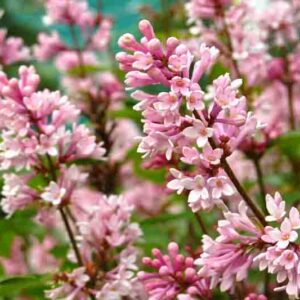
Should you cut off those shoots around your lilac? Not always. Learn the difference between root suckers and basal shoots, when young growth helps renew an old lilac, why grafted plants need special care, how to control unwanted spread safely, and when a rooted sucker can become another lilac.



Few things make a lilac look untidy faster than a crop of shoots popping up around its base. One appears in the border, another works its way into the lawn, and before long it can seem as though the shrub is trying to colonize the entire garden.
The usual instinct is to cut them all off.
Sometimes that is exactly right. But not always.
On an own-root lilac (Syringa), some of those young shoots may be very useful. They can replace old stems, help rejuvenate a bare or declining shrub, fill an awkward gap, or even be dug up and grown into new plants.
On a grafted lilac, however, a shoot coming from the roots may not belong to the cultivar you planted at all. It may be growth from the rootstock.
That is why sucker management is not simply a matter of keeping the base tidy. Before removing a shoot, it helps to know where it came from, whether it belongs to the cultivar, and whether it has a useful future in the shrub.
Before cutting a young shoot, check four things:
Gardenia’s approach: Do not remove young growth automatically. Decide first whether it belongs in the lilac you want five or ten years from now.
A true lilac sucker is a shoot that arises from a root. It may appear close to the main shrub or several feet away, depending on how far the root system has spread.
Lilacs also produce strong new stems directly from the crown or very close to the base. These are more accurately described as basal shoots.
Gardeners often call both types of growth “suckers,” which is understandable, but the distinction is useful.
A vigorous basal shoot beside an aging stem may be exactly where you want the next generation of the shrub. A sucker coming up three feet away in a paving joint is another matter.
Syringa vulgaris, the common lilac, is particularly well known for producing suckers and gradually widening into a colony if those shoots are allowed to remain.
Not all lilacs behave this way. Suckering varies considerably among species and cultivars, and many compact selections stay much more contained.
A lilac that suckers is not misbehaving. It is following its natural growth habit. The real question is whether that habit suits the space where the shrub is growing.
This is the most important distinction in the entire discussion.
An own-root lilac is growing entirely on its own root system. If it is a named cultivar, root suckers arising from those roots are genetically the same cultivar.
A grafted lilac is different. The desired cultivar has been joined to another plant that supplies the root system.
That sucker may be vigorous and perfectly healthy, but if it is allowed to become a major part of the shrub, it can eventually overwhelm or replace the cultivar above.
Grafted lilac? Be careful. Root suckers should normally be removed. They are not rejuvenating the named cultivar – they are replacing it.
This becomes particularly important when an old shrub is being renovated. On an own-root lilac, young basal shoots and suitable suckers can help rebuild the framework. On a grafted plant, you must know which growth belongs to the cultivar before deciding what stays.
Gardenia’s How to Rejuvenate an Old Lilac Bush explains how to renew an aging shrub without accidentally preserving the wrong growth.
If the plant is fairly new, start with the label or nursery information. Some growers specifically sell lilacs on their own roots.
With an old garden shrub, you may need to investigate the base of the plant.
Look for:
Do not expect the graft union to be obvious on a very old lilac. With time, the union may become difficult to recognize.
Preserving an old named lilac? If you are uncertain whether it is grafted, do not automatically use distant suckers to replace the original stems. First establish what those shoots actually are.
If your lilac is own-root, there is no reason to regard every young shoot as a nuisance.
Some are genuinely useful.
Look at an old common lilac and you may see several tall woody stems, flowers mostly high above eye level, and very little attractive growth near the ground.
That shrub needs younger wood.
Good candidates to keep are shoots that are:
Over time, these young stems can take the place of older trunks that have become bare, weak, damaged, or excessively tall.
If one side of the shrub has thinned after an old branch has died or been removed, a vigorous shoot appearing in that gap can improve the shape naturally.
The same shoot would be less useful if it emerged in the crowded center of the clump.
Not every lilac needs to remain a tightly defined specimen.
Allowing some own-root suckers to remain can work beautifully in:
The planting will still benefit from occasional thinning. A loose colony of lilacs can be charming; an impenetrable tangle of competing stems is less so.
A simple way to decide: If a young shoot has a future job – replacing an old stem, filling a gap, expanding a planned colony, or becoming a new plant – there is a good reason to keep it.
There are just as many situations where removing suckers is the right choice.
Remove them when:
Remember: Sucker removal is often ongoing maintenance on a vigorous common lilac. Needing to remove new shoots every year does not mean you are doing anything wrong.
Young suckers are much easier to deal with than old ones, so there is little advantage in letting an unwanted shoot become another woody stem.
For a root sucker growing away from the main clump:
Simply cutting a sucker at ground level removes the visible shoot, but the connected root remains alive and may send up more growth.
For occasional suckers in a lawn, regular mowing may be enough to keep them out of sight. If you want more lasting control, remove them closer to their origin when possible.
Do not spray connected lilac suckers with systemic weedkiller. The sucker and parent shrub share connected tissues. A systemic herbicide absorbed by the sucker can travel into the lilac and damage the plant you intended to keep.
Because the roots are still capable of producing them.
Removing one sucker does not change the natural habit of the shrub. Another may appear from the same section of root later or emerge somewhere nearby.
This is why gardeners sometimes feel that cutting suckers somehow makes the lilac produce more. Usually, the plant is simply continuing to do what it was genetically inclined to do.
If suckers repeatedly appear beyond the intended footprint, consider the bigger question: does the lilac have enough room?
Gardenia’s Footprint Rule: If you spend every season fighting the same shrub’s natural spread, the real problem may be the match between the plant and the available space, not your pruning technique.
A vigorous common lilac can be magnificent in a roomy border. The same plant can become frustrating in a narrow bed where every extra foot of growth creates a problem.
This is where sucker management becomes part of lilac rejuvenation.
An old own-root lilac may contain many woody stems that have been flowering for years. Eventually some become tall, bare at the bottom, damaged, or less productive.
If you keep removing every young shoot, there is nothing ready to replace them.
A better renewal strategy is:
The result is still an old lilac, but not an old collection of stems.
Think in generations. A healthy multi-stem lilac should contain older flowering stems and younger replacements. Removing every young shoot interrupts that cycle.
On grafted plants, rootstock suckers should not be used as replacement framework. If you are planning significant renovation, first establish which growth belongs to the cultivar.
For the complete process, see How to Rejuvenate an Old Lilac Bush: Step by Step.
Yes. If the parent lilac is own-root, separating a rooted sucker can be one of the easiest ways to make another plant.
The important thing is not the size of the shoot. It is the quality of the roots.
Choose roots, not height. A modest sucker with a good cluster of fine roots is generally a better propagation candidate than a tall shoot with almost no independent root system.
Spring is particularly suitable for separating suckers because growth is beginning and the new plant has the growing season ahead in which to establish.
To move one successfully:
Do not use this method blindly on a grafted lilac. A rooted sucker from the rootstock will produce another rootstock plant, not another copy of the cultivar above.
For cuttings, layering, grafting, and detailed sucker propagation, see Gardenia’s How to Propagate Lilacs: Cuttings, Suckers, Layering and Grafting.
You will sometimes hear that suckers should always be removed because they “steal energy” from the shrub.
That is an oversimplification.
On an own-root lilac, a sucker is part of the same plant. Producing young stems is one of the ways the shrub spreads and renews itself.
A few well-positioned replacement shoots can be valuable. The problem comes when too many are allowed to remain.
An overcrowded base can lead to:
On grafted plants, vigorous rootstock suckers are also competing with growth you actually want to preserve.
So rather than asking whether a sucker is stealing energy, ask whether it is contributing something useful to the structure of the shrub.
Small unwanted suckers can be removed whenever you notice them. In fact, it is usually easier to deal with them while they are young.
This is different from pruning the flowering framework of the shrub.
Lilacs develop the following spring’s flower buds during the previous growing season. Routine pruning of flowering branches is therefore generally done soon after bloom, before those buds have had much time to develop.
Removing a small root sucker in the lawn is not the same operation and does not require waiting until the shrub has flowered.
If sucker removal is part of larger rejuvenation or structural pruning, coordinate the work with the overall pruning plan.
See Gardenia’s When to Prune Lilacs Without Losing Next Year’s Blooms for the full timing strategy.
Sometimes nothing is wrong.
Common lilacs can sucker strongly, and the amount of new growth may vary from year to year.
You may also notice more basal growth after:
Look at the whole plant before deciding that extra shoots signal stress.
If the foliage is healthy and the shrub is growing normally, the young shoots may simply be part of the lilac’s renewal cycle.
If the new growth appears alongside yellowing leaves, wilting, widespread branch dieback, damaged bark, or generally poor vigor, investigate further.
Do not diagnose from the suckers alone. Abundant new shoots can be perfectly normal. Look at the health of the entire shrub before deciding that the lilac is under stress.
Gardenia’s Lilac Diseases: What’s Wrong With My Lilac? can help separate normal aging and regrowth from pest, disease, and root problems.
The mistake behind many of the others is treating every shoot alike. A useful replacement stem, unwanted lawn sucker, rootstock shoot, and rooted propagation candidate may look similar at first glance, but they should not receive the same treatment.
| What You Have | What to Do |
|---|---|
| Strong basal shoot on an old own-root lilac | Consider keeping it as replacement framework. |
| Own-root sucker spreading into a lawn or path | Remove it near its origin if practical. |
| Root sucker on a grafted lilac | Remove it so the rootstock does not replace the cultivar. |
| Rooted sucker from an own-root cultivar | Use it for propagation if you want another plant. |
| Dozens of crowded young stems | Thin them and keep only the best future stems. |
| Suckers widening an informal lilac hedge | Let selected shoots remain, but prevent excessive congestion. |
Gardenia’s Lilac Sucker Test: Own-Root or Grafted? → Basal Shoot or Root Sucker? → Useful Location? → Renewal Needed? → Keep, Remove, or Propagate.
No. On an own-root lilac, some root suckers and basal shoots can be useful replacement growth or propagation material. Remove shoots that are unwanted, crowded, weak, or badly positioned. Root suckers from grafted lilacs should normally be removed because they belong to the rootstock.
A true sucker grows from the root system and may emerge some distance from the main shrub. A basal shoot grows from the crown or very close to the base. Gardeners commonly call both suckers, but basal shoots are often especially useful when renewing an old lilac.
If the lilac is grafted, shoots growing from roots below the graft are rootstock growth. Look for a graft union near the base and for differences in bark, foliage, growth habit, or eventual flowers. The graft may be difficult to see on an old shrub.
No. Many lilacs naturally produce suckers. Selected young growth can help an own-root shrub renew itself. Suckers become a problem when they crowd the shrub, spread where they are not wanted, or arise from the rootstock of a grafted plant.
No. Common lilacs often sucker freely and can form broad colonies, but suckering varies considerably among species and cultivars. Many smaller or more compact lilacs remain more contained.
Yes, if they belong to an own-root lilac. Young shoots need time to mature before flowering heavily. A sucker from the rootstock of a grafted lilac may also eventually flower, but its flowers may differ from those of the named cultivar.
Remove unwanted root suckers while they are young, tracing them back toward their point of origin where practical. Naturally suckering lilacs may continue producing new shoots, so some ongoing maintenance may be necessary.
Yes, but mowing only removes the above-ground shoot. The connected root can produce more growth later. For better long-term control, remove unwanted suckers closer to their point of origin where practical.
Avoid systemic weedkiller on suckers connected to a lilac you want to keep. Because the sucker and parent share connected tissues, the herbicide can move into and damage the parent shrub.
Yes, if it comes from an own-root lilac and has developed fibrous roots of its own. Spring is a particularly good time. Preserve as many fine roots as possible, sever the connection to the parent, and replant promptly.
If the lilac is an own-root named cultivar, its root suckers are genetically the same cultivar. A root sucker from a grafted lilac belongs to the rootstock and should not be expected to reproduce the flowers of the cultivar above the graft.
Usually yes, particularly on an own-root lilac. Keep several vigorous, well-positioned young shoots to replace aging stems, but thin out weak, crowded, or unnecessary growth.
Some lilacs naturally sucker strongly, and vigorous new growth can also become more noticeable after old stems are removed or the shrub is rejuvenated. If the rest of the plant looks healthy, abundant young growth is not automatically a sign of trouble.
Small unwanted suckers can be removed whenever you notice them. It is generally easier to deal with them while they are young. Larger structural pruning of flowering stems follows different timing because lilacs set next year’s flower buds during the previous growing season.
If you remember only one thing, make it this: not every shoot around a lilac has the same value.
A rootstock sucker on a grafted plant should usually go. A sucker growing into a path probably should too.
But a strong young basal shoot on an aging own-root lilac may be exactly the stem you will be glad you kept five years from now.
A rooted sucker from a cherished own-root cultivar may also give you another lilac to grow elsewhere or pass along.
That is why sucker management works best when it is treated as part of the shrub’s long-term structure rather than simply as tidying.
The question is not simply, “How do I get rid of these shoots?” It is, “Which ones belong in the future lilac?”
For related guidance, explore Gardenia’s How to Rejuvenate an Old Lilac Bush, How to Propagate Lilacs, When to Prune Lilacs, and How to Grow and Care for Lilacs.
Updated: September 2026 • Reviewed by Gardenia Editors
| Hardiness |
3 - 7 |
|---|---|
| Plant Type | Shrubs, Trees |
| Plant Family | Oleaceae |
| Genus | Syringa |
| Exposure | Full Sun |
| Season of Interest | Spring (Mid, Late) |
| Maintenance | Low |
| Water Needs | Average |
| Soil Type | Chalk, Clay, Loam, Sand |
| Soil pH | Alkaline, Neutral |
| Soil Drainage | Moist but Well-Drained, Well-Drained |
| Characteristics | Cut Flowers, Fragrant, Showy |
| Landscaping Ideas | Beds And Borders, Hedges And Screens, Patio And Containers |
| Garden Styles | City and Courtyard, Informal and Cottage |
| Hardiness |
3 - 7 |
|---|---|
| Plant Type | Shrubs, Trees |
| Plant Family | Oleaceae |
| Genus | Syringa |
| Exposure | Full Sun |
| Season of Interest | Spring (Mid, Late) |
| Maintenance | Low |
| Water Needs | Average |
| Soil Type | Chalk, Clay, Loam, Sand |
| Soil pH | Alkaline, Neutral |
| Soil Drainage | Moist but Well-Drained, Well-Drained |
| Characteristics | Cut Flowers, Fragrant, Showy |
| Landscaping Ideas | Beds And Borders, Hedges And Screens, Patio And Containers |
| Garden Styles | City and Courtyard, Informal and Cottage |
Create a membership account to save your garden designs and to view them on any device.
Becoming a contributing member of Gardenia is easy and can be done in just a few minutes. If you provide us with your name, email address and the payment of a modest $25 annual membership fee, you will become a full member, enabling you to design and save up to 25 of your garden design ideas.
Join now and start creating your dream garden!
Create a membership account to save your garden designs and to view them on any device.
Becoming a contributing member of Gardenia is easy and can be done in just a few minutes. If you provide us with your name, email address and the payment of a modest $25 annual membership fee, you will become a full member, enabling you to design and save up to 25 of your garden design ideas.
Join now and start creating your dream garden!