Armenian grape hyacinth, Garden grape hyacinth, Common grape hyacinth, Blue spike hyacinth
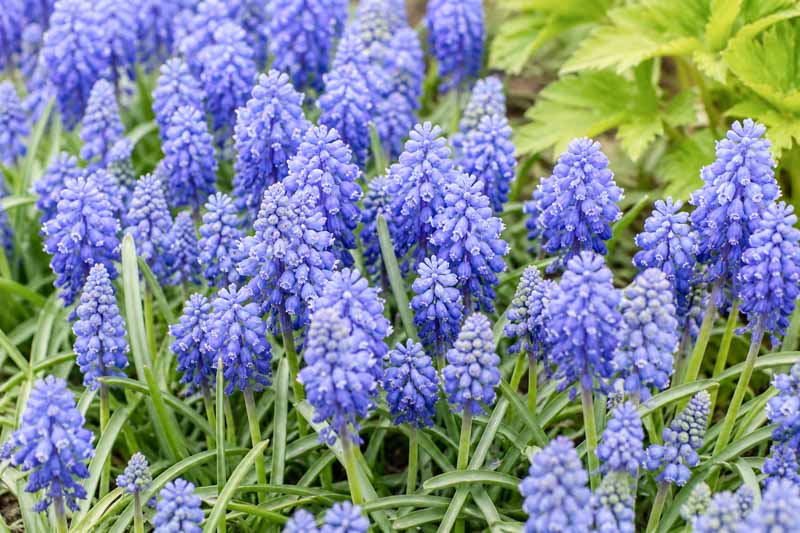


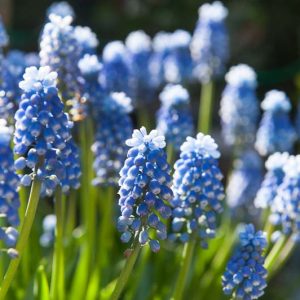
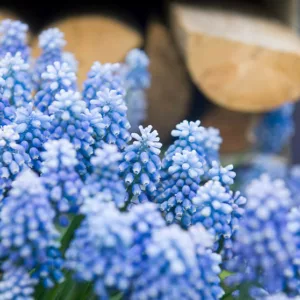
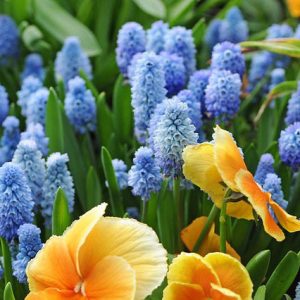
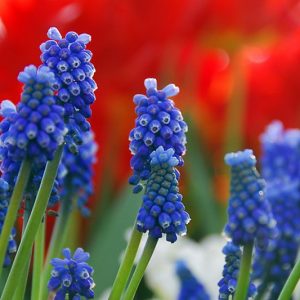
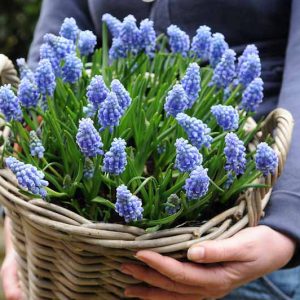
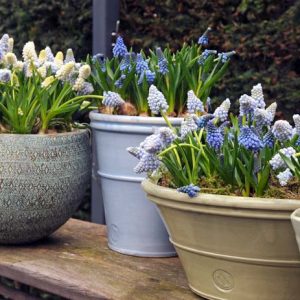
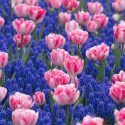
Muscari armeniacum ‘Blue Spike’, commonly called Blue Spike grape hyacinth, is a distinctive double-flowered selection of the beloved spring bulb Muscari armeniacum. Instead of the usual tight beads of grape-like flowers, this cultivar produces plush, fully double blue spikes above neat, grassy foliage.
Compact, fragrant, and easy to grow, ‘Blue Spike’ brings saturated spring color to the front of borders, rock gardens, patio pots, window boxes, woodland edges, bulb lawns, and underplantings beneath deciduous shrubs and trees. Plant it in generous groups for a charming blue carpet in mid to late spring.
This is a good muscari for gardeners who want the reliability of grape hyacinths with extra texture and refinement. Because it is a double-flowered cultivar, it is often less seed-driven than some single-flowered forms, though it can still increase gradually by bulb offsets.
Summary: A compact spring-flowering bulb with narrow green leaves and dense, scented, double blue flower spikes.
Use: Excellent for spring borders, edging, rock gardens, containers, bulb lawns, pollinator gardens, cottage gardens, naturalized plantings, and underplanting tulips and daffodils.
Highlight: The double flowers give each spike a fuller, softer, more textured appearance than ordinary grape hyacinths.
| Botanical Name | Muscari armeniacum ‘Blue Spike’ |
|---|---|
| Family | Asparagaceae |
| Common Names | Blue Spike grape hyacinth, double grape hyacinth, grape hyacinth ‘Blue Spike’ |
| Plant Type and Habit | Bulbous perennial; compact, clump-forming, spring-flowering habit |
| Hardiness | Commonly grown in USDA Zones 4 to 8; RHS hardiness H6 |
| Size | Usually 6 to 8 inches tall and 2 to 6 inches wide |
| Sun and Exposure | Full sun to partial shade |
| Soil | Average, well-drained soil; avoid waterlogged conditions |
| Bloom Time | Mid to late spring |
| Flower Color | Soft blue to medium blue, often with pale or whitish tips |
| Wildlife Value | May be visited by early bees and other spring pollinators |
| Best Uses | Mass planting, edging, containers, rock gardens, underplanting, naturalizing, small cut flowers |
Design spark
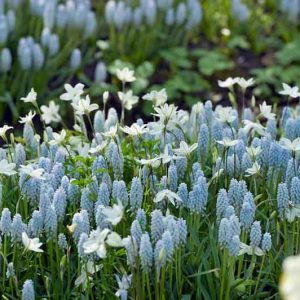
Weave ‘Blue Spike’ through yellow miniature daffodils, white anemones, and early purple crocus for a fresh blue-and-gold spring display.
Muscari armeniacum ‘Blue Spike’ is a double-flowered cultivar of Armenian grape hyacinth. Its densely packed blue flowers are fuller and softer than typical grape hyacinths, giving the plant a refined, textural look.
‘Blue Spike’ is a compact bulbous perennial, usually 6 to 8 inches tall. It forms tidy clumps over time by producing offsets and is especially useful in small gardens, containers, courtyards, and the front of spring borders.
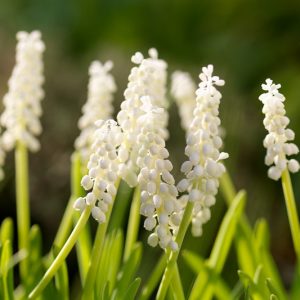
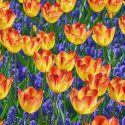
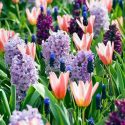
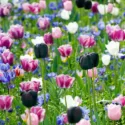
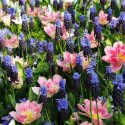
The bloom season falls in mid to late spring. The flowers are soft to medium blue, sometimes with pale tips, and combine easily with lemon-yellow daffodils, white windflowers, pink tulips, purple crocus, blue hyacinths, and silver foliage.
The leaves are narrow, grassy, and green. Like many grape hyacinths, foliage may appear in fall or winter in mild climates. After flowering, let the leaves yellow naturally before removing them so the bulb can store energy for next year.
Care secret
Do not tidy too soon. Let the fading leaves feed the bulb for a stronger blue show next spring.
‘Blue Spike’ performs best where winters provide a cool dormancy period and spring brings moderate moisture. In hot summer regions, the bulbs avoid stress by going dormant after flowering.
The scented blue flowers may be visited by bees and other spring pollinators on sunny days. For stronger habitat value, combine ‘Blue Spike’ with other early bulbs and perennials.
Grape hyacinths are often listed among deer-resistant spring bulbs and are commonly avoided by rabbits. Deer resistance is never absolute, but ‘Blue Spike’ is useful where browsing is a concern.
During spring growth, ‘Blue Spike’ prefers average moisture. Once dormant, it tolerates drier soil well. Avoid heavy summer watering, especially in clay or poorly drained ground.
Muscari armeniacum should be treated as an ornamental bulb, not an edible plant. According to RHS guidance, ingestion may cause severe discomfort. Keep stored bulbs away from children and pets, and contact a medical professional, veterinarian, or poison-control service if a significant amount is eaten.
Common grape hyacinth can naturalize freely by offsets and seed. ‘Blue Spike’ is often less seed-driven than single-flowered forms, but it can still spread slowly by offsets. Remove unwanted clumps when dormant.
Full sun gives the strongest flowering, but partial shade is suitable. One of the best sites is beneath deciduous trees or shrubs, where bulbs receive bright spring light before the canopy fills in.
Plant in well-drained soil. Average garden soil is fine, including loam, sand, chalk, or improved clay, provided winter drainage is good. Avoid wet, heavy soil.
Water after planting and during dry spring weather. Containers may need extra moisture. After the foliage fades, reduce watering and allow the bulbs to rest.
In good soil, little feeding is needed. Add compost or a balanced bulb fertilizer in fall if soil is poor or bulbs are grown in containers. Avoid excessive nitrogen.
Plant bulbs in fall, ideally several weeks before the ground freezes. Set them about 3 to 4 inches deep and 2 to 3 inches apart. For naturalized plantings, scatter bulbs and plant them where they fall.
Snip off faded flower stems if desired, but leave the foliage until it yellows. Hide fading leaves with emerging perennials such as hardy geraniums, catmint, lady’s mantle, or daylilies.
Propagate by dividing bulb offsets when dormant. Lift clumps after the foliage dies back, separate healthy offsets, and replant immediately or store in a cool, dry, airy place until fall.
Generally pest-free: Serious pest trouble is uncommon in well-drained soil.
Fungal diseases: Anther smuts and bluebell rust may occur. Good spacing and healthy bulbs help reduce risk.
Bacterial soft rot: Prevent by planting sound bulbs in sharply drained soil and avoiding waterlogged conditions.
Congested clumps: If flowering declines, lift and divide dormant bulbs.
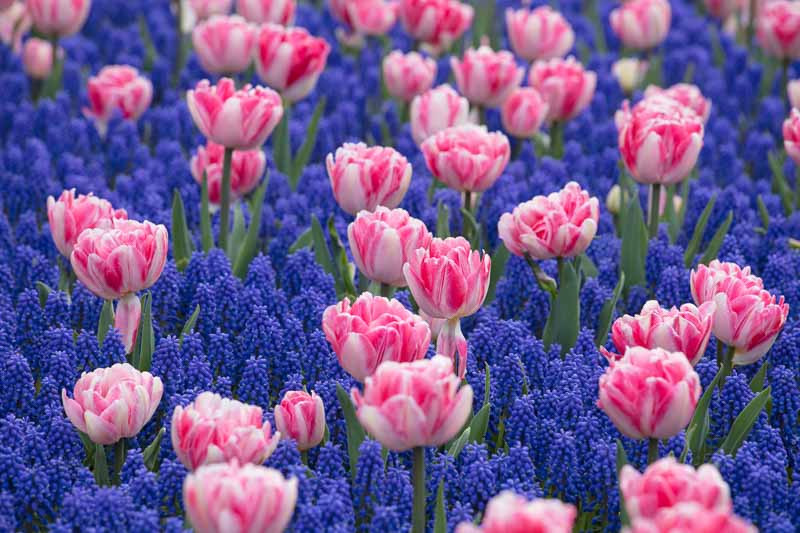
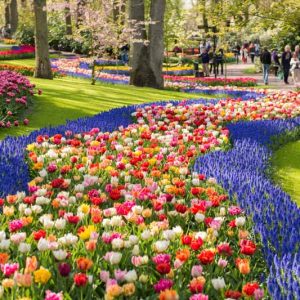
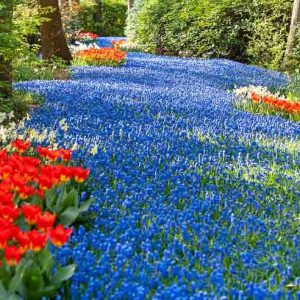
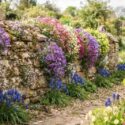
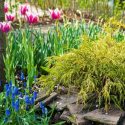
Muscari armeniacum ‘Blue Spike’ is best used as a low, textural blue carpet beneath taller spring bulbs or around deciduous trees and shrubs. Plant in drifts rather than isolated singles for the strongest effect.
Planting formula
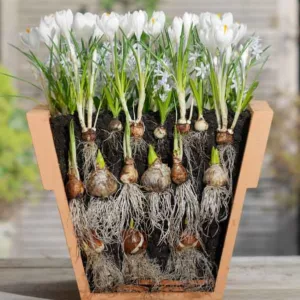
For a high-impact spring pot, plant tulips deep, daffodils above them, and ‘Blue Spike’ near the surface.
Muscari armeniacum ‘Blue Spike’ is a compact, double-flowered grape hyacinth cultivar with dense, scented blue flower spikes above narrow green leaves.
Muscari ‘Blue Spike’ usually grows about 6 to 8 inches tall, making it ideal for edging, containers, rock gardens, and the front of spring borders.
Muscari armeniacum ‘Blue Spike’ blooms in mid to late spring, depending on climate and local growing conditions.
Yes. Muscari ‘Blue Spike’ is excellent in containers because it is compact, colorful, fragrant, and long-lasting. Use a free-draining potting mix and a container with drainage holes.
Muscari ‘Blue Spike’ can increase gradually by bulb offsets. As a double-flowered cultivar, it is often less seed-driven than some single-flowered grape hyacinths.
Remove faded flower stems if desired, but leave the foliage until it yellows naturally. The leaves feed the bulb and help produce next year’s flowers.
Updated: June 2026 • Reviewed by Gardenia Editors
| Hardiness |
4 - 8 |
|---|---|
| Heat Zones |
1 - 8 |
| Climate Zones | 1, 1A, 1B, 2, 2A, 2B, 3, 3A, 3B, 4, 5, 6, 7, 8, 9, 10, 11, 12, 13, 14, 15, 16, 17, 18, 19, 20, 21, 22, 23, 24, A1, A2, A3 |
| Plant Type | Bulbs |
| Plant Family | Asparagaceae |
| Genus | Muscari |
| Common names | Grape Hyacinth |
| Exposure | Full Sun, Partial Sun |
| Season of Interest | Spring (Mid, Late) |
| Height | 6" - 8" (15cm - 20cm) |
| Spread | 2" - 6" (5cm - 15cm) |
| Spacing | 2" (5cm) |
| Depth | 4" (10cm) |
| Maintenance | Low |
| Water Needs | Average |
| Soil Type | Chalk, Clay, Loam, Sand |
| Soil pH | Acid, Alkaline, Neutral |
| Soil Drainage | Moist but Well-Drained, Well-Drained |
| Characteristics | Cut Flowers, Fragrant, Showy |
| Tolerances | Deer, Clay Soil, Rabbit, Black Walnut, Poor Soil, Fire |
| Attracts | Bees |
| Garden Uses | Banks And Slopes, Beds And Borders, Edging, Ground Covers, Patio And Containers, Underplanting Roses And Shrubs |
| Garden Styles | City and Courtyard, Gravel and Rock Garden, Informal and Cottage, Pollinator Garden, Prairie and Meadow, Woodland Garden |
| Toxic to Humans | Low severity |
| Toxic to Cats | Toxic |
| Toxic to Dogs | Toxic |
| Toxic to Horses | Not toxic |


| Hardiness |
4 - 8 |
|---|---|
| Heat Zones |
1 - 8 |
| Climate Zones | 1, 1A, 1B, 2, 2A, 2B, 3, 3A, 3B, 4, 5, 6, 7, 8, 9, 10, 11, 12, 13, 14, 15, 16, 17, 18, 19, 20, 21, 22, 23, 24, A1, A2, A3 |
| Plant Type | Bulbs |
| Plant Family | Asparagaceae |
| Genus | Muscari |
| Common names | Grape Hyacinth |
| Exposure | Full Sun, Partial Sun |
| Season of Interest | Spring (Mid, Late) |
| Height | 6" - 8" (15cm - 20cm) |
| Spread | 2" - 6" (5cm - 15cm) |
| Spacing | 2" (5cm) |
| Depth | 4" (10cm) |
| Maintenance | Low |
| Water Needs | Average |
| Soil Type | Chalk, Clay, Loam, Sand |
| Soil pH | Acid, Alkaline, Neutral |
| Soil Drainage | Moist but Well-Drained, Well-Drained |
| Characteristics | Cut Flowers, Fragrant, Showy |
| Tolerances | Deer, Clay Soil, Rabbit, Black Walnut, Poor Soil, Fire |
| Attracts | Bees |
| Garden Uses | Banks And Slopes, Beds And Borders, Edging, Ground Covers, Patio And Containers, Underplanting Roses And Shrubs |
| Garden Styles | City and Courtyard, Gravel and Rock Garden, Informal and Cottage, Pollinator Garden, Prairie and Meadow, Woodland Garden |
| Toxic to Humans | Low severity |
| Toxic to Cats | Toxic |
| Toxic to Dogs | Toxic |
| Toxic to Horses | Not toxic |
How many Muscari armeniacum ‘Blue Spike’ (Grape Hyacinth) do I need for my garden?
| Plant | Quantity | |
|---|---|---|
| Muscari armeniacum ‘Blue Spike’ (Grape Hyacinth) | N/A | Buy Plants |
Create a membership account to save your garden designs and to view them on any device.
Becoming a contributing member of Gardenia is easy and can be done in just a few minutes. If you provide us with your name, email address and the payment of a modest $25 annual membership fee, you will become a full member, enabling you to design and save up to 25 of your garden design ideas.
Join now and start creating your dream garden!
Create a membership account to save your garden designs and to view them on any device.
Becoming a contributing member of Gardenia is easy and can be done in just a few minutes. If you provide us with your name, email address and the payment of a modest $25 annual membership fee, you will become a full member, enabling you to design and save up to 25 of your garden design ideas.
Join now and start creating your dream garden!