Muscari (Grape Hyacinth) Guides
Characteristics
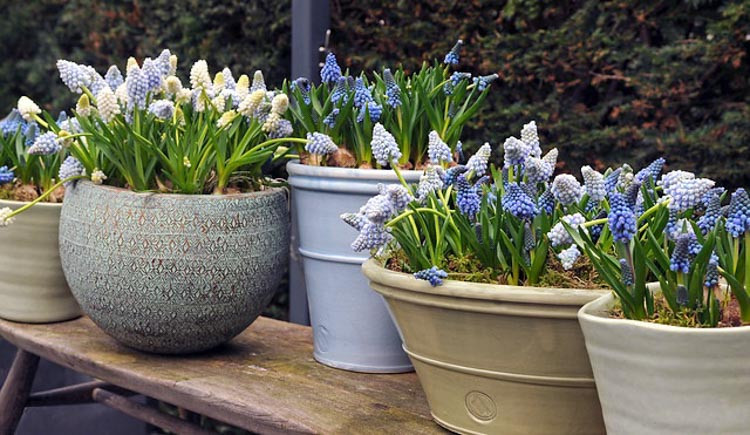
Muscari, commonly called grape hyacinth, is a small spring-flowering bulb that gives gardeners an easy way to add early color, fragrance, and natural charm. Its bead-like flower clusters bloom in blue, purple, white, pale pink, or yellow and look especially good in drifts, containers, rock gardens, lawns, and under deciduous shrubs. For the full overview, start with the Muscari grape hyacinth genus guide.
How to Choose Muscari
Choose muscari by color, bloom time, and planting purpose. For classic deep blue, plant Muscari armeniacum. For soft blue containers, try Muscari aucheri ‘Ocean Magic’. For two-tone spikes, choose Muscari latifolium. For pale blue elegance, use ‘Valerie Finnis’, or add bright azure color with Muscari azureum.
Where and When to Plant
Plant muscari bulbs in fall, before the ground freezes, in full sun to partial shade and well-drained soil. The best advice is simple: plant generously. Small groups can disappear visually, but drifts of 25, 50, or more create a memorable spring display. Use muscari with other flower bulbs, especially when planning color from January through May.
Care Advice That Works
Plant bulbs about three times as deep as the bulb is tall, water after planting, then let winter moisture help roots develop. After bloom, do not cut the leaves too early. Let foliage yellow naturally so bulbs can store energy for next year. If clumps become crowded, lift and divide them after the leaves fade. For longer bloom planning, remember that spring is really three seasons, so combine early, mid, and late bulbs.
Design Tips
Use muscari as a low carpet beneath tulips, daffodils, shrubs, and roses. Its blue flowers are especially useful in designs inspired by blue flowers for the garden and the best spring flowers. For roses, follow ideas for underplanting roses with low-growing spring bulbs. In pots, layer muscari above larger bulbs using the lasagne planting method.
For success with Muscari, remember this simple guidance: plant in fall, use generous drifts, give bulbs drainage, and let the leaves ripen after bloom. Do that, and grape hyacinths return with cheerful spring color year after year.