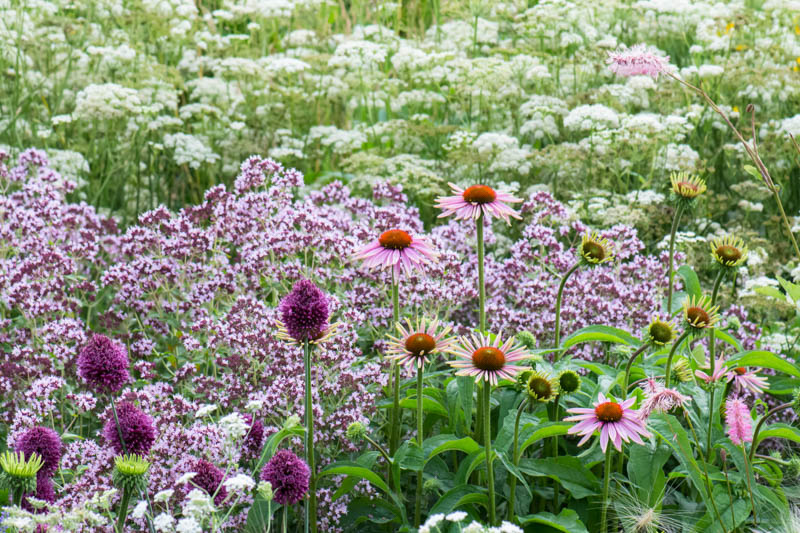
Perennial Flower Borders
Dreaming of a flower border bursting with color from spring through fall? Discover the best perennials for flower borders, from romantic peonies and long-blooming salvias to cheerful coneflowers, elegant astilbes, and easy-care hardy geraniums. Whether you’re creating a sunny cottage garden, a colorful front-yard flower bed, or a peaceful shady border, the right combination of perennial flowers can bring beauty back year after year. Explore perennial flower border ideas, low-maintenance plants, pollinator-friendly combinations, and flowers for every season. Find plants suited to your hardiness zone, sunlight, soil, and garden style, then bring your dream border to life.
Find the Best Perennials for Sunny and Shady Flower Borders
A sunny perennial flower border is one of the most rewarding features you can add to a garden. With six or more hours of direct sunlight and the right combination of plants, you can enjoy waves of flowers, beautiful foliage, and changing colors throughout the growing season.
The secret isn’t choosing the greatest number of flowers. It’s selecting perennials that complement one another in height, shape, color, and flowering time.
Six beautiful perennials for sunny flower borders:
- Salvia ‘Caradonna’ (Woodland Sage): An outstanding border perennial with rich violet-purple flower spikes and striking dark stems. Its upright habit creates strong vertical accents among softer, rounded flowers. Especially effective planted in repeating groups alongside catmint, roses, and coneflowers. Best in full sun and well-drained soil.
- Nepeta ‘Walker’s Low’ (Catmint): A favorite for relaxed, low-maintenance flower borders. Its billowing mounds of aromatic gray-green foliage are covered in lavender-blue flowers from late spring into summer, with possible repeat flowering after trimming. Lovely along pathways and at the front of sunny borders.
- Echinacea purpurea (Purple Coneflower): A classic summer-flowering perennial with rosy-purple petals surrounding prominent coppery-orange cones. It brings bold color and architectural seedheads to naturalistic borders while attracting bees and butterflies. Leave some seedheads standing for birds and winter interest.
- Achillea ‘Moonshine’ (Yarrow): Its flat clusters of luminous lemon-yellow flowers hover above finely divided, silvery foliage. An excellent choice for sunny, well-drained borders, especially when combined with purple salvia, ornamental grasses, or blue-flowering perennials. Avoid heavy, wet soils.
- Geranium ‘Rozanne’ (Hardy Geranium): One of the most useful long-flowering perennials for softening border edges. Its violet-blue flowers can appear from late spring or early summer well into fall under favorable conditions. The spreading foliage weaves naturally between taller plants and helps create a full, generous appearance.
- Hylotelephium ‘Autumn Joy’ (Upright Stonecrop): A dependable late-season perennial with fleshy foliage and broad flowerheads that mature from pink to coppery-red. Its sturdy form brings structure to sunny borders, while the aging flowers and seedheads remain attractive into fall and winter.
Gardenia’s planting combination: For a beautiful purple, pink, and golden-yellow border, combine Salvia ‘Caradonna’, Nepeta ‘Walker’s Low’, Echinacea purpurea, and Achillea ‘Moonshine’. Let catmint soften the front, repeat salvia through the middle, and use coneflowers to provide summer height and color. This combination suits a sunny site with well-drained soil, although its members have different moisture needs during establishment.
Design tip: Repeat your favorite plants in groups of three or five, where space allows, instead of planting one of everything. Larger, irregular drifts create a more unified display, particularly when flowers have contrasting shapes.
Looking for inspiration? Explore Gardenia’s low-water perennial border for full sun or discover a vibrant summer perennial border.
Not every beautiful flower border needs full sun. A garden receiving gentle morning sunlight, filtered light beneath deciduous trees, or afternoon shade can support an enchanting combination of flowering woodland perennials and colorful foliage.
In fact, partial shade offers some wonderful planting possibilities. Think elegant flower plumes, delicate spring blossoms, lush hosta leaves, and richly colored foliage that stays attractive long after the flowers fade.
Beautiful perennials for partially shaded borders:
- Astilbe ‘Fanal’: Feathery crimson-red flower plumes rise above attractive, deeply divided foliage in early to midsummer. Particularly striking when planted in generous groups alongside hostas and other woodland perennials. Astilbes prefer moisture-retentive soil and are poor choices for dry shade.
- Hosta ‘Halcyon’: A beautiful blue-leaved hosta with thick, heart-shaped foliage and pale lavender summer flowers. Although primarily grown for its leaves, it provides an essential visual contrast to finer-textured flowering perennials and helps maintain interest between flowering seasons.
- Geranium ‘Rozanne’: This versatile hardy geranium can also grow in partial shade, although flowering may be reduced compared with a sunny position. Its long season of violet-blue blossoms makes it especially useful near the front of a border receiving several hours of sunlight.
Gardenia’s planting combination: Pair deep red Astilbe ‘Fanal’ with blue Hosta ‘Halcyon’ in a moist, partially shaded garden. The feathery astilbe flowers rise above the rounded hosta leaves, creating an attractive contrast of color and texture. Add other shade-loving flowering perennials suited to your local conditions to extend the display.
What about deep shade? Flowering choices become more limited where sunlight is scarce. Concentrate on woodland plants adapted to low light and let beautiful foliage carry the design. Hostas and ferns may offer more reliable interest than trying to force sun-loving perennials to bloom in unsuitable conditions.
Important: Partial shade is not the same as dry shade. A border beneath mature trees can be surprisingly dry because established roots compete for moisture. Choose plants for both the available light and the soil’s actual moisture conditions.
For more inspiration, explore Gardenia’s serene perennial border planting idea, featuring an elegant mix of foliage, flowers, and contrasting plant forms.
Plan a Perennial Border: Seasonal Flowers, Color, Height, and Spacing
One of the most common disappointments with perennial flower beds is that everything looks wonderful for a few weeks, then the color disappears. Fortunately, a little planning can make an enormous difference.
Rather than searching for a single perennial that flowers all season, combine plants with overlapping bloom times. As one group finishes, another takes center stage.
Build your flowering border around four seasonal highlights:
- Spring: Peonies, bleeding hearts, columbines, and early-flowering hardy geraniums introduce the first waves of color. Spring bulbs such as daffodils and alliums can also be woven between established perennials to brighten the border before summer foliage develops.
- Late spring to early summer: Salvias, catmint, irises, and many hardy geraniums create fresh color and contrasting flower shapes. Some salvias and catmints may bloom again after their first flush if trimmed appropriately.
- Midsummer: Coneflowers, yarrow, daylilies, and suitable rudbeckias provide generous summer color. Combine daisy-shaped flowers with upright spikes and airy flowerheads for a more exciting display.
- Late summer to fall: Upright stonecrops, perennial asters, and later-flowering rudbeckias extend interest as temperatures cool. Ornamental grasses and attractive seedheads can carry the border into winter.
Gardenia’s border-planning principle: Don’t divide the flower bed into separate spring, summer, and fall sections. Instead, distribute plants with different flowering seasons throughout the border. As spring flowers fade, summer perennials should emerge nearby, followed by late-season flowers in the same visual area.
Remember that flowering dates vary. A perennial blooming in May in a warm region may not flower until June in a colder garden. Hardiness zone describes winter cold tolerance, not an exact flowering calendar. Local climate, sunlight, rainfall, and cultivar selection all influence bloom times.
For a border that remains beautiful beyond flowers: Include plants with contrasting leaf colors, interesting silhouettes, strong seedheads, and attractive autumn foliage. Even a well-planned perennial border will have quieter moments, especially during winter when herbaceous plants die back.
Explore Gardenia’s Perennial Bloom Calendar: Flowers from Spring to Fall or discover our spring-to-fall perennial border design for a practical example of complementary flowering seasons.
Design Your Perennial Flower Border: Height, Spacing, Color, and Plant Combinations
What makes a perennial flower border look beautifully designed rather than simply filled with plants? The difference often comes down to a few principles: proportion, repetition, seasonal balance, and the relationship between different plant forms.
Start with the shape and size of your flower bed. A long, narrow border beside a walkway needs a different planting arrangement from a deep border against a fence. Measure the available space and decide where you want the most color, height, and visual impact.
Use a layered planting arrangement:
- Back of the border: Taller perennials such as suitable coneflowers, baptisias, and perennial asters provide height and presence. In a border viewed from all sides, position taller plants toward the center instead.
- Middle of the border: Medium-height salvias, yarrows, and other flowering perennials create the main body of color. Repeat these through the planting to connect different sections visually.
- Front of the border: Lower-growing catmints, compact hardy geraniums, and other edging perennials soften the boundary and create a graceful transition toward paths or lawns.
Don’t make every layer rigid. Let a few taller flowers rise through lower plantings, and arrange groups in gently interlocking drifts rather than perfectly straight rows. This creates a more natural, inviting garden.
Choose a color scheme you love:
- Romantic cottage border: Soft pinks, lavender-blue flowers, creamy whites, and billowing foliage create a relaxed, abundant effect.
- Bold summer border: Combine purple salvias, golden yarrow, rosy coneflowers, and warm-colored rudbeckias for vivid contrast.
- Elegant pastel border: Pale lavender, blush pink, white flowers, and blue-green foliage create a calmer appearance.
- Naturalistic prairie-inspired border: Mix compatible coneflowers, asters, and other meadow perennials with ornamental grasses for movement, texture, and late-season appeal.
How many plants do you need? Plant quantities depend on each variety’s mature spread and the dimensions of your border. A compact perennial may need considerably less space than a broad, spreading catmint or a large mature peony.
As an illustration, a perennial with an expected mature spread of 18 inches might be planted approximately 15-18 inches from neighboring plants of similar size, depending on the desired effect. Wider-growing species need more space. Always check individual plant profiles rather than applying one spacing rule to the entire border.
A common design mistake: Planting too many different varieties in small quantities. A border containing fifteen unrelated perennials, each represented by one plant, can look busy and disconnected. Repeating five to eight compatible varieties often produces a much stronger design, although the ideal number depends on the size of the bed.
Another mistake to avoid: Choosing plants for flower color alone. A successful combination also requires compatible sunlight, soil moisture, drainage, winter hardiness, and maintenance needs. Two plants may look wonderful together in a photograph but struggle when grown under the same conditions.
For a complete step-by-step approach, read Gardenia’s How to Design a Perennial Flower Border. You can also explore beautiful beds and borders garden ideas or discover small perennials for borders and edging.
Create a Low-Maintenance, Pollinator-Friendly Perennial Border
Love beautiful flowers but don’t want to spend every weekend staking, pruning, and dividing plants? A low-maintenance perennial border is entirely achievable when you choose reliable varieties suited to your growing conditions.
The best easy-care flower borders use resilient plants, repeat a manageable number of varieties, and allow enough room for each perennial to mature naturally.
Excellent plants for an easy-care sunny border include:
- Catmint: Long-lasting color, aromatic foliage, and a soft, spreading habit make suitable Nepeta selections excellent choices for relaxed borders. Occasional trimming can refresh their appearance.
- Coneflowers: Established Echinacea purpurea plants can be relatively drought-tolerant in suitable soils, provide colorful summer flowers, and offer nectar and pollen to visiting insects.
- Yarrow: Well suited to sunny, freely draining locations, Achillea adds flat flowerheads and attractive foliage without requiring rich, heavily fertilized soil.
- Hardy geraniums: Well-chosen varieties provide spreading foliage, seasonal flowers, and attractive edging. Match the species or cultivar to your site’s sunlight and moisture.
- Upright stonecrops: Late-season flowers, succulent foliage, and decorative winter seedheads make Hylotelephium particularly useful in sunny, well-drained flower beds.
Want to attract bees and butterflies? Include several flower shapes and overlapping flowering periods. Salvias provide tubular flowers, coneflowers offer prominent central discs, and yarrow produces broad clusters of small flowers. Together, these offer a more varied floral display than a border dominated by one flower type.
For better wildlife value, consider regionally native perennial species, avoid invasive plants, minimize insecticide use, and leave selected seedheads and stems standing through winter where practical. Not every ornamental cultivar provides equal ecological benefits.
Five ways to reduce border maintenance:
- Choose plants adapted to your sunlight, climate, soil drainage, and available water.
- Allow for mature plant widths rather than squeezing too many perennials into a new bed.
- Apply suitable organic mulch around new plants, keeping it away from crowns, to help suppress weeds and conserve moisture.
- Water thoroughly during establishment, then adjust irrigation to the needs of the selected plants.
- Favor sturdy, naturally well-shaped varieties over plants requiring frequent staking or intensive grooming.
Are perennial flower borders maintenance-free? No. Even easy-care borders need weeding, occasional division, seasonal cleanup, and monitoring. But thoughtful plant selection can greatly reduce the work while improving the garden’s appearance as it matures.
Discover more reliable selections in Gardenia’s Low-Maintenance Perennials That Come Back Every Year.