Spark summer with a vibrant mix of scarlet bee balm, cool-blue garden phlox, and fragrant anise hyssop. This border glows at golden hour, draws hummingbirds and butterflies, and perfumes the path. Layered heights, long bloom, and easy care make it a joyful, wildlife-friendly show from midsummer into fall.


I wil use the second picture. Please update this information accordingly:
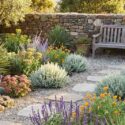
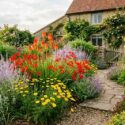
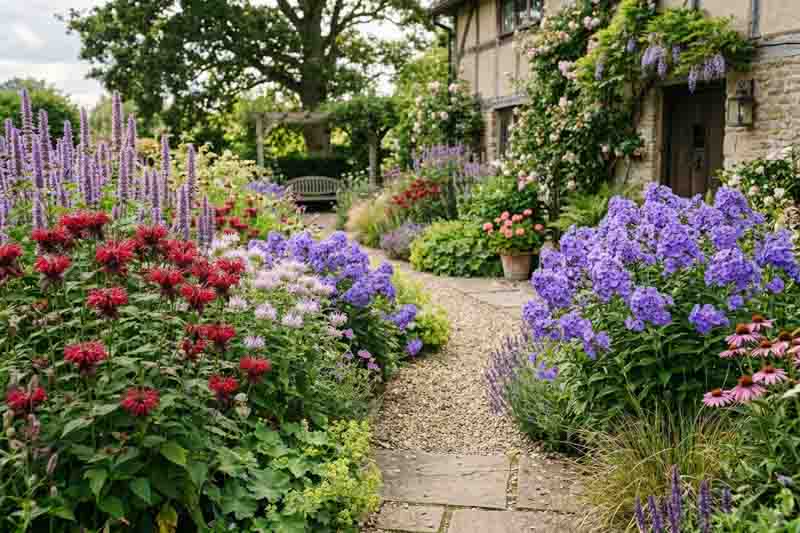
This mature summer border runs alongside a narrow gravel path, with a stone cottage and climbing roses creating a relaxed backdrop. Large violet-blue flower clusters of Phlox paniculata ‘Blue Paradise’ fill the foreground, while pink and scarlet bee balms appear in irregular groups behind and between them. Taller spikes of Agastache foeniculum rise above much of the planting, adding a lighter vertical layer without obscuring the flowers below.
The garden is full but not rigidly arranged. Some plants lean into their neighbors, flower groups vary in size, and grasses and other perennials continue farther down the path. That slight irregularity is important: it gives the border the settled character of an established cottage garden rather than a newly planted display.
Main plants used: Phlox paniculata ‘Blue Paradise’, Monarda ‘Gardenview Scarlet’, Monarda ‘Beauty of Cobham’, and Agastache foeniculum
The strongest feature of this border is the difference in flower shape. ‘Blue Paradise’ Phlox forms broad, rounded clusters, while the bee balms produce shaggy flower heads on upright stems. Anise Hyssop is finer and more vertical, with narrow lavender-blue spikes that rise between the broader flowers.
The colors are close enough to feel connected without becoming monotonous. Violet-blue Phlox provides the largest cool-colored mass. ‘Beauty of Cobham’ adds softer pink, while ‘Gardenview Scarlet’ introduces smaller areas of stronger red. Agastache repeats the lavender-blue tones at a greater height.
The photograph also shows why these plants should not be arranged as four separate blocks. Phlox dominates some areas, Monarda appears in smaller pockets, and Agastache repeats through the middle and back. The groups overlap enough to feel natural while remaining distinct.
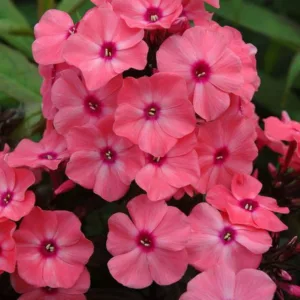
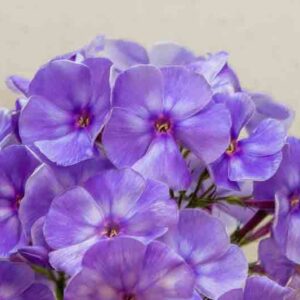
Phlox paniculata ‘Blue Paradise’ provides the largest flower clusters in the planting. Its color can shift from violet-blue toward purple depending on light and temperature. Give it reasonably fertile soil, consistent moisture, and good airflow for the strongest growth and healthiest foliage.
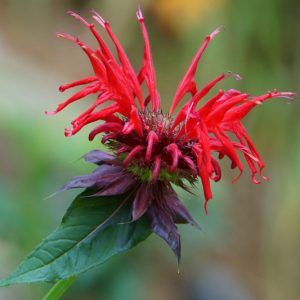
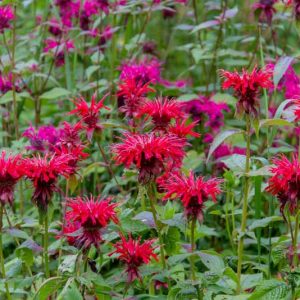
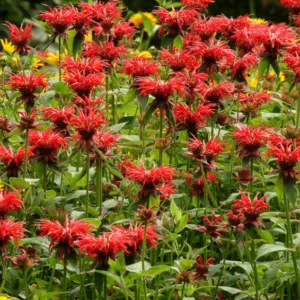
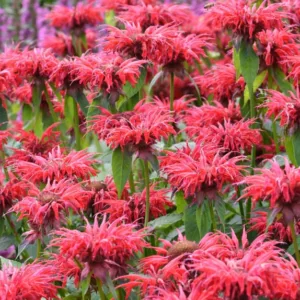
Monarda ‘Gardenview Scarlet’ contributes the deepest red flowers. It works best in repeated groups rather than scattered individual plants. Bee balm appreciates moisture during active growth, but good drainage and air circulation help reduce mildew problems.
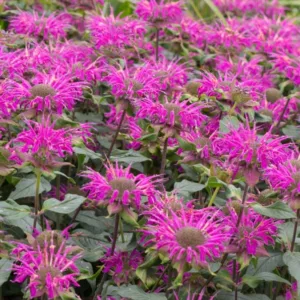
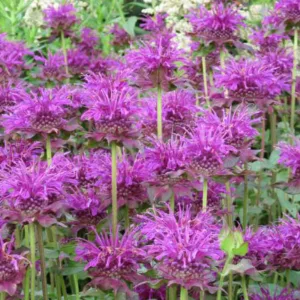
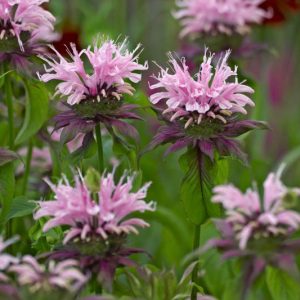
Monarda ‘Beauty of Cobham’ brings a softer pink note that sits comfortably between the stronger red Monarda and cooler Phlox. Like other bee balms, it can spread gradually by rhizomes, so mature clumps may need thinning if they begin to crowd neighboring plants.
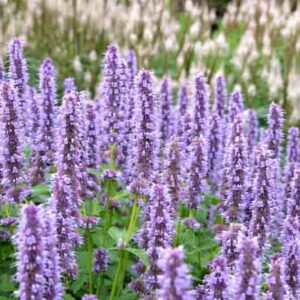
Agastache foeniculum, or Anise Hyssop, provides the tallest and finest flower spikes. Its aromatic foliage and long flowering period make it particularly useful in pollinator borders. It prefers good drainage and generally tolerates drier conditions than Phlox and Monarda once established.
Create a full midsummer border with substantial violet-blue Phlox, repeated pink and red Bee Balm, and taller lavender Agastache rising between them.
These percentages describe the balance of the four featured plants rather than exact plant numbers. Roses, grasses, and other supporting perennials can be incorporated around them, as in the garden shown.
Use Phlox in several substantial groups through the front and middle rather than creating one continuous band.
Repeat both Monardas in smaller irregular clumps, allowing some red and pink flowers to appear between the Phlox groups.
Thread Agastache through the middle and back so its taller flower spikes recur at different depths. Keep enough open space between mature clumps for airflow, particularly around the Phlox and Bee Balm.
The four plants do not have identical moisture needs. Phlox and Monarda generally perform best with more consistent moisture, while Anise Hyssop prefers good drainage and tolerates drier conditions once established. Avoid managing the entire border as either a dry prairie or a constantly damp bed.
Powdery mildew is the main practical concern. Good spacing, adequate moisture at the roots, and avoiding prolonged overcrowding will help, although susceptibility also varies with cultivar and weather.
Finally, allow the border to change slightly from year to year. Bee Balm can spread, Agastache may self-seed, and mature Phlox clumps gradually broaden. Occasional thinning and moving of plants is usually more effective than trying to keep every clump permanently in its original position.
| Hardiness |
4 - 8 |
|---|---|
| Heat Zones |
1 - 8 |
| Climate Zones | 1, 1A, 1B, 2, 2A, 2B, 3, 3A, 3B, 4, 5, 6, 7, 8, 9, 10, 11, 14 |
| Exposure | Full Sun, Partial Sun |
| Season of Interest | Summer (Mid, Late), Fall |
| Maintenance | Average |
| Water Needs | Average |
| Soil Type | Chalk, Loam, Sand |
| Soil pH | Acid, Neutral, Alkaline |
| Soil Drainage | Moist but Well-Drained |
| Characteristics | Fragrant, Cut Flowers, Showy |
| Native Plants | United States, Midwest, Illinois, Iowa |
| Tolerances | Deer |
| Attracts | Bees, Butterflies, Hummingbirds, Birds |
| Landscaping Ideas | Beds And Borders |
| Garden Styles | Butterfly Garden, City and Courtyard, Informal and Cottage, Pollinator Garden, Prairie and Meadow |

| Hardiness |
4 - 8 |
|---|---|
| Heat Zones |
1 - 8 |
| Climate Zones | 1, 1A, 1B, 2, 2A, 2B, 3, 3A, 3B, 4, 5, 6, 7, 8, 9, 10, 11, 14 |
| Exposure | Full Sun, Partial Sun |
| Season of Interest | Summer (Mid, Late), Fall |
| Maintenance | Average |
| Water Needs | Average |
| Soil Type | Chalk, Loam, Sand |
| Soil pH | Acid, Neutral, Alkaline |
| Soil Drainage | Moist but Well-Drained |
| Characteristics | Fragrant, Cut Flowers, Showy |
| Native Plants | United States, Midwest, Illinois, Iowa |
| Tolerances | Deer |
| Attracts | Bees, Butterflies, Hummingbirds, Birds |
| Landscaping Ideas | Beds And Borders |
| Garden Styles | Butterfly Garden, City and Courtyard, Informal and Cottage, Pollinator Garden, Prairie and Meadow |
Recreate this garden. Specify the percentages you would like to have of each plant and input the dimensions of your garden space.We'll give you a shopping list so you know how many plants you need.
| Plant | Quantity | |
|---|---|---|
| Monarda 'Gardenview Scarlet' (Bee Balm) | N/A | Buy Plants |
| Monarda 'Beauty of Cobham' (Bee Balm) | N/A | Buy Plants |
| Phlox paniculata 'Blue Paradise' (Garden Phlox) | N/A | Buy Plants |
| Agastache foeniculum (Anise Hyssop) | N/A | Buy Plants |
Create a membership account to save your garden designs and to view them on any device.
Becoming a contributing member of Gardenia is easy and can be done in just a few minutes. If you provide us with your name, email address and the payment of a modest $25 annual membership fee, you will become a full member, enabling you to design and save up to 25 of your garden design ideas.
Join now and start creating your dream garden!
Create a membership account to save your garden designs and to view them on any device.
Becoming a contributing member of Gardenia is easy and can be done in just a few minutes. If you provide us with your name, email address and the payment of a modest $25 annual membership fee, you will become a full member, enabling you to design and save up to 25 of your garden design ideas.
Join now and start creating your dream garden!