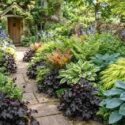
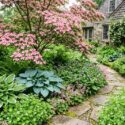
Step into this woodland border where amber Epimedium Amber Queen flares, lavender-blue Anemone nemorosa Robinsoniana glows and a mist of sky-blue Myosotis spills between them, creating a shimmering spring carpet beneath the trees that feels secret, sheltered, quietly magical and impossible to rush past, inviting you to pause and breathe.
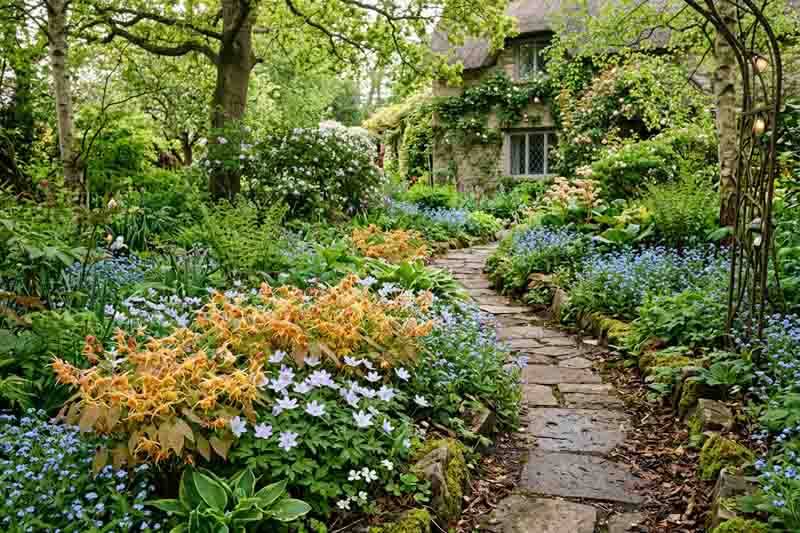


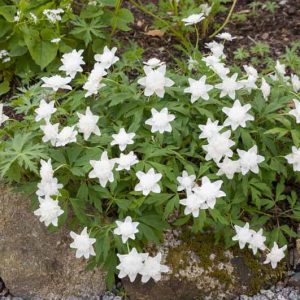
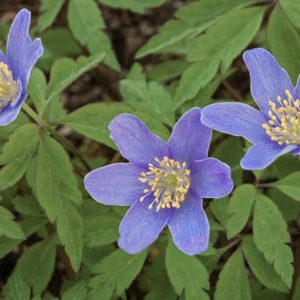
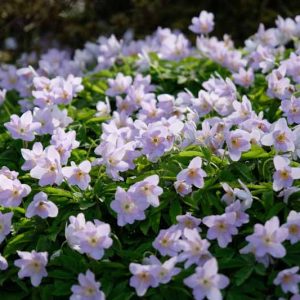
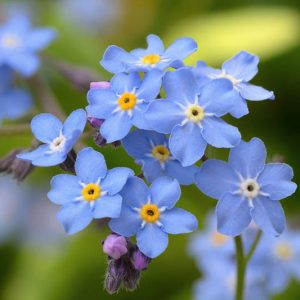
This woodland planting follows a narrow path beneath mature trees, where spring flowers spread through the lower layers before the canopy fully closes overhead. Pale lavender-blue Anemone nemorosa ‘Robinsoniana’ forms broad colonies near the front, while blue Myosotis sylvatica (Woodland Forget-Me-Not) runs in loose drifts along the path. Rising through the middle is Epimedium ‘Amber Queen’, with warm yellow-orange flowers held above fresh spring foliage.
The planting feels natural because the three plants are allowed to mingle rather than sit in separate blocks. The cool colors of the Anemone and forget-me-nots spread across the woodland floor, while the warmer Epimedium flowers provide contrast without dominating the scene. Ferns and other shade plants in the background make the combination feel part of a larger, established woodland garden.
Main plants used: Epimedium ‘Amber Queen’, Anemone nemorosa ‘Robinsoniana’, and Myosotis sylvatica (Woodland Forget-Me-Not)
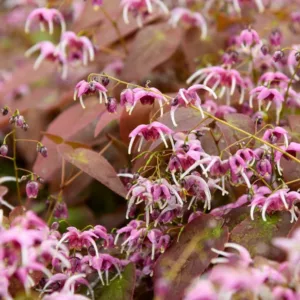
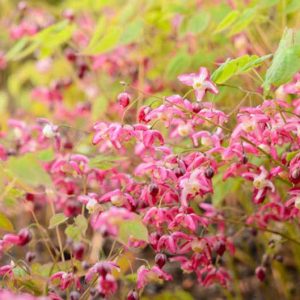
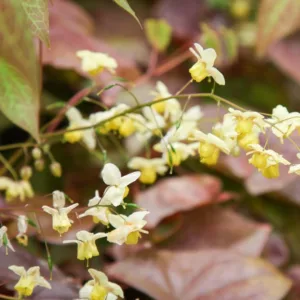
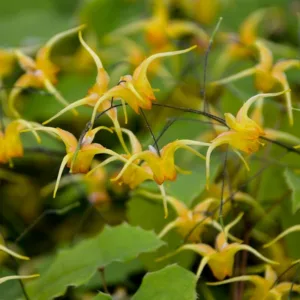
Epimedium ‘Amber Queen’ provides the warmest color in the planting. Its flowers are held on slender stems above the foliage, so they remain visible even when surrounded by lower spring plants. New leaves often emerge with bronze or reddish tones before maturing to green, adding interest after flowering.
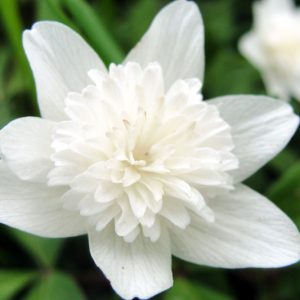
Anemone nemorosa ‘Robinsoniana’ contributes broader, open flowers close to the ground. Its soft lavender-blue coloring works especially well in dappled spring light, and the plant is most effective when allowed to form a spreading colony rather than being dotted around individually.
Myosotis sylvatica brings a finer texture and a much denser scattering of small blue flowers. In the garden shown, it continues along the path and through the middle distance, helping connect the foreground planting with the rest of the woodland.
Epimedium ‘Amber Queen’ works best in the middle of the planting, where its flower stems can rise above the lower ground layer. It prefers humus-rich, moist but well-drained soil and is especially useful beneath deciduous trees where spring light reaches the ground before the canopy develops fully.
Anemone nemorosa ‘Robinsoniana’ should be given room to spread. It flowers in spring and then gradually becomes less conspicuous as the season advances, making space visually for later woodland growth.
Myosotis sylvatica is short-lived but often self-seeds freely. That habit is useful in a naturalistic border because seedlings can appear between more permanent perennials, but unwanted plants should be removed before they become too numerous.
Create a spring woodland border with warm Epimedium flowers rising above a lower carpet of lavender-blue and blue flowers, while allowing the planting to blend naturally with surrounding ferns and woodland foliage.
The equal ratio applies to the three featured plants. Existing ferns and other woodland plants can remain around and between them, as in the garden shown.
Place Epimedium in several groups through the middle of the bed, where the flower stems and foliage can rise above the lower plants.
Allow Anemone to form broader colonies toward the front and beneath the Epimedium.
Use forget-me-nots more loosely along the path and between the other plants. Avoid repeating the same group size or spacing throughout; slight irregularity suits a woodland setting much better.
This garden changes noticeably after spring. The wood anemones retreat, forget-me-nots become less prominent, and the foliage of Epimedium and surrounding ferns takes on a larger role. That seasonal shift is part of a woodland planting rather than something that needs to be corrected.
Tree roots can also make shaded beds drier than expected. Even where the ground looks cool and sheltered, check soil moisture during prolonged dry weather, especially while the planting is young.
Over time, allow the colonies to adjust naturally. Thin forget-me-nots where they become too dense, divide or move plants if one species begins to dominate, and keep the path edge open enough to remain usable.
| Hardiness |
5 - 8 |
|---|---|
| Climate Zones | 2, 2A, 2B, 3, 3A, 3B, 4, 5, 6, 7, 8, 9, 14, 15, 16, 17 |
| Exposure | Partial Sun |
| Season of Interest | Spring (Mid, Late), Summer (Early, Mid) |
| Maintenance | Low |
| Water Needs | Average |
| Soil Type | Loam |
| Soil pH | Acid, Neutral |
| Soil Drainage | Moist but Well-Drained |
| Tolerances | Deer, Rabbit |
| Attracts | Bees |
| Landscaping Ideas | Beds And Borders |
| Garden Styles | Informal and Cottage, Woodland Garden |

| Hardiness |
5 - 8 |
|---|---|
| Climate Zones | 2, 2A, 2B, 3, 3A, 3B, 4, 5, 6, 7, 8, 9, 14, 15, 16, 17 |
| Exposure | Partial Sun |
| Season of Interest | Spring (Mid, Late), Summer (Early, Mid) |
| Maintenance | Low |
| Water Needs | Average |
| Soil Type | Loam |
| Soil pH | Acid, Neutral |
| Soil Drainage | Moist but Well-Drained |
| Tolerances | Deer, Rabbit |
| Attracts | Bees |
| Landscaping Ideas | Beds And Borders |
| Garden Styles | Informal and Cottage, Woodland Garden |
Recreate this garden. Specify the percentages you would like to have of each plant and input the dimensions of your garden space.We'll give you a shopping list so you know how many plants you need.
| Plant | Quantity | |
|---|---|---|
| Epimedium 'Amber Queen' (Barrenwort) | N/A | Buy Plants |
| Anemone nemorosa 'Robinsoniana' (Wood Anemone) | N/A | Buy Plants |
| Myosotis sylvatica (Wood Forget-Me-Not) | N/A | Buy Plants |
Create a membership account to save your garden designs and to view them on any device.
Becoming a contributing member of Gardenia is easy and can be done in just a few minutes. If you provide us with your name, email address and the payment of a modest $25 annual membership fee, you will become a full member, enabling you to design and save up to 25 of your garden design ideas.
Join now and start creating your dream garden!
Create a membership account to save your garden designs and to view them on any device.
Becoming a contributing member of Gardenia is easy and can be done in just a few minutes. If you provide us with your name, email address and the payment of a modest $25 annual membership fee, you will become a full member, enabling you to design and save up to 25 of your garden design ideas.
Join now and start creating your dream garden!