Turn a sunny garden path into a spectacular edible tunnel with vigorous indeterminate tomatoes trained overhead and basil, sweet alyssum, and marigolds planted below. This productive garden design combines abundant harvests with flowers, fragrance, and structure while keeping tomato spacing, airflow, access, and support practical for real-world growing.
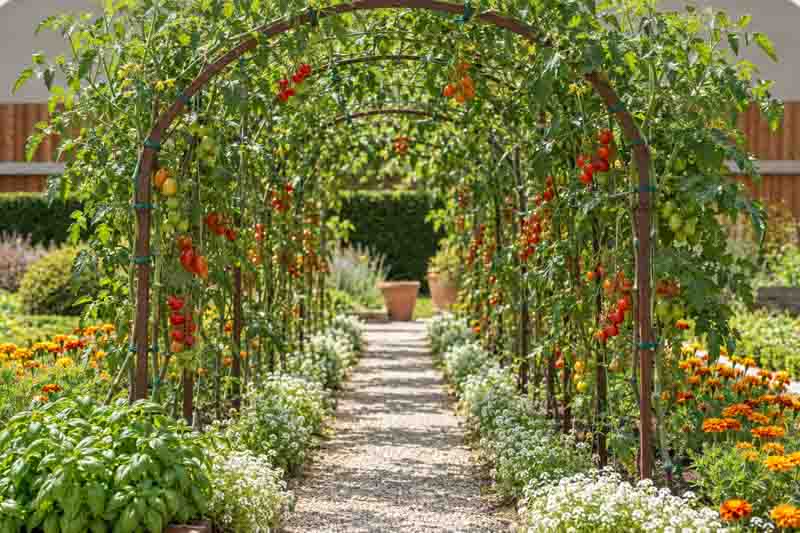


A tomato tunnel can turn a practical kitchen garden into one of the most enjoyable places to spend time in summer. In this design, vigorous ‘Sungold’ tomato vines climb a sturdy series of arches and gradually meet overhead, while Genovese basil, sweet alyssum, and French marigolds create a lighter planting at ground level.
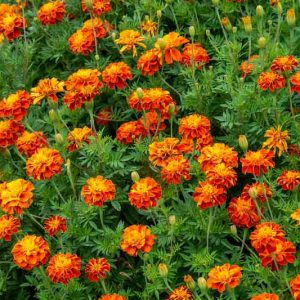
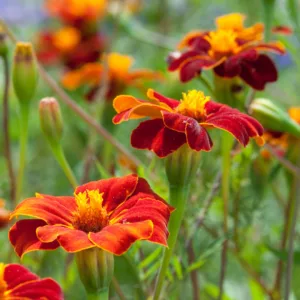
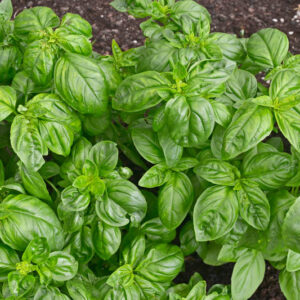
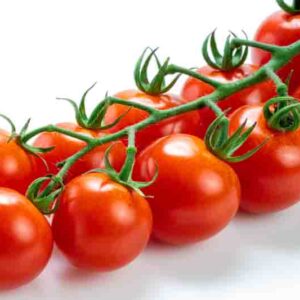
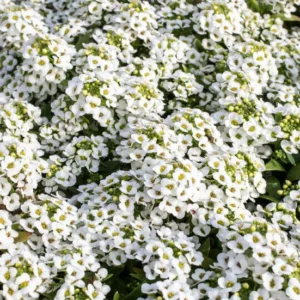
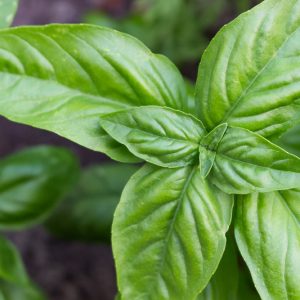
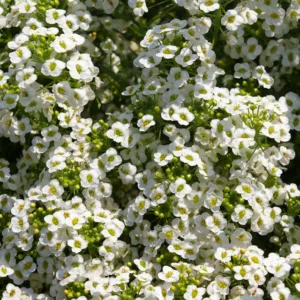
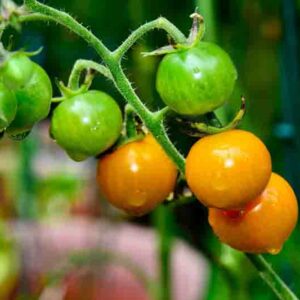
The combination is deliberately simple. ‘Sungold’ supplies almost all the height and much of the visual drama, with clusters of glowing orange cherry tomatoes hanging among fresh green foliage. Basil adds an edible lower layer, alyssum softens the path with small white flowers, and marigolds provide occasional flashes of orange-gold.
The important thing is not to overplant. ‘Sungold’ is a vigorous indeterminate tomato, and a tunnel that looks surprisingly open in late spring can become lush very quickly once warm weather arrives. Leave enough room to tie stems, water at soil level, inspect foliage, and harvest comfortably.
Main plants used: Tomato ‘Sungold’, Genovese Basil (Ocimum basilicum), Sweet Alyssum (Lobularia maritima), and French Marigold (Tagetes patula).
Aim for a garden that feels generous and leafy, not packed solid. Good access is part of the design.
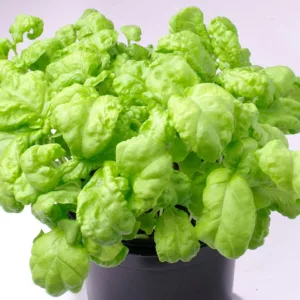
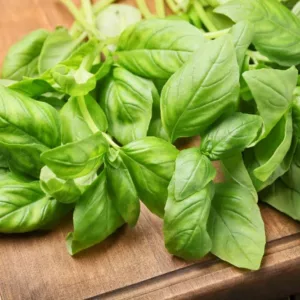
‘Sungold’ provides the height, enclosure, and most of the visual drama. Basil adds a substantial edible layer beneath the vines, alyssum stays low and softens the edge, and marigolds contribute concentrated splashes of orange-gold.
The flowers also broaden the garden’s insect activity. Sweet alyssum and marigolds can provide nectar and pollen for visiting pollinators and beneficial insects when allowed to flower freely. They should be viewed as part of a diverse garden ecosystem, however, not as a substitute for monitoring tomato pests.
Because the palette is limited, the garden remains visually coherent even when the tomato vines become exuberant. The orange ‘Sungold’ fruit also echoes the warm tones of the marigolds without making the planting feel overly coordinated.
Train vigorous ‘Sungold’ tomatoes vertically and surround them with a lighter planting that is edible, colorful, and easy to work around.
Planted allocation: 70%. The remaining space is intentionally left open for access, mulch, airflow, and working room. In a walk-through tunnel, part of that open area is the path itself.
Gardenia quantity note: The percentages are used with each plant’s recommended spacing to calculate quantities. A small garden may need only one ‘Sungold’ tomato, while a larger tunnel can accommodate several. Proper spacing matters more than filling every available gap.
The percentages help keep the design balanced, but plant quantities are often more useful when you are actually buying and planting. These numbers are practical starting points for common garden sizes.
| Garden Size | ‘Sungold’ Tomatoes | Genovese Basil | Sweet Alyssum | French Marigolds |
|---|---|---|---|---|
| 4 × 4 ft | 1 | 2 | 2-3 | 1-2 |
| 2 × 6 ft | 1 | 2 | 2-3 | 1-2 |
| 3 × 6 ft | 2 | 3 | 3-4 | 2 |
| 4 × 6 ft | 2 | 3-4 | 4-5 | 2-3 |
These are practical starting quantities, not maximum capacities or guaranteed Design Tool outputs. Gardenia’s Design Tool calculates quantities from the exact dimensions entered, each plant’s spacing, and the planting allocation. The table intentionally favors a workable, uncrowded garden, so small differences are expected.
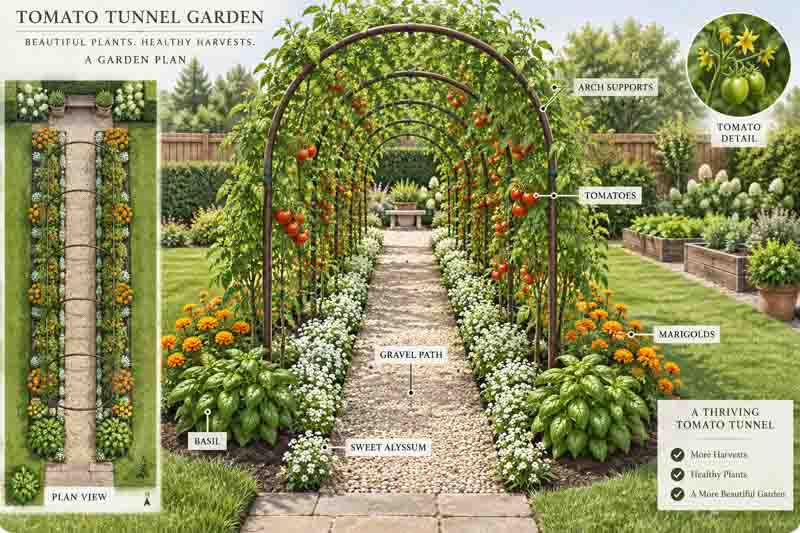
For a walk-through tunnel, the support needs to be tall enough to work beneath once the vines have filled out. A practical target is roughly 6.5-7 ft. (2-2.1 m) high at the center, with a path around 30-36 in. (75-90 cm) wide.
The exact dimensions can vary, but the path should remain wide enough for tying, pruning, harvesting, and carrying a basket through the tunnel after the plants are mature.
Use a strong metal arch, cattle panel, or similarly substantial framework anchored securely into the ground. Mature indeterminate tomatoes carry a surprising amount of foliage and fruit, and wet vines are considerably heavier after rain.
Install the support before planting, then position the tomatoes first because they determine the structure of the garden. In a tunnel, space them along both sides of the path. In a smaller bed, the same planting combination can be grown against a sturdy trellis or single arch.
Once the tomatoes are in place, tuck basil into selected gaps, keeping the immediate base of each tomato reasonably open for watering, mulch, and inspection.
Use sweet alyssum in short, broken drifts along the edge of the bed or path, where its low growth can soften gravel or paving. Place French marigolds in a few small groups slightly farther back, where their orange flowers remain visible beneath the tomato foliage.
Do not worry if the planting looks open at first. By midsummer, the tomatoes and basil will occupy far more space than they did at planting time.
Begin tying the vines while the stems are still young and flexible. Use soft ties and leave enough room for the stems to thicken. During warm weather, check new growth regularly because indeterminate tomatoes can lengthen very quickly.
When vines reach the top of the arch, guide them over gradually rather than forcing mature stems into position. There is no need to create a completely solid roof. Some openness improves light, airflow, visibility, and access to the fruit.
Garden note: A decorative arch may look attractive in spring but prove inadequate by late summer. Choose the support for the weight of the mature crop, not the size of the young plants.
A productive tunnel should feel abundant, but you still need to be able to see and reach the plants. Remove damaged or diseased foliage, keep tomato leaves from lying on the soil where practical, and prevent basil or flowers from crowding the main stems.
There is no need to strip healthy foliage. The goal is simply to maintain reasonable airflow and enough working space to water, inspect, and harvest comfortably.
At planting time, the support may seem far too visible. That is normal. Young tomatoes occupy very little space compared with the plants they will become.
By midsummer, the vines will be climbing strongly, basil will have filled out, alyssum will be flowering along the edges, and marigolds will be adding orange below. Green fruit, ripe tomatoes, flowers, and foliage begin to overlap.
At peak harvest, the tomatoes dominate the scene. Regular tying and picking become part of the routine. Later in the season, remove tired foliage as needed and continue harvesting until cool weather finally brings the display to an end.
| Hardiness |
3 - 11 |
|---|---|
| Climate Zones | 1, 1A, 1B, 2, 2A, 2B, 3, 3A, 3B, 4, 5, 6, 7, 8, 9, 10, 11, 12, 13, 14, 15, 16, 17, 18, 19, 20, 21, 22, 23, 24 |
| Exposure | Full Sun |
| Season of Interest | Summer (Early, Mid, Late), Fall |
| Maintenance | High |
| Water Needs | Average |
| Soil Type | Loam, Sand |
| Soil pH | Acid, Neutral |
| Soil Drainage | Moist but Well-Drained |
| Attracts | Bees, Butterflies |
| Landscaping Ideas | Beds And Borders |
| Garden Styles | City and Courtyard, Informal and Cottage, Pollinator Garden |



| Hardiness |
3 - 11 |
|---|---|
| Climate Zones | 1, 1A, 1B, 2, 2A, 2B, 3, 3A, 3B, 4, 5, 6, 7, 8, 9, 10, 11, 12, 13, 14, 15, 16, 17, 18, 19, 20, 21, 22, 23, 24 |
| Exposure | Full Sun |
| Season of Interest | Summer (Early, Mid, Late), Fall |
| Maintenance | High |
| Water Needs | Average |
| Soil Type | Loam, Sand |
| Soil pH | Acid, Neutral |
| Soil Drainage | Moist but Well-Drained |
| Attracts | Bees, Butterflies |
| Landscaping Ideas | Beds And Borders |
| Garden Styles | City and Courtyard, Informal and Cottage, Pollinator Garden |
Recreate this garden. Specify the percentages you would like to have of each plant and input the dimensions of your garden space.We'll give you a shopping list so you know how many plants you need.
| Plant | Quantity | |
|---|---|---|
| Tagetes patula Bonanza™ Deep Orange (French Marigold) | N/A | Buy Plants |
| Ocimum basilicum 'Genovese' (Sweet Basil) | N/A | Buy Plants |
| Lobularia 'Snow Princess' (Sweet Alyssum) | N/A | Buy Plants |
| Solanum lycopersicum 'Sungold' (Tomato) | N/A | Buy Plants |
Create a membership account to save your garden designs and to view them on any device.
Becoming a contributing member of Gardenia is easy and can be done in just a few minutes. If you provide us with your name, email address and the payment of a modest $25 annual membership fee, you will become a full member, enabling you to design and save up to 25 of your garden design ideas.
Join now and start creating your dream garden!
Create a membership account to save your garden designs and to view them on any device.
Becoming a contributing member of Gardenia is easy and can be done in just a few minutes. If you provide us with your name, email address and the payment of a modest $25 annual membership fee, you will become a full member, enabling you to design and save up to 25 of your garden design ideas.
Join now and start creating your dream garden!