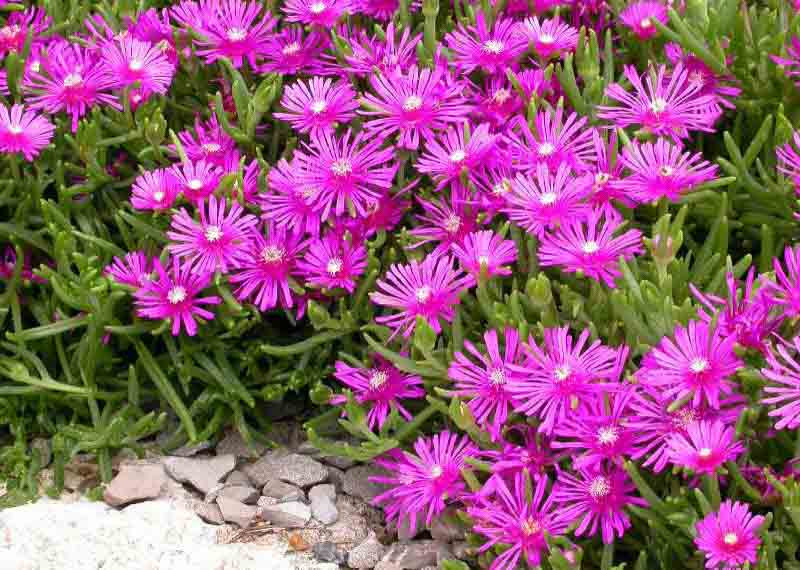
Flowering Slope Garden Ideas
Imagine a hillside overflowing with soft pink roses, golden black-eyed Susans swaying among ornamental grasses, or a rocky bank transformed into a waterfall of blue, purple, and white spring flowers. A beautifully designed flowering slope garden can turn difficult, uneven ground into one of the most spectacular features of your landscape. Discover inspiring flowering hillside garden ideas, from romantic cottage slopes and colorful prairie plantings to cascading rock gardens and water-wise native landscapes. Explore beautiful combinations of groundcover roses, flowering perennials, creeping plants, and ornamental grasses that follow the natural contours of the land. Find ideas for sunny banks, dry slopes, pollinator-friendly hillsides, and low-maintenance gardens, then create a planting that suits your own growing conditions.
Fall in Love with Romantic Rose-Covered Slopes and Cottage Hillside Gardens
There’s something irresistible about a hillside planted with soft, billowing flowers. Pink roses tumble between mounds of lavender-blue catmint, magenta hardy geraniums brighten the lower slopes, and graceful grasses catch the breeze. The garden feels relaxed and romantic, as though the flowers have found their own perfect places along the bank.
The most beautiful cottage-style slopes are carefully designed around a small number of complementary plants, repeated in generous groups.
Two gorgeous published Gardenia hillside designs:
- A Romantic Pink Rose and Lavender-Blue Cottage Garden Slope: This charming planting brings together pink groundcover roses, vivid magenta Geranium sanguineum ‘Max Frei’, lavender-blue Nepeta ‘Purrsian Blue’, airy white Achillea millefolium, and upright Little Bluestem ‘Standing Ovation’. The roses create generous masses of flowers, while catmint and hardy geraniums soften the hillside. Ornamental grasses bring movement and a beautiful late-season silhouette.
- A Romantic Pink and Lavender Hillside Garden with Evergreen Juniper: Soft pink Rosa ‘The Fairy’ combines with violet-blue Geranium ‘Rozanne’, lavender-blue Nepeta ‘Walker’s Low’, and deep purple Salvia ‘Caradonna’. Low-growing Juniperus ‘Blue Chip’ provides an evergreen layer beneath the flowers. The result is an abundant, romantic hillside with contrasting flower shapes and foliage that remains attractive beyond the summer display.
Why these designs are so beautiful: The flower colors are repeated throughout the slope, creating continuity without looking repetitive. Rounded roses contrast with upright salvia spikes, while spreading catmint and hardy geraniums create a flowing ground-level layer.
Try a soft pink-and-purple planting palette: Combine groups of pink groundcover roses with Nepeta ‘Purrsian Blue’ and Geranium ‘Max Frei’. Their contrasting flower colors and growth habits create a wonderfully relaxed cottage-garden effect.
How should the plants be arranged? Repeat broad, staggered groups along the contours of the bank, allowing the low perennials to connect the spaces between shrubs. Avoid placing tall plants in positions where they obscure the view of the rest of the hillside.
Can these gardens attract pollinators? Yes. Appropriate roses, catmint, yarrow, hardy geraniums, and salvias can provide flowers for visiting insects, though their value varies by species and cultivar. Include complementary flowering periods for a longer season of interest.
Design tip: Use two or three dominant flower colors and repeat them across the slope. Pink, lavender-blue, and violet create a romantic display that works particularly well with soft green foliage and the fine texture of ornamental grasses.
Explore more hillside garden combinations or discover Gardenia’s best plants for slopes.
Explore Spectacular Spring Flower Carpets and Colorful Prairie-Inspired Slopes
Some flowering slopes are at their most spectacular in spring, when low cushions of flowers transform a rocky bank into a brilliant tapestry of color. Others reach their peak in summer, when coneflowers, black-eyed Susans, and tall purple flower spikes sway above graceful prairie grasses.
Both approaches celebrate the natural shape of a hillside, but they create very different garden experiences.
Two inspiring published Gardenia designs:
- A Romantic Cascading Rock Garden with Colorful Spring Flowers: A glorious combination of lavender-blue Phlox ‘Emerald Cushion Blue’, vivid purple Aubrieta deltoidea, golden Aurinia saxatilis, white Iberis sempervirens, and crimson-pink creeping thyme. The plants flow naturally between stones and spill over the edges of the bank, creating a spectacular spring display. Their low, spreading foliage helps maintain texture after flowering, though the plants need suitable drainage and room to develop.
- A Colorful Prairie Garden for Sunny Slopes: Pale pink Echinacea pallida combines with golden Rudbeckia fulgida var. speciosa, upright purple Liatris spicata, Little Bluestem, and Prairie Dropseed. The contrasting daisy-shaped flowers, vertical spikes, and fine-textured grasses create a beautiful, naturalistic hillside. This combination provides summer color and movement, with seedheads and grasses extending interest later in the year.
What makes the spring rock garden so attractive? The plants are arranged in flowing drifts rather than rigid patterns. Purple, white, blue, and golden-yellow flowers create vibrant contrast, while the low cushions soften the outlines of the stones.
What makes the prairie slope work? Tall flowering perennials rise through clumps of grasses, creating different levels of height and texture. The garden feels natural because plants are repeated in informal groups rather than planted as isolated specimens.
Which design is right for your garden? A cascading spring rock garden is best suited to a sunny, freely draining bank with stones and suitable soil. A prairie-inspired hillside needs enough depth and space for taller flowers and grasses, along with a climate and soil conditions appropriate to the chosen species.
Try a blue-and-white spring flower carpet: Combine Phlox ‘Emerald Cushion Blue’ with suitable white-flowering candytuft and purple Aubrieta deltoidea. Use broad groups that follow the contours of a sunny, well-drained bank.
For a longer flowering season: Introduce appropriate summer and late-season perennials in separate compatible planting groups. The aim is to distribute seasonal color throughout the slope without overcrowding the spring-flowering plants.
How do you make a prairie slope wildlife-friendly? Choose regionally native flowers and grasses where possible, provide overlapping bloom periods, and avoid invasive species. Plants such as coneflowers and blazing stars can offer nectar and pollen, while suitable grasses contribute habitat structure.
Design tip: Avoid planting one of every variety. Repeat the main flowers in irregular groups and let grasses or low foliage plants connect the planting visually.
Discover more in Gardenia’s Drought-Tolerant Garden Design Guide, Small Perennials for Edging and Rock Gardens, and Banks and Slopes Garden Ideas.
Get Inspired by Water-Wise Native Flowering Hillsides and Low-Maintenance Gardens
Some of the most beautiful flowering slopes are inspired by natural landscapes. Rather than relying on traditional bedding plants, they combine flowering native shrubs, colorful perennials, and ornamental grasses in broad, relaxed groupings.
These gardens often look particularly appropriate on exposed hillsides, where the planting should feel connected to the surrounding landscape.
A beautiful published Gardenia design:
A Colorful California Native Garden for Sunny, Dry Slopes: This stunning planting combines spreading Ceanothus ‘Yankee Point’, purple-flowering Salvia clevelandii, brilliant scarlet California fuchsia, California buckwheat, and graceful Deer Grass. The blue, purple, and red flowers bring seasonal drama, while the flowering shrubs and grasses create a naturally layered hillside. The design is intended for suitable California dry-garden conditions and should not be copied unchanged into colder or wetter climates.
Why this planting is so beautiful: Spreading evergreen shrubs create a low framework, upright flowers provide color above it, and grasses introduce movement. The different plant heights give the hillside depth without making it feel overcrowded.
Three ideas inspired by the design:
- A Blue Spring Flowering Bank: Repeat Ceanothus ‘Yankee Point’ across a broad, well-drained bank in a suitable mild climate. Its low evergreen branches and blue spring flowers can create a spectacular display. Allow for its mature width and avoid excessive summer irrigation once established where local conditions permit.
- A Red and Purple Late-Season Slope: Combine Epilobium canum (California Fuchsia) with suitable native sages and grasses. Scarlet tubular flowers contrast beautifully with blue-purple blooms and silvery foliage, adding striking late-season color in an appropriately adapted dry garden.
- A Naturalistic Buckwheat and Grass Hillside: Use Eriogonum fasciculatum (California Buckwheat) with compatible locally appropriate grasses. The buckwheat’s delicate flowers and aging seedheads create a softer display, while grasses provide contrasting structure and movement.
What makes a water-wise flowering slope successful? Choose plants naturally adapted to the climate and soil, group them according to watering needs, and provide appropriate irrigation while roots establish. Drought-tolerant plants aren’t automatically drought-proof, especially during their first growing season.
For a pollinator-friendly hillside: Include suitable native shrubs and perennials with different flowering seasons. In appropriate western North American regions, California fuchsia provides late-season flowers attractive to hummingbirds, while buckwheats offer valuable floral resources for many insects.
For a low-maintenance slope: Favor plants with naturally attractive shapes that don’t require frequent deadheading or pruning. Choose mature sizes carefully and plan safe access for occasional care.
What about winter structure? Evergreen ceanothus, woody shrubs, and persistent grasses can maintain visual interest when many perennials are dormant. Their suitability depends on local hardiness, soil drainage, and winter rainfall.
Can these plantings reduce erosion? Suitable established vegetation can contribute to surface-soil protection, but no single planting palette guarantees slope stability. Sites with active erosion, deep gullies, or structural problems need appropriate drainage or professional evaluation.
Design tip: Use a few dominant plant shapes and repeat them across the hillside. A flowing combination of low shrubs, upright flowers, and ornamental grasses creates a stronger landscape than dozens of unrelated plants scattered across the bank.
Explore Gardenia’s Hillside Planting Combinations, 25 Best Plants for Slopes and Erosion Control, and Water-Wise Garden Design Guide.
From romantic rose-covered banks and spectacular spring rock gardens to colorful prairie hillsides and water-wise native landscapes, flowering slopes offer wonderful opportunities for creative planting. Find the designs that inspire you, adapt them to your growing conditions, and let the hillside become one of the most beautiful features in your garden.