Groundcover Garden Ideas for Banks & Slopes
Who says a difficult hillside can’t become the most beautiful part of your garden? Imagine a sunny bank cascading with lavender-blue phlox, soft pink roses flowing down a gentle slope, or silvery evergreen junipers creating a sweeping carpet of year-round color. The right groundcover garden ideas for banks and slopes can transform bare, awkward ground into an inviting landscape filled with flowers, foliage, and natural texture. Explore inspiring hillside groundcover combinations, flowering slope gardens, evergreen banks, cottage-style plantings, and drought-tolerant landscaping ideas. Whether you’re designing a small front-yard incline or a generous garden hillside, discover beautiful ways to combine plants that suit your sunlight, soil, drainage, and growing conditions.
Fall in Love with Romantic Flowering Slopes and Cottage Garden Hillsides
There is something wonderfully charming about a hillside planted with soft, billowing flowers. Groundcover roses tumble over the soil, hardy geraniums spread between the shrubs, and graceful grasses catch the breeze. Rather than hiding a slope, these plantings celebrate its natural shape.
Two beautiful published Gardenia slope designs:
- A Romantic Pink Rose and Lavender-Blue Cottage Garden Slope: Soft pink Rosa ‘Flower Carpet Pink’ combines with vivid magenta Geranium sanguineum ‘Max Frei’, lavender-blue Nepeta ‘Purrsian Blue’, airy white-flowering Achillea millefolium, and upright Schizachyrium ‘Standing Ovation’. The groundcover roses and low-growing perennials soften the bank, while the grasses create height and movement. This is a beautiful example of using different plant forms rather than relying on one continuous carpet.
- A Romantic Pink and Lavender Hillside Garden with Evergreen Junipers: Pink Rosa ‘The Fairy’ mingles with violet-blue Geranium ‘Rozanne’, lavender-blue Nepeta ‘Walker’s Low’, and deep purple Salvia ‘Caradonna’. Low-growing Juniperus horizontalis ‘Blue Chip’ provides an evergreen layer that helps connect the planting and maintain interest outside the main flowering season.
Why these gardens work: The roses provide soft, rounded flowers and woody structure, while spreading perennials fill the spaces between them. Upright flower spikes and ornamental grasses add contrasting shapes, preventing the planting from looking flat.
Try a romantic pink-and-blue slope: Repeat groups of low-growing pink groundcover roses, lavender-blue catmint, and violet-flowering hardy geraniums across a sunny, accessible bank. Introduce suitable ornamental grasses for additional movement and seasonal structure.
How should the plants be arranged? Use generous, staggered groups that follow the slope’s contours rather than placing every plant in rigid vertical rows. Leave room for mature shrubs and avoid overcrowding the roses with vigorous groundcovers.
What about flowering seasons? Hardy geraniums, catmint, salvia, and suitable repeat-flowering roses can provide overlapping displays, although their flowering periods depend on climate and cultivar. Ornamental grasses and evergreen junipers contribute interest after the main flowers fade.
For pollinators: Combine suitable nectar-rich perennials with shrubs and grasses that provide additional habitat. Choose regionally appropriate plants and avoid treating every ornamental cultivar as equally beneficial to wildlife.
Design tip: Choose two or three main flower colors and repeat them across the bank. Pink, lavender-blue, and fresh green create a romantic cottage-garden atmosphere, while the structure of the grasses adds a naturalistic touch.
Discover more inspiration in Gardenia’s Hillside and Slope Plant Combinations and explore Juniperus ‘Blue Chip’ for evergreen structure.
Explore Cascading Flower Carpets, Sunny Rock Gardens, and Evergreen Banks
Some of the most spectacular slope gardens appear in spring, when low-growing plants turn a rocky bank into a carpet of flowers. Cascading phlox, colorful rock cress, golden basket-of-gold, and white candytuft can create a breathtaking display against natural stone.
For year-round interest, these flowering plants can be combined with suitable evergreen groundcovers that provide structure when the blooms have disappeared.
Two published Gardenia planting ideas:
- A Romantic Cascading Rock Garden with Colorful Spring Flowers: This colorful design combines lavender-blue Phlox subulata ‘Emerald Cushion Blue’, violet Aubrieta deltoidea, golden Aurinia saxatilis, white Iberis sempervirens, and crimson-pink Thymus praecox ‘Coccineus’. The plants spill between rocks and flow over the planting edges, creating a spectacular spring display. Best suited to a sunny, well-drained bank or rock garden where the plants can form generous cushions.
- A Colorful Garden Path with Creeping Phlox and Candytuft: Golden basket-of-gold, purple and pink creeping phlox, and white candytuft create a cheerful spring planting alongside stone paving. Although designed as a path border, the same low-growing plant combination can inspire the flowering edges of a sunny bank or gently sloping rock garden with suitable drainage.
Why these combinations look so beautiful: The flowers follow the natural contours of the stones instead of being arranged in rigid rows. Contrasting colors create a dramatic spring display, while the low cushions make the planting feel soft and abundant.
Try a blue-and-gold evergreen slope: For a foliage-focused planting concept, combine Juniperus ‘Blue Chip’ with Juniperus ‘Limeglow’. The silvery-blue and golden foliage creates a striking contrast throughout the year in a suitable sunny climate.
Add seasonal flowers: Introduce drifts of Phlox ‘Emerald Cushion Blue’ between larger evergreen groupings, allowing sufficient room for each plant’s mature spread. The phlox provides spring flowers, while the junipers maintain the planting’s structure.
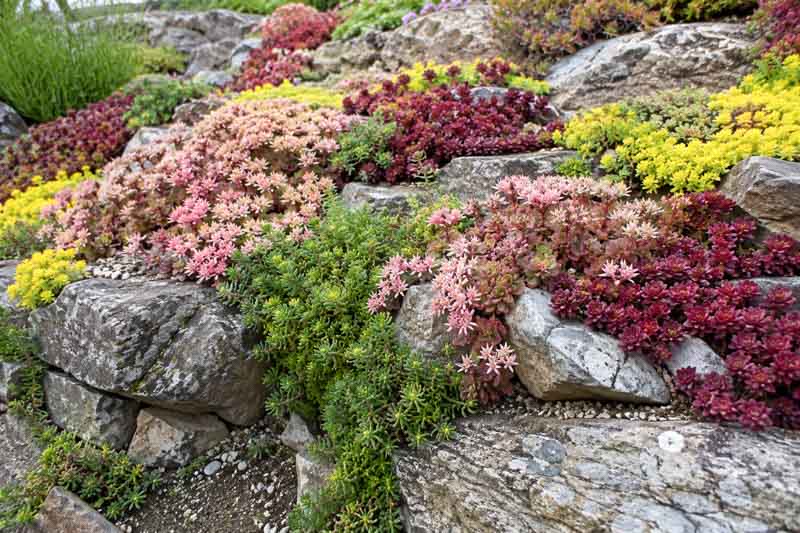
For a low-water rock garden: Golden Sedum ‘Angelina’ creates beautiful foliage contrast with blue-green shrubs and natural gravel. Choose an appropriate climate and well-drained soil, and avoid placing it where runoff will repeatedly bury its low foliage.
Will these groundcovers control erosion? Established plants can help protect surface soil, but shallow flowering mats alone are not enough for severe erosion. On vulnerable banks, combine vegetation with appropriate soil protection and drainage measures.
Design tip: Let one evergreen groundcover dominate the planting, then introduce flowering plants in broad, repeated drifts. A strong foliage framework makes the garden attractive for longer than a planting that relies entirely on a short spring flowering season.
Explore Gardenia’s Drought-Tolerant Groundcover Guide and Banks and Slopes Garden Ideas for more inspiration.
Discover Naturalistic, Native-Inspired, and Low-Maintenance Hillside Gardens
Not every hillside needs to look like a flower border. Some of the most beautiful slope gardens draw inspiration from natural landscapes, with flowering shrubs, native grasses, spreading groundcovers, and seasonal flowers arranged in loose, repeated groups.
These plantings can feel wonderfully relaxed while providing a variety of foliage textures and rooting habits.
A published Gardenia garden to explore:
A Colorful California Native Garden for Sunny, Dry Slopes: This inspiring design demonstrates a naturalistic approach to a sunny hillside, using regionally appropriate plant forms and seasonal color. Rather than covering the entire slope with one low plant, the planting creates a layered landscape with different heights and textures. Its palette is intended for suitable California conditions and should be adapted for other climates and regions.
Three additional planting concepts to consider:
- A Soft Woodland Sedge Bank: Repeat generous groups of Carex pensylvanica (Pennsylvania Sedge) in a suitable partially shaded slope. The fine-textured foliage creates a relaxed, meadow-like ground layer. Introduce compatible native woodland plants for seasonal interest, choosing species appropriate to the local region and soil moisture.
- A Magenta and Green Woodland Slope: Use Geranium ‘Czakor’ to create spreading foliage coverage beneath appropriate shrubs. Its magenta flowers and aromatic leaves bring seasonal charm, while its relatively adaptable growth habit makes it useful in suitable partially shaded locations.
- A Water-Wise Evergreen Hillside: Combine repeated drifts of Juniperus ‘Bar Harbor’ with other compatible drought-adapted shrubs and low-growing plants. The evergreen foliage provides structure, while selected flowering companions add seasonal interest. This concept works best on a sunny, well-drained slope with sufficient room for mature plant growth.
What makes a naturalistic slope garden successful? The plants appear relaxed, but the arrangement has a clear structure. Repeated groups create visual rhythm, spreading groundcovers connect the planting, and taller shrubs or grasses provide height and movement.
How can you create a low-maintenance hillside? Choose plants that thrive in the existing soil, light, and water conditions. Avoid species requiring frequent cutting or division in inaccessible areas, and plan safe access for occasional inspections and care.
Should you use native groundcovers? Regionally native plants can be excellent choices, particularly when their roots and growth habits suit the hillside. However, a plant native to one part of North America may be unsuitable or non-native elsewhere. Check local ecological recommendations.
How can you attract wildlife? Include flowering plants with complementary bloom periods, suitable native shrubs, and grasses that provide shelter or seed. Avoid invasive species and minimize unnecessary pesticide use.
Can a slope garden stay beautiful in winter? Evergreen shrubs, decorative grasses, woody stems, and selected seedheads can provide structure after flowers have faded. Choose plants with appropriate winter hardiness and consider the effect of wind exposure on an open hillside.
Design tip: Repeat your most dependable groundcover in large groups, then introduce complementary flowering shrubs and grasses. The planting should look like a connected landscape rather than a collection of isolated plants.
Remember: Beautiful planting is only part of successful hillside landscaping. If the slope shows active erosion, deep runoff channels, or structural movement, address those problems before relying on groundcovers for protection.
Explore Gardenia’s Hillside and Slope Plant Combinations, 25 Best Plants for Slopes and Erosion Control, and Drought-Tolerant Garden Design Guide.