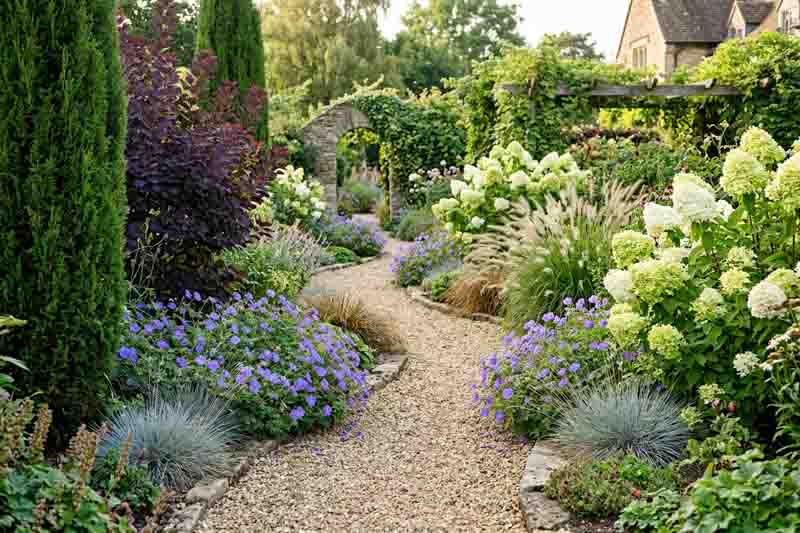
Mixed Border Garden Ideas
Dreaming of a garden border overflowing with beautiful flowers, colorful foliage, and graceful ornamental grasses? A thoughtfully designed mixed border brings together roses, flowering shrubs, perennials, bulbs, and evergreens to create a landscape that changes beautifully throughout the seasons. From romantic cottage garden borders to elegant contemporary plantings, colorful summer displays, and lush shade gardens, discover inspiring mixed border garden ideas and plant combinations for every style and space. Explore beautiful designs for sunny gardens, partially shaded borders, small front yards, and low-maintenance landscapes, then find the plants and inspiration to create a border of your own.
Fall in Love with Romantic Cottage Gardens and Colorful Mixed Flower Borders
There’s something wonderfully inviting about a traditional mixed flower border. Fragrant roses rise above clouds of catmint, purple salvia spikes weave between softer flowers, and ornamental grasses bring movement to the planting. It feels generous and spontaneous, but the most successful cottage borders have a carefully chosen combination of plants underneath all that abundance.
Three beautiful mixed border ideas to explore:
- A Romantic Apricot Rose and Purple Perennial Cottage Border: Soft apricot Rosa ‘Port Sunlight’ combines with deep violet Salvia ‘Caradonna’, lavender-blue Nepeta ‘Walker’s Low’, delicate peach-leaved bellflowers, and graceful feather reed grass. The roses provide generous rounded flowers, salvia adds height and rhythm, and the catmint softens the front of the planting. This beautiful combination is particularly suited to sunny cottage-style borders with compatible soil and moisture conditions.
- A Romantic Cottage Border with Roses, Salvia, and Catmint: Fragrant pink Rosa ‘Gertrude Jekyll’ takes center stage, surrounded by rich violet-blue Salvia ‘May Night’, soft clouds of Nepeta ‘Walker’s Low’, and the lime-green flowers of lady’s mantle. A lovely example of how a limited palette can create a wonderfully rich and romantic display without introducing dozens of different plants.
- A Colorful Summer Mixed Border with Roses, Hibiscus, and Grasses: Repeat-flowering Knock Out roses mingle with the striking scarlet flowers and dramatic dark foliage of Hibiscus ‘Midnight Marvel’. Hydrangeas, ornamental grasses, and other complementary plants add depth and texture. The result is bold, colorful, and beautifully layered, with interest continuing from summer into fall.
Why these designs work: Shrubs provide the main structure, while flowering perennials and grasses create softer transitions. Contrasting flower shapes prevent the border from looking monotonous, and repeated colors help connect the planting.
Try a romantic color combination: Apricot roses, violet-purple salvias, lavender-blue catmint, and fresh green foliage create a charming cottage garden palette. For a bolder display, combine dark-leaved shrubs or perennials with pink, red, and creamy-white flowers.
Design tip: Don’t plant everything in straight rows. Allow low-growing perennials to drift around the bases of shrubs and repeat selected plants at intervals along the border. The result feels much more natural and inviting.
For more inspiration, explore Gardenia’s English roses for mixed borders and discover Rosa ‘Ballerina’, a graceful shrub rose for informal mixed plantings.
Explore Elegant Hydrangea Borders, Contemporary Gardens, and Shady Plantings
Not every mixed border needs to be overflowing with bright flowers. Some of the most beautiful designs use contrasting foliage, generous flowering shrubs, and the soft movement of ornamental grasses to create a calm, elegant effect.
Hydrangeas are particularly useful in mixed borders because their large flowerheads provide a strong visual focus, while foliage plants and grasses help extend interest beyond their main flowering season.
Four inspiring mixed border designs:
- A Beautiful Mixed Border with Hydrangeas, Grasses, and Colorful Perennials: Generous hydrangea blooms are softened by flowing ornamental grasses and contrasting flowering perennials. A graceful combination that demonstrates how substantial shrub flowers, slender grass foliage, and smaller seasonal flowers can complement one another.
- An Elegant Contemporary Border with Hydrangeas and Evergreens: Hydrangea ‘Limelight’ brings luminous summer flowers, while upright evergreens provide year-round structure. Dark-leaved shrubs, Geranium ‘Rozanne’, upright stonecrops, and ornamental grasses introduce additional color, texture, and movement. An attractive approach for a modern garden where the planting needs to remain interesting beyond summer.
- An Elegant Shady Corner with Hydrangea and Hosta: White Hydrangea ‘Madame Emile Mouillere’ combines with the richly textured, variegated foliage of Hosta ‘Patriot’. This understated combination demonstrates how white flowers can illuminate a partially shaded garden and how foliage creates lasting visual interest even when the main flowering period is over.
- A Lush Mixed Border with Hydrangeas, Hostas, and Fountain Grass: Hydrangea ‘Limelight’ provides the main focal point, while hostas offer broad variegated foliage. Fountain grass adds airy texture, and colorful summer bedding plants bring seasonal highlights. This layered garden idea illustrates how shrubs, perennials, grasses, groundcovers, and annuals can share a mixed border when their different light and moisture requirements are accommodated.
Why these combinations are so attractive: Large hydrangea flowerheads create generous masses of color, ornamental grasses add fine texture and movement, and foliage plants provide a calmer background. Evergreens introduce permanent structure and help prevent the border from looking bare in winter.
For a contemporary mixed border: Choose a limited palette of white, pale green, purple, and deep burgundy. Repeat structural shrubs and evergreen accents, then let ornamental grasses and low-growing perennials soften the planting.
For a shaded mixed border: Combine suitable hydrangeas with hostas, heucheras, ferns, and Japanese forest grass. Choose plants according to the actual light and soil moisture available. A border beneath mature trees may be much drier than an open, partially shaded garden.
Design tip: Let one flowering shrub provide the main attraction, then select a few supporting plants with contrasting foliage. Too many competing shrubs can make a small mixed border feel crowded.
Explore Hydrangea ‘Limelight’ or discover Gardenia’s best hydrangea companion plants for more planting combinations.
Discover Naturalistic, Low-Maintenance, and Long-Season Mixed Border Ideas
Some mixed borders are at their best when they look a little wild. Tall flowers rise through soft drifts of perennials, grasses sway between the blooms, and seedheads add texture long after summer has passed. Naturalistic borders can be wonderfully beautiful, especially when they combine plants with different flowering seasons and complementary growth habits.
Three inspiring garden ideas for relaxed, colorful borders:
- A Beautiful Late-Season Border with Perennials and Architectural Grasses: Helenium ‘Moerheim Beauty’, purple-pink coneflowers, asters, and dramatic ornamental grasses create a richly textured border with attractive late-summer and autumn color. The tall grasses bring height and movement, while the flowerheads provide strong contrasting shapes. An excellent source of inspiration for the perennial and grass layers of a larger mixed border.
- A Vibrant Summer Border with Coneflowers, Salvia, and Grasses: Pale pink coneflowers, violet-purple Salvia ‘Caradonna’, blue sea holly, yellow yarrow, airy verbena, and ornamental grasses create a colorful, naturalistic display. Its relaxed drifts can be adapted to a mixed border by placing compatible flowering shrubs behind the perennials, with enough room for their mature growth.
- A Romantic Rose Border with Catmint, Hardy Geraniums, and Evergreen Juniper: Soft pink Rosa ‘The Fairy’ combines with lavender-blue catmint, violet Geranium ‘Rozanne’, dark-stemmed Salvia ‘Caradonna’, and the spreading evergreen foliage of Juniperus ‘Blue Chip’. This combination illustrates how shrubs, colorful perennials, and evergreens can work together to provide a long flowering season and lasting structure.
What makes a naturalistic mixed border successful? The planting feels relaxed, but the arrangement is deliberate. Repeated groups of flowers create rhythm, grasses introduce movement, and contrasting plant forms prevent the border from looking flat or repetitive.
How can you extend seasonal interest? Begin with spring bulbs and suitable spring-flowering shrubs, followed by roses, salvias, and early-summer perennials. Add coneflowers, hydrangeas, and summer-flowering plants, then finish with asters, upright stonecrops, ornamental grass plumes, and autumn foliage.
For low-maintenance planting: Choose varieties matched to your sunlight, soil, water availability, and hardiness zone. Repeat dependable plants rather than assembling a collection that requires different care in every section. Avoid vigorous species that may dominate neighboring plants.
For pollinator-friendly borders: Include flowers that provide accessible nectar and pollen across the growing season. Suitable native shrubs, coneflowers, salvias, asters, and other regionally appropriate plants can create valuable feeding and shelter opportunities.
Don’t forget winter. Evergreen shrubs, decorative grasses, interesting seedheads, and woody branches can provide structure after many herbaceous flowers have disappeared. However, not all grasses remain attractive or evergreen in every climate, so check their individual growing habits.
Design tip: Avoid dividing the border into separate spring, summer, and fall sections. Distribute plants with different flowering times throughout the planting, so that each part of the garden offers changing highlights.
Looking for help translating these ideas into a planting plan? Explore Gardenia’s flower border design guide, discover perennials for spring-to-fall color, or browse more beautiful garden border ideas.
Whether you love romantic rose borders, elegant hydrangea gardens, or colorful naturalistic plantings, a mixed border gives you endless opportunities to combine flowers, foliage, and structure. Find a design that inspires you, adapt it to your growing conditions, and create a garden that becomes more beautiful with every season.