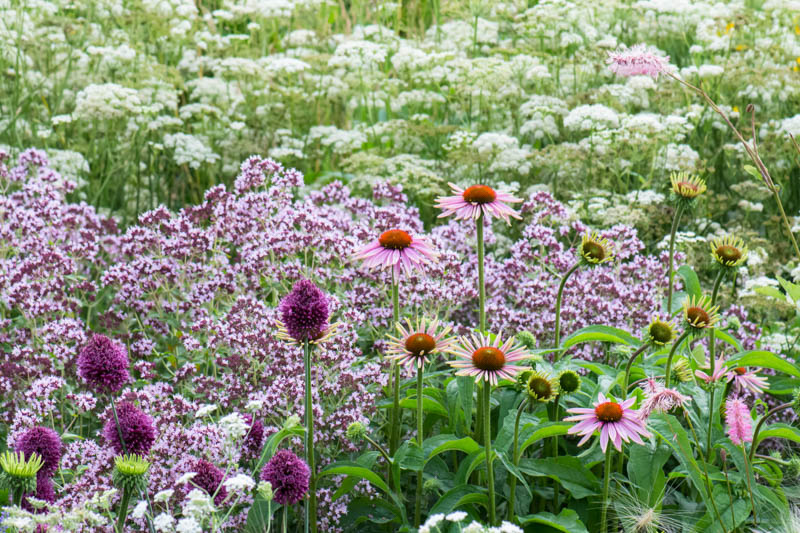
Perennial Flower Border Ideas
Dreaming of a perennial flower border overflowing with color, texture, and beautiful flowers that return year after year? From romantic cottage garden borders filled with roses and lavender-blue blooms to vibrant summer flower beds, elegant shade gardens, and naturalistic pollinator plantings, discover inspiring perennial flower border ideas and plant combinations for every garden style. Explore gorgeous designs for sunny and partially shaded borders, small gardens, low-maintenance landscapes, and flower beds that shine from spring through fall. Each Gardenia garden idea brings together complementary plants, beautiful color palettes, and practical planting inspiration to help you create a garden that’s truly your own.
Discover Romantic Cottage Gardens and Colorful Sunny Borders
There’s something irresistible about a cottage garden border. Flowers tumble into one another, fragrant roses rise above soft mounds of perennials, and narrow paths disappear between generous drifts of color. The whole garden feels wonderfully relaxed, yet the most beautiful cottage borders are often carefully planned.
Romantic pinks, soft apricots, violet-blue flowers, and fresh green foliage create a welcoming atmosphere, particularly when combined with plants of contrasting heights and flower shapes.
Three charming cottage garden border ideas to explore:
- A Romantic Apricot Rose and Purple Perennial Border: This delightful combination brings together apricot English roses, purple Salvia ‘Caradonna’, lavender-blue Catmint ‘Walker’s Low’, delicate peach-leaved bellflowers, and graceful feather reed grass. Rounded rose blossoms contrast beautifully with slender flower spikes and softly billowing foliage. A lovely idea for a sunny border beside a fence or garden path.
- A Romantic Cottage Border with Roses, Salvia, and Catmint: Fragrant pink roses take center stage above violet-blue salvia and airy catmint, while lady’s mantle brings a fresh, soft-green accent. This combination is especially attractive when you want an abundant, traditional English garden atmosphere without introducing too many competing flower colors.
- A Sunny Cottage Border with Dahlias, Sneezeweed, and Catmint: For something warmer and more exuberant, combine copper-orange dahlias with russet-red Helenium and lavender-blue Nepeta. The contrast between fiery summer flowers and cool blue blooms creates a cheerful, inviting border with interest extending into autumn. In colder regions, dahlias may need to be lifted and stored for winter.
Why these designs work: The plants share an informal character, but their flowers have different shapes. Rounded roses or dahlias provide fullness, upright salvias introduce rhythm, and spreading catmint softens the edges. Together, they create abundance without making the planting look chaotic.
Design tip: Choose two or three dominant colors and repeat them throughout the border. Allow the plants to overlap naturally, but give every variety enough room to reach its mature size. A beautiful cottage border should feel generous, not overcrowded.
For a particularly versatile starting point, consider Salvia ‘Caradonna’. Its dark stems and rich violet-purple flowers add structure among softer cottage garden plants.
Explore Colorful Perennial Borders for Full Sun and Summer Flowers
If your garden receives plenty of sunshine, you have a wonderful opportunity to create a perennial flower border filled with vibrant colors, contrasting flower shapes, and the gentle movement of ornamental grasses.
Think purple salvias rising above golden yarrows, pink coneflowers mingling with airy summer flowers, and late-season seedheads catching the afternoon light. A sunny border can be spectacular without needing an enormous collection of plants.
Three inspiring ideas for sunny perennial borders:
- A Vibrant Perennial Border for Summer Gardens: This naturalistic design combines pale pink coneflowers, violet-purple Salvia ‘Caradonna’, architectural blue sea holly, lemon-yellow yarrow, airy Verbena bonariensis, and ornamental grasses. The result is colorful, textured, and full of movement. Particularly attractive in a generous sunny border where plants can be arranged in flowing, irregular groups.
- A Brilliant Summer Border with Crocosmia, Agapanthus, and Grasses: For gardeners who love bold flower shapes and dramatic contrasts, this combination uses striking crocosmia flowers, elegant agapanthus, and ornamental grasses. It creates an architectural summer display, especially suited to suitable mild-climate gardens with sunny, well-drained conditions. Check individual plant hardiness before recreating it in colder areas.
- A Glowing Border with Architectural Perennials and Grasses: Discover how bold foliage, upright flower spikes, and graceful grasses can transform a conventional flower bed into a striking contemporary planting. The contrast between sturdy plant forms and fine-textured foliage gives the border interest even when some flowers are fading.
What creates the greatest visual impact? Contrast. Combine rounded daisy-shaped flowers with narrow vertical spikes, broad flower clusters with delicate stems, and warm colors with cool purples or blues. The flowers don’t all have to be at their peak simultaneously to create an attractive display.
Try a purple, pink, and yellow palette: The rich violet spikes of Salvia ‘Caradonna’ look wonderful alongside rosy Echinacea purpurea and the lemon-yellow flowerheads of Achillea ‘Moonshine’. These perennials offer different shapes and complementary colors, although their mature sizes and moisture preferences should be considered when planning the bed.
Design tip: Let one or two plants dominate the border, then introduce contrasting flowers in smaller, repeated groups. A restrained planting palette usually looks more cohesive than placing a different variety in every available space.
Explore Shady, Low-Maintenance, and Pollinator-Friendly Borders
Some of the most beautiful perennial borders grow where sunlight is gentle and filtered. A partially shaded flower bed can feel wonderfully peaceful, with lush hostas, arching ornamental grasses, delicate woodland blossoms, and foliage in shades of silver, blue, lime, and deep green.
Unlike a sunny border, where flowers often provide the main display, a successful shade garden relies on attractive foliage for much of its beauty. Seasonal flowers become highlights against a rich background of contrasting leaves.
Three beautiful shade border designs:
- A Lush Hosta Shade Border for Season-Long Interest: Blue-green and variegated hostas combine with gracefully arching Japanese forest grass, delicate foamflowers, and tall white-flowering Actaea. The result is a beautifully layered woodland border with striking contrasts in leaf shape, texture, and height. Best where the soil provides suitable moisture and protection from harsh afternoon sun.
- A Woodland Border with Hosta, Heuchera, Ferns, and Polemonium: This elegant planting combines bold hosta foliage, richly colored coral bells, delicate ferns, and the graceful blue flowers of Jacob’s ladder. The contrasting leaves create year-round design interest during the growing season, while the flowers introduce seasonal color and charm.
- A Cool, Lush Border with Hostas and Candelabra Primroses: A lovely idea for a moist, partially shaded garden where bold blue-gray hosta leaves provide a dramatic foundation for upright primrose flowers. This combination is particularly appealing in woodland-inspired beds with moisture-retentive soil.
Why these shade gardens are so attractive: Their beauty comes from the foliage as much as the flowers. Large, rounded hosta leaves contrast with fine fern fronds and flowing grasses, while lighter-colored foliage brightens darker corners of the garden.
Design tip: Repeat broad-leaved plants in generous groups, then weave finer-textured perennials between them. Rather than filling every inch with flowers, allow the leaves to provide the main structure.
Choose shade plants carefully. Partial shade, deep shade, moist shade, and dry shade are very different growing environments. Plants such as astilbes and many primroses need reliable moisture, while established trees can create surprisingly dry conditions beneath their canopies.
For beautiful blue-green foliage, explore Hosta ‘Halcyon’, a particularly attractive choice for cool, sheltered garden borders.
Find Low-Maintenance, Drought-Tolerant, and Pollinator-Friendly Border Ideas
Wouldn’t it be wonderful to enjoy a border filled with beautiful flowers and butterflies without spending every weekend looking after it? By combining resilient perennials, suitable ornamental grasses, and flowers that attract pollinators, you can create a garden that’s both rewarding and relatively easy to maintain.
Some of the most striking contemporary borders use repeated groups of drought-tolerant plants, relaxed meadow-inspired combinations, and naturalistic planting that becomes more beautiful as it matures.
Three garden ideas worth exploring:
- A Heat-Loving, Low-Water Perennial Border: This colorful sunny border combines purple Salvia ‘Caradonna’, lemon-yellow Achillea ‘Moonshine’, airy Russian sage, and late-flowering Hylotelephium ‘Autumn Joy’. The combination provides contrasting flower shapes and a long season of interest, especially in sunny gardens with well-drained soil. Once established, these plants can generally tolerate periods of reduced watering.
- A Colorful, Low-Maintenance Pollinator Border: Bright golden Rudbeckia flowers and purple Liatris spikes create a cheerful, wildlife-friendly display, complemented by other flowering plants and grasses. This naturalistic planting offers abundant summer color and a beautiful range of flower forms for visiting insects.
- A Pollinator-Rich Border with Coneflowers, Sea Holly, and Garden Phlox: Pink coneflowers, silvery sea holly, and violet-blue Phlox ‘Blue Paradise’ create a generous, richly colored summer planting. Their contrasting flower shapes make a memorable display and provide floral resources for visiting pollinators. Match their soil and watering needs carefully rather than treating every plant as equally drought-tolerant.
What makes a border low-maintenance? Choose plants that naturally thrive in your growing conditions, allow them enough room to develop, and repeat a manageable selection of varieties. Healthy plants established in suitable locations generally require less intervention.
Want to attract more pollinators? Include flowers with different shapes and flowering periods, choose regionally appropriate plants, and consider leaving attractive seedheads standing through winter. Simple-flowered plants often provide more accessible pollen and nectar than highly modified double flowers.
Design tip: Naturalistic borders look especially beautiful when the planting is repeated in broad, loose drifts. Combine upright flower spikes, rounded flowerheads, and airy grasses for a display that feels alive with movement.
Remember that low-maintenance does not mean maintenance-free. Even drought-tolerant perennial borders need watering during establishment, occasional weeding, and periodic seasonal care.
Get Inspired by Perennial Borders with Flowers from Spring to Fall
Imagine stepping into your garden in spring to enjoy fragrant peonies, returning in summer to find colorful coneflowers and salvias, then welcoming autumn with glowing asters and elegant seedheads. A carefully designed perennial border can offer something wonderful to enjoy throughout the growing season.
The trick is choosing plants whose main flowering periods overlap, rather than relying on a single group of perennials that all bloom at once.
Three inspiring seasonal flower border ideas:
- A Perennial Border from Spring to Fall: This beautiful design combines fragrant pink Peony ‘Sarah Bernhardt’, purple Salvia ‘Caradonna’, rosy coneflowers, and compact Aster ‘Purple Dome’. The peonies bring late-spring beauty, salvias and coneflowers create a colorful summer display, and asters provide a final flourish in fall. A lovely example of seasonal succession using just four complementary plants.
- A Pollinator-Rich Spring Perennial Planting: Explore a delightful combination featuring verbascums, irises, and camassias, designed to shine in late spring and early summer. Its upright flower spikes and contrasting forms create a striking display at a time when many summer perennials are only beginning to grow.
- A Summer-to-Fall Perennial Border That Glows: Bright coneflowers, striking red-hot pokers, daylilies, and airy verbena create a vibrant summer border with contrasting colors and flower shapes. A wonderful source of inspiration for sunny gardens where you want strong color and an informal, exuberant atmosphere.
Why season-long planting works: Instead of separating spring, summer, and fall flowers into distinct sections, distribute plants with different blooming periods throughout the border. As one group finishes flowering, another takes center stage in the same area.
Think beyond the flowers: Peony foliage remains attractive after blooming, ornamental grasses provide movement, and some coneflowers and asters produce distinctive seedheads. These quieter elements give a perennial border character between its peak flowering moments.
Can a perennial flower border look beautiful all year? Yes, although not through continuous flowering alone. In colder climates, many herbaceous perennials disappear above ground in winter. Evergreen companions, ornamental grasses, carefully retained seedheads, and attractive garden structure can help maintain interest during the dormant season.
Design tip: Choose at least one dependable flowering highlight for spring, summer, and fall. Then repeat those plants through the border, allowing foliage and complementary flowers to connect the seasons visually.
Looking for help turning this inspiration into a real planting plan? Explore Gardenia’s How to Design a Perennial Flower Border or discover more beautiful flower bed and garden border ideas.