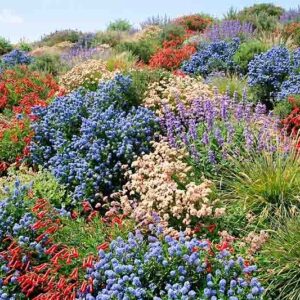
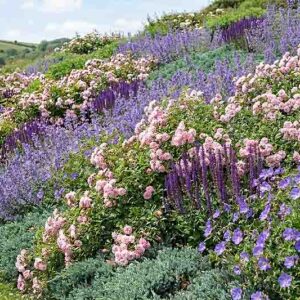
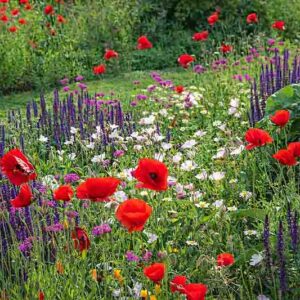
Turn a difficult hillside into one of your garden's most beautiful features. Discover 25 outstanding plants for slopes and erosion control, including colorful groundcovers, native grasses, flowering perennials, and low-maintenance shrubs. Learn which plants suit sunny, shady, dry, or damp banks and how to create a lasting landscape.


A sloping garden can be a challenge. Rain washes soil downhill, grass struggles to grow, and maintaining a steep bank is rarely anyone’s favorite job. But with the right plants, that difficult hillside could become one of the most beautiful features of your landscape.
Imagine sweeping drifts of flowering groundcovers, graceful grasses, and spreading shrubs that create color, texture, and year-round interest while helping protect the soil beneath them.
The secret is choosing plants for more than their appearance. Some form dense carpets that shield the surface from rain. Others develop extensive roots that help bind the soil. The best plants for slopes and erosion control often work together, combining attractive ground coverage with long-term root reinforcement.
Quick answer: Creeping juniper, little bluestem, switchgrass, Pennsylvania sedge, and suitable spreading shrubs are excellent choices for erosion control. For colorful ground coverage, consider creeping phlox, bigroot geranium, or aromatic aster. The right combination depends on sunlight, soil moisture, drainage, and slope conditions.
Not every hillside needs the same plants. A dry, sunny embankment requires a different approach from a shaded woodland bank or a slope where moisture collects.
| Slope conditions | Recommended plants |
|---|---|
| Sunny, dry | Creeping juniper, little bluestem, creeping rosemary |
| Rocky, well-drained | Creeping phlox, thyme, stonecrop |
| Dry shade | Pennsylvania sedge, bigroot geranium, barrenwort |
| Moist shade | Golden ragwort, wild ginger, Christmas fern |
| Native meadow | Little bluestem, prairie dropseed, switchgrass |
| California dry hillside | Low-growing ceanothus, California buckwheat |
| Damp lower bank | Red-osier dogwood, suitable switchgrass |
Explore more options in Gardenia’s plants for banks and slopes collection.
Plants protect slopes in three important ways. Their foliage intercepts rainfall, reducing its impact on exposed soil. Spreading stems and leaves form protective ground coverage, while roots help hold soil particles together.
Dense, fibrous roots from grasses and sedges are particularly useful for reinforcing upper soil layers. Shrubs contribute established woody root systems, while creeping groundcovers help reduce bare patches.
For many garden slopes, a combination of these plants is more useful than relying on one species. However, plants cannot reliably prevent landslides or deep soil movement. Steep, unstable banks may require professional drainage or structural solutions.
These plants are grouped by the conditions where they perform best. Some provide important root reinforcement; others are especially valuable for flowering surface coverage and ornamental interest.
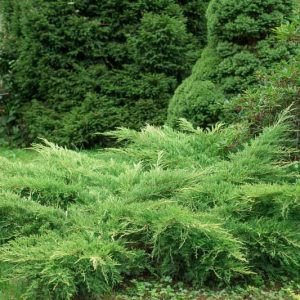
One of the most dependable evergreen groundcovers for sunny slopes, creeping juniper forms spreading woody branches that gradually cover exposed soil. Blue-green, silver, and golden cultivars provide year-round texture. Its established roots contribute to soil reinforcement, making it particularly valuable for long-term hillside coverage. Avoid poorly drained sites.
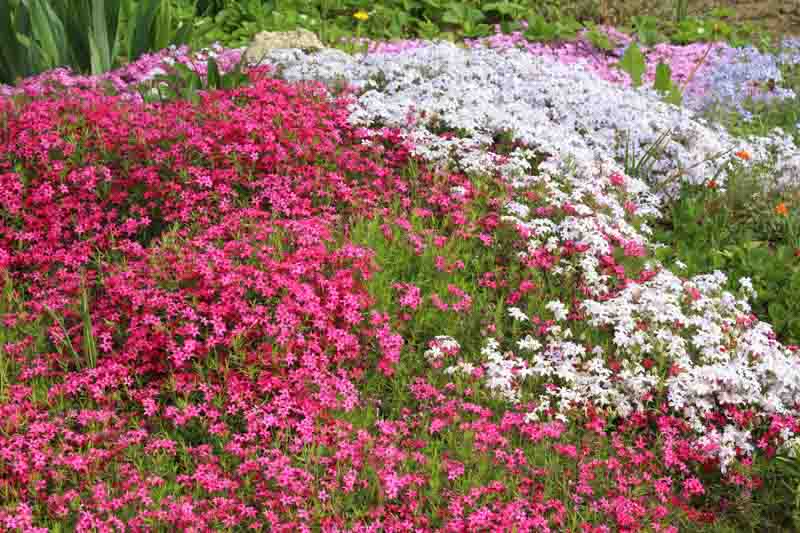
Few groundcovers make a hillside more spectacular than creeping phlox. Masses of pink, lavender, purple, or white flowers tumble over rocks and soften the edges of banks. Its evergreen foliage forms a protective surface mat, although its relatively shallow roots make it better for ornamental coverage than substantial soil reinforcement.
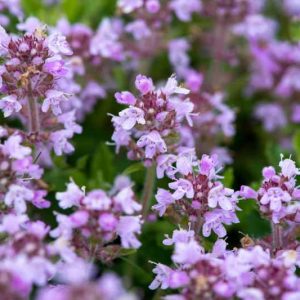
Perfect for smaller, rocky banks, creeping thyme creates a fragrant carpet dotted with flowers that attract bees. It thrives in sunny, well-drained conditions and looks beautiful between stones. Use it for attractive surface coverage rather than relying on its shallow roots to stabilize a steep hillside.
Stonecrop handles thin, rocky soil where many plants struggle. Its spreading succulent foliage creates colorful carpets, complemented by clusters of star-shaped flowers. It is useful for covering exposed pockets of soil, but not for major erosion problems. Check regional invasive-plant guidance before choosing vigorous varieties.
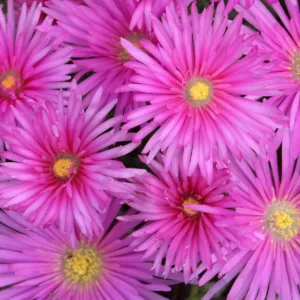
For brilliant color on a hot, gravelly bank, hardy ice plant is difficult to beat. Its succulent foliage is covered in vivid magenta-purple flowers. Excellent drainage is essential, especially during winter. Consider it a decorative groundcover for stable slopes, not a primary erosion-control plant.
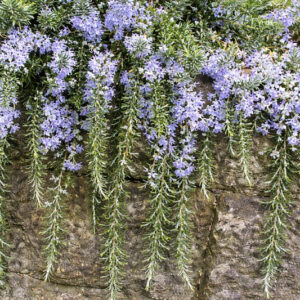
Trailing rosemary gives sunny hillsides an elegant Mediterranean appearance. Aromatic evergreen branches cascade over rocks, while blue flowers attract pollinators. Its woody growth and established roots make it a useful choice for dry banks in mild climates. Choose prostrate cultivars and avoid poorly drained soil.
| Genus | Arctostaphylos, Ceanothus, Cornus, Delosperma, Echinacea, Epimedium, Eriogonum, Fragaria, Juniperus, Panicum, Phlox, Polystichum, Rudbeckia, Schizachyrium, Sedum, Thymus |
|---|---|
| Landscaping Ideas | Banks And Slopes |


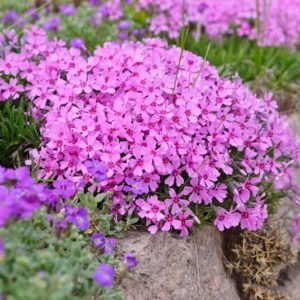
For a natural-looking hillside, combine grasses with colorful flowering perennials. Their contrasting foliage, flowers, and root systems create an attractive, resilient planting.
Little bluestem combines attractive blue-green foliage with rich copper and russet autumn color. Its dense fibrous roots help bind soil, making it particularly useful for sunny, well-drained slopes. Repeat it in sweeping drifts with flowering perennials for a natural prairie effect.
This graceful native grass forms fountains of fine foliage topped with airy flowers. Beneath its delicate appearance is an extensive fibrous root system that contributes to long-term soil reinforcement. It establishes slowly, so protect bare soil while the planting matures.
Switchgrass offers elegant foliage, airy flowers, and substantial fibrous roots. It is useful for naturalized slopes where long-term reinforcement matters. Choose cultivars suited to local moisture conditions. In wildfire-prone regions, avoid continuous masses of dry grasses near structures and follow local fire-safety guidance.
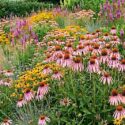
Purple coneflowers bring cheerful blooms, pollinators, and attractive seedheads to grassy slopes. Their established roots complement those of ornamental grasses, although they are better used as flowering companions than primary stabilizers. Combine them with little bluestem for a colorful naturalistic planting.
Golden flowers with dark centers brighten slopes and attract pollinators. Black-eyed Susan gradually forms expanding clumps, filling spaces between grasses and shrubs. It performs particularly well where soil retains some moisture and makes a beautiful companion to native ornamental grasses.
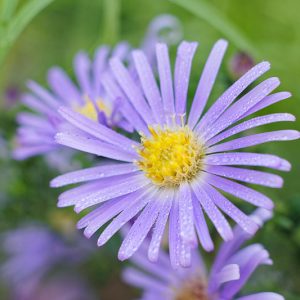
Aromatic aster brings masses of lavender-blue flowers to the autumn hillside. Its spreading, bushy growth helps fill gaps, while the flowers support late-season pollinators. Particularly attractive with little bluestem, it suits sunny banks with good drainage in appropriate regions.
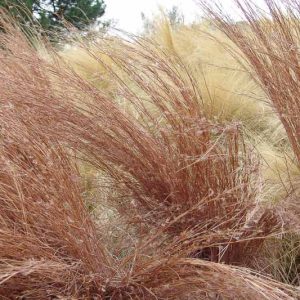
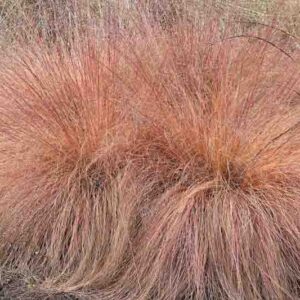
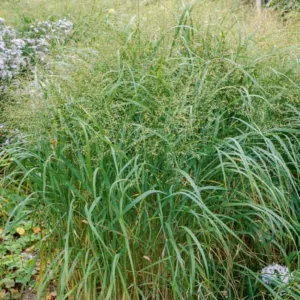


Shaded banks beneath trees can be difficult to plant, especially where roots compete for moisture. These woodland choices offer attractive alternatives to struggling lawn.
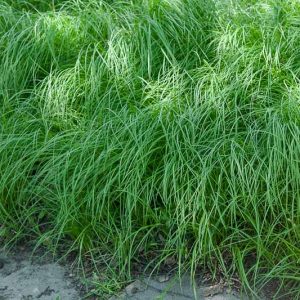
Pennsylvania sedge creates a soft, flowing carpet beneath trees. Its spreading rhizomes help bind the upper soil, making it a useful lawn alternative on suitable woodland banks. It tolerates relatively dry shade once established but needs protection from heavy foot traffic.
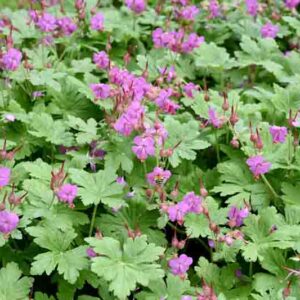
Bigroot geranium combines aromatic leaves, charming flowers, and attractive autumn foliage. Its thick, spreading rhizomes gradually form colonies that help cover shaded soil. Particularly useful beneath established trees, it tolerates some dryness once established. Check local guidance because it is nonnative in North America.
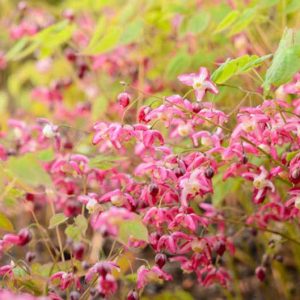
With heart-shaped leaves and delicate spring flowers, barrenwort brings refined beauty to woodland slopes. Its rhizomes gradually create a protective groundcover in sheltered shade. It is better suited to established ornamental banks than areas needing rapid erosion control.
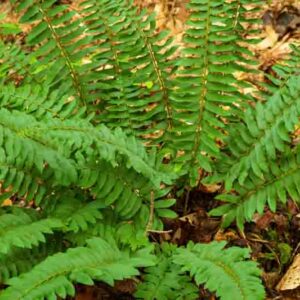
Christmas fern provides handsome evergreen fronds and natural woodland character. Its established clumps help protect shaded soil, but it does not spread rapidly. Combine it with sedges or other woodland groundcovers to protect the spaces between plants.
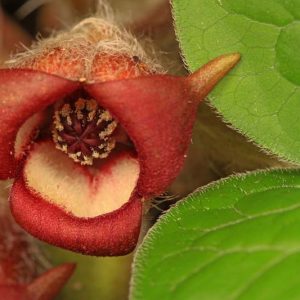
Wild ginger forms lush colonies of heart-shaped leaves that spread through creeping rhizomes. It is ideal for shaded woodland banks with fertile, moisture-retentive soil, where it helps cover exposed ground. Avoid hot, drought-prone slopes.
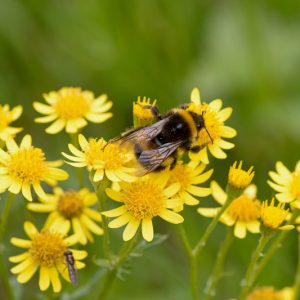
Golden ragwort brightens moist woodland banks with cheerful yellow flowers. Its spreading colonies create useful surface coverage while supporting early pollinators. It is particularly effective in informal native gardens where the soil remains reasonably moist.
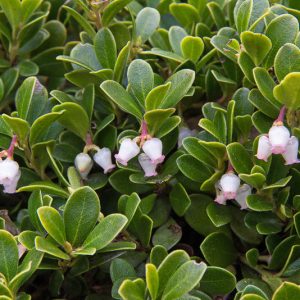
Bearberry forms an elegant evergreen carpet with glossy leaves, delicate flowers, and red berries. Its spreading woody stems provide attractive long-term coverage on acidic, well-drained slopes in cool climates. Establishment can be slow, and it dislikes poorly drained soil.
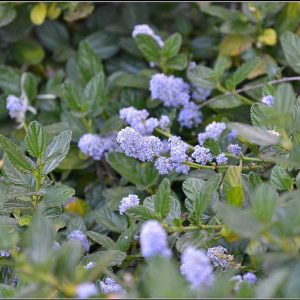
Low-growing ceanothus can transform a California hillside with dense evergreen foliage and brilliant blue flowers. Its woody roots contribute to soil reinforcement, while the flowers attract pollinators. Select locally adapted cultivars, as drainage, irrigation needs, and climate tolerance vary considerably.
California buckwheat is an excellent native shrub for dry western hillsides. Creamy flower clusters mature to rusty tones, creating lasting interest and attracting wildlife. Its extensive roots help reinforce suitable slopes, particularly when combined with native grasses and other drought-adapted shrubs.
Virginia strawberry offers attractive foliage, white flowers, and small fruits enjoyed by wildlife. Runners root as they spread, creating living ground coverage between larger plants. It is particularly useful for naturalistic banks where the soil retains adequate moisture.
Beach strawberry creates a glossy carpet of foliage with delicate white flowers. Its creeping runners root into the soil, making it useful for appropriate coastal slopes. It tolerates salt-laden air and benefits from adequate moisture during establishment.
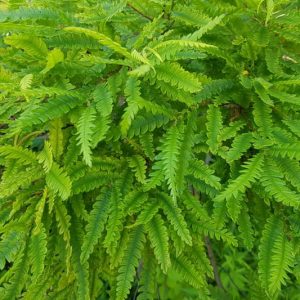
Despite its name, sweetfern is a fragrant native shrub rather than a fern. Its deeply divided foliage looks wonderful on naturalized banks. Spreading underground stems help form colonies and reinforce sandy, acidic soil in suitable eastern North American landscapes.
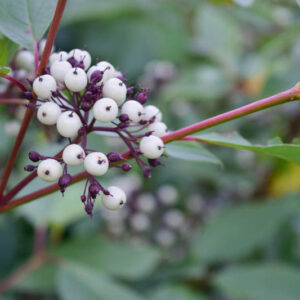
Red-osier dogwood is especially valuable on moist banks, where its spreading woody roots help reinforce soil. Attractive foliage and brilliant red winter stems provide year-round interest. Give it adequate moisture and room to develop into a natural-looking shrub colony.


A successful hillside is rarely built around one plant. Gardenia’s Slope Planting Matrix organizes choices into three complementary roles, making it easier to create a planting that is both beautiful and practical.
| Planting role | Examples | Main benefit |
|---|---|---|
| Surface cover | Creeping phlox, thyme, stonecrop | Protects exposed soil and adds color |
| Fibrous or rhizomatous roots | Little bluestem, switchgrass, Pennsylvania sedge | Helps bind upper soil layers |
| Woody structure | Creeping juniper, ceanothus, dogwood | Provides long-lived root reinforcement |
These roles describe planting functions, not measured erosion-control ratings. Soil conditions, climate, and establishment all affect performance.
Gardenia’s Three-Layer Approach
1. Cover the soil with suitable groundcovers and temporary erosion protection where needed.
2. Reinforce the planting with grasses, sedges, spreading perennials, or shrubs.
3. Create the garden with repeated combinations of flowers, foliage, and seasonal interest.
Looking for hillside garden inspiration? Discover beautiful planting combinations for banks and slopes, with ideas for turning a difficult hillside into a colorful, inviting garden.
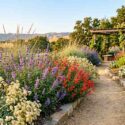
Sunny prairie hillside: Repeat little bluestem and prairie dropseed, with purple coneflower and aromatic aster woven between them. The result is a naturalistic planting with fine textures, colorful flowers, and contrasting root systems.
Shady woodland bank: Combine Pennsylvania sedge with Christmas fern and golden ragwort where moisture permits. This creates a soft, layered alternative to struggling turfgrass beneath trees.
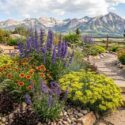
California dry hillside: Plant broad, irregular drifts of low-growing ceanothus and California buckwheat, adding locally appropriate native grasses. The combination offers evergreen structure, flowers, and valuable wildlife habitat.
Use Gardenia’s Plant Finder to narrow these selections for your conditions, then arrange them in the Garden Design Tool to review combinations and quantities.
Even well-chosen plants need protection while their roots become established. These steps help reduce erosion during that vulnerable period.
When plants aren’t enough: Deep gullies, cracking ground, sliding soil, unstable retaining walls, or persistent seepage can signal serious slope problems. Seek professional assessment rather than relying on vegetation alone.
Creeping juniper, little bluestem, switchgrass, Pennsylvania sedge, and suitable spreading shrubs are useful choices. Combining groundcovers, grasses, and woody plants can provide complementary soil coverage and root reinforcement.
Creeping juniper works well on many sunny, well-drained banks, while Pennsylvania sedge suits certain shaded sites. Very steep or unstable slopes may need additional erosion-control measures or professional assessment.
Consider creeping juniper, little bluestem, creeping rosemary, creeping phlox, and locally adapted native shrubs. Choose plants suited to the climate, soil, and drainage.
Pennsylvania sedge, bigroot geranium, Christmas fern, barrenwort, wild ginger, and golden ragwort are attractive alternatives, depending on soil moisture and growing conditions.
Establishment varies by species and site conditions. Some groundcovers spread relatively quickly, while grasses and shrubs may require several growing seasons to develop extensive root systems. Protect bare soil during this period.
The best hillside gardens don’t rely on one miracle plant. They combine groundcovers, grasses, perennials, and shrubs suited to the conditions, creating an attractive landscape while helping protect the soil.
Explore Gardenia’s hillside landscaping ideas for inspiration, then choose plants that work together rather than planting at random.
Updated and reviewed by Gardenia: November 2026
| Genus | Arctostaphylos, Ceanothus, Cornus, Delosperma, Echinacea, Epimedium, Eriogonum, Fragaria, Juniperus, Panicum, Phlox, Polystichum, Rudbeckia, Schizachyrium, Sedum, Thymus |
|---|---|
| Landscaping Ideas | Banks And Slopes |
Create a membership account to save your garden designs and to view them on any device.
Becoming a contributing member of Gardenia is easy and can be done in just a few minutes. If you provide us with your name, email address and the payment of a modest $25 annual membership fee, you will become a full member, enabling you to design and save up to 25 of your garden design ideas.
Join now and start creating your dream garden!