Create a beautiful, resilient landscape that thrives on less water. This hub covers design principles, plant lists by layer, ready-to-copy planting ideas, care tips, and FAQs to help you build a gorgeous drought tolerant garden in any climate.
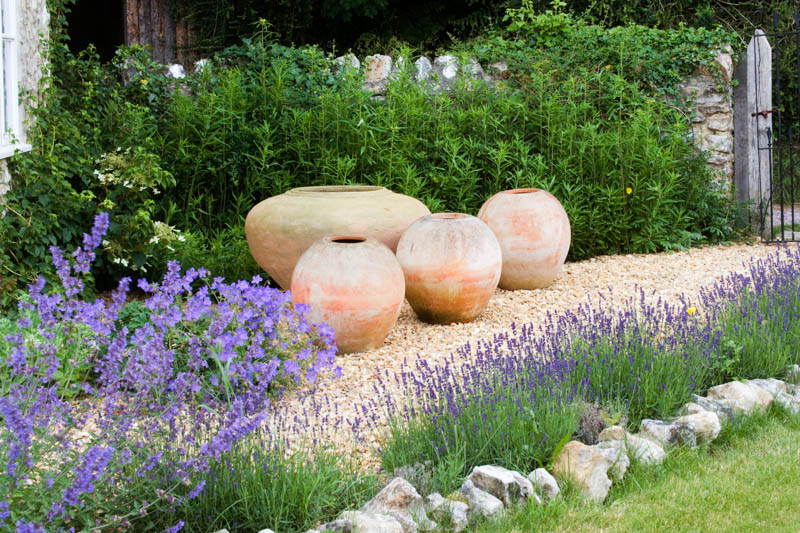


Create a beautiful, resilient landscape that thrives on less water. This hub covers design principles, plant lists by layer, ready-to-copy planting ideas, care tips, and FAQs to help you build a gorgeous drought-tolerant garden in any climate.
Drought-tolerant gardens are landscapes planned to use far less water than a conventional lawn and border. They rely on tough, climate adapted plants, smart layout, improved soil structure, and efficient irrigation. You might also hear related terms like water-wise garden, xeriscape garden, Mediterranean garden, gravel garden, and dry garden. All share one goal – high impact beauty with low water use and low maintenance.
Key ideas include hydrozoning (grouping plants by water need), building deep, healthy soil with compost and mulch, improving drainage where needed, reducing or replacing lawn, and watering deeply but infrequently so roots grow down rather than up. Combined with drought resistant plants and native plants, you get a landscape that stays attractive through heat, wind, and periodic watering restrictions.
Think in layers for structure, shade, color, and four-season interest. Always verify USDA hardiness zone, sun, and soil requirements for your site before choosing exact varieties.
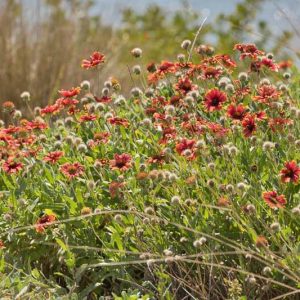
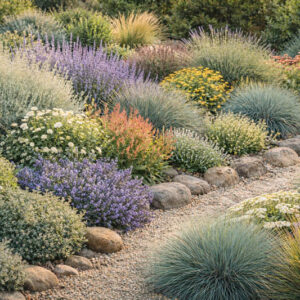
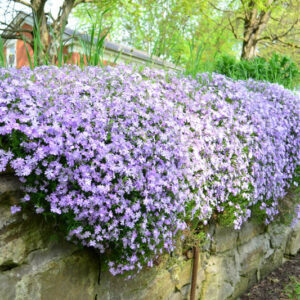
See More Drought-Tolerant Shrubs
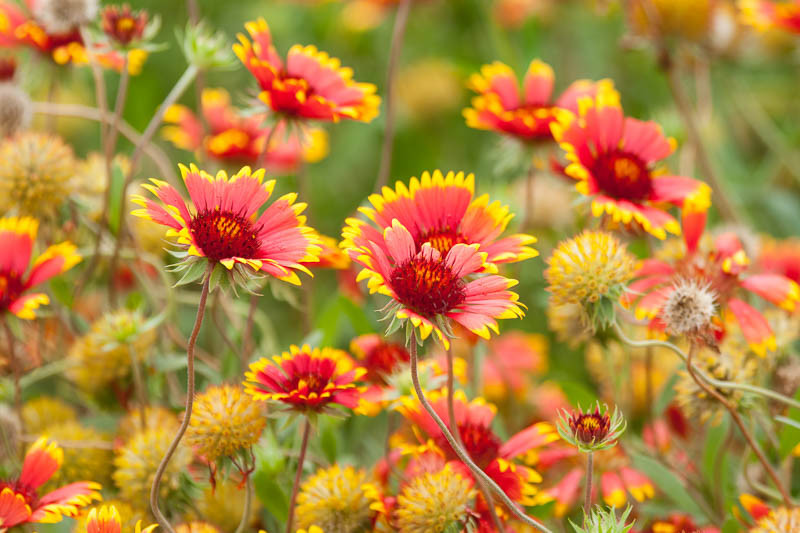
See More Drought-Tolerant Perennials
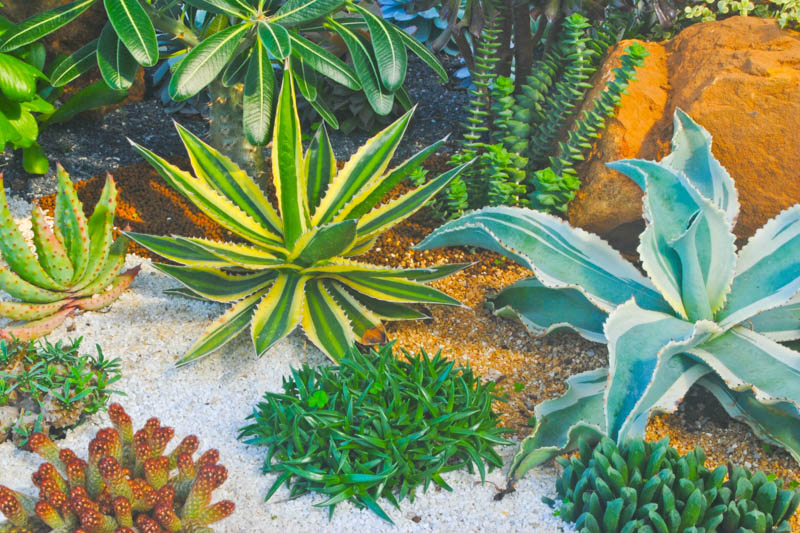
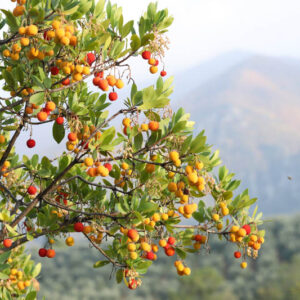
See More Drought-Tolerant Trees
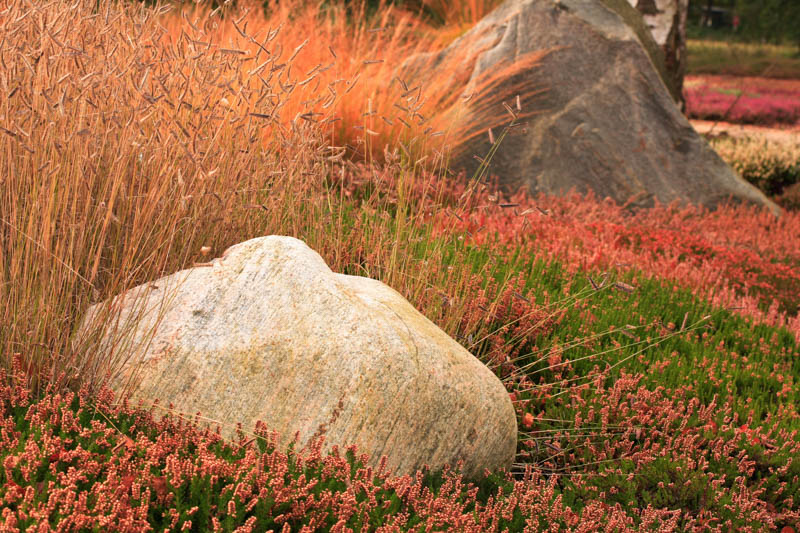
See More Drought-Tolerant Grasses
🔎 Find More Drought-Tolerant Plants with our Plant Finder
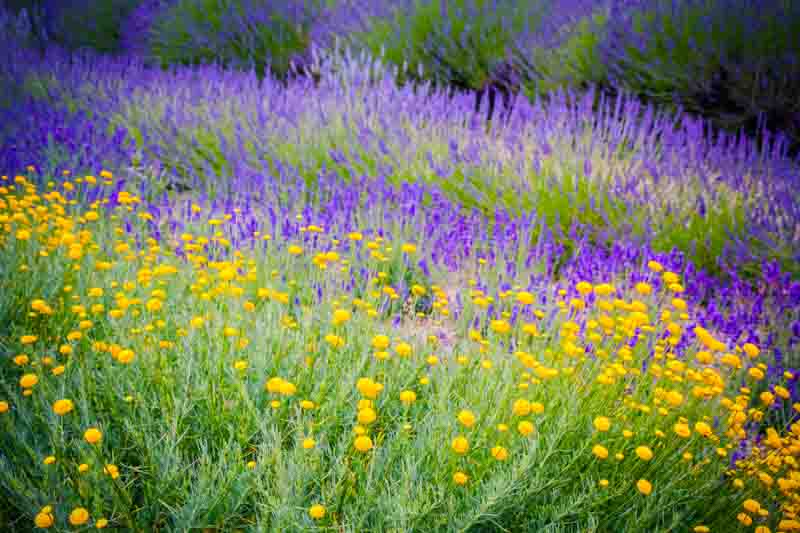
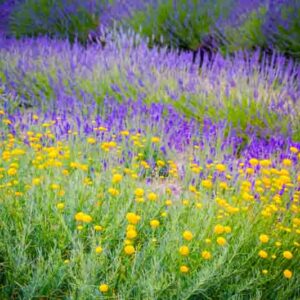
This duo nails that sun-baked, Mediterranean vibe – crisp, fragrant, and effortlessly tidy even in tough, dry spots. Mounded green santolina (Santolina rosmarinifolia) forms neat, aromatic cushions topped with golden button flowers, while English lavender (Lavandula angustifolia) lines the scene with purple spikes and soothing scent. Together they deliver clean structure, color, and texture that thrive in hot, well-drained sites.
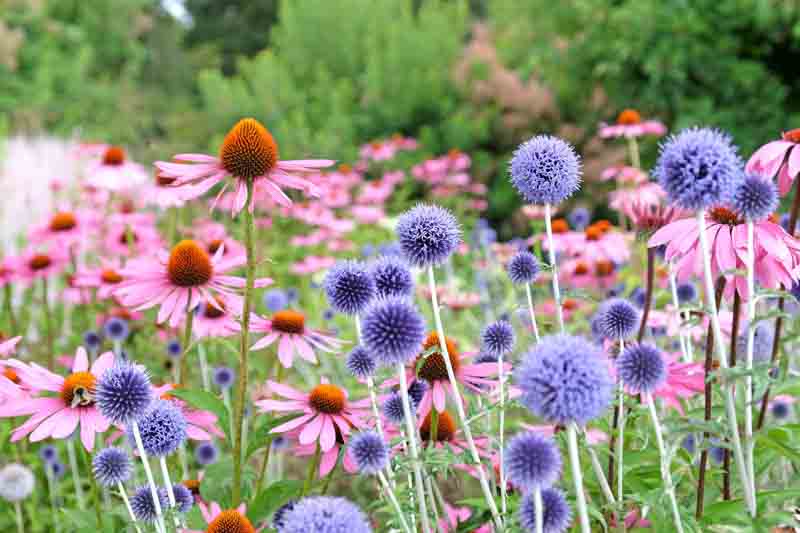
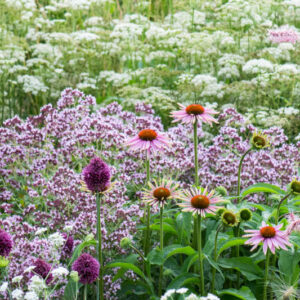
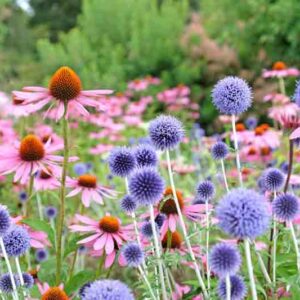
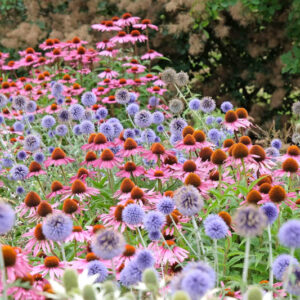
Think of this border as your sculptural color show – bold, sun-soaked, and effortless. Rich, daisy-like purple coneflowers (Echinacea purpurea) play against the cool spheres of globe thistle (Echinops ritro), creating a clean contrast of shapes and tones. It reads designed without feeling fussy – just strong summer drama that practically runs itself.
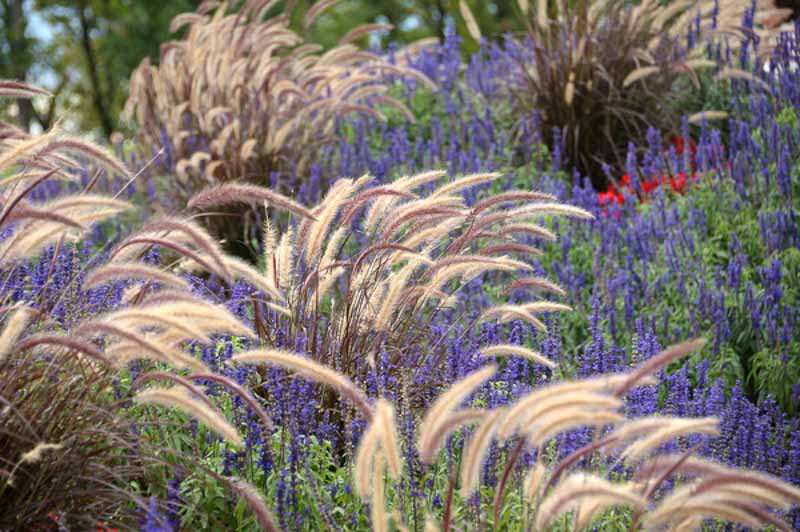
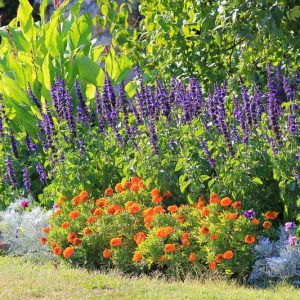
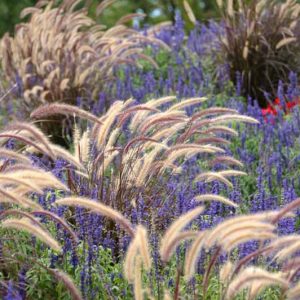
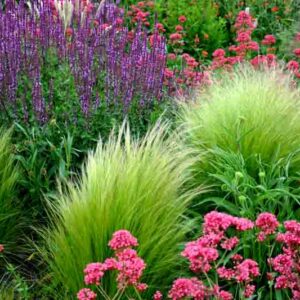
This pairing looks designer-made—yet it practically runs itself. Upright, purple-blue spikes of mealy-cup sage (Salvia farinacea) play off the long, arching plumes of purple fountain grass (Pennisetum setaceum), which sway and shimmer in every summer breeze. Plant them in full sun and well-drained soil for months of movement, color, and easy elegance. (In colder climates, simply grow them as annuals or in containers).
Pennisetum setaceum note: use sterile cultivars or region-safe species.
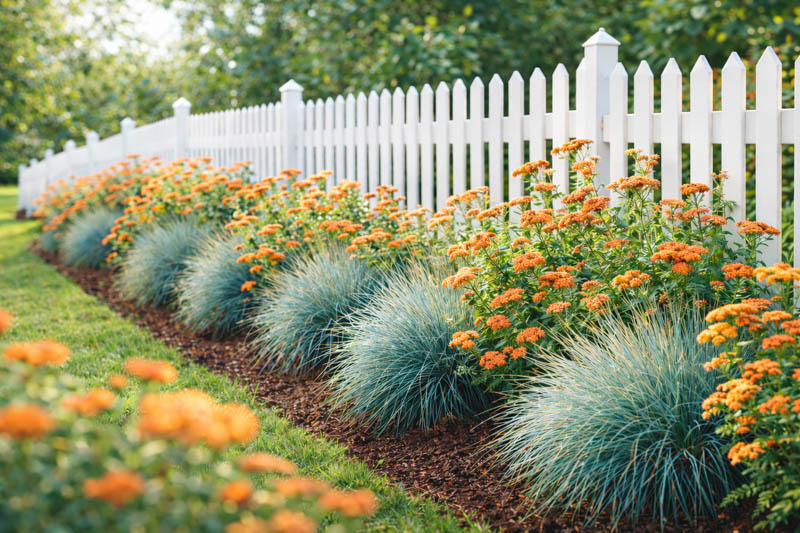
This combo brings saturated color and cool texture to even lean, dry soils—and asks almost nothing in return.
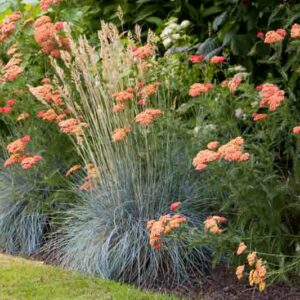
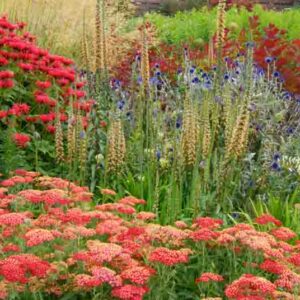
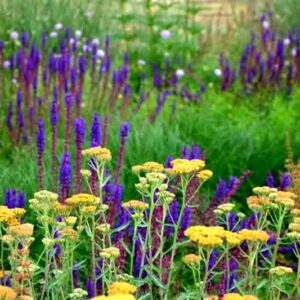
Yarrow (Achillea) stacks flat, crimson-tinged flower plates for weeks, while blue fescue (Festuca glauca) forms tidy blue clumps topped with elegant, creamy plumes. Together, they deliver a crisp, modern meadow vibe that’s easy to repeat in any sunny spot.
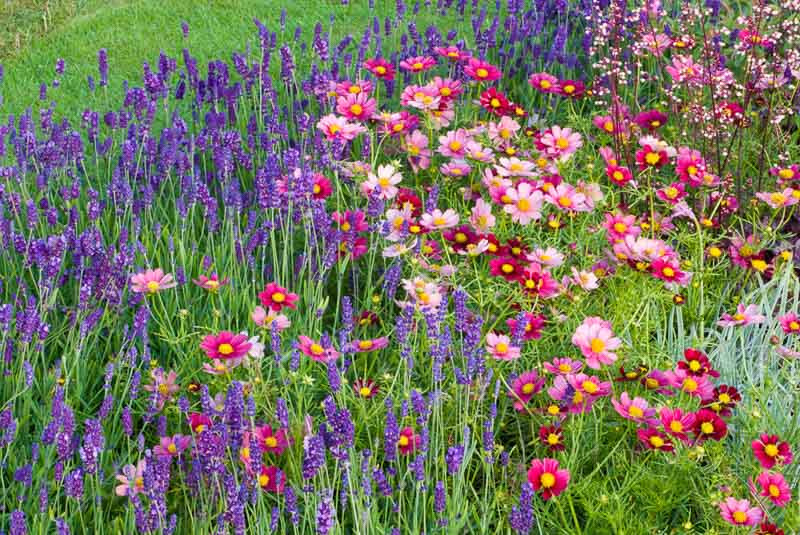
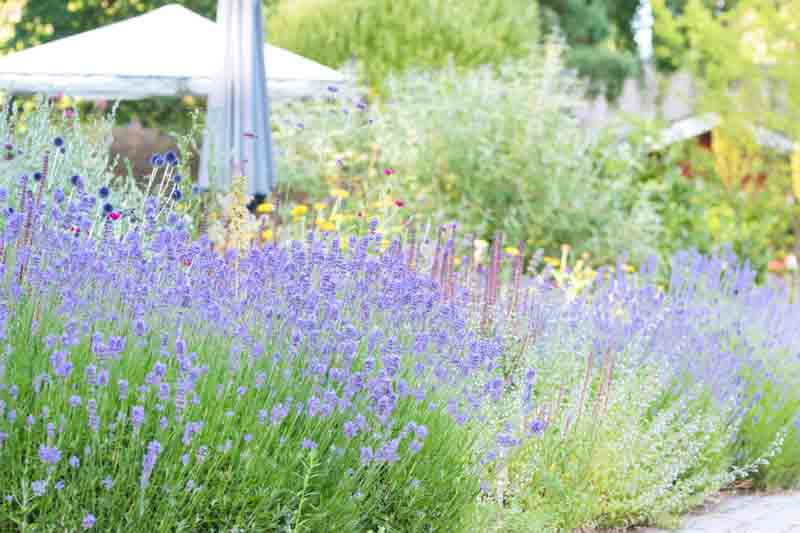
Think of this border as your breezy summer postcard – fragrant, floaty, and impossibly charming. Neat mounds of English lavender (Lavandula angustifolia) anchor the design while airy cosmos (Cosmos bipinnatus) dance overhead, creating a sun-washed look that feels both wild and refined.
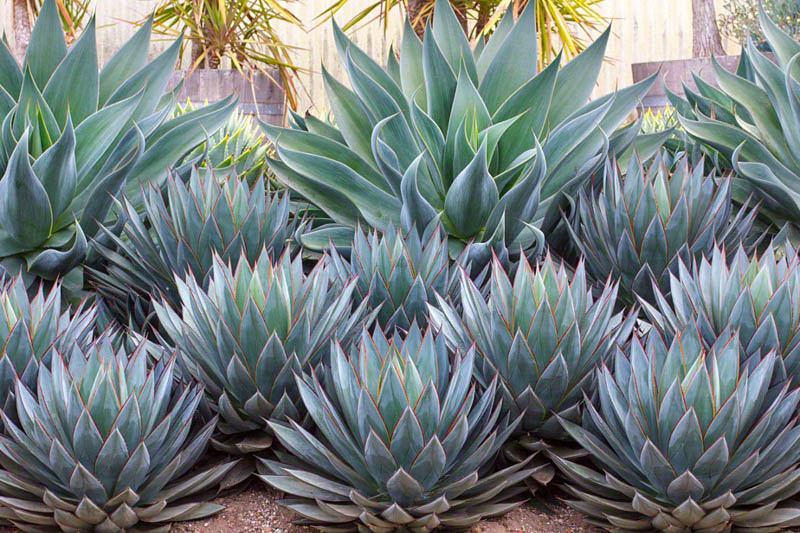
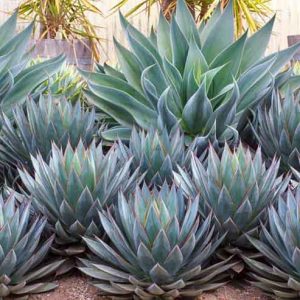
This pairing is pure sculpture—minimal water, maximum drama.
Graceful Agave ‘Blue Flame’ arcs into large, smooth blue-gray rosettes edged with tiny teeth and a red-brown line kissed by a thin yellow-green ribbon. Compact, jewel-like Agave ‘Blue Glow’ answers with tidy, blue-green rosettes whose golden-and-red margins ignite when the sun shines through. Together they’re breathtaking—especially backlit at dawn or dusk—on gravel, among boulders, in sleek containers, or against modern architecture.
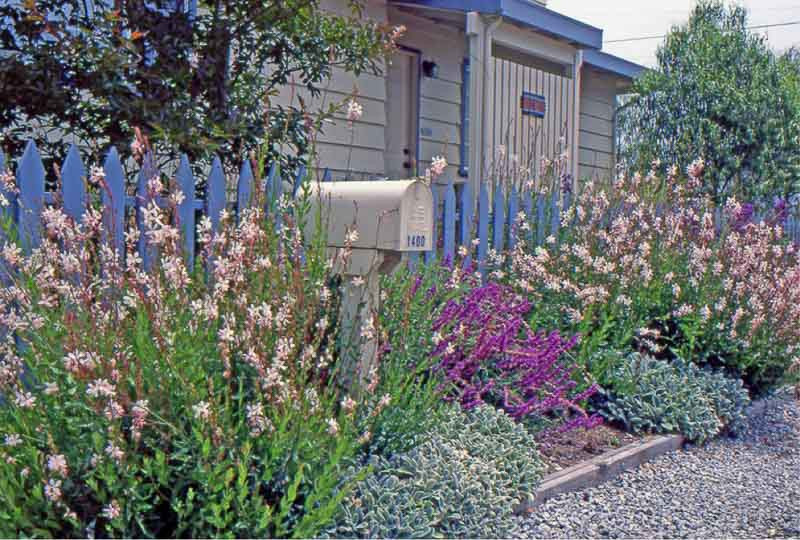
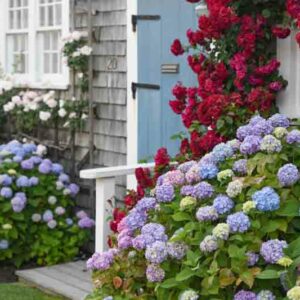
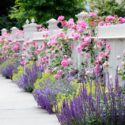
This mix has that breezy, just-right cottage look—casual, colorful, and full of soft movement. Airy pink wands of beeblossom (Gaura/Oenothera lindheimeri) dance above the silver, velvety carpet of lamb’s ears (Stachys byzantina), while Mexican bush sage (Salvia leucantha) pours on rich purple plumes. The blue picket fence echoes the house trim, tying garden and cottage into one cheerful coastal scene.
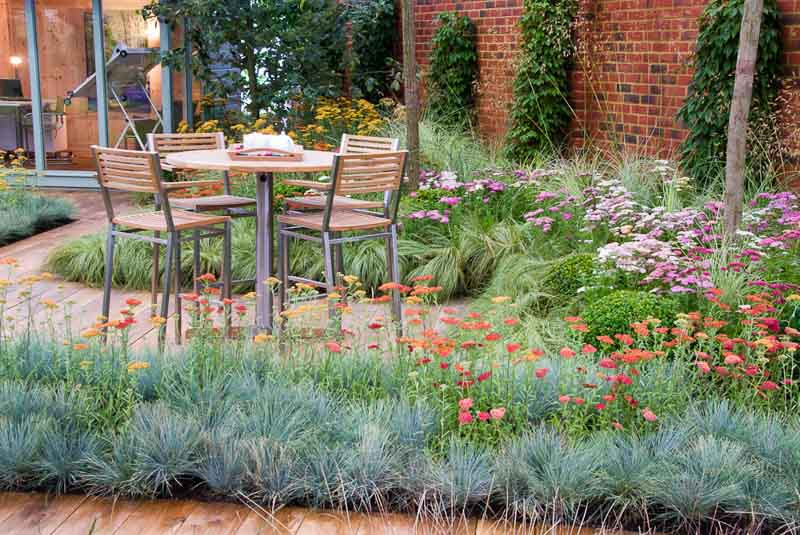
This border delivers that easy, sun-kissed meadow vibe—soft color drifts anchored by cool, tidy mounds and shimmering movement. Airy swaths of yarrow (Achillea) in peach, golden-yellow, or blush pink float above the tight, silver-blue cushions of blue fescue (Festuca glauca), while New Zealand hair sedge (Carex comans) threads through with graceful, silvery-green spirals.
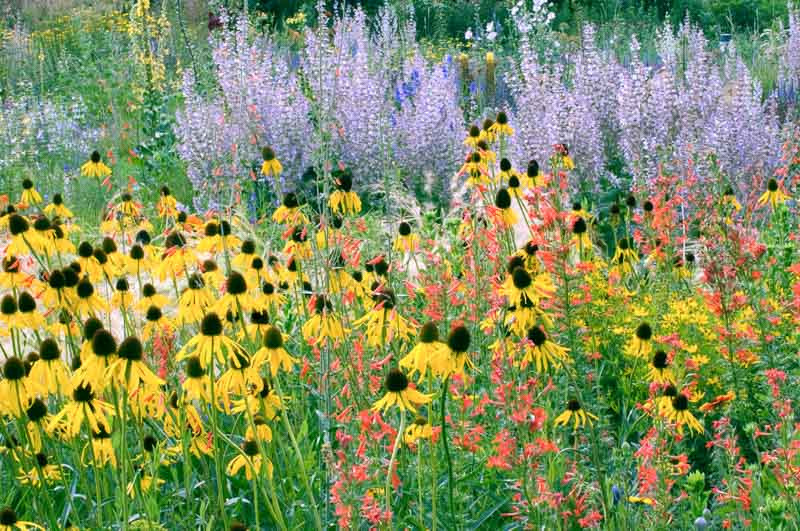
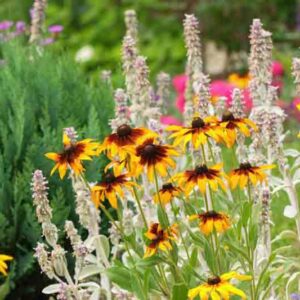
This garden crackles with color and movement—yet it practically runs itself.
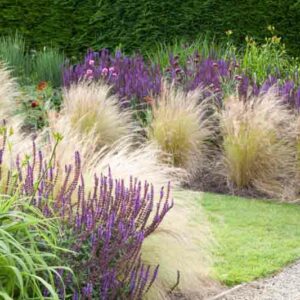
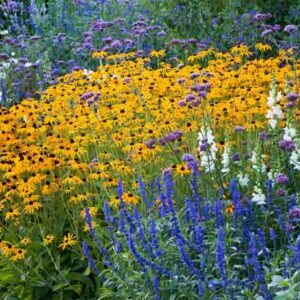
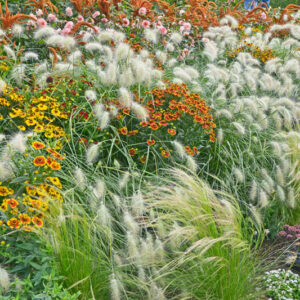
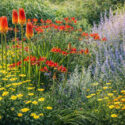
Sunny disks of yellow coneflowers (Echinacea paradoxa) light the scene, while the vertical scarlet spears of Penstemon barbatus ‘Coccineus’ and the showy bracts of clary sage (Salvia sclarea) add rhythm. Mexican feather grass (Stipa tenuissima) threads through it all, creating a soft, wind-kissed haze.
Find Drought-Tolerant Garden Design Ideas
Tame rooty, dry shade with tough groundcovers and foliage stars.
Swap thirsty turf for fragrant stepables and resilient mats.
Beauty with lower wildfire risk: spacing, clean lines, low-resin plants.
Check local fire codes and plant lists.
Improve structure with compost and coarse grit. Create raised beds or shallow berms. Choose plants that tolerate heavier soils such as yarrow, rudbeckia, echinacea, russian sage, daylily, switchgrass, and oakleaf hydrangea for part shade zones.
Salt spray and wind dry plants fast. Use leathery or silvery foliage. Try armeria, cistus, santolina, sea kale, agapanthus in mild climates, and tough native grasses. Shelter young plants with windbreak fabric their first season.
Pick large pots with drainage holes. Use a gritty mix. Combine a structural succulent like agave with fillers such as echeveria and trailing plants like delosperma or thyme. Water deeply then allow the mix to dry between cycles.
Direct downspouts into cisterns, rain barrels, or shallow swales. Build a dry stream bed that moves stormwater through the landscape and soaks it into planted basins. Choose plants that can handle periodic surges like juncus in the basin edge and artemisia on the berm crest.
Match plants to place using USDA hardiness zones, light (full sun, part shade, bright shade), and soil (well drained, clay, sandy, loam). Favor drought-tolerant and heat tolerant species where needed, and note deer resistant options for browsing pressure.
Garden types: Mediterranean garden, gravel garden, rain garden with swales, prairie style meadow, dry rock garden, native xeriscape, coastal dry garden, lawn replacement with thyme or native bunchgrasses, and container based dry gardens for patios and balconies.
Browse ideas or jump straight into planning:
Filter by hardiness zone, light, soil, bloom season, height, color, and water needs to plan with confidence.
| Step | Why it saves water | Typical impact | Tools / links |
|---|---|---|---|
| Reduce lawn | Lawns are the thirstiest element; replacing with low-water plants slashes irrigation. | Outdoor use ≈ 30% of household water; inefficient irrigation wastes up to 50%. | |
| Add mulch (2–4 in.) | Shades soil, reduces evaporation & weeds, moderates temperature. | Up to ~70% less soil evaporation (3–5 in. tested). | UC ANR · |
| Switch to drip | Delivers water at the root zone with minimal wind/overspray loss. | >90% efficient drip vs. ~50–70% sprinklers. | UC ANR |
| Hydrozone | Groups similar water-need plants to avoid over/underwatering. | Keep high-water areas small & near entries/patios. | Guidelines (PDF) |
| Plan the taper | Reduce frequency after roots establish; water deeply, less often. | Perennials ~1 season; shrubs/trees often 1–2+ years. |
Regionalization: Verify local invasive status, cultivar legality, and firewise guidance before planting. Check regional water-wise lists and restrictions.
It’s a landscape designed to thrive with minimal supplemental water by using drought-tolerant plants, hydrozoning, mulch, and efficient drip irrigation. The goal is high visual impact with low water use and low maintenance, even through heat waves and watering restrictions. Discover Drought Tolerant Garden Design That Looks Lush
Xeriscape is the broader water-wise design philosophy; a drought-tolerant garden is one way to implement it. Both emphasize plant selection, soil improvement, mulch, and efficient irrigation to cut outdoor water use dramatically.
Yes – especially during establishment. Water deeply and infrequently to train roots down; once established, most plants need only occasional deep soaks during prolonged dry spells.
Replacing lawn with low-water plants, adding 2–3 inches of mulch, and switching to drip can reduce outdoor water use by 30–60%. In arid climates, savings can be even higher when paired with smart controllers and leak fixes.
Hydrozoning groups plants by water need—high, medium, and low. Put thirstiest plants near the hose or downspouts and reserve the largest areas for low-water shrubs, perennials, and grasses to simplify irrigation and avoid overwatering.
Well-drained soil is essential. Improve compacted or clay soils with compost and coarse mineral grit, raise beds or create berms where needed, and avoid planting into cold, wet soil that suffocates roots.
Use gravel or crushed stone around Mediterranean herbs, succulents, and cacti to keep crowns dry. Use shredded bark or chips around prairie perennials and shrubs to cool soil and add organic matter as it breaks down.
Aim for 2–3 inches uniformly, keeping mulch a couple of inches away from stems and crowns. Top up annually as it settles or decomposes.
Lavender, rosemary, rockrose (Cistus), ceanothus, artemisia, santolina, manzanita, grevillea, and buddleja (sterile forms). They offer evergreen structure, fragrance, pollinator value, and minimal irrigation once established.
Salvia, agastache, echinacea, nepeta, penstemon, yarrow (Achillea), gaillardia, coreopsis, echinops, kniphofia, and late-season sedum. Plant in drifts for impact and easier maintenance.
Panicum (switchgrass), Schizachyrium (little bluestem), Festuca glauca, Pennisetum (fountain grass), Muhlenbergia (pink muhly), and Bouteloua (blue grama). Always check regional guidance for Nassella tenuissima, which can be invasive in some areas.
They’re excellent for hot, dry sites with sharp drainage, but overwatering kills them faster than drought. Mix succulents with drought-tolerant perennials and grasses for four-season interest.
Yes. Focus on dry-shade performers and foliage texture. Try epimedium, hellebore, heuchera, geranium macrorrhizum, lamium, liriope, and spring ephemerals like snowdrops or trout lily, and mulch well to conserve moisture.
Native and climate-adapted plants are often more water-efficient and support pollinators and wildlife. Use regional natives as the backbone and blend in compatible, non-invasive exotics for extended bloom.
Drip lines or soaker hoses paired with a simple timer. Water at dawn, audit emitters each spring, and lengthen intervals as plants establish to encourage deep roots.
Push a finger 2–3 inches into the soil near the root zone. If it’s dry at depth, water; if it’s still moist, wait – this prevents shallow roots and overwatering.
Yes. Use creeping thyme, low sedum, dymondia, or blue grama, then weave in stepping stones for access. Expect big cuts in water use and mowing.
In very hot climates it can raise surface temperatures. Balance with organic mulches in other hydrozones, add shade from shrubs or small trees, and choose lighter-colored aggregates.
Olive, desert willow, arbutus (strawberry tree), ginkgo, golden rain tree, Chinese pistache, Italian cypress, and Texas mountain laurel (by zone). Water regularly the first season, then taper to deep, infrequent soaks.
Layer evergreen structure (rosemary, artemisia, manzanita) with perennials for spring-summer bloom (salvia, coreopsis, echinacea) and grasses for fall movement and winter silhouettes.
Updated: November 2025
| Plant Type | Annuals, Cactus & Succulents, Ornamental Grasses, Perennials, Shrubs, Trees |
|---|---|
| Genus | Achillea, Agastache, Agave, Aloe, Arctostaphylos, Artemisia, Buddleia, Ceanothus, Cistus, Coreopsis, Delosperma, Echinacea, Echinops, Gaillardia, Grevillea, Kniphofia, Lavandula, Nepeta, Opuntia, Penstemon, Rosmarinus, Salvia, Santolina, Sedum, Sempervivum |
| Tolerance | Drought |
| Plant Type | Annuals, Cactus & Succulents, Ornamental Grasses, Perennials, Shrubs, Trees |
|---|---|
| Genus | Achillea, Agastache, Agave, Aloe, Arctostaphylos, Artemisia, Buddleia, Ceanothus, Cistus, Coreopsis, Delosperma, Echinacea, Echinops, Gaillardia, Grevillea, Kniphofia, Lavandula, Nepeta, Opuntia, Penstemon, Rosmarinus, Salvia, Santolina, Sedum, Sempervivum |
| Tolerance | Drought |
Create a membership account to save your garden designs and to view them on any device.
Becoming a contributing member of Gardenia is easy and can be done in just a few minutes. If you provide us with your name, email address and the payment of a modest $25 annual membership fee, you will become a full member, enabling you to design and save up to 25 of your garden design ideas.
Join now and start creating your dream garden!
Create a membership account to save your garden designs and to view them on any device.
Becoming a contributing member of Gardenia is easy and can be done in just a few minutes. If you provide us with your name, email address and the payment of a modest $25 annual membership fee, you will become a full member, enabling you to design and save up to 25 of your garden design ideas.
Join now and start creating your dream garden!