Discover 25 beautiful shade shrubs for USDA Zone 10, including fragrant gardenias, tropical flowering plants, colorful foliage, and evergreen screens. Find reliable choices for deep shade, bright courtyards, and woodland gardens. Compare California and Florida growing conditions, avoid common planting mistakes, and create a garden that thrives.


A shady garden in USDA Zone 10 can be just as beautiful as a sunny border. Fragrant gardenias brighten sheltered entrances, Brazilian plume produces spectacular pink flowers, and tropical foliage plants bring rich color beneath trees. Even deep shade can become inviting with the right evergreen shrubs.
But shade gardening in Zone 10 depends on more than sunlight. A coastal California courtyard with dry summers has different growing conditions from a humid South Florida woodland. A shrub that thrives in one may struggle in the other.
These 25 best shade shrubs for USDA Zone 10 include tropical flowering plants, colorful foliage, evergreen screens, and woodland natives. Some tolerate deep shade; others need bright filtered light to flower well. Gardenia’s Three Tests will help you choose shrubs that look beautiful and thrive in your particular garden.
Gardenia jasminoides (Cape Jasmine) is a favorite for fragrance. Its creamy white flowers shine against glossy evergreen leaves, particularly near entrances and terraces. Morning sun, afternoon shade, and acidic, moist but well-drained soil encourage the best display.
Abutilon pictum ‘Thompsonii’ (Painted Abutilon) produces delicate salmon-colored bells among yellow-speckled leaves. It is especially attractive in mild coastal gardens where filtered sunlight protects the foliage from scorching.
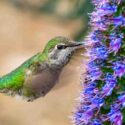
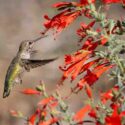
Fuchsia magellanica var. molinae offers graceful pendant flowers visited by hummingbirds. It appreciates cool coastal conditions and regular moisture rather than intense inland heat.
For a tropical statement, Justicia carnea (Brazilian Plume) produces bold pink flower spikes above lush foliage. Brunfelsia pauciflora (Yesterday, Today and Tomorrow) adds fragrant flowers that change from purple to lavender and white.
| Hardiness |
10 |
|---|---|
| Plant Type | Shrubs |
| Genus | Abutilon, Fuchsia, Gardenia, Justicia, Loropetalum |
| Exposure | Partial Sun, Shade |




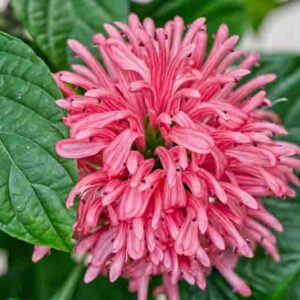
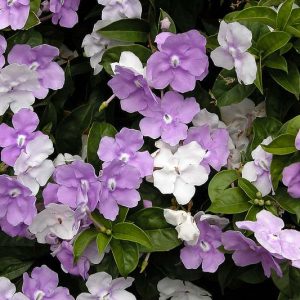
Flowers need daylight: These shrubs perform best in bright partial shade, not permanent darkness. Cape Jasmine is toxic to cats and dogs, while Brunfelsia is poisonous to people and pets, especially its berries.
Justicia brandegeeana (Shrimp Plant) produces unusual pinkish bracts and small white flowers over a long season. Its arching habit softens shaded paths and tropical borders.
Justicia aurea (Yellow Jacobinia) brightens filtered shade with large golden flower spikes above broad green leaves. Both justicias enjoy warm conditions and consistent moisture.
Strobilanthes dyeriana (Persian Shield) is grown primarily for its striking metallic-purple leaves with silver markings. It creates a beautiful contrast with green ferns and glossy evergreens.
Acalypha wilkesiana (Copperleaf) offers dramatic foliage in copper, bronze, pink, red, and gold. Loropetalum ‘Purple Daydream’ adds burgundy leaves and pink spring flowers, especially in bright partial shade.
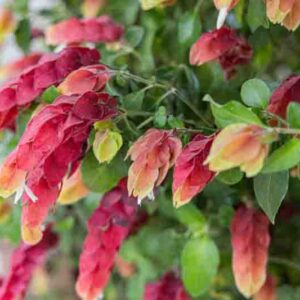


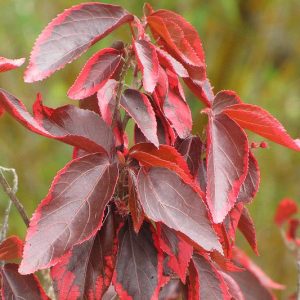

Color without flowers: Persian shield provides exceptional foliage interest in filtered shade. Copperleaf and purple loropetalum develop richer colors in brighter light. Copperleaf is toxic to pets.
Deep shade favors handsome foliage and natural structure rather than abundant flowers. Aucuba japonica (Spotted Laurel) is particularly useful, with glossy leaves often marked with gold. Established plants tolerate relatively dry shade in sheltered gardens.
Psychotria nervosa (Wild Coffee) is an excellent South Florida native, valued for its deeply veined foliage, small white flowers, and red berries attractive to birds.
Rivina humilis (Bloodberry) offers delicate flowers followed by bright red berries. It thrives in moist woodland settings but may self-seed, and its fruit should not be eaten.
Ardisia escallonioides (Island Marlberry) provides glossy evergreen foliage, pale fragrant flowers, and dark berries. It can mature into a substantial shrub or small tree.
For moist woodland edges, Cornus foemina (Swamp Dogwood) offers white flowers and blue berries. Unlike the other plants in this group, it is deciduous.
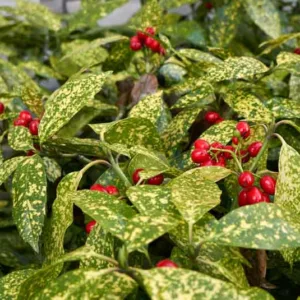
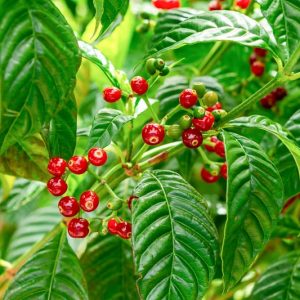


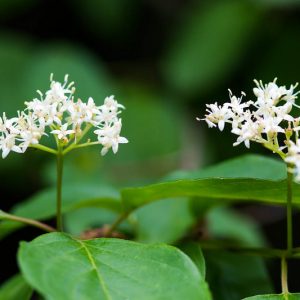
Deep shade is not always moist: Aucuba tolerates relatively dry conditions, while bloodberry and swamp dogwood prefer more moisture. Account for tree-root competition, regional suitability, and self-seeding before planting.
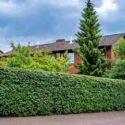
Pittosporum tobira (Japanese Pittosporum) makes a handsome evergreen screen with glossy leaves and fragrant spring flowers. It is particularly useful in mild coastal gardens with good drainage.
Viburnum tinus (Laurustinus) offers dark evergreen foliage, pink buds, and white winter-to-spring flowers, making it valuable along sheltered Mediterranean-style boundaries.
Pittosporum tenuifolium ‘Silver Queen’ brightens lightly shaded borders with creamy-edged leaves and contrasting dark stems.
Loropetalum ‘Emerald Snow’ forms a compact evergreen mound with attractive white flowers, ideal for smaller gardens receiving morning light.
For tropical privacy, Coccoloba diversifolia (Pigeon Plum) provides dense evergreen foliage and dark fruit in South Florida. Allow sufficient room, since it can develop into a tree.
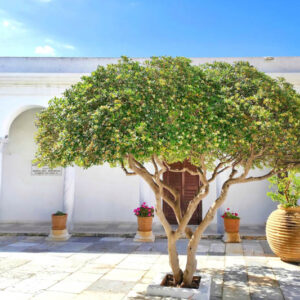

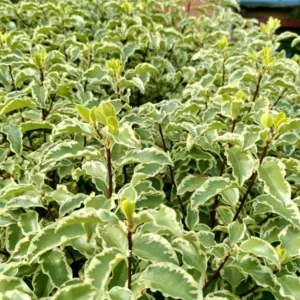


Best conditions: These shrubs generally perform best in light or bright partial shade. Pittosporum and laurustinus suit mild coastal climates, while pigeon plum favors warm tropical settings.
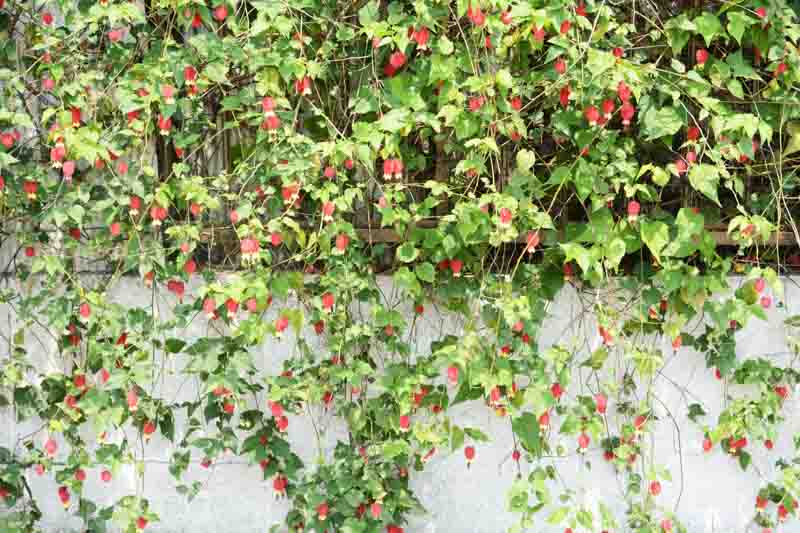
Abutilon megapotamicum (Trailing Abutilon) carries charming red-and-yellow lantern flowers on arching stems. It looks beautiful spilling through a sheltered border or trained against a wall.
Schefflera arboricola (Dwarf Umbrella Tree) brings glossy, umbrella-shaped leaves to tropical courtyards. It tolerates filtered shade and responds well to pruning.
Hebe ‘Silver Queen’ offers cream-edged evergreen foliage and small summer flowers. It is best in mild coastal gardens with plenty of filtered daylight.
Podocarpus ‘Mood Ring’ provides slender evergreen foliage and attractive new growth. It tolerates substantial shade, although brighter light encourages denser growth.
Illicium parviflorum (Yellow Anise) is a Florida-native woodland shrub with aromatic evergreen leaves and small yellowish flowers. It is particularly useful for screening in moist, shaded gardens.
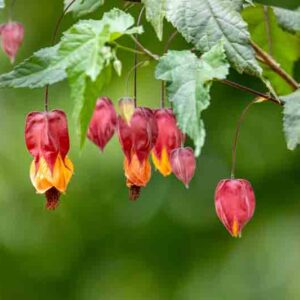
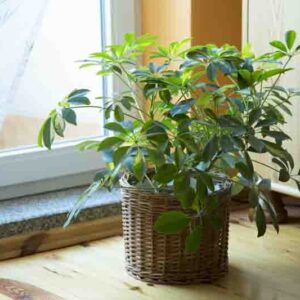


Choose according to climate: Abutilon and hebe favor mild coastal gardens, while yellow anise prefers moisture-retentive woodland soil. Dwarf umbrella tree is toxic to pets, and podocarpus foliage and seeds should not be ingested.
This table focuses on shade performance, climate suitability, and growing requirements. Mature dimensions are available in the Gardenia plant cards.
| Shrub | Best Light | Climate Fit | Key Consideration |
|---|---|---|---|
| Cape Jasmine | Bright partial | Humid / irrigated | Fragrance; acidic soil; pet toxicity |
| Painted Abutilon | Morning sun | Mild coastal | Bell flowers; moisture |
| Hardy Fuchsia | Bright partial | Cool coastal | Hummingbirds; avoid heat |
| Brazilian Plume | Partial | Humid tropical | Pink flowers; moist soil |
| Brunfelsia | Bright partial | Humid subtropical | Fragrance; poisonous berries |
| Shrimp Plant | Partial | Warm subtropical | Long-season flowers |
| Yellow Jacobinia | Partial | Humid tropical | Golden flowers; moisture |
| Persian Shield | Bright partial | Humid tropical | Purple metallic foliage |
| Copperleaf | Bright partial | Humid tropical | Colorful foliage; toxicity |
| Purple Daydream | Bright partial | Mild / warm | Burgundy foliage |
| Spotted Laurel | Partial to full shade | Sheltered mild | Dry-shade tolerance |
| Wild Coffee | Partial to full shade | South Florida | Textured leaves; berries |
| Bloodberry | Partial to full shade | Humid woodland | Red berries; self-seeding |
| Island Marlberry | Partial | South Florida | Wildlife fruit; large shrub |
| Swamp Dogwood | Partial | Moist southeastern | Deciduous; wet soil |
| Japanese Pittosporum | Light partial | Mild coastal | Evergreen screening |
| Laurustinus | Light partial | Mediterranean | Winter flowers |
| Silver Queen Pittosporum | Bright partial | Mild coastal | Variegated foliage |
| Emerald Snow | Bright partial | Mild / warm | Compact; white flowers |
| Pigeon Plum | Light partial | South Florida | Evergreen; tree potential |
| Trailing Abutilon | Morning sun | Mild coastal | Lantern flowers |
| Dwarf Umbrella Tree | Filtered partial | Humid tropical | Glossy foliage; toxicity |
| Silver Queen Hebe | Light partial | Mild coastal | Variegated leaves |
| Mood Ring Podocarpus | Partial to full shade | Warm / adaptable | Evergreen screening |
| Yellow Anise | Partial to full shade | Humid southeastern | Native evergreen; moist soil |
USDA Zone 10 has average annual extreme minimum temperatures of 30-40°F (-1.1°C to 4.4°C). Zone 10a ranges from 30-35°F and Zone 10b from 35-40°F. These temperatures describe winter cold, not summer heat or humidity.
Bright partial shade: Gentle morning sunshine or abundant filtered daylight. Ideal for gardenias, abutilons, justicias, and loropetalums.
Dappled shade: Moving patches of sunlight beneath trees. Suitable for many tropical woodland shrubs where moisture is adequate.
Deep shade: Very limited direct sun. Favor foliage and structure with aucuba, wild coffee, yellow anise, or suitable podocarpus selections.
Dry shade: Common beneath mature trees. Root competition and limited rainfall often create more difficulty than low light alone.
Remember that mild coastal California and humid South Florida require different plant choices even when both fall within Zone 10.
A shrub that survives in shade does not necessarily flower well or maintain attractive foliage. Gardenia’s Three Tests distinguish shade survival, ornamental performance, and regional climate suitability.
Aucuba, wild coffee, and yellow anise tolerate deeper shade. Gardenia and Brazilian plume need brighter conditions. Healthy foliage and natural shape matter more than simple survival.
Choose gardenia for fragrance, Persian shield for colorful foliage, or a suitable evergreen for privacy. Expect fewer flowers as light levels decrease.
Fuchsias and some abutilons favor mild coastal conditions. Brazilian plume and wild coffee suit humid subtropical gardens. Yellow anise needs more moisture than established aucuba.
| Your Garden | Better Choices | Avoid |
|---|---|---|
| Deep shaded courtyard | Aucuba, wild coffee, yellow anise | Expecting heavy flowering |
| Bright tropical shade | Brazilian plume, shrimp plant, Persian shield | Irregular watering |
| Fragrant entrance | Gardenia, Brunfelsia | Ignoring pH and toxicity |
| Coastal California shade | Abutilon, fuchsia, pittosporum | Extreme inland heat |
| Moist Florida woodland | Wild coffee, yellow anise, swamp dogwood | Wrong soil moisture |
| Shaded evergreen screen | Podocarpus, yellow anise; pittosporum in brighter shade | Too little light for dense growth |
| Colorful patio | Persian shield, copperleaf, shrimp plant | Insufficient daylight |
| Dry shade beneath trees | Aucuba in suitable mild climates | Skipping establishment water |
Find Zone 10 Shrubs for Your Shade and Soil
Use Gardenia’s Plant Finder to refine your choices by hardiness, sunlight, soil, drainage, water needs, and mature size.
Combine: Gardenia jasminoides, Abutilon pictum ‘Thompsonii’, Fuchsia magellanica var. molinae, and Japanese pittosporum.
Creamy gardenia flowers contrast with hanging abutilon bells and graceful fuchsia blooms, while pittosporum provides evergreen structure.
Conditions: Mild coastal Zone 10, morning sunshine, afternoon shade, and appropriate irrigation. Provide acidic soil for gardenia.
Combine: Brazilian plume, Persian shield, shrimp plant, and wild coffee.
Rich pink flowers rise above shimmering purple leaves and delicate shrimp-like bracts. Wild coffee creates a glossy green backdrop.
Conditions: Humid subtropical shade, humus-rich soil, and consistent moisture. Give flowering shrubs the brightest positions.
Combine: Wild coffee, yellow anise, island marlberry, and swamp dogwood.
Textured evergreens, aromatic foliage, seasonal flowers, and wildlife-friendly fruit create a natural woodland planting.
Conditions: Partial shade and moisture-retentive soil. Place swamp dogwood in wetter areas and allow marlberry room to mature.
Gardenia design tip: Position flowering shrubs in the brightest shade and use contrasting foliage to create structure. The most successful shade borders remain attractive even when few plants are blooming.
Explore More Zone 10 Garden Ideas
Find warm-climate planting inspiration and adapt the combinations to your garden’s light and moisture.
Assess summer shade. Light beneath trees changes seasonally. Observe your garden when the canopy is full before choosing flowering shrubs.
Protect tree roots. Use smaller nursery plants beneath mature trees and avoid cutting major roots. Mulch lightly without covering stems or trunks.
Water appropriately. Trees compete for moisture, even in shade. Gardenias, fuchsias, and Brazilian plume need more consistent watering than established aucuba.
Maintain drainage and airflow. Overcrowding encourages fungal problems, while waterlogged soil damages roots. Allow space for mature growth.
Prune selectively. Shape spring-flowering shrubs after bloom where appropriate. Lightly pinch tropical shrubs to encourage bushiness without constantly removing flowers.
Aucuba, wild coffee, yellow anise, and suitable podocarpus selections tolerate substantial shade in appropriate climates. Deep shade usually reduces flowering, so prioritize foliage and structure.
Gardenia, abutilon, hardy fuchsia, Brazilian plume, shrimp plant, and Brunfelsia can flower in bright partial shade. Gentle morning sunshine or filtered light encourages better blooming.
Aucuba, wild coffee, yellow anise, and suitable podocarpus selections offer evergreen structure. Pittosporum, laurustinus, and loropetalum generally prefer brighter partial shade.
Established aucuba tolerates relatively dry shade in mild, sheltered gardens. Even drought-tolerant shrubs need watering during establishment, especially beneath mature trees.
Yes. Gardenias appreciate morning sun and afternoon shade in hot climates. Too little light reduces flowering. They need acidic, moist but well-drained soil and are toxic to cats and dogs.
Wild coffee, island marlberry, pigeon plum, and swamp dogwood are examples suited to appropriate native landscapes. Yellow anise is native to Florida but its natural distribution and moisture preferences should be checked locally.
Persian shield, copperleaf, spotted laurel, and purple-leaved loropetalum offer attractive foliage. Color intensity depends on light, with copperleaf and loropetalum generally preferring brighter conditions.
Insufficient daylight is a common reason. Incorrect pruning, unsuitable soil pH, heat stress, and inconsistent watering may also reduce flowers.
Not always. Mild coastal California has relatively dry summers, while South Florida is warmer and more humid. Fuchsias and abutilons favor cooler coastal conditions; Brazilian plume and wild coffee prefer humid climates.
Autumn often favors establishment in dry-summer California. In South Florida, plant during favorable warm weather with reliable moisture. Avoid extreme heat and keep new shrubs watered.
From fragrant flowers and tropical foliage to evergreen privacy and native woodland planting, Zone 10 offers wonderful possibilities for shade. Choose shrubs for the daylight and climate you actually have, and combine plants with compatible water and soil requirements.
Turn Your Zone 10 Shade Shrubs Into a Garden Plan
Use Gardenia’s Garden Design Tool to save plants, check compatibility, compare mature sizes and seasonal interest, estimate quantities, and create a shopping list.
Start free with up to five plants and refine your choices before visiting the nursery.
Updated and reviewed by Gardenia: October 2026
| Hardiness |
10 |
|---|---|
| Plant Type | Shrubs |
| Genus | Abutilon, Fuchsia, Gardenia, Justicia, Loropetalum |
| Exposure | Partial Sun, Shade |
Create a membership account to save your garden designs and to view them on any device.
Becoming a contributing member of Gardenia is easy and can be done in just a few minutes. If you provide us with your name, email address and the payment of a modest $25 annual membership fee, you will become a full member, enabling you to design and save up to 25 of your garden design ideas.
Join now and start creating your dream garden!