Want butterflies and hummingbirds in the same garden? Start with flowers they can share, then add butterfly host plants and hummingbird-rich tubular blooms. Discover standout perennials, vines, shrubs, and natives, build nectar from spring through fall, and use Gardenia to choose plants that truly fit your region and garden.


Butterflies and hummingbirds often visit the same garden, but they do not use it in quite the same way. Both depend heavily on flower nectar, yet their needs diverge beyond that shared food source. Butterflies also need host plants for their caterpillars, while hummingbirds supplement nectar with tiny insects and spiders.
That means the best plants for butterflies and hummingbirds are not simply the flowers appearing most often on “pollinator-friendly” lists. A successful garden combines shared nectar plants, butterfly host plants, hummingbird-specialist flowers, a long season of bloom, shelter, and plants suited to the actual growing conditions.
The goal is not to make every plant serve every visitor. Some plants can form a shared nectar backbone. Others earn their place because they feed butterfly caterpillars or offer especially useful tubular flowers for hummingbirds.
The simplest way to plan: begin with flowers butterflies and hummingbirds can share, add the specialized plants each group needs, then make sure useful habitat continues from spring through fall.
Butterflies and hummingbirds overlap at the nectar bar, but they are not interchangeable garden visitors.
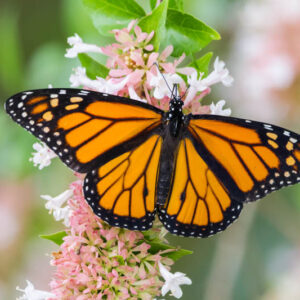
Adult butterflies drink nectar from many flower forms, including flat-topped, clustered, and daisy-like blooms. Coneflowers, asters, milkweeds, blazing stars, Joe-Pye weed, goldenrods, and zinnias can all be valuable. Their caterpillars, however, are often far more selective.
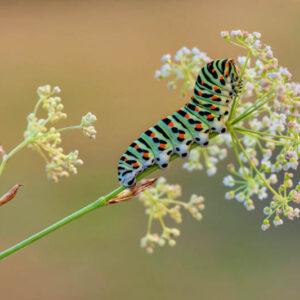
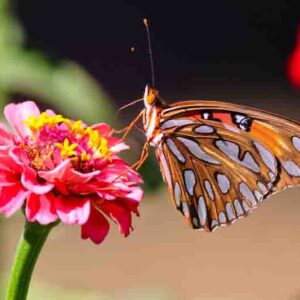
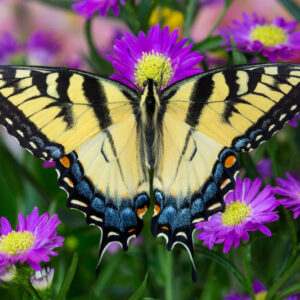
A Monarch caterpillar needs milkweed. A Black Swallowtail uses plants in the carrot family. A Gulf Fritillary uses passionflowers, while the Spicebush Swallowtail relies primarily on spicebush and sassafras.
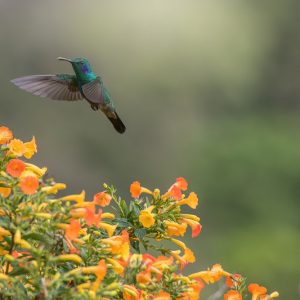
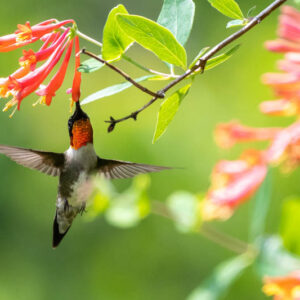
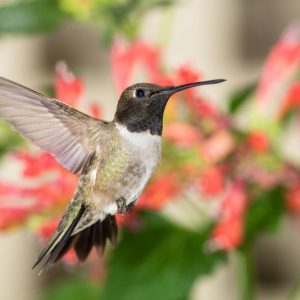
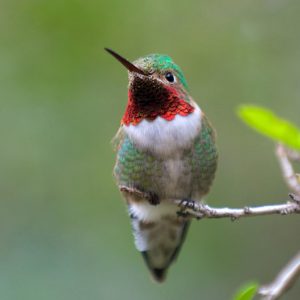
Hummingbirds are particularly well adapted to reaching nectar in elongated or tubular flowers. Bee balms, salvias, cardinal flowers, penstemons, columbines, coral honeysuckle, and similar flowers can be highly effective.
Flower shape is not the only difference. Hummingbirds also catch tiny insects and spiders, while butterflies need host foliage during their larval stage. Designing for both therefore means combining several kinds of plants rather than relying on one generic “pollinator” palette.
Begin with plants that give both butterflies and hummingbirds a reason to visit. These six form a useful nectar backbone while covering different heights, flower forms, and parts of the growing season.
Scarlet Bee Balm (Monarda didyma)
Few plants bridge the two groups as effectively. Its scarlet tubular flowers are especially attractive to hummingbirds, while butterflies and bees also feed readily from the flower heads. It brings strong midsummer color and works particularly well in moist, fertile borders.
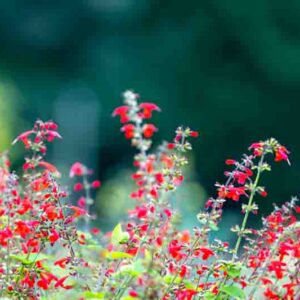
Scarlet Sage (Salvia coccinea)
Scarlet sage produces tubular red flowers over a long warm-season period. Gardenia records it as attracting bees, butterflies, and hummingbirds, making it a useful shared nectar plant for sunny gardens and warmer climates.
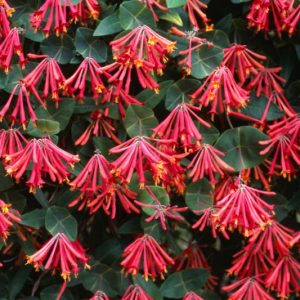
Coral Honeysuckle (Lonicera sempervirens)
This native vine carries nectar into the vertical layer of the garden. Its coral-red flowers are especially attractive to hummingbirds, while butterflies and other pollinators also visit. It is useful on fences, arbors, and trellises where horizontal planting space is limited.
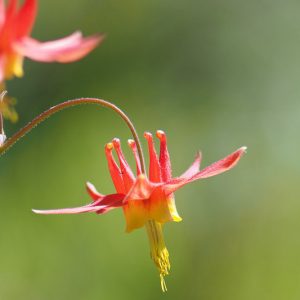
Eastern Columbine (Aquilegia canadensis)
Eastern columbine is particularly valuable because it flowers early. Its red-and-yellow spurred blooms can feed hummingbirds and butterflies before the main summer nectar plants reach their peak, making it useful around woodland edges and partly shaded gardens.
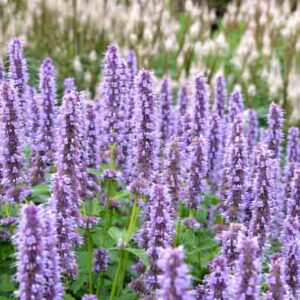
Anise Hyssop (Agastache foeniculum)
Long spikes of lavender-purple flowers supply nectar from summer toward fall. Gardenia lists this North American native as attracting bees, butterflies, and hummingbirds, while its upright habit adds useful vertical structure to prairie and pollinator plantings.
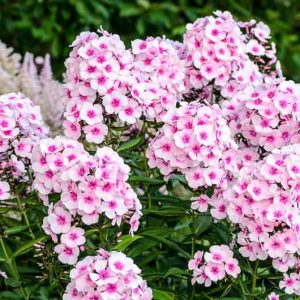
Garden Phlox (Phlox paniculata)
Large fragrant flower clusters provide abundant midsummer nectar and are visited by butterflies and hummingbirds. Garden phlox also occupies a useful middle layer between low-growing perennials and taller vertical plants.
| Genus | Agastache, Aquilegia, Asclepias, Campsis, Fuchsia, Lobelia, Lonicera, Monarda, Passiflora, Penstemon, Phlox, Viola |
|---|---|
| Attracts | Butterflies, Hummingbirds |
Why these six? They give the garden early, middle, and later nectar while combining a vine, woodland perennial, upright spikes, and substantial border plants instead of six variations on the same flower.
Shared nectar plants bring adult butterflies into the garden. Host plants make the garden useful to the next generation.
Female butterflies search for plants their caterpillars can eat, and those relationships can be surprisingly specific. The right host plants therefore depend on which butterflies actually occur in your region.
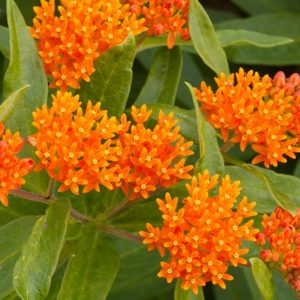
Butterfly Weed (Asclepias tuberosa)
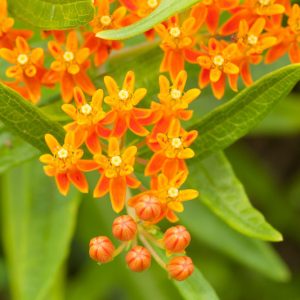
Milkweeds are the essential larval hosts of Monarch butterflies. Butterfly weed thrives in sunny, well-drained sites and also supplies nectar for adult butterflies, bees, other pollinators, and visiting hummingbirds.
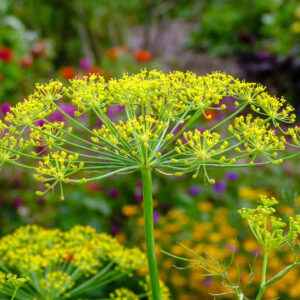
Dill (Anethum graveolens)
Black Swallowtail caterpillars use dill and other members of the carrot family. It fits easily into herb gardens, edible beds, or sunny mixed borders. Plant enough that both caterpillars and the kitchen can have a share.
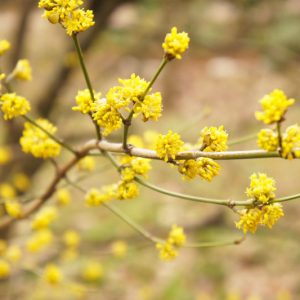
Spicebush (Lindera benzoin)
This eastern North American shrub is an important host for Spicebush Swallowtail caterpillars. It also contributes early flowers, autumn color, shelter, and woody structure, demonstrating why butterfly habitat should not consist only of herbaceous perennials.
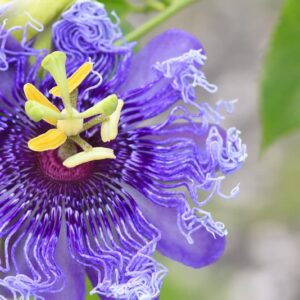
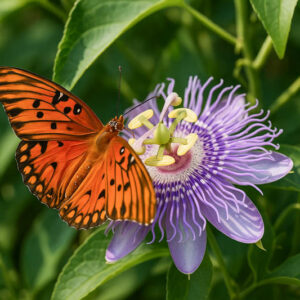
Purple Passionflower (Passiflora incarnata)
This native passionflower is an important host for Gulf Fritillary caterpillars and also produces striking flowers from summer into fall, with a longer season in warm climates. Its vigorous stems can cover a fence, trellis, or arbor, combining ornamental value with genuine butterfly habitat.
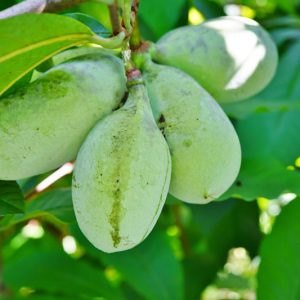
Pawpaw (Asimina triloba)
Zebra Swallowtail caterpillars depend closely on pawpaws. This small tree or large shrub illustrates another important point: some of the most valuable butterfly plants perform their critical role through their leaves rather than their flowers.
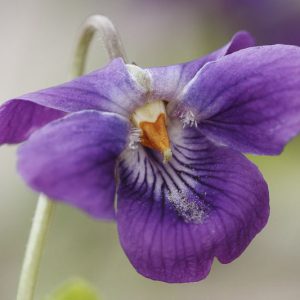
Common Blue Violet (Viola sororia)
Violets are host plants for several fritillary butterflies. Allowing them to remain in woodland edges, naturalized lawns, and informal groundcover areas can quietly add caterpillar habitat without requiring another large border plant.
For a wider butterfly-to-host-plant reference, see Gardenia’s Butterfly Host Plants Guide.
Chewed leaves can be good news. If you deliberately plant host plants, some foliage is supposed to become caterpillar food.
Once the shared nectar backbone and butterfly host layer are in place, add plants whose flower structure or nectar presentation makes them especially valuable to hummingbirds.
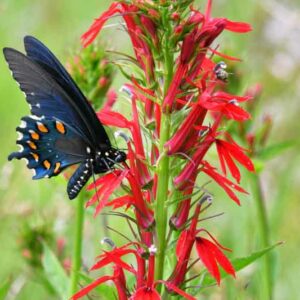
Cardinal Flower (Lobelia cardinalis)
Few native perennials advertise themselves to hummingbirds more dramatically. Tall spikes of brilliant scarlet flowers appear from midsummer into early fall. Cardinal flower is especially useful in moist borders, rain gardens, pond edges, and other sites that do not dry out.
Foxglove Beardtongue (Penstemon digitalis)
Its tubular flowers rise above the foliage in late spring and early summer, helping bridge the period between spring flowers and the main summer display. It works particularly well in native, prairie, and naturalistic plantings.
Crossvine (Bignonia capreolata)
Crossvine places trumpet-shaped flowers high on fences, arbors, and trellises, creating an important spring nectar source for hummingbirds. In some climates and cultivars, flowering can extend into early summer.
Trumpet Vine (Campsis radicans)
Large orange-red trumpet flowers are highly attractive to hummingbirds through summer. This vigorous native vine needs thoughtful placement because it can spread aggressively, so give it strong support and room where its growth can be managed.
California Fuchsia (Epilobium canum)
A superb late-season choice for dry western gardens, California fuchsia produces brilliant red tubular flowers from late summer into fall, extending nectar well beyond the summer peak.
Hardy Fuchsia (Fuchsia magellanica var. molinae)
Its pendent tubular flowers continue from summer toward frost and attract hummingbirds. It is especially useful in mild climates and partly shaded borders where many sun-loving hummingbird plants are less comfortable.
For many more options, see Gardenia’s Best Flowers to Attract Hummingbirds.
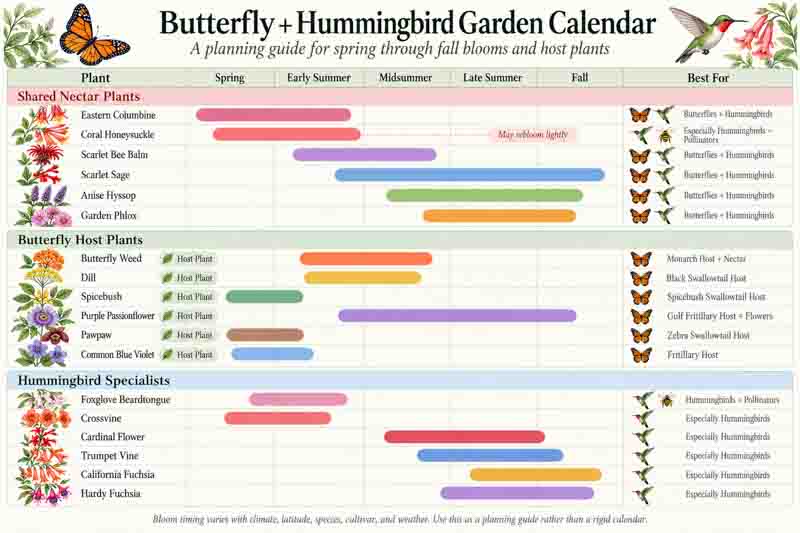
Choosing good wildlife plants is only half the job. The next question is when do they flower, and when are their host leaves available?
A garden overflowing with nectar in July can still offer very little in April or September. Butterflies have different flight periods, hummingbird arrival and migration times vary by region, and caterpillars need host foliage when the adults are reproducing. The safest strategy is therefore a sequence of useful plants rather than one spectacular peak.
The 18 plants featured above cover three different jobs: shared nectar, butterfly reproduction, and hummingbird-focused nectar. Their seasons overlap, but not every plant contributes in exactly the same way.
Spring can begin with Eastern columbine, coral honeysuckle, crossvine, spicebush, pawpaw, and common blue violet. Some supply nectar, while spicebush, pawpaw, and violet are particularly important because of their butterfly host value.
Late spring into early summer brings foxglove beardtongue, butterfly weed, and dill. Depending on climate, crossvine may still be flowering, while purple passionflower begins contributing as temperatures rise.
Midsummer is usually the richest nectar period. scarlet bee balm, scarlet sage, anise hyssop, garden phlox, cardinal flower, and trumpet vine can provide flowers at several heights, while purple passionflower continues serving as Gulf Fritillary host habitat.
Late summer into fall is where many gardens develop their biggest gap. California fuchsia, hardy fuchsia, scarlet sage, anise hyssop, garden phlox, and purple passionflower can continue contributing after many spring and early-summer plants have finished.
The season-gap test: look at the garden in spring, midsummer, and again in September. If one period offers little nectar or useful habitat, fill that gap before adding more plants to an already abundant season.
How to read the calendar: the chart separates the 18 featured plants into three roles – shared nectar plants, butterfly host plants, and hummingbird specialists. Butterfly and hummingbird icons show which visitors benefit from the flowers, while the Host Plant marker identifies plants whose most important butterfly role is feeding caterpillars rather than supplying nectar.
Bloom timing varies with climate, latitude, species, cultivar, and weather, so the calendar should be used as a planning sequence rather than a rigid national schedule. The Gardenia Garden Design Tool can help compare bloom timing and seasonal interest for the plants you actually choose.
Gardenia’s 5-Part Butterfly + Hummingbird Planting Method turns wildlife preferences into a practical garden framework: shared nectar, butterfly host plants, hummingbird specialists, a seasonal habitat relay, and plants matched to the site.
1. Shared nectar backbone
Choose several plants both butterflies and hummingbirds can use.
2. Butterfly nursery layer
Add host plants for butterflies that actually occur locally.
3. Hummingbird specialists
Add tubular flowers and vertical nectar sources that strengthen hummingbird habitat.
4. Seasonal relay
Check spring, summer, and fall rather than judging the garden only at peak bloom.
5. Garden fit
Filter by hardiness, sunlight, soil, drainage, water, mature size, tolerances, and regional suitability.
Gardenia’s distinction: a wildlife list tells you what a butterfly or hummingbird may visit. Gardenia helps you decide which of those plants can actually grow together in your garden.
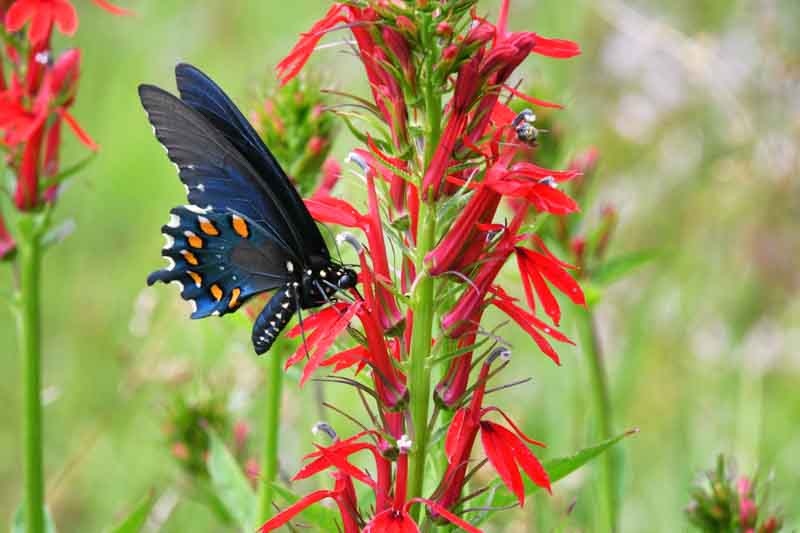 Swallowtail Butterfly on Cardinal Flowers (Lobelia cardinalis)
Native plants can be especially valuable, but “native” needs geography. A plant native somewhere in North America is not automatically the best choice in every North American garden.
In Texas, Gardenia’s Texas Plants for Hummingbirds covers native flowers, vines, shrubs, and other choices suited to the state’s varied ecological regions.
In Florida, Gardenia’s Native Plants That Attract Hummingbirds in Florida reflects a different climate, soil profile, and long growing season.
Regional differences can matter even within one state. Gardenia maintains separate guides for Northern Virginia and Southeast Virginia.
The same principle applies to butterflies. Start with the species occurring locally, then identify their host plants and useful nectar plants. Gardenia’s Wildlife-Friendly Plants Guide also provides access to regional and state-specific pollinator resources.
A garden for butterflies and hummingbirds works better when habitat occupies several heights instead of forming one flat band of flowers.
The result is not only better habitat. Repeated groups, layered planting, and vertical accents generally create a more coherent garden than scattering one specimen of every wildlife plant through the border.
A hummingbird feeder can supplement natural nectar, particularly during migration or temporary gaps between flower flushes. It does not replace a diverse planting.
Plants contribute much more than sugar-rich nectar. They also support insects, provide perches and shelter, create seasonal structure, and feed butterflies, bees, and other wildlife.
For feeder placement, nectar preparation, cleaning, and other practical advice, see Gardenia’s How to Attract Hummingbirds With Success. For behavior and biology, visit the Hummingbird Guide or explore 30 Fun Facts About Hummingbirds.
A garden designed for butterflies and hummingbirds depends on insect life.
Butterfly caterpillars are insects, so products intended to kill leaf-eating caterpillars can also kill Monarchs, swallowtails, fritillaries, and other butterfly larvae feeding on their host plants.
Hummingbirds also eat tiny insects and spiders. Eliminating insect life therefore removes part of their natural diet.
Identify a problem before treating it, tolerate minor cosmetic damage where practical, and use the least disruptive targeted approach necessary.
A wildlife garden should contain wildlife. Caterpillars, a few chewed leaves, and insects among the flowers are often evidence that the habitat is functioning.
By now, the challenge is no longer finding another plant that butterflies or hummingbirds might visit. The harder question is choosing plants that can thrive together in your particular garden.
Don’t stop at a wildlife plant list.
Use the Gardenia Plant Finder to narrow butterfly- and hummingbird-friendly plants by hardiness, sunlight, soil, drainage, water needs, mature size, tolerances, native goals, and other growing conditions.
Then take your choices into the Gardenia Garden Design Tool to compare bloom timing and seasonal interest, check plant compatibility, estimate quantities, and turn individual wildlife plants into a coherent garden plan.
A search result can tell you what wildlife likes. Gardenia can help you decide what belongs together in your garden.
The strongest butterfly and hummingbird garden is not the one with the longest plant list. It is the one in which shared nectar plants, host plants, hummingbird specialists, seasonal habitat, regional relevance, and growing conditions all fit together.
Excellent shared choices include scarlet bee balm, scarlet sage, coral honeysuckle, Eastern columbine, anise hyssop, and garden phlox. The best combination depends on your climate, growing conditions, and bloom season.
There is no single best flower for every garden. Bee balm is one of the strongest shared choices, while salvia, coral honeysuckle, columbine, anise hyssop, and garden phlox can also attract both groups.
Adult butterflies drink nectar, but their caterpillars need particular plants to eat. Monarch caterpillars require milkweed, Black Swallowtails use carrot-family plants, Gulf Fritillaries use passionflowers, and Zebra Swallowtails use pawpaw.
Tubular nectar-rich flowers are especially useful. Examples include cardinal flower, penstemon, crossvine, trumpet vine, California fuchsia, bee balm, salvias, and coral honeysuckle.
Use overlapping plants and habitat from spring through fall. Begin with early flowers such as columbine and coral honeysuckle, add abundant summer nectar, and finish with late flowers such as California fuchsia, hardy fuchsia, anise hyssop, scarlet sage, and other regional late bloomers.
Regionally native plants are especially useful because they are adapted to local conditions and may support important wildlife relationships. Native to North America does not automatically mean native to your particular region, so choose plants with local relevance.
No. A feeder is optional. Properly maintained feeders can supplement natural nectar, but flowers also provide cover, insects, seasonal structure, and food for other wildlife.
Use pesticides with great caution. Butterfly caterpillars can be harmed by insecticides, and hummingbirds eat small insects as part of their diet. Identify problems before treating them and use the least disruptive targeted approach necessary.
| Genus | Agastache, Aquilegia, Asclepias, Campsis, Fuchsia, Lobelia, Lonicera, Monarda, Passiflora, Penstemon, Phlox, Viola |
|---|---|
| Attracts | Butterflies, Hummingbirds |
Create a membership account to save your garden designs and to view them on any device.
Becoming a contributing member of Gardenia is easy and can be done in just a few minutes. If you provide us with your name, email address and the payment of a modest $25 annual membership fee, you will become a full member, enabling you to design and save up to 25 of your garden design ideas.
Join now and start creating your dream garden!