Do deer eat marigolds? Usually not much. True marigolds have strongly aromatic foliage that deer tend to avoid, but their scent should not be treated as a guaranteed barrier around nearby plants. Learn which French, African, and signet marigolds resist browsing and how to recognize real deer damage.
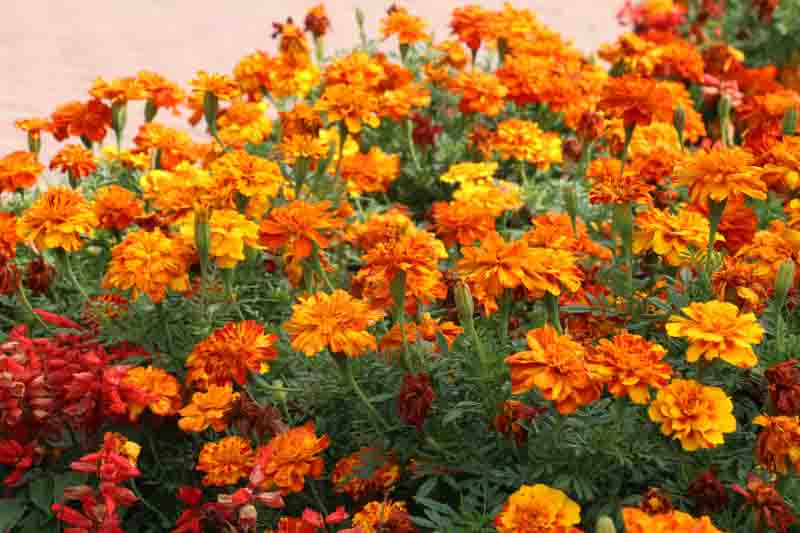


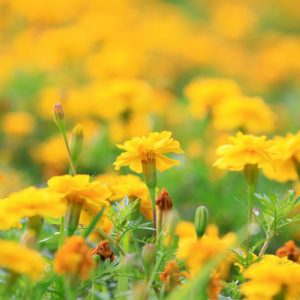
Deer can eat marigolds, but true marigolds (Tagetes) are generally considered deer resistant and are often left alone. Clemson Extension lists marigolds as deer resistant, University of Minnesota notes that deer and rabbits tend to avoid their distinctive odor, and Missouri Botanical Garden records deer tolerance for French marigolds.
That makes marigolds a useful choice for gardens where browsing is a regular problem. French, African, and signet marigolds all belong to Tagetes, but they differ greatly in height, flower size, texture, and how they work in a planting.
Gardenia’s Marigold Rule: aromatic marigold foliage may discourage deer, but the most dependable benefit is simpler – deer usually avoid eating the marigolds themselves. Do not count on a row of marigolds to protect a plant deer strongly prefer.
Marigolds are resistant, not untouchable. Deer become less selective when populations are high, preferred food is limited, or weather reduces their usual forage. Newly planted marigolds can also be more vulnerable simply because their growth is soft and there is less of it to spare.
Browsing becomes more likely when:
A missing flower or shoot tip does not necessarily require action. The more useful question is whether the damage continues. Repeated loss of new growth can stop compact annuals from filling out and flowering normally, while an isolated nibble may have almost no effect.
Gardenia browse check: one sampled stem is usually incidental. Repeated loss of fresh shoots or flower stems is when protection becomes worthwhile.
Marigolds have several other common pests, so chewed foliage should not automatically be blamed on deer. The pattern of damage is often more useful than the fact that something has been eating the plant.
Tracks, droppings, or similar browsing on neighboring plants make deer a much stronger suspect. A marigold covered in small holes but still holding all of its stems is more likely dealing with insects, slugs, or snails.
Read the damage pattern. Ragged missing stems fit deer. Clean low cuts suggest rabbits. Irregular holes or skeletonized foliage point toward smaller pests.
Marigolds grow quickly in warm weather, so modest damage is often temporary. There is little value in protecting every plant after one exploratory bite.
The goal is not to keep every leaf perfect. Protection becomes worthwhile when repeated browsing interferes with establishment, flowering, or the overall display.
Once deer resistance is no longer the deciding factor, choose marigolds for height, flower size, color, texture, and garden role. A 10-inch French marigold and a tall African marigold may both resist browsing, but they solve completely different design problems.
| Hardiness |
2 - 11 |
|---|---|
| Plant Type | Annuals, Perennials |
| Plant Family | Asteraceae |
| Genus | Tagetes |
| Exposure | Full Sun |
| Season of Interest | Spring (Late), Summer (Early, Mid, Late), Fall |
| Maintenance | Low |
| Water Needs | Average |
| Soil Type | Clay, Loam, Sand |
| Soil pH | Acid, Alkaline, Neutral |
| Soil Drainage | Moist but Well-Drained, Well-Drained |
| Characteristics | Cut Flowers, Fragrant, Showy |
| Tolerances | Deer |
| Attracts | Bees, Butterflies, Birds |
| Landscaping Ideas | Beds And Borders, Edging, Patio And Containers |
| Garden Styles | City and Courtyard, Coastal Garden, Informal and Cottage |
The useful comparison is not which marigold deer dislike most. It is whether you need a low edging plant, a fine-textured container marigold, a strong mass of summer color, or a tall African marigold that can hold its own farther back in the border.
Gardenia design note: once browse risk is acceptable, choose by garden role. French marigolds excel at the front of a border, signet marigolds bring lighter texture, and taller African marigolds can provide stronger vertical presence.
“Marigold” is one of those common names that can cause unnecessary confusion.
True marigolds belong to the genus Tagetes. Pot marigold is Calendula officinalis, a completely different genus. Both belong to the daisy family and both can produce yellow or orange flowers, but botanically and horticulturally they are not the same plant.
Tagetes are warm-season annuals that flourish in summer heat. Calendula generally performs best in cooler conditions. Their foliage, flowers, seeds, and traditional uses also differ.
That botanical distinction matters when evaluating deer resistance. Evidence for Tagetes should not automatically be transferred to Calendula simply because the word “marigold” appears in both common names.
See Gardenia’s Marigold vs. Calendula guide for a full comparison.
Gardenia identification check: if the botanical name is Tagetes, it is a true marigold. If it is Calendula officinalis, evaluate it separately.
Once you know marigolds are generally lower-browse flowers, deer resistance stops being the main decision.
Use the Gardenia Plant Finder to compare deer-resistant plants by sun, soil, drainage, water needs, climate, mature size, bloom season, and garden style. Browse Deer-Resistant Garden Ideas for inspiration, then use the Garden Design Tool to see how marigolds and other lower-browse plants fit together before you plant.
Deer can eat marigolds, but true marigolds in the genus Tagetes are generally deer resistant. Clemson Extension, University of Minnesota Extension, and Missouri Botanical Garden all describe marigolds as plants deer tend to avoid.
Their strongly aromatic foliage may help discourage deer. However, the strongest documented benefit is that deer tend to avoid eating the marigolds themselves, so a border of marigolds should not be relied on as the sole protection for highly palatable plants.
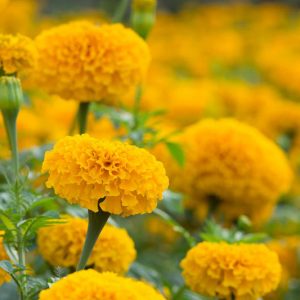
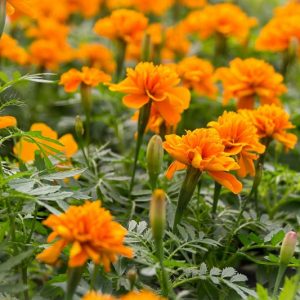
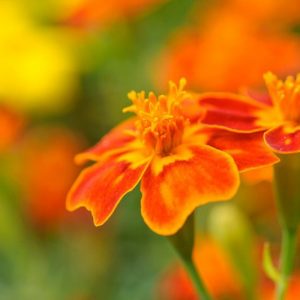
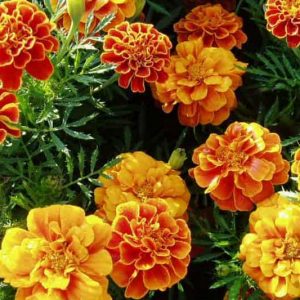
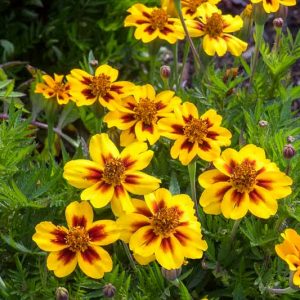
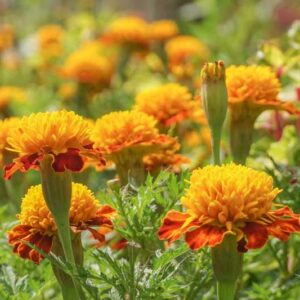
French marigolds, African marigolds, and signet marigolds are all useful lower-browse choices. They belong to Tagetes patula, Tagetes erecta, and Tagetes tenuifolia.
Yes. Deer become less selective when preferred forage is scarce, populations are high, or weather limits other food. Deer resistance lowers the risk of browsing but does not guarantee that every marigold will remain untouched.
Deer often remove large sections of leaves or shoots and leave ragged stems. Rabbits tend to leave cleaner angled cuts, while slugs make irregular holes and Japanese beetles can skeletonize the foliage.
Marigold scent may help discourage deer, but do not rely on marigolds alone to protect tomatoes or other highly palatable plants. Where deer pressure is significant, repellents or physical barriers are more dependable.
No. Pot marigold is Calendula officinalis, while true marigolds belong to the genus Tagetes. Deer-resistance information for Tagetes should not automatically be applied to Calendula.
Updated: September 2026 – Reviewed by Gardenia Editors
| Hardiness |
2 - 11 |
|---|---|
| Plant Type | Annuals, Perennials |
| Plant Family | Asteraceae |
| Genus | Tagetes |
| Exposure | Full Sun |
| Season of Interest | Spring (Late), Summer (Early, Mid, Late), Fall |
| Maintenance | Low |
| Water Needs | Average |
| Soil Type | Clay, Loam, Sand |
| Soil pH | Acid, Alkaline, Neutral |
| Soil Drainage | Moist but Well-Drained, Well-Drained |
| Characteristics | Cut Flowers, Fragrant, Showy |
| Tolerances | Deer |
| Attracts | Bees, Butterflies, Birds |
| Landscaping Ideas | Beds And Borders, Edging, Patio And Containers |
| Garden Styles | City and Courtyard, Coastal Garden, Informal and Cottage |
Create a membership account to save your garden designs and to view them on any device.
Becoming a contributing member of Gardenia is easy and can be done in just a few minutes. If you provide us with your name, email address and the payment of a modest $25 annual membership fee, you will become a full member, enabling you to design and save up to 25 of your garden design ideas.
Join now and start creating your dream garden!