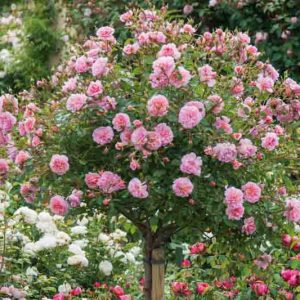
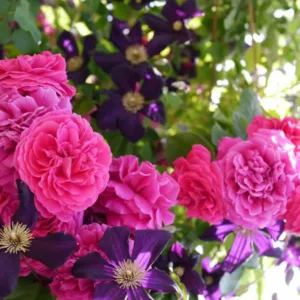
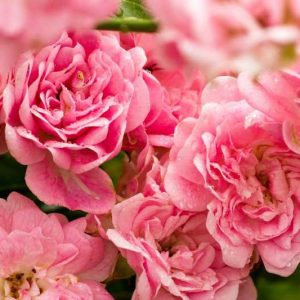
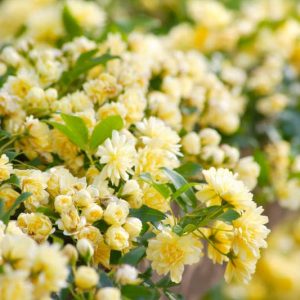
Do deer eat roses? Yes - even thorny roses can lose shoots, leaves, buds, and flowers. Learn whether any roses are less appealing to deer, how to recognize browsing, whether damaged plants recover, when protection makes sense, and how to choose lower-browse replacements that perform the same garden role.
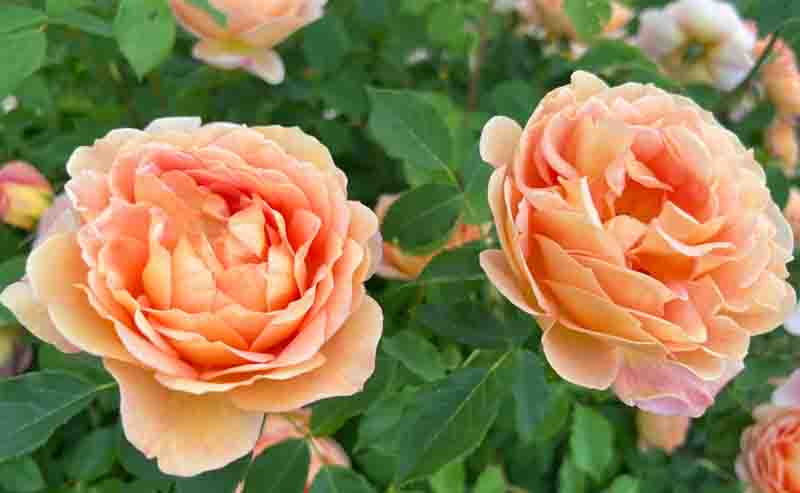


Yes. Deer eat roses, including tender shoots, leaves, flower buds, and blooms, and thorns do not reliably stop them. Roses are not generally considered deer-resistant plants. Browsing varies with local deer pressure, season, drought, and available food, but valuable roses may need protection wherever deer regularly enter the garden.
Roses look well defended. Their prickly stems suggest that deer should leave them alone, but that is not a dependable assumption.
Iowa State University Extension identifies deer as an important animal pest of roses and notes that deer browse flower buds and foliage despite the thorns. It also advises that areas with high deer populations may simply be poor locations for roses because plants can be frequently browsed or damaged.
NC State likewise lists deer damage among potential problems on several rose pages, including Knock Out roses.
The practical conclusion is straightforward: if deer regularly enter the garden, roses should be treated as potentially vulnerable plants.
That does not mean every rose will be eaten. Deer pressure varies enormously from one garden to another. A rose may remain untouched for years and then suddenly be browsed during drought, winter food shortages, or periods when local deer populations are putting greater pressure on available plants.
The more important distinction is therefore not simply “deer resistant” versus “not deer resistant.” It is how much browsing pressure exists at the site and whether the rose can realistically be protected.
Deer generally target the tender, accessible growth of a rose rather than chewing indiscriminately through every part of the shrub.
They may eat:
Flower buds are particularly important because deer can spoil the display without seriously threatening the survival of the shrub.
If a bud is removed before it opens, that flower is lost. A repeat-flowering rose may produce more buds later, but a once-blooming rose has far less opportunity to replace a large part of its seasonal display.
That leads to an important distinction: a rose can survive deer browsing while still losing the flowers you planted it to enjoy.
There is not enough reliable evidence to rank ordinary garden rose cultivars precisely by deer resistance.
That means it would be misleading to claim that a particular hybrid tea, floribunda, shrub rose, climbing rose, or heavily thorned cultivar is proven deer-proof.
Even Knock Out roses, which are valued for vigor and disease resistance, should not be confused with deer-resistant roses. NC State lists deer among their potential animal problems.
Rugosa roses are a more interesting case. NC State describes Rosa rugosa as a plant deer tend to avoid, while also noting that its flowers may still be eaten. This suggests somewhat lower browse risk, not immunity.
There is another tradeoff to consider. Rosa rugosa can spread aggressively and is invasive in parts of North America, particularly in some coastal regions. Gardeners should check local recommendations before planting it.
So the useful question is not: “Which rose is deer-proof?” It is: “Which rose best fits my garden, and is it worth protecting in this location?”
Choose roses for the qualities that are actually documented: flowering habit, disease resistance, fragrance, mature size, hardiness, repeat bloom, color, and garden use. Then assess deer pressure separately rather than relying on an unsupported cultivar deer-resistance ranking.
Deer damage usually looks different from the diseases and insects that commonly trouble roses.
Look for:
By contrast, black spot leaves dark lesions and yellowing foliage. Powdery mildew produces a pale or powdery coating. Japanese beetles and rose sawfly larvae chew foliage but often leave holes, skeletonized leaves, or surface feeding rather than removing entire shoots.
Bud problems can also have other causes. Thrips and other flower-feeding insects may discolor or distort buds without removing the whole bud and stem.
Gardenia’s Rose Damage Check: if healthy shoots, leaves, buds, or flowers have abruptly disappeared, browsing is likely. If the tissue remains but is spotted, distorted, skeletonized, powdery, or discolored, investigate disease or insect damage instead.
Established roses are resilient, and modest browsing rarely kills a healthy shrub outright.
If deer remove a few leaves or shoot tips, the plant can usually produce new growth. If a developing flower bud or flowering stem is removed, however, that bloom is lost.
Repeat-flowering roses have a better chance of producing another flush later in the season. Once-blooming roses have less opportunity to compensate if deer remove a large percentage of their buds before flowering.
Young roses are more vulnerable because they have smaller root systems and fewer stems from which to recover.
Repeated browsing can also affect established plants. If new shoots are continually removed, the shrub may lose flowering potential, struggle to reach its intended size, and develop an uneven shape even though it remains alive.
So recovery should be judged in two ways:
If deer regularly visit the garden, protection is more dependable than trying to find a rose they will never touch.
Physical exclusion offers the strongest protection. Iowa State identifies exclusion as the most effective approach to animal damage on roses. Depending on the scale of the garden, this may mean deer fencing, netting, or a temporary cage around an individual shrub.
Give young roses priority. Recently planted shrubs have less growth to spare and benefit most from uninterrupted establishment.
Repellents may help under lighter pressure. Their performance depends on the product, deer pressure, weather, new growth, and consistent reapplication. Follow the label rather than assuming one treatment will protect the plant for the season.
Do not rely on companion planting as a barrier. Lavender, catmint, daffodils, and other lower-browse plants do not make a neighboring rose inaccessible. Deer can simply reach the rose itself.
Where deer pressure is persistently high, Iowa State’s broader advice is worth taking seriously: the site may simply be a poor place for unprotected roses.
If repeated deer damage makes roses impractical, do not look only for a flower that resembles a rose. First ask what job the rose was supposed to perform.
| If the Rose Was Meant to… | Consider Lower-Browse Plants Such As… | What to Compare |
|---|---|---|
| Provide a flowering shrub | Potentilla, Caryopteris, butterfly bush, or some lilacs | Height, width, bloom season, hardiness, sun, water needs |
| Add long summer color | Nepeta, Salvia, Coreopsis, Achillea, Echinacea | Bloom period, height, drought tolerance, garden style |
| Add fragrance | Lavender, Nepeta, aromatic herbs, or fragrant shrubs suited to your climate | Fragrance, sun, drainage, mature size, winter hardiness |
| Fill a sunny perennial border | Nepeta, Salvia, Coreopsis, Achillea, Echinacea | Height, spread, bloom sequence, moisture needs, pollinator value |
| Create a hedge or structural planting | Choose a deer-resistant shrub according to the site rather than flower resemblance | Evergreen or deciduous habit, density, mature height, width, hardiness, exposure |
These are starting points, not interchangeable substitutes. A 2-foot catmint and a 6-foot shrub rose clearly do not perform the same structural role.
The better replacement is the plant that combines lower browse risk with the same garden function, appropriate mature size, and compatible growing conditions.
That distinction is especially important when replacing hedges, foundation shrubs, screens, or major structural roses. In those situations, height, density, evergreen habit, hardiness, and site fit matter more than simply finding another flowering plant.
Deer in the neighborhood do not automatically mean giving up roses.
The decision comes down to three things:
A favorite rose near the house may be easy to protect. A long unfenced rose hedge beside a regular deer route is much harder to justify.
If you decide the roses are worth protecting, explore Gardenia’s rose collection or compare rose plants by mature size, hardiness, fragrance, flowering habit, disease resistance, and garden use.
Gardenia’s Deer-Smart Rose Strategy: judge roses by browse pressure × value of the plant × practicality of protection. Protect important roses where that is realistic. In exposed areas with repeated damage, replace the rose by garden function rather than simply choosing another attractive flower.
Use the Gardenia Plant Finder to find lower-browse replacements that also match your hardiness, sun, soil, drainage, water needs, mature size, garden style, native goals, wildlife value, and other tolerances.
For broader deer guidance, see What Plants Do Deer Eat? and Gardenia’s guide to keeping deer out of the garden.
Then use the Gardenia Design Tool to check whether your roses, replacement plants, and companions share compatible growing conditions before planting them together.
Yes. Deer eat rose leaves, tender shoots, flower buds, and blooms. Thorns do not reliably stop them, so roses may need protection where deer regularly visit the garden.
Roses should not generally be treated as reliably deer resistant. Browsing varies with local deer pressure, but even thorny roses may lose foliage, buds, flowers, and tender shoots.
No. Iowa State Extension notes that deer browse rose foliage and flower buds despite the thorns. Prickles do not provide dependable protection when deer decide to browse a rose.
No. NC State lists deer among the potential animal problems of Knock Out roses. Their vigor and disease resistance should not be confused with deer resistance.
Rosa rugosa may carry somewhat lower browse risk, and NC State notes that deer tend to avoid it, although the flowers may still be eaten. It is not deer-proof and can also be invasive in some regions.
Established roses usually recover from modest browsing. However, eaten buds and flowers are lost, and repeated browsing can reduce flowering, slow young plants, and alter the shape of established shrubs.
Physical exclusion is the most dependable option. Deer fencing, netting, or cages around individual roses can prevent browsing. Repellents may help under lighter pressure but usually require repeated applications.
Choose a replacement by the role the rose was meant to perform. Lower-browse options may include Nepeta, Salvia, Coreopsis, Achillea, Echinacea, Potentilla, Caryopteris, butterfly bush, or some lilacs, depending on the site and desired size.
Updated: September 2026 – Reviewed by Gardenia Editors
| Hardiness |
4 - 10 |
|---|---|
| Plant Type | Climbers, Roses, Shrubs |
| Plant Family | Rosaceae |
| Genus | Rosa, Rosa - Climbing Rose, Rosa - English Rose, Rosa - Floribunda Rose, Rosa - Grandiflora Rose, Rosa - Groundcover Rose, Rosa - Hybrid Tea Rose, Rosa - Rambling Rose, Rosa - Shrub Rose |
| Exposure | Full Sun, Partial Sun |
| Season of Interest | Spring (Late), Summer (Early, Mid, Late), Fall |
| Maintenance | Average |
| Water Needs | Average |
| Soil Type | Chalk, Clay, Loam, Sand |
| Soil pH | Acid, Neutral, Alkaline |
| Soil Drainage | Well-Drained |
| Characteristics | Cut Flowers, Fragrant, Showy |
| Landscaping Ideas | Arbors, Pergolas, Trellises, Beds And Borders, Hedges And Screens, Patio And Containers, Wall-Side Borders |
| Garden Styles | City and Courtyard, Informal and Cottage, Traditional Garden |
Create a membership account to save your garden designs and to view them on any device.
Becoming a contributing member of Gardenia is easy and can be done in just a few minutes. If you provide us with your name, email address and the payment of a modest $25 annual membership fee, you will become a full member, enabling you to design and save up to 25 of your garden design ideas.
Join now and start creating your dream garden!