Start the daylily season sooner with Extra Early and Early cultivars. Learn how these bloom windows differ, how to combine them for a smoother transition into peak season, and how to choose plants by color, height, flower form, fragrance, rebloom, and garden role for a longer, more dynamic display.
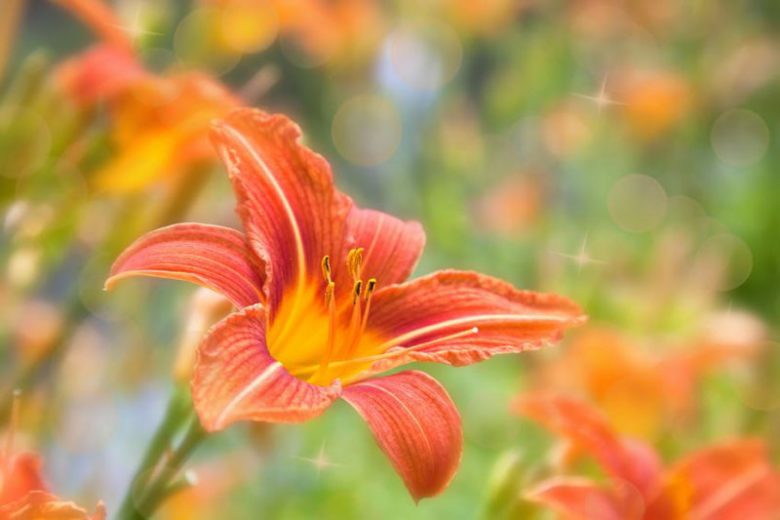


Daylilies are often associated with the height of summer, but some daylilies (Hemerocallis) begin flowering well before the main season reaches its peak. Choosing cultivars classified as Extra Early or Early brings daylily color into the garden sooner and creates the opening stage of a much longer flowering display.
Early bloom is especially useful if you want daylilies to contribute for more than one concentrated midsummer period. Extra Early cultivars open the season, Early cultivars keep it moving, and Early Midseason selections then begin the transition toward peak bloom.
For practical garden planning, Gardenia organizes the standard daylily bloom sequence into three connected seasons: Early (Extra Early + Early), Midseason (Early Midseason + Midseason + Late Midseason), and Late (Late + Very Late). The underlying bloom classifications come from the American Daylily Society; Gardenia’s three-season grouping is designed to make those classifications easier to use in the garden.
Think of the beginning of the daylily season as Open → Sustain → Hand Off.
| Bloom Window | Relative Timing | Garden Role |
|---|---|---|
| Extra Early (EE) | Among the first daylilies to flower | Open: starts the daylily season |
| Early (E) | Follows or overlaps Extra Early and precedes Early Midseason | Sustain: keeps the early display going |
| Early Midseason (EM) | The next bloom window before the local peak | Hand Off: connects early flowering to the build toward peak season |
Gardenia’s Early-Season Handoff: Extra Early cultivars open the season, Early cultivars sustain it, and Early Midseason cultivars take over as the garden begins building toward peak bloom.
Daylily bloom seasons describe relative timing rather than fixed calendar dates. Extra Early cultivars are among the first daylilies to bloom in a given area. Early cultivars follow or overlap that first group and flower before Early Midseason selections begin the build toward peak bloom.
This distinction matters because an “Early” daylily does not bloom on the same date everywhere. Climate, latitude, spring temperatures, elevation, and weather all influence when the local daylily season begins.
In warm regions, the first cultivars may flower surprisingly early, while gardeners in colder climates may see the same sequence considerably later.
Think in sequence, not dates. Extra Early and Early describe where a cultivar flowers in relation to other daylilies in your area. That is more useful for garden planning than assigning the same fixed month everywhere.
Extra Early daylilies are the advance guard of the daylily season. They begin flowering before the main mass of cultivars comes into bloom and are particularly valuable if you want Hemerocallis to contribute color as soon as possible.
Their value is not simply novelty. Extra Early cultivars can fill the transition between late-spring flowers and the larger summer display, bringing daylilies into the garden before most cultivars have started.
Use Extra Early daylilies to:
Some Extra Early cultivars are also rebloomers. When conditions allow, they can contribute at the beginning of the primary flowering sequence and later send up additional scapes.
Starting earlier matters. Extending the daylily season is not only about finding plants that flower later. Extra Early cultivars can add valuable weeks of color before peak season even arrives.
Early daylilies follow or overlap the Extra Early group and keep the first wave of flowering moving before Early Midseason begins.
This makes the Early category particularly important if you want more than a handful of precocious flowers. Extra Early cultivars open the season, but Early cultivars give that first display enough depth and duration to become a meaningful part of the garden.
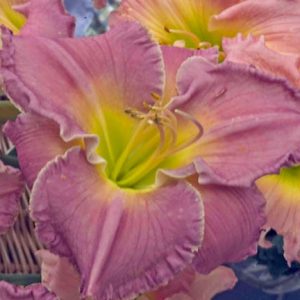
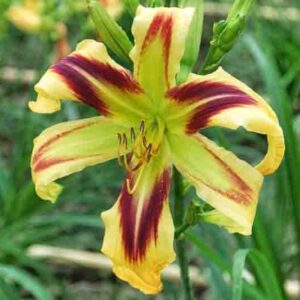
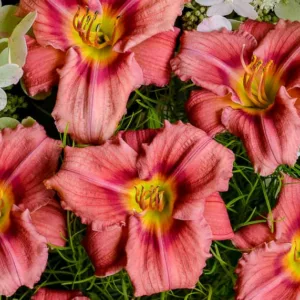
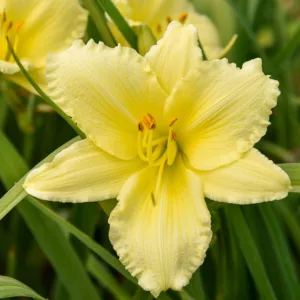
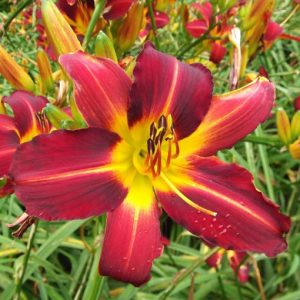
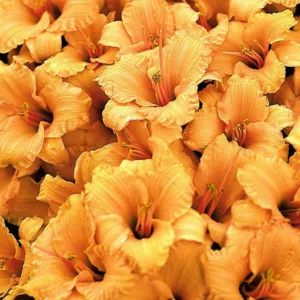
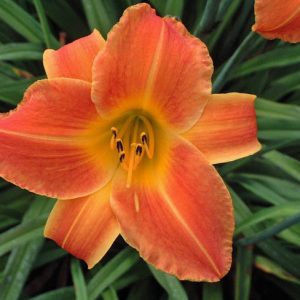
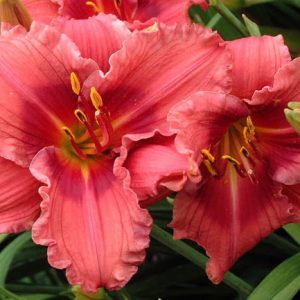
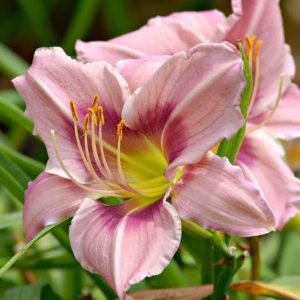
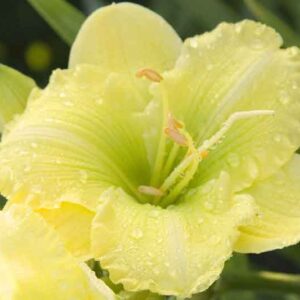
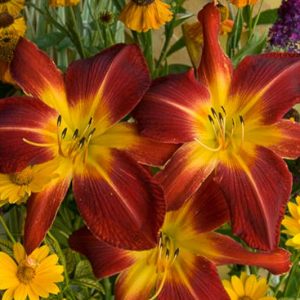
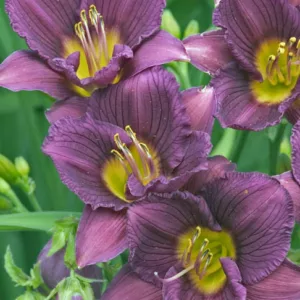
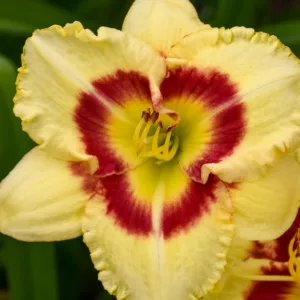
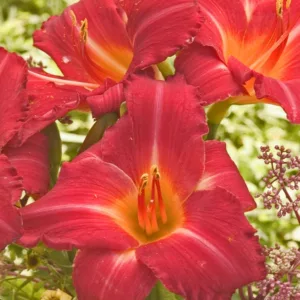
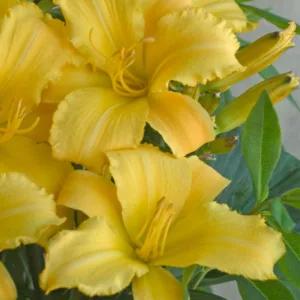
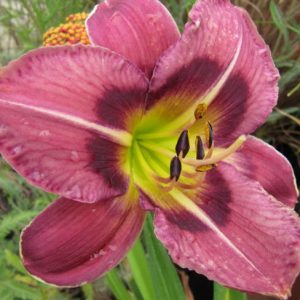
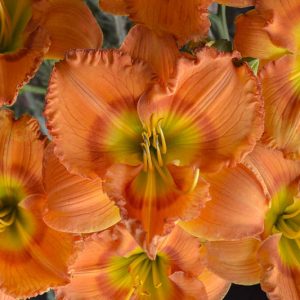
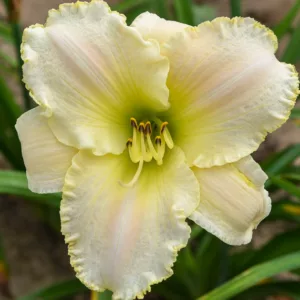
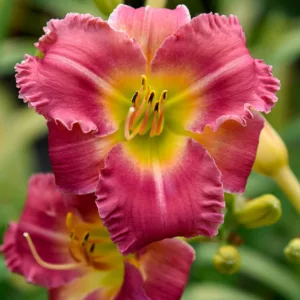
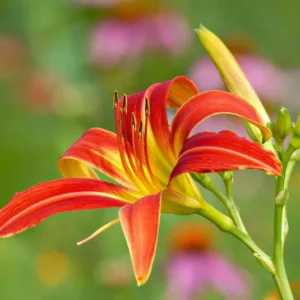
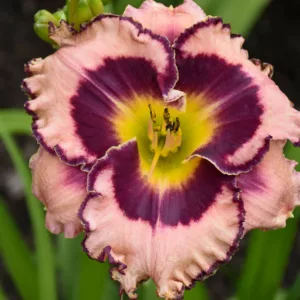
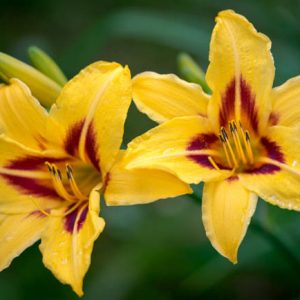
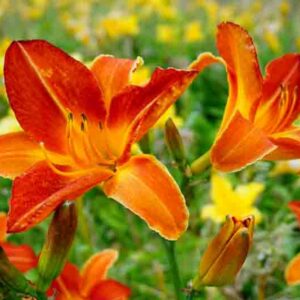
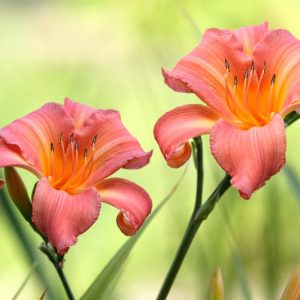
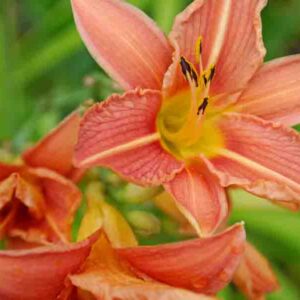
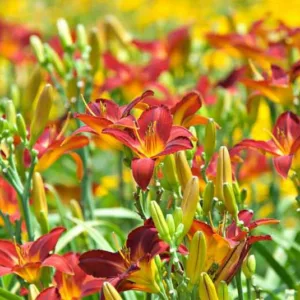
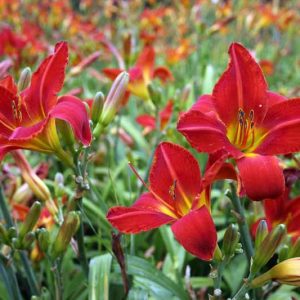
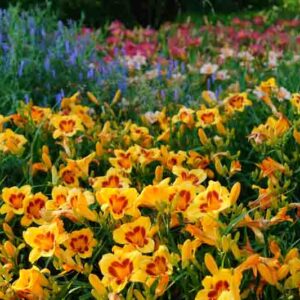
Early-flowering cultivars can also be remarkably diverse. They are not limited to traditional yellows and oranges. Depending on the cultivar, flowers may be pink, red, burgundy, bicolored, eyed, ruffled, broad-petaled, or more unusual in form.
Early is a timing category, not a flower style. Once you have chosen the bloom window, compare cultivars for color, flower form, height, fragrance, foliage habit, rebloom, and the role they need to play in your garden.
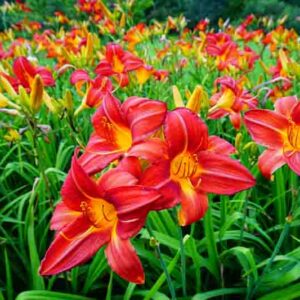
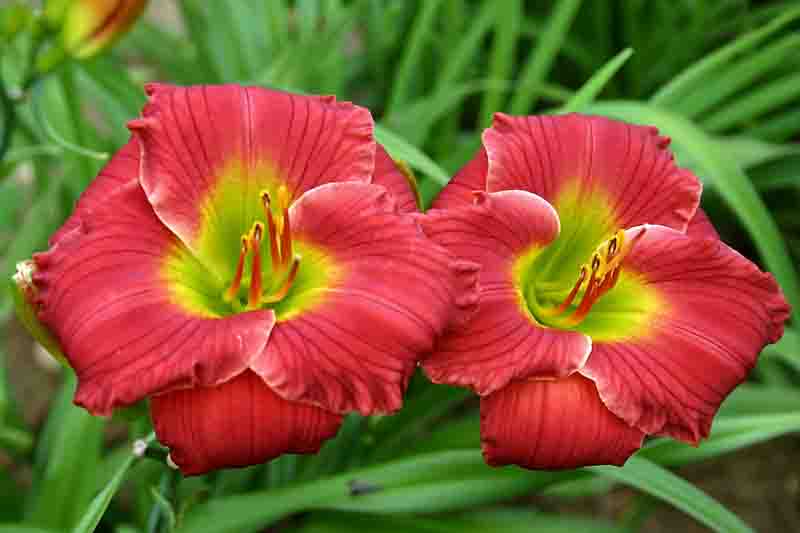 Hemerocallis ‘Red Hot Returns’
Early flowering is only the beginning of the daylily sequence. Once Extra Early and Early cultivars are underway, Early Midseason begins the transition toward the central peak.
Gardenia’s Midseason-Blooming Daylilies guide covers the next three flowering windows:
After that central sequence, Late-Blooming Daylilies continue the display with Late and Very Late cultivars.
| Garden Phase | Bloom Groups | Purpose |
|---|---|---|
| Start | Extra Early + Early | Bring daylily color into the garden before peak season |
| Build | Early Midseason | Bridge early flowering into the main display |
| Peak | Midseason | Create maximum flower impact |
| Carry | Late Midseason | Keep color moving beyond peak bloom |
| Extend | Late + Very Late | Continue flowering after most daylilies have finished |
Then add rebloom: Reblooming cultivars can produce additional scapes after their primary flowering period, but they work best as another layer on top of a well-planned primary bloom sequence.
An early-flowering daylily and a reblooming daylily describe two different characteristics.
An Extra Early or Early cultivar may rebloom, but not every early daylily does. Conversely, a reblooming cultivar can belong to a later primary bloom-season category.
If you want dependable early-season color, choose by primary bloom season first. Then treat rebloom as an additional characteristic.
Explore Gardenia’s Reblooming Daylilies for cultivars capable of producing additional flowering scapes.
Early + rebloom can be a powerful combination. A cultivar that starts early and later produces additional scapes may contribute at more than one point in the season, but the strength and timing of rebloom can vary with climate and growing conditions.
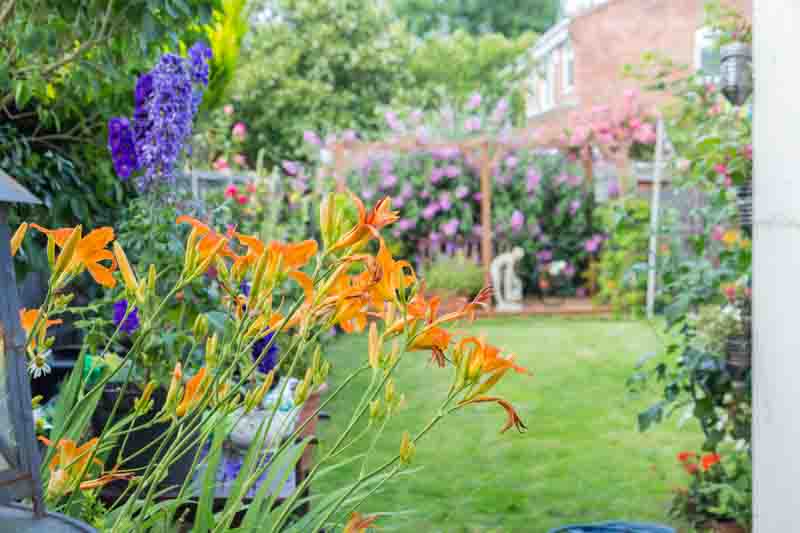
A satisfying early-season planting is more than a group of cultivars that happen to flower sooner. The strongest combinations vary timing, flower form, height, color, and rebloom potential so the display develops rather than arriving all at once.
Start with timing. If all your earliest cultivars fall into one narrow bloom window, the display may be colorful but brief. Combining Extra Early and Early selections creates a more gradual opening and positions the garden for a smooth transition into Early Midseason.
Think in overlap, not blocks. Extra Early cultivars do not need to finish before Early ones begin. Some overlap creates a fuller transition and makes the flowering sequence feel continuous rather than divided into separate episodes.
A planting containing several cultivars in related colors can still look varied if their flower forms differ. Combine broad, rounded flowers with narrower forms, ruffled cultivars with simpler flowers, or solid colors with contrasting eyes, throats, bands, or edges.
Use scape height to create depth. Shorter cultivars can occupy the foreground, medium-height selections can carry the main early display, and taller flowers can rise behind them.
Do not assume cultivars with the same bloom timing have similar dimensions. Compare the individual plant profiles before deciding where each belongs.
Early daylilies occupy a useful seasonal transition. Their colors can echo late-spring flowers or introduce the warmer palette of the coming summer.
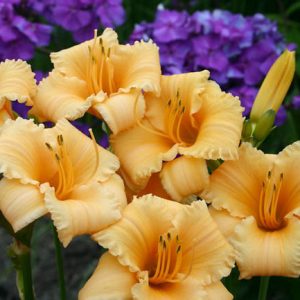
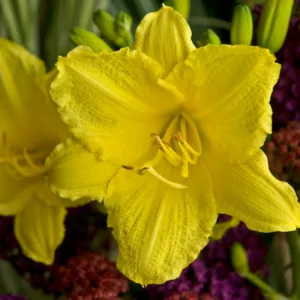
Soft yellow, peach, cream, and pink can blend gently with late-spring borders, while orange, scarlet, burgundy, and strongly patterned cultivars can signal the shift toward summer.
An early rebloomer can be particularly useful because its primary display contributes to the beginning of the season while later scapes may reinforce the garden after the initial flush.
But do not build the entire season around hoped-for rebloom. A sequence of primary bloom periods is a more dependable foundation.
Best early-season combinations: Start with Extra Early and Early timing, vary height and flower form, use color to connect spring with summer, and let rebloom provide an additional layer rather than carrying the entire display.
For planting combinations that complement daylilies before, during, and after bloom, explore Gardenia’s Great Companion Plants for Daylilies.
Early flowering does not require special cultivation, but even the best early cultivar will flower poorly if its growing conditions are unsuitable. Daylilies are adaptable, yet strong flowering depends on sufficient light, appropriate crown depth, reliable moisture, good drainage, and enough room for the clump to develop.
For complete planting, watering, fertilizing, deadheading, dividing, and seasonal-care instructions, see Gardenia’s How to Grow and Care for Daylilies: Complete Planting & Care Guide.
If an established daylily produces plenty of foliage but few flowers, investigate sunlight, crown depth, crowding, spring moisture, cultivar behavior, and plant health before simply adding more fertilizer.
Once you have decided that you want Extra Early or Early bloom, compare the whole plant rather than choosing only by flower color.
Choosing shortcut: Choose the bloom window first, then the cultivar. Timing determines when the plant enters the display; its individual characteristics determine what it contributes once it gets there.
Gardeners with limited space can also explore Gardenia’s Dwarf Daylilies, while the Top Daylilies guide and complete Hemerocallis collection provide additional ways to compare cultivars.
| Garden Goal | Best Bloom Groups | Explore |
|---|---|---|
| Start daylily color as early as possible | Extra Early + Early | Early-Blooming Daylilies |
| Build and extend the peak-season display | Early Midseason + Midseason + Late Midseason | Midseason-Blooming Daylilies |
| Keep flowers coming after peak season | Late + Very Late | Late-Blooming Daylilies |
| Add another possible flowering flush | Rebloomers | Reblooming Daylilies |
The cultivars below are drawn from Gardenia’s daylily database and organized by their primary ADS bloom-season classification. Browse Extra Early and Early daylilies separately, then use the individual profiles to compare flower color and form, height and spread, fragrance, rebloom, foliage habit, hardiness, and growing requirements.
Planning tip: Choose cultivars from both early bloom windows if you want the opening display to progress rather than arrive all at once. Bloom timing remains relative and can shift with climate, location, and weather.
| Hardiness |
3 - 9 |
|---|---|
| Climate Zones | 2, 3, 4, 5, 6, 7, 8, 9, 10, 11, 12, 13, 14, 15, 16, 17, 18, 19, 20, 21, 22, 23, 24, H1, H2 |
| Plant Type | Perennials |
| Genus | Hemerocallis |
| Exposure | Full Sun, Partial Sun |
| Season of Interest | Summer (Early, Mid) |
| Maintenance | Low |
| Water Needs | Average |
| Soil Type | Chalk, Clay, Loam |
| Soil pH | Acid, Alkaline, Neutral |
| Soil Drainage | Moist but Well-Drained, Well-Drained |
| Characteristics | Fragrant, Plant of Merit, Showy |
| Tolerance | Drought, Rabbit |
| Attracts | Birds, Butterflies, Hummingbirds |
| Landscaping Ideas | Beds And Borders, Edging, Patio And Containers |
| Garden Styles | City and Courtyard, Informal and Cottage, Prairie and Meadow, Traditional Garden |
Gardenia uses “early-blooming daylilies” as a practical grouping for Extra Early and Early cultivars. These flower before the central daylily season, with Extra Early cultivars opening first and Early cultivars sustaining the display before Early Midseason begins.
The exact dates vary by climate and location. Daylily bloom-season classifications describe relative timing rather than fixed calendar months. The first cultivars may bloom considerably earlier in warm regions than in colder northern gardens.
An Extra Early daylily is among the first cultivars to flower in the local daylily season. These plants are useful for starting daylily color before the main wave of cultivars begins.
An Early daylily follows or overlaps the Extra Early group and flowers before Early Midseason begins. It helps sustain the first wave of flowering and creates a smoother transition toward the main season.
Early Midseason is a distinct bloom-season classification. For practical garden planning, Gardenia groups Extra Early and Early cultivars in its Early guide, while Early Midseason joins Midseason and Late Midseason in the Midseason guide.
Not exactly. Extra Early and Early are relative bloom classifications, while “early summer” is a calendar-season description. The actual flowering date of an Early cultivar changes with climate, location, and weather.
Some do, but early bloom and rebloom are separate characteristics. Extra Early or Early describes the timing of the primary flowering period, while rebloom describes the ability to produce additional flower scapes afterward.
Combine cultivars from successive primary bloom periods: Extra Early, Early, Early Midseason, Midseason, Late Midseason, Late, and Very Late. Reblooming cultivars can provide an additional possible extension where climate and growing conditions support repeat flowering.
Most daylilies flower best with about six hours or more of direct sunlight per day. They tolerate partial shade, but flowering generally decreases as light levels decline.
Bloom-season categories describe relative timing, not fixed dates. Spring temperatures, climate, latitude, elevation, and local weather can shift flowering earlier or later, even for the same cultivar.
Yes. Combining cultivars from several primary bloom periods is one of the most dependable ways to extend the daylily season. Early cultivars begin the display, Midseason cultivars build and sustain the peak, and Late and Very Late cultivars continue flowering afterward.
Good companions share compatible sunlight, soil, drainage, and moisture needs while adding contrasting flower forms or complementary bloom times. Late-spring and early-summer perennials are particularly useful for creating a smooth transition around early daylilies.
Extending the daylily season does not begin only with rebloom or late-flowering cultivars. It can also begin at the front of the season by choosing daylilies whose primary display naturally occurs before the local peak.
Extra Early cultivars open the season, and Early cultivars sustain that first wave. Together they create a more substantial opening display and prepare the handoff to Early Midseason, Midseason, and Late Midseason flowers.
For the longest sequence, follow your early selections with Gardenia’s Midseason-Blooming Daylilies and Late-Blooming Daylilies, then add reblooming cultivars where appropriate for another possible flush.
Updated: August 2026 • Reviewed by Gardenia Editors
| Hardiness |
3 - 9 |
|---|---|
| Climate Zones | 2, 3, 4, 5, 6, 7, 8, 9, 10, 11, 12, 13, 14, 15, 16, 17, 18, 19, 20, 21, 22, 23, 24, H1, H2 |
| Plant Type | Perennials |
| Genus | Hemerocallis |
| Exposure | Full Sun, Partial Sun |
| Season of Interest | Summer (Early, Mid) |
| Maintenance | Low |
| Water Needs | Average |
| Soil Type | Chalk, Clay, Loam |
| Soil pH | Acid, Alkaline, Neutral |
| Soil Drainage | Moist but Well-Drained, Well-Drained |
| Characteristics | Fragrant, Plant of Merit, Showy |
| Tolerance | Drought, Rabbit |
| Attracts | Birds, Butterflies, Hummingbirds |
| Landscaping Ideas | Beds And Borders, Edging, Patio And Containers |
| Garden Styles | City and Courtyard, Informal and Cottage, Prairie and Meadow, Traditional Garden |
Create a membership account to save your garden designs and to view them on any device.
Becoming a contributing member of Gardenia is easy and can be done in just a few minutes. If you provide us with your name, email address and the payment of a modest $25 annual membership fee, you will become a full member, enabling you to design and save up to 25 of your garden design ideas.
Join now and start creating your dream garden!
Create a membership account to save your garden designs and to view them on any device.
Becoming a contributing member of Gardenia is easy and can be done in just a few minutes. If you provide us with your name, email address and the payment of a modest $25 annual membership fee, you will become a full member, enabling you to design and save up to 25 of your garden design ideas.
Join now and start creating your dream garden!

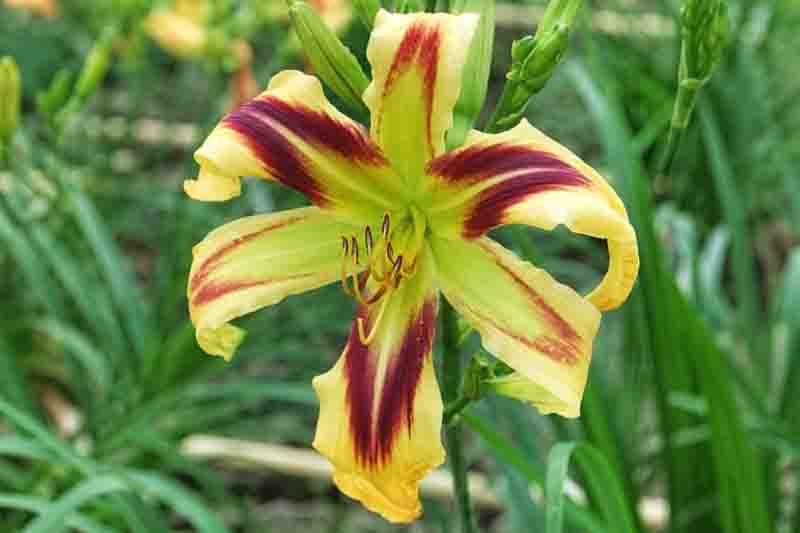 Hemerocallis ‘Free Wheelin’
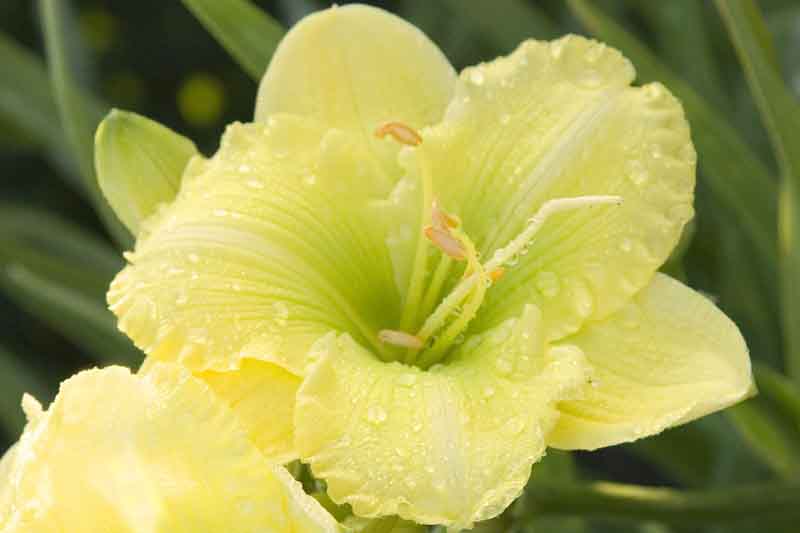 Hemerocallis ‘Irish Envy’