Amore Titanium Bleeding Heart, Titanium Bleeding Heart, Fernleaf Bleeding Heart, Fringed Bleeding Heart, Bleeding Heart
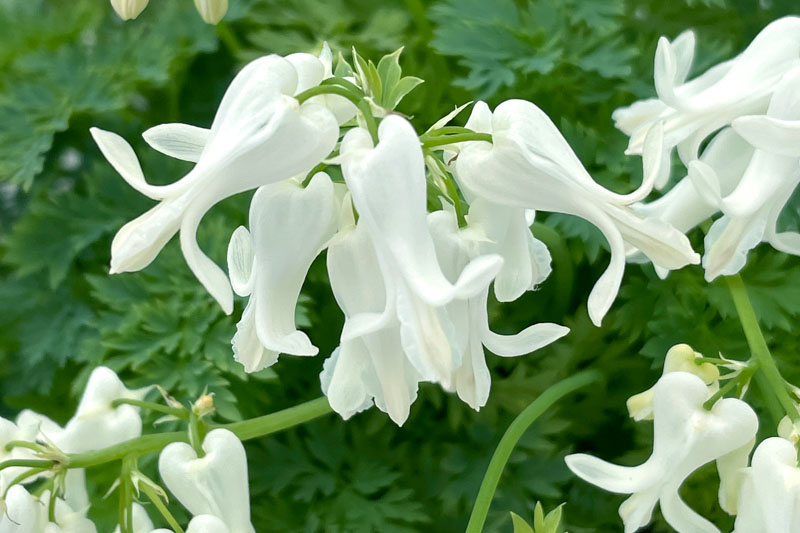
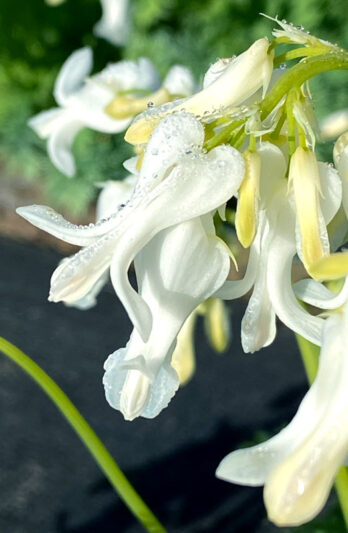
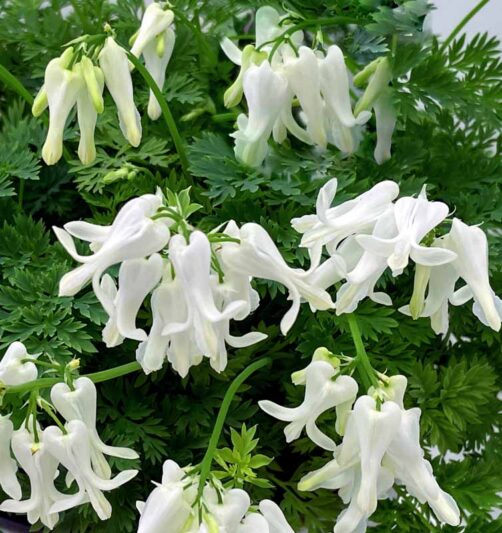
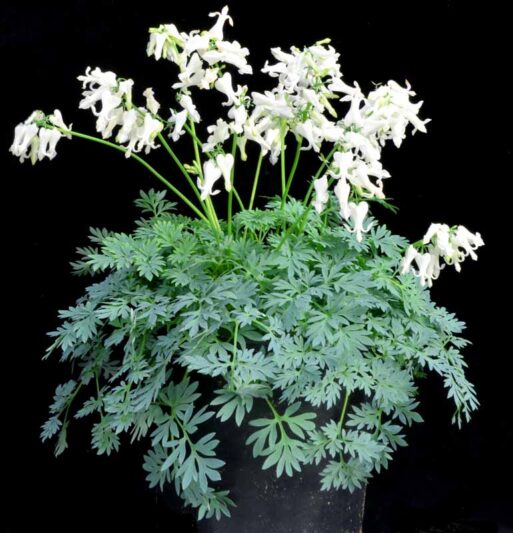


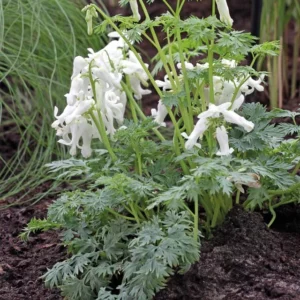
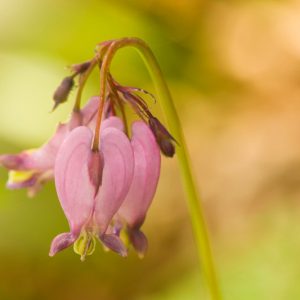
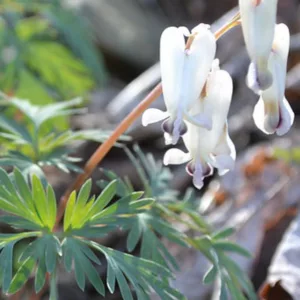
Dicentra Amore™ ‘Titanium’, often sold as Amore Titanium bleeding heart, is a compact, long-blooming perennial with pure white heart-shaped flowers held above soft blue-green, fern-like foliage. It brings the romance of classic bleeding hearts into a smaller, more heat-tolerant, longer-flowering form that fits beautifully into shade gardens, woodland borders, containers, entry plantings, and cool, moist patio displays.
This is not the old-fashioned bleeding heart that blooms briefly in spring and disappears in summer. Amore™ ‘Titanium’ belongs to Terra Nova Nurseries’ Amore™ series, bred and selected for exceptional vigor, heat resistance, and a much longer bloom season. Its white flowers appear from spring through summer in cool, shaded conditions, creating a clean, luminous effect against finely cut foliage.
Use this perennial where you want elegance without fuss. It is small enough for the front of a border, bright enough to lift a dark corner, and refined enough for containers by an entry or shaded seating area. Give it part shade to full shade, moist but well-drained loamy soil, and steady moisture, and it becomes one of the most graceful repeat-blooming perennials for the shade garden.
Summary: Compact herbaceous perennial bleeding heart with pure white flowers, soft blue-green fern-like foliage, and a long spring-to-summer bloom season.
Use: Excellent for shade gardens, woodland borders, containers, entry plantings, small-space borders, cool patios, and moist part-shade beds.
Highlight: A vigorous, heat-resistant Amore™ series selection with one of the longest flowering periods among bleeding hearts.
Note: Keep evenly moist, not wet. Strong sun or dry soil can cause summer rest, reduced bloom, or foliage decline.
| Botanical Name | Dicentra Amore™ ‘Titanium’; US Patent PP35856 |
|---|---|
| Family | Papaveraceae |
| Common Names | Amore Titanium bleeding heart, Titanium bleeding heart, white bleeding heart |
| Plant Type and Habit | Herbaceous perennial; compact, clumping, mounding, deciduous in winter |
| Hardiness (USDA) | Generally listed for USDA Zones 5 to 9 |
| Size | About 9 in. tall in foliage, 18 in. wide, with flower stems to about 14 in. |
| Sun and Exposure | Part shade to full shade; filtered sun or morning sun is best where soil stays cool and moist |
| Soil | Moist, loamy, humus-rich, well-drained soil; avoid wet winter soil and dry summer soil |
| Bloom Time | Spring through summer, often May to September in favorable conditions |
| Flower Color | Pure white heart-shaped flowers, often opening from pale greenish buds |
| Foliage Color | Soft blue-green to smoky green, finely divided, fern-like foliage |
| Wildlife Value | Listed as a hummingbird attractor; flowers may also interest early-season pollinators |
| Deer Resistance | Generally deer resistant, though no plant is completely deer proof |
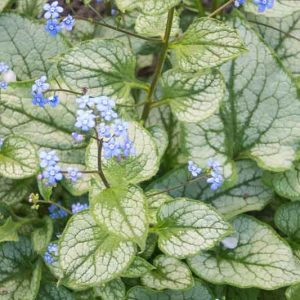
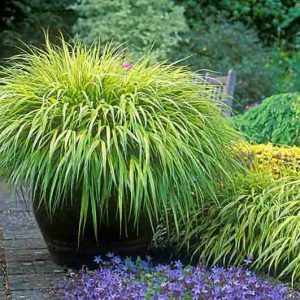
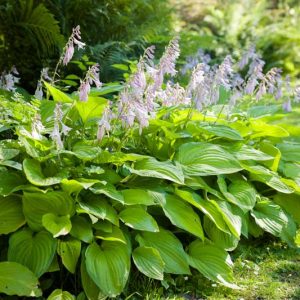
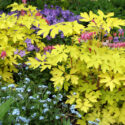
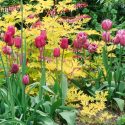
Think of Amore™ ‘Titanium’ as a white-flowered jewel for the shade garden – compact, luminous, long-blooming, and especially striking beside silver brunnera, blue hosta, caramel heuchera, and gold Japanese forest grass.
Amore™ ‘Titanium’ is a compact bleeding heart selected for pure white flowers, refined blue-green foliage, and exceptional garden vigor. Terra Nova Nurseries describes it as a spontaneous mutation of Amore™ ‘Pink’ and highlights its heat resistance and many months of bloom. Compared with traditional bleeding hearts, it is lower, denser, and better suited to containers and small-space shade plantings.
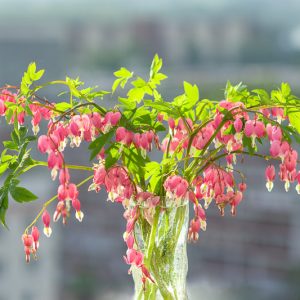
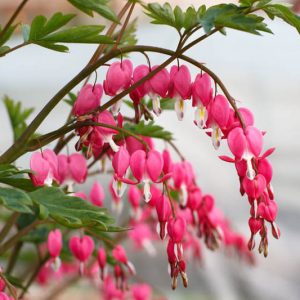
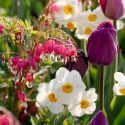
The plant forms a neat mound of finely divided foliage with arching stems of dangling white flowers. The blooms have the classic bleeding-heart shape but a cleaner, brighter color than many older white forms. Because the plant remains relatively low, it works beautifully at the front of a border, along a shaded path, or in a decorative pot.
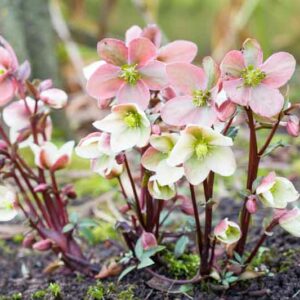
This is a clump-forming perennial with a mounded habit. Mature plants are commonly listed at about 9 inches tall in foliage and 18 inches wide, with flowering stems rising to about 14 inches. The compact footprint makes it easy to weave between hostas, ferns, brunneras, heucheras, hellebores, and spring bulbs without overwhelming them.
The pure white flowers are the main attraction. They appear on slender arching stems above the foliage and can continue from late spring into summer where the plant receives shade and steady moisture. In hot, dry, or sunny conditions, bloom may slow, and the plant may take a summer rest. In cool shade, it can remain fresh and floriferous for months.
The key is not pampering – it is consistency. Keep the soil moist, cool, and well-drained. Dry soil shortens the show; soggy soil risks rot.
The foliage is soft, lacy, and blue-green, giving the plant value even before and after bloom. Its fine texture contrasts beautifully with bold hosta leaves, rounded heuchera foliage, glossy hellebore leaves, and silver brunnera. In winter, the plant goes dormant and returns from the crown in spring.
Amore™ ‘Titanium’ is generally listed for USDA Zones 5 to 9. It is notably heat-resistant for a bleeding heart, but heat-resistant does not mean drought-tolerant. In warm climates, shade and moisture are essential. In cold climates, avoid heavy winter-wet soil, which can damage crowns and roots.
Terra Nova lists Amore™ ‘Titanium’ as a hummingbird attractor. The dangling flowers may also interest pollinators visiting shaded gardens. Its strongest role, however, is ornamental – bringing long-lasting white bloom and fine foliage texture to spaces where many sun perennials cannot perform.
Amore™ ‘Titanium’ is generally considered deer-resistant. That makes it useful in woodland-edge gardens where hostas and other shade plants may be browsed. Deer resistance is not absolute, especially in high-pressure areas, but bleeding hearts are usually less tempting than many soft-leaved perennials.
This is not a drought-tolerant perennial. It needs regular moisture during active growth and flowering. If the soil dries repeatedly, the plant may stop blooming, wilt, yellow, or go partially dormant. A mulch of composted leaves or fine bark helps buffer moisture swings.
Bleeding hearts contain alkaloids and should be treated as toxic if eaten by pets, people, or grazing animals. Keep pets and children from chewing the foliage, flowers, or roots, and contact a veterinarian or poison control professional if ingestion is suspected. Wear gloves if you have sensitive skin.
Amore™ ‘Titanium’ is not invasive. It forms a compact clump and does not run aggressively. Over time, established plants may be divided, but patented selections should not be propagated for sale or distribution without permission.
Part shade to full shade is best. Morning sun or filtered sun is acceptable where soil stays cool and moist. Avoid hot afternoon sun, especially in warm regions or in containers. Too much sun can reduce flowering and push the plant into summer rest.
Plant in moist, loamy, humus-rich, well-drained soil. The ideal soil feels like a woodland edge – fertile, cool, and moisture-retentive but never stagnant. Improve sandy soil with compost, and avoid compacted clay that stays wet in winter.
Keep the soil evenly moist during active growth. Water deeply rather than sprinkling lightly, and check containers often in warm weather. The goal is steady moisture, not wet feet. Terra Nova recommends keeping garden plants evenly moist, not wet.
Feed lightly. A spring topdressing of compost is often enough. In containers or lean soil, use a mild slow-release perennial fertilizer. Avoid heavy feeding, which can encourage soft growth and reduce resilience.
Plant in spring or early fall. Set the crown at the same level it grew in the pot, water thoroughly, and mulch lightly. Space plants about 16 to 18 inches apart so the mound can expand without crowding.
Deadhead spent flowers to keep the plant tidy and encourage continued bloom. Remove yellowing or tired foliage as needed. Cut back after the plant goes dormant in fall, or leave a little top growth as a marker and clean up in early spring.
Amore™ ‘Titanium’ is protected by US Patent PP35856, so propagation for sale or distribution is prohibited without authorization. Home gardeners should purchase plants from licensed nurseries. Older clumps may be divided for garden maintenance where permitted, but avoid disturbing young plants unnecessarily.
Amore™ ‘Titanium’ is generally easy to grow when sited correctly, but moisture balance, drainage, and airflow matter. Most problems come from wet soil, hot sun, drought stress, or crowded shade conditions.
These companions suit Amore™ ‘Titanium’ because they share its preference for part shade to shade, humus-rich soil, steady moisture, and cool woodland conditions. Use them to build layered shade plantings with white flowers, silver foliage, blue-green leaves, gold texture, and deer-resistant interest.
Dicentra Amore Titanium is a compact herbaceous perennial bleeding heart with pure white heart-shaped flowers and soft blue-green, fern-like foliage. It is part of Terra Nova Nurseries’ Amore series.
Dicentra Amore Titanium grows about 9 inches tall in foliage and about 18 inches wide, with flower stems rising to about 14 inches. It is compact enough for containers and the front of shade borders.
Dicentra Amore Titanium can bloom from spring through summer, often May to September in favorable shaded, evenly moist conditions. Heat, strong sun, or dry soil may shorten the bloom period.
Part shade to full shade is best. Morning sun or filtered light is acceptable where soil stays moist, but hot afternoon sun can reduce flowering and cause the plant to rest in summer.
Yes. Dicentra Amore Titanium is promoted as very heat resistant for a bleeding heart, but it still needs shade and consistent moisture in hot climates. Heat resistance does not mean drought tolerance.
Dicentra Amore Titanium is generally considered deer resistant, though no plant is completely deer proof. It is often a useful choice for woodland-edge gardens with browsing pressure.
Bleeding hearts contain alkaloids and should be considered toxic if eaten by pets, people, or grazing animals. Keep pets and children from chewing the leaves, flowers, or roots.
Yes. Dicentra Amore Titanium is excellent in shaded containers if the pot has drainage holes and the soil is kept evenly moist. Containers need more frequent watering than garden beds.
Terra Nova Nurseries – Dicentra ‘Amore Titanium’: https://www.terranovanurseries.com/product/dicentra-amore-titanium/
Horticulture Magazine – Dicentra Titanium: https://www.hortmag.com/plants/titanium-bleeding-heart
Gardenia – Bleeding Heart Guide: https://www.gardenia.net/guide/how-to-grow-and-care-for-bleeding-heart
Pet Poison Helpline – Bleeding Hearts: https://www.petpoisonhelpline.com/poison/bleeding-hearts/
Updated: June 2026 • Reviewed by Gardenia Editors
| Hardiness |
5 - 9 |
|---|---|
| Heat Zones |
1 - 8 |
| Climate Zones | 1, 1A, 1B, 2, 2A, 2B, 3, 3A, 3B, 4, 5, 6, 7, 8, 9, 14, 15, 16, 17, 18, 19, 20, 21, 22, 23, 24, A1, A2, A3 |
| Plant Type | Perennials |
| Plant Family | Papaveraceae |
| Genus | Dicentra |
| Common names | Bleeding Heart |
| Exposure | Partial Sun, Shade |
| Season of Interest | Spring (Late), Summer (Early, Mid, Late), Fall |
| Height | 9" - 2' (23cm - 60cm) |
| Spread | 1' - 2' (30cm - 60cm) |
| Spacing | 18" (50cm) |
| Maintenance | Low |
| Water Needs | Average |
| Soil Type | Chalk, Clay, Loam |
| Soil pH | Alkaline, Neutral |
| Soil Drainage | Moist but Well-Drained |
| Characteristics | Showy |
| Tolerance | Full Shade, Clay Soil, Deer, Rabbit |
| Attracts | Butterflies, Hummingbirds, Bees |
| Garden Uses | Beds And Borders, Edging, Ground Covers, Underplanting Roses And Shrubs |
| Garden Styles | Butterfly Garden, Gravel and Rock Garden, Informal and Cottage, Pollinator Garden, Woodland Garden |


| Hardiness |
5 - 9 |
|---|---|
| Heat Zones |
1 - 8 |
| Climate Zones | 1, 1A, 1B, 2, 2A, 2B, 3, 3A, 3B, 4, 5, 6, 7, 8, 9, 14, 15, 16, 17, 18, 19, 20, 21, 22, 23, 24, A1, A2, A3 |
| Plant Type | Perennials |
| Plant Family | Papaveraceae |
| Genus | Dicentra |
| Common names | Bleeding Heart |
| Exposure | Partial Sun, Shade |
| Season of Interest | Spring (Late), Summer (Early, Mid, Late), Fall |
| Height | 9" - 2' (23cm - 60cm) |
| Spread | 1' - 2' (30cm - 60cm) |
| Spacing | 18" (50cm) |
| Maintenance | Low |
| Water Needs | Average |
| Soil Type | Chalk, Clay, Loam |
| Soil pH | Alkaline, Neutral |
| Soil Drainage | Moist but Well-Drained |
| Characteristics | Showy |
| Tolerance | Full Shade, Clay Soil, Deer, Rabbit |
| Attracts | Butterflies, Hummingbirds, Bees |
| Garden Uses | Beds And Borders, Edging, Ground Covers, Underplanting Roses And Shrubs |
| Garden Styles | Butterfly Garden, Gravel and Rock Garden, Informal and Cottage, Pollinator Garden, Woodland Garden |
How many Dicentra ‘Amore Titanium’ (Fern-Leaf Bleeding Heart) do I need for my garden?
| Plant | Quantity | |
|---|---|---|
| Dicentra ‘Amore Titanium’ (Fern-Leaf Bleeding Heart) | N/A | Buy Plants |
Create a membership account to save your garden designs and to view them on any device.
Becoming a contributing member of Gardenia is easy and can be done in just a few minutes. If you provide us with your name, email address and the payment of a modest $25 annual membership fee, you will become a full member, enabling you to design and save up to 25 of your garden design ideas.
Join now and start creating your dream garden!
Create a membership account to save your garden designs and to view them on any device.
Becoming a contributing member of Gardenia is easy and can be done in just a few minutes. If you provide us with your name, email address and the payment of a modest $25 annual membership fee, you will become a full member, enabling you to design and save up to 25 of your garden design ideas.
Join now and start creating your dream garden!