Sweet Briar, Sweet Brier, Eglantine, Eglantier, Églantier Odorant, Rosa eglanteria, Rosa umbellata, Rosa comosa, Rosa klukii, Rosa echinocarpa, Wild Roses, Shrub Roses
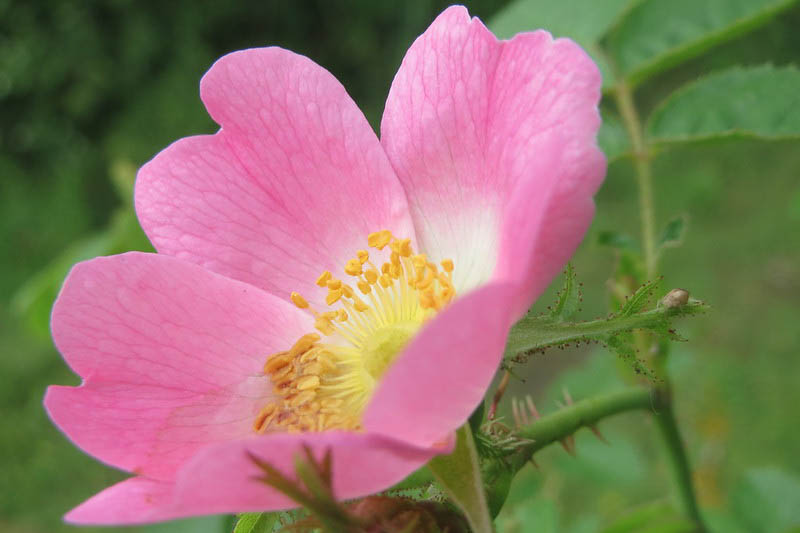
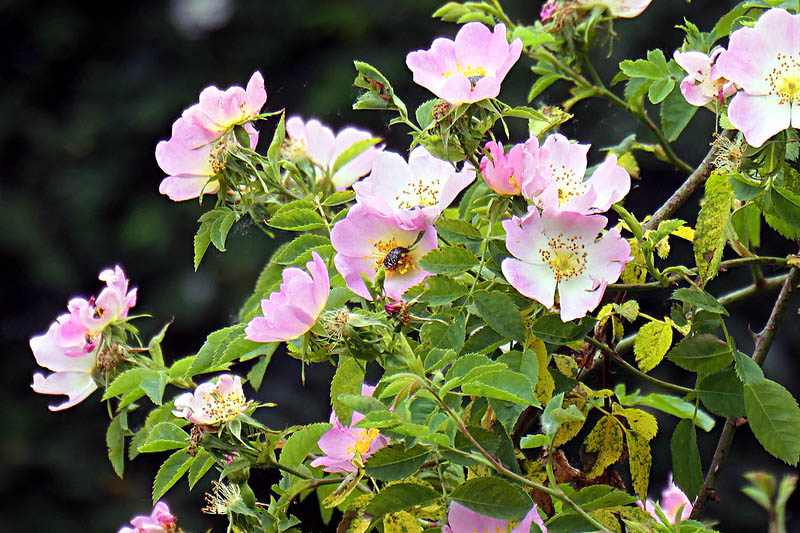


Rosa rubiginosa—the classic Sweet Briar or Eglantine—is a hardy, deciduous wild rose from Europe and Western Asia that thrives in poor soils and open country. It forms an upright, arching shrub ideal for wildlife hedges and naturalistic borders. Grow it for the foliage perfume released after rain, the simple late-spring flowers that feed pollinators, and the abundant red hips that carry color and bird food into winter. In a few regions it can spread, so manage suckers and hips responsibly.
Roses belong to the Rosaceae family, alongside apples (Malus domestica), peaches (Prunus persica), and strawberries (Fragaria × ananassa).
| Botanical Name | Rosa rubiginosa (syn. R. eglanteria) |
| Family | Rosaceae |
| Common Names | Sweet Briar, Eglantine Rose |
| Plant Type | Deciduous shrub; suckering, thorny canes |
| Size | 6–10 ft (2–3 m) tall and wide |
| Hardiness | USDA Zones 4–9 |
| Exposure | Full sun (best) to light shade |
| Soil | Moist, well-drained; tolerates poor/clay/sandy soils |
| Bloom | Late spring–early summer; single pink flowers, lightly fragrant |
| Foliage | Aromatic, apple-scented, pinnate leaves with glandular hairs |
| Fruit | Bright red hips (vitamin-C rich); autumn–winter interest |
| Wildlife Value | Bees/butterflies; hips feed birds; thickets provide cover |
| Uses | Hedgerows, wildlife gardens, erosion control, cottage borders; hips for tea/jam |
| Toxicity | Non-toxic; hip hairs can irritate—strain/prepare properly |
| Notes | Can be invasive in parts of S. America, Australia, New Zealand; manage spread |
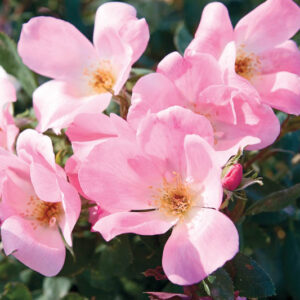
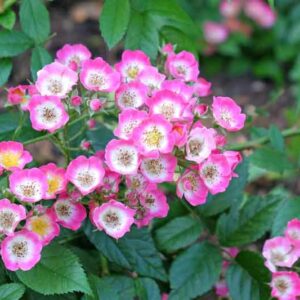
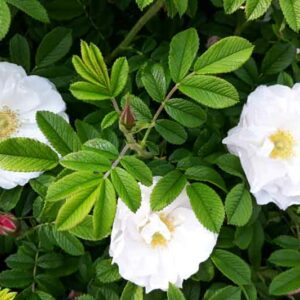
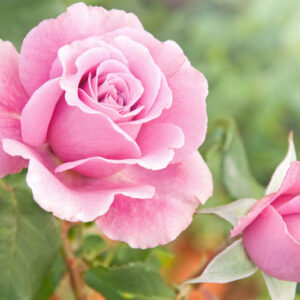
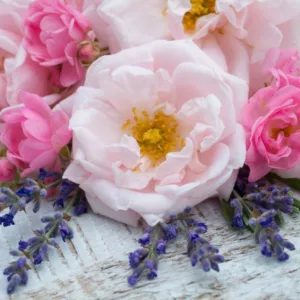
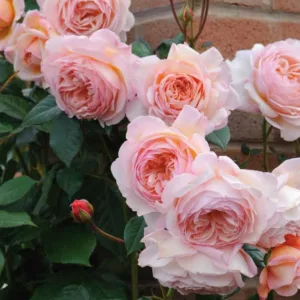
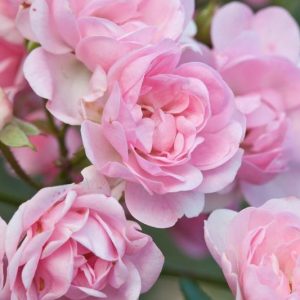
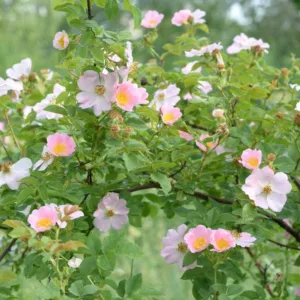
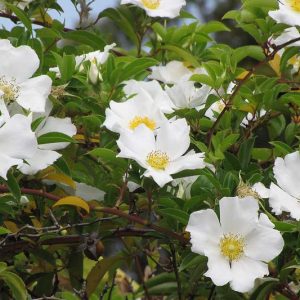
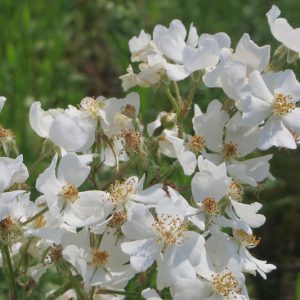
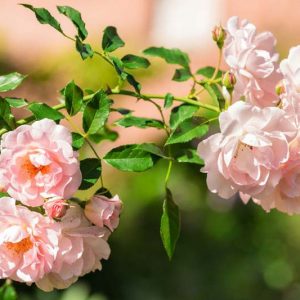
The Sweet Briar is a robust shrub with arching, thorny stems and finely toothed, pinnately divided leaves. Its distinguishing feature is the apple-like fragrance of its leaves, released when crushed or brushed. In early summer, it bears delicate, five-petaled, pink flowers with a subtle fragrance, followed by an abundance of oval, bright red hips that persist into winter. These characteristics make it a charming addition to natural and ornamental landscapes.
Rosa rubiginosa is native to Europe and Western Asia but has been introduced and naturalized in regions across the globe. It thrives in diverse habitats, including woodland edges, hedgerows and roadsides, grasslands and pastures, banks, slopes, and waste areas. Its adaptability to poor soils has contributed to its widespread distribution.
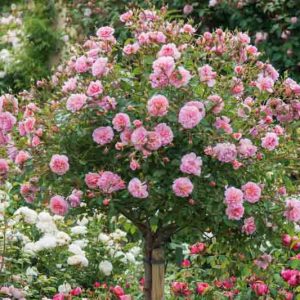
The Sweet Briar is a dense, deciduous shrub with an upright, arching habit. It spreads via suckers and seeds, forming thickets that can be difficult to manage.
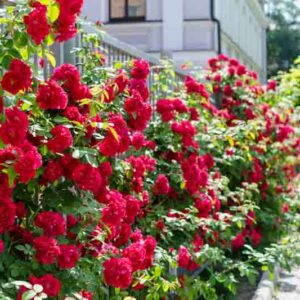
Its vigorous growth makes it an excellent choice for hedging and erosion control but can also contribute to its invasiveness.
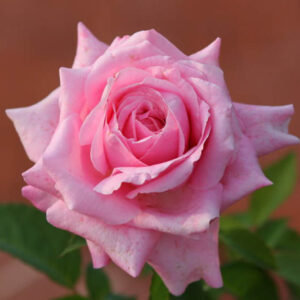
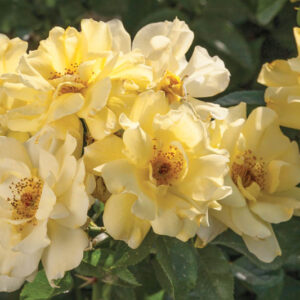
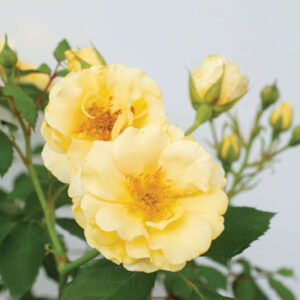
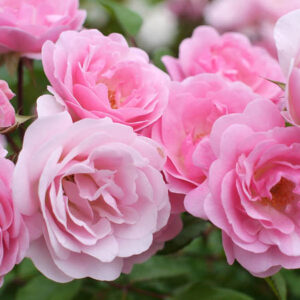
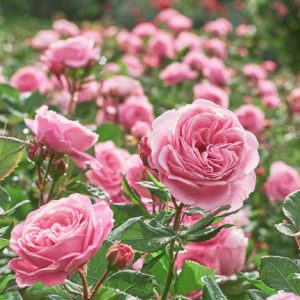
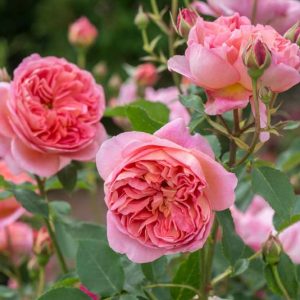
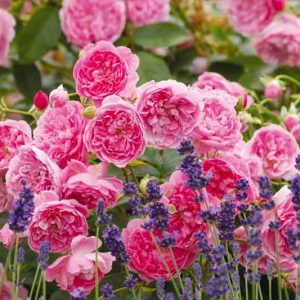
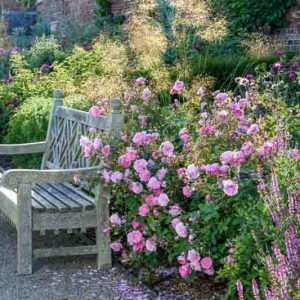
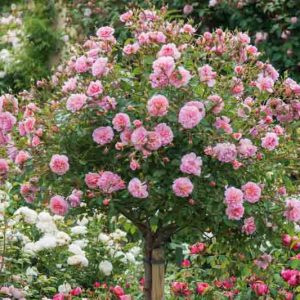
The Sweet Briar’s blooms are simple yet elegant, adding charm to any garden:
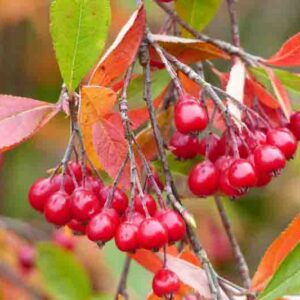
After flowering, the Sweet Briar produces an abundance of bright red rose hips:
The foliage of the Sweet Briar or Eglantine Rose is aromatic and attractive:
This wild rose is hardy in USDA Zones 4–9, tolerating both cold winters and hot summers.
The Sweet Briar supports biodiversity by providing food and shelter:
Rosa rubiginosa is versatile, offering ecological, ornamental, and practical benefits:
While the thorny stems deter most animals, young shoots and tender foliage may still be browsed by deer and rabbits.
The Sweet Briar is non-toxic to humans and pets. Its hips are edible and nutritious.
While highly valued, Rosa rubiginosa can become invasive in certain regions:
Rosa rubiginosa grows best in full sun but tolerates partial shade. Full sun promotes better flowering and disease resistance.
The Sweet Briar thrives in fertile, humus-rich, moist but well-drained soil. It tolerates poor soils, including clay and sandy substrates.
Water regularly during the growing season, especially in dry periods. Avoid overhead watering to reduce the risk of foliar diseases. Drought-Tolerant Roses: The Best Low-Water Rose Bushes for Your Garden
Apply a general rose fertilizer in early spring and early summer for robust growth and blooms. Mulch with well-rotted organic matter in late winter to retain moisture and suppress weeds.
Propagate this wild rose through various methods for reliable growth:
While this wild rose is a hardy and resilient species, it can still encounter common pests and diseases that affect roses.
This rose may attract common pests such as aphids, spider mites, scale insects, or caterpillars. These pests can damage foliage, flowers, and stems, reducing the plant’s vigor.
This rose may be susceptible to several fungal diseases, including rose black spot, rust, and powdery mildew. These diseases often thrive in humid conditions, causing leaf discoloration, defoliation, or stem dieback. Disorders like rose blindness (failure to bloom) and flower balling (petals failing to open) may also occur under certain conditions. In severe cases, honey fungus, a soil-borne pathogen, can damage the plant’s root system.
Tiny glandular hairs on the leaf surface release aromatic oils—most noticeable after rain or when foliage is brushed—giving a distinct apple-like scent.
It can be. Outside its native range, Sweet Briar spreads by seed and suckers and is invasive in parts of Patagonia, Australia, and New Zealand. In sensitive regions, avoid planting near natural areas, remove hips before birds spread seed, and control suckers.
After flowering, remove dead/diseased wood and crossing stems. If hips are desired, delay major pruning until late winter so hips can persist through fall/winter. Periodically thin older canes at the base to open the center and encourage new growth.
Yes—hips are rich in vitamin C and used for teas, syrups, and jams. Scoop out the inner hairs and seeds (they can irritate) and strain preparations well.
Full sun and moist, well-drained soil, though it tolerates poor, clay, or sandy sites. It’s hardy in USDA 4–9 and fairly drought-tolerant once established.
Sweet Briar has strongly apple-scented foliage and usually smaller, more numerous glands on leaves and stems. Dog Rose generally lacks the pronounced apple scent and differs subtly in hip and leaflet shape.
Aphids, spider mites, scale, and caterpillars can appear. Common rose diseases include black spot, rust, and powdery mildew—reduce risk with full sun, good airflow, clean pruning, and avoiding overhead watering.
Yes, it’s considered non-toxic, but the thorns are sharp. Process hips properly to remove irritating hairs before consumption.
Use softwood cuttings in late spring, hardwood cuttings in late summer–autumn, chip budding in summer, or seed (after cold stratification). Seedlings may vary.
Thorny canes deter browsing, but tender new growth may still be sampled by deer or rabbits. Protect young plants until established.
| Hardiness |
4 - 9 |
|---|---|
| Plant Type | Roses, Shrubs |
| Plant Family | Rosaceae |
| Genus | Rosa, Rosa - Shrub Rose |
| Common names | Rose |
| Exposure | Full Sun, Partial Sun |
| Season of Interest | Spring (Late), Summer (Early), Fall, Winter |
| Height | 6' - 10' (180cm - 3m) |
| Spread | 6' - 10' (180cm - 3m) |
| Spacing | 72" - 120" (180cm - 3m) |
| Maintenance | Average |
| Water Needs | Average |
| Soil Type | Chalk, Clay, Loam, Sand |
| Soil pH | Acid, Alkaline, Neutral |
| Soil Drainage | Moist but Well-Drained |
| Characteristics | Fragrant, Showy, Fruit & Berries |
| Native Plants | United Kingdom |
| Tolerances | Drought, Clay Soil, Poor Soil, Fire, Erosion |
| Attracts | Bees, Butterflies, Birds |
| Garden Uses | Hedges And Screens |
| Garden Styles | Butterfly Garden, Informal and Cottage, Pollinator Garden, Prairie and Meadow |
| Toxic to Humans | No known toxicity |
| Toxic to Cats | Not toxic |
| Toxic to Dogs | Not toxic |
| Toxic to Horses | Not toxic |


| Hardiness |
4 - 9 |
|---|---|
| Plant Type | Roses, Shrubs |
| Plant Family | Rosaceae |
| Genus | Rosa, Rosa - Shrub Rose |
| Common names | Rose |
| Exposure | Full Sun, Partial Sun |
| Season of Interest | Spring (Late), Summer (Early), Fall, Winter |
| Height | 6' - 10' (180cm - 3m) |
| Spread | 6' - 10' (180cm - 3m) |
| Spacing | 72" - 120" (180cm - 3m) |
| Maintenance | Average |
| Water Needs | Average |
| Soil Type | Chalk, Clay, Loam, Sand |
| Soil pH | Acid, Alkaline, Neutral |
| Soil Drainage | Moist but Well-Drained |
| Characteristics | Fragrant, Showy, Fruit & Berries |
| Native Plants | United Kingdom |
| Tolerances | Drought, Clay Soil, Poor Soil, Fire, Erosion |
| Attracts | Bees, Butterflies, Birds |
| Garden Uses | Hedges And Screens |
| Garden Styles | Butterfly Garden, Informal and Cottage, Pollinator Garden, Prairie and Meadow |
| Toxic to Humans | No known toxicity |
| Toxic to Cats | Not toxic |
| Toxic to Dogs | Not toxic |
| Toxic to Horses | Not toxic |
How many Rosa rubiginosa (Sweet Briar) do I need for my garden?
| Plant | Quantity | |
|---|---|---|
| Rosa rubiginosa (Sweet Briar) | N/A | Buy Plants |
Create a membership account to save your garden designs and to view them on any device.
Becoming a contributing member of Gardenia is easy and can be done in just a few minutes. If you provide us with your name, email address and the payment of a modest $25 annual membership fee, you will become a full member, enabling you to design and save up to 25 of your garden design ideas.
Join now and start creating your dream garden!
Create a membership account to save your garden designs and to view them on any device.
Becoming a contributing member of Gardenia is easy and can be done in just a few minutes. If you provide us with your name, email address and the payment of a modest $25 annual membership fee, you will become a full member, enabling you to design and save up to 25 of your garden design ideas.
Join now and start creating your dream garden!