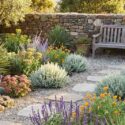
A sun-drenched Mediterranean garden unfolds along a stone path, where lavender hums with bees, silver eryngium rises like sculpture, and heleniums glow in late-summer heat. Airy Mexican feather grass softens every edge, while horned spurge threads fresh green through the planting, creating movement, fragrance, and long-season color.
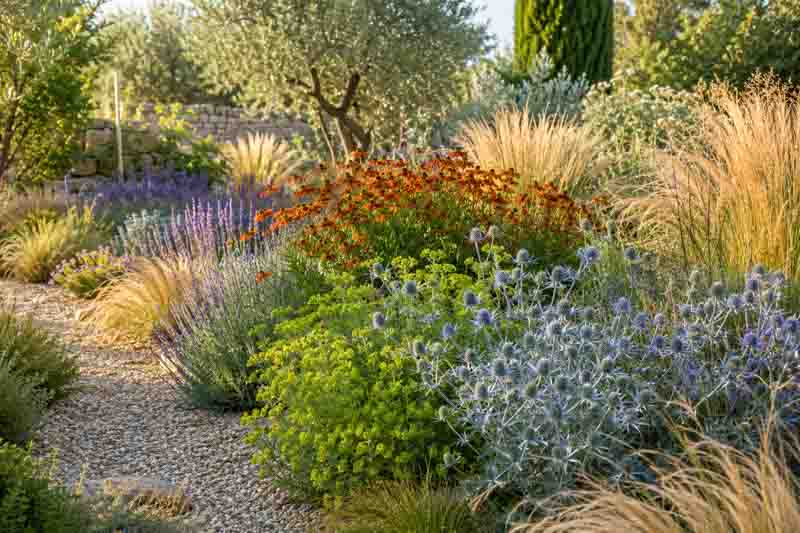


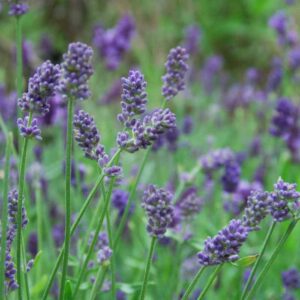
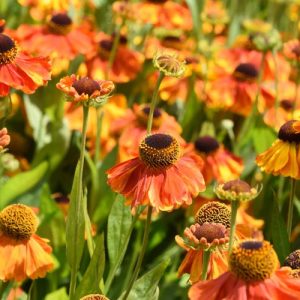
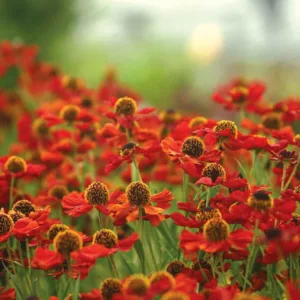
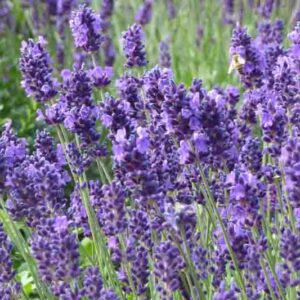
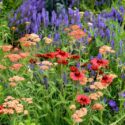
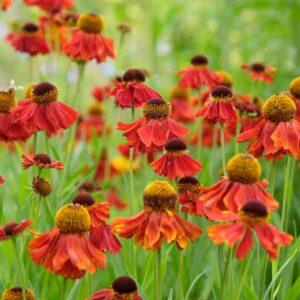
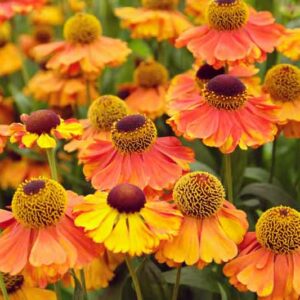
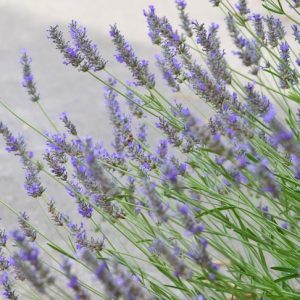
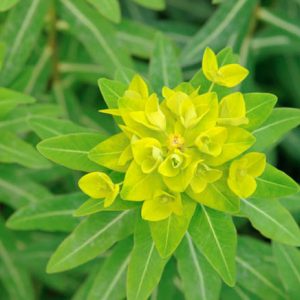
This sunny border follows a pale gravel path through a warm mix of purple, orange, silver, chartreuse, and straw-gold. Rounded mounds of Lavandula × intermedia ‘Grosso’ repeat along the path, while orange-red Helenium flowers form broader groups through the middle. Pale, spiny heads of Eryngium giganteum stand out in the foreground, and Euphorbia cornigera fills lower spaces with fresh green and chartreuse foliage.
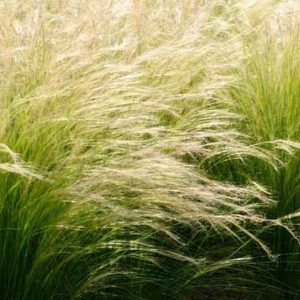
Fine clumps of Nassella tenuissima run through the whole planting, becoming especially noticeable where the pale seedheads catch the low light. Olive trees, a stone wall, and other Mediterranean-style plants continue into the background, giving the border a settled character rather than making it look like a five-plant display.
Main plants used: Lavandula × intermedia ‘Grosso’, Helenium ‘Moerheim Beauty’, Helenium ‘Sahin’s Early Flower’, Eryngium giganteum, Euphorbia cornigera, and Nassella tenuissima
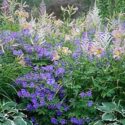
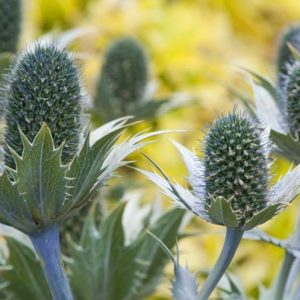
The border succeeds because the plants differ strongly in both texture and shape. Lavender forms compact woody mounds, Helenium carries broad daisy-like flowers, and Eryngium has rigid silvery bracts and cone-shaped flower heads. Euphorbia is softer and lower, while Mexican Feather Grass adds the finest texture of all.
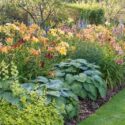
The colors are equally balanced. Purple lavender cools the hotter orange Heleniums, while Eryngium introduces a pale silver note. Chartreuse Euphorbia keeps the middle of the border from becoming too dark, and the tawny grass brings all of those colors together as summer advances.
The photograph also shows why the grasses should not simply be used as edging. They occur in substantial pockets through the middle and background as well, which gives the garden movement and prevents the flowers from reading as isolated blocks.
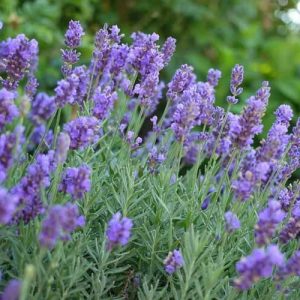
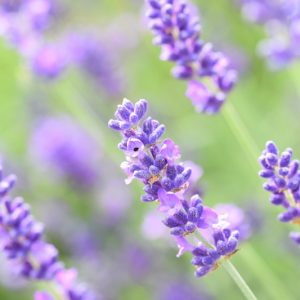
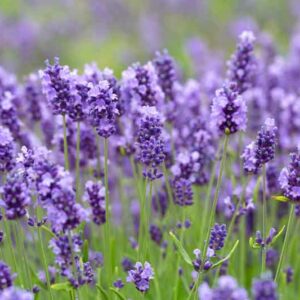
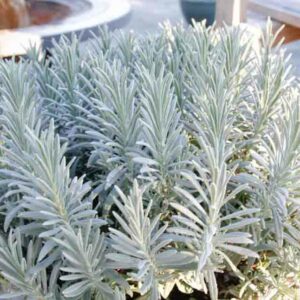
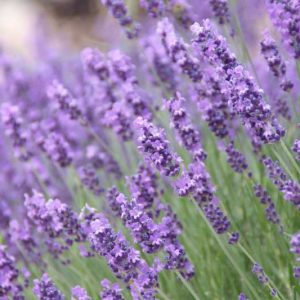
Lavandula × intermedia ‘Grosso’ provides the repeated purple mounds along the path. It needs full sun and excellent drainage and performs best when soil is not overly rich. Trim lightly after flowering to keep plants compact, but avoid cutting hard into old leafless wood.
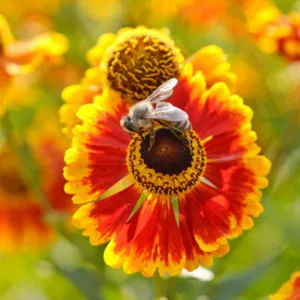
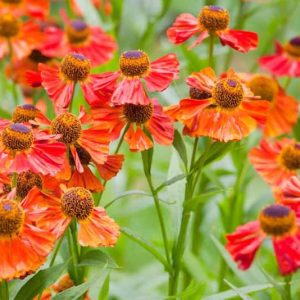
Helenium ‘Moerheim Beauty’ and ‘Sahin’s Early Flower’ provide the strongest warm color. ‘Sahin’s Early Flower’ begins earlier, while ‘Moerheim Beauty’ contributes rich red-brown and orange tones later in the season. Unlike the driest plants in this border, Helenium generally performs best with reasonably consistent moisture during active growth.
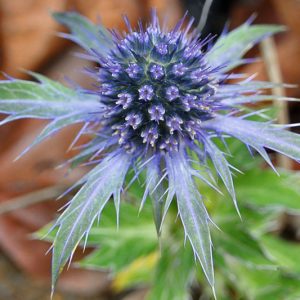
Eryngium giganteum, or Miss Willmott’s Ghost, produces pale silvery flower heads surrounded by dramatic bracts. It is usually biennial or short-lived, often maintaining itself by self-seeding rather than remaining as the same permanent clump for many years.
Euphorbia cornigera brings chartreuse color and a softer mound between the stronger flowers and grasses. Its milky sap can irritate skin and eyes, so wear gloves when pruning and avoid contact with the face.
Nassella tenuissima, or Mexican Feather Grass, supplies the pale flowing texture visible throughout the garden. Its very fine leaves and seedheads move easily in the wind.
Important: Mexican Feather Grass can reseed aggressively and is invasive or restricted in some regions. Check local guidance before planting it and substitute a non-invasive fine-textured grass where necessary.
Create a sunny gravel border with repeated lavender mounds, broad late-summer flower groups, silver vertical accents, and enough grass to introduce movement without hiding the path.
These percentages describe the overall planting balance rather than exact numbers of individual plants.
Repeat Lavender in substantial mounds along and just behind the path rather than as a continuous hedge.
Use Helenium in broader groups through the middle, then place Eryngium in smaller repeated clusters where its pale flower heads remain visible against darker foliage.
Thread Mexican Feather Grass through several parts of the border, and use Euphorbia in lower pockets between the flowering groups. Vary the size and distance between clumps so the planting does not become overly patterned.
This is not a uniformly dry border. Lavender, Eryngium, and established Mexican Feather Grass favor relatively dry, freely draining conditions, whereas Helenium usually flowers better when the soil does not dry severely during summer. Positioning the Helenium in slightly more moisture-retentive pockets makes the combination easier to manage.
Eryngium giganteum is also not a permanent structural perennial in the same way as Lavender. It is generally biennial or short-lived, so allow some seedlings to develop if you want its silver flower heads to continue appearing through the border.
Finally, Mexican Feather Grass requires regional caution. Where it is invasive or discouraged, use a locally appropriate fine-textured grass that provides the same movement without the risk of escaping into surrounding landscapes.
| Hardiness |
7 - 8 |
|---|---|
| Heat Zones |
7 - 8 |
| Exposure | Full Sun |
| Season of Interest | Summer (Early, Mid, Late) |
| Maintenance | Low |
| Water Needs | Low, Average |
| Soil Type | Loam, Sand |
| Soil pH | Acid, Alkaline, Neutral |
| Soil Drainage | Moist but Well-Drained, Well-Drained |
| Characteristics | Dried Arrangements, Cut Flowers, Fragrant, Plant of Merit, Showy |
| Tolerances | Rabbit, Deer |
| Attracts | Bees, Butterflies, Hummingbirds, Birds |
| Landscaping Ideas | Beds And Borders |
| Garden Styles | Butterfly Garden, Gravel and Rock Garden, Informal and Cottage, Pollinator Garden |

| Hardiness |
7 - 8 |
|---|---|
| Heat Zones |
7 - 8 |
| Exposure | Full Sun |
| Season of Interest | Summer (Early, Mid, Late) |
| Maintenance | Low |
| Water Needs | Low, Average |
| Soil Type | Loam, Sand |
| Soil pH | Acid, Alkaline, Neutral |
| Soil Drainage | Moist but Well-Drained, Well-Drained |
| Characteristics | Dried Arrangements, Cut Flowers, Fragrant, Plant of Merit, Showy |
| Tolerances | Rabbit, Deer |
| Attracts | Bees, Butterflies, Hummingbirds, Birds |
| Landscaping Ideas | Beds And Borders |
| Garden Styles | Butterfly Garden, Gravel and Rock Garden, Informal and Cottage, Pollinator Garden |
Recreate this garden. Specify the percentages you would like to have of each plant and input the dimensions of your garden space.We'll give you a shopping list so you know how many plants you need.
| Plant | Quantity | |
|---|---|---|
| Helenium 'Moerheim Beauty' (Sneezeweed) | N/A | Buy Plants |
| Helenium 'Sahin's Early Flowerer' (Sneezeweed) | N/A | Buy Plants |
| Eryngium giganteum (Miss Willmott's Ghost) | N/A | Buy Plants |
| Stipa tenuissima (Mexican Feather Grass) | N/A | Buy Plants |
| Lavandula x intermedia 'Grosso' (Lavender) | N/A | Buy Plants |
| Euphorbia cornigera (Horned Spurge) | N/A | Buy Plants |
Create a membership account to save your garden designs and to view them on any device.
Becoming a contributing member of Gardenia is easy and can be done in just a few minutes. If you provide us with your name, email address and the payment of a modest $25 annual membership fee, you will become a full member, enabling you to design and save up to 25 of your garden design ideas.
Join now and start creating your dream garden!
Create a membership account to save your garden designs and to view them on any device.
Becoming a contributing member of Gardenia is easy and can be done in just a few minutes. If you provide us with your name, email address and the payment of a modest $25 annual membership fee, you will become a full member, enabling you to design and save up to 25 of your garden design ideas.
Join now and start creating your dream garden!