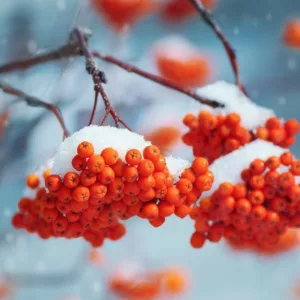
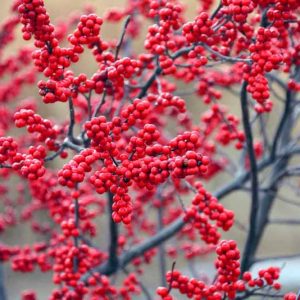
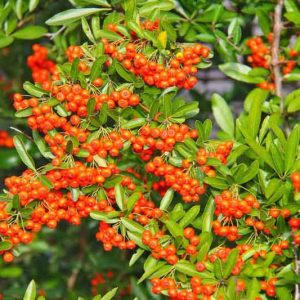
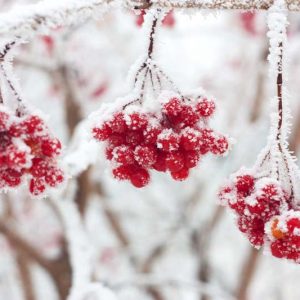
From hollies to pyracantha, meet evergreens with red berries. Bird-friendly picks, quick care, and bold design ideas for four-season color.
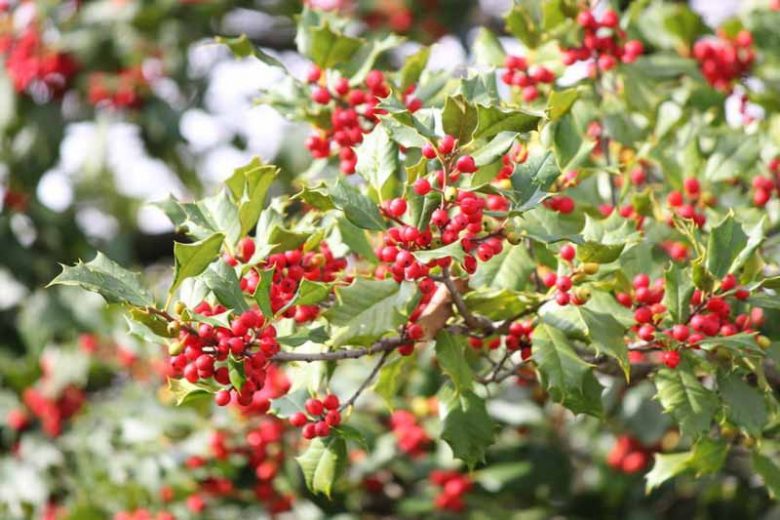


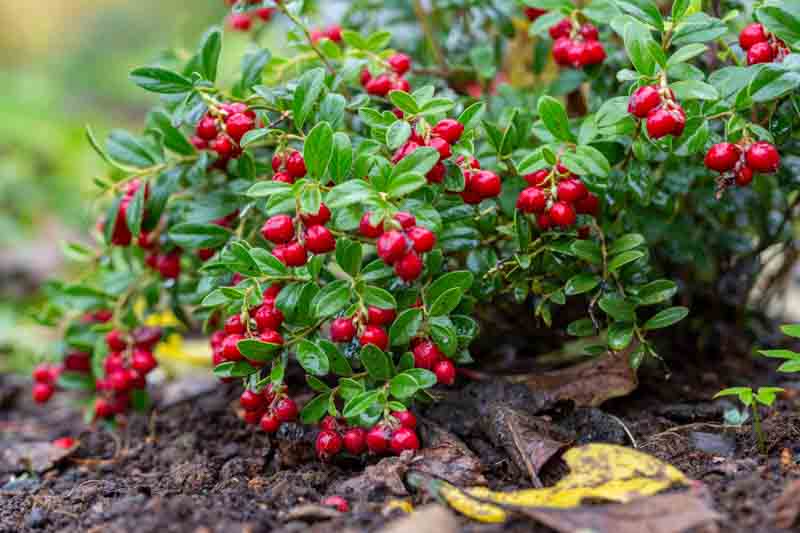
Red berries are the garden’s exclamation points. When flowers fade and leaves fall, these glossy dots keep the scene lively for months. From handsome hollies to flame-bright firethorns, evergreen berry plants pull double duty – structure all year, sparkle in fall and winter. Use them for hedges, front doors, wildlife, and instant holiday magic.
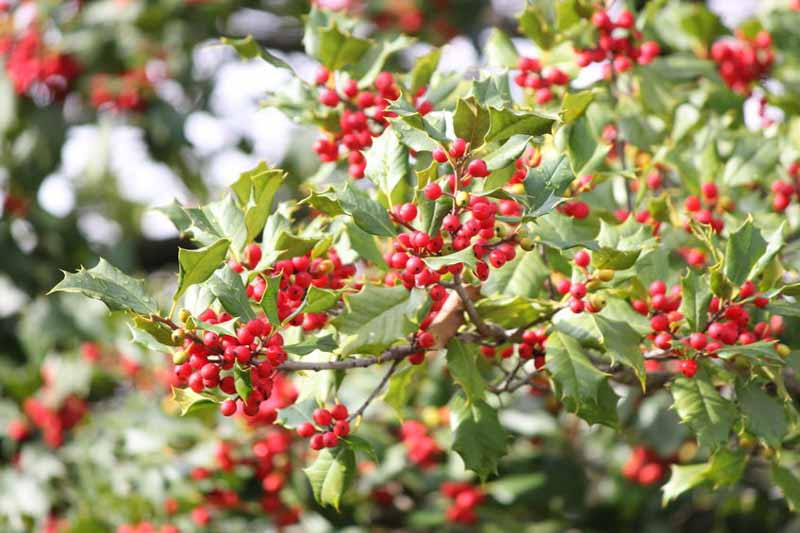
Evergreen berry plants shine precisely when most gardens go quiet. Many fruit in fall and hold their berries through winter. Some need a partner for pollination. Choose the right size and sun for your site and you get a tough, low-maintenance glow that birds appreciate and neighbors notice.
| Topic | Details |
|---|---|
| Best landscape uses | Hedges and screens, entry accents, mixed borders, wildlife plantings, containers near doors and gates |
| Typical USDA zones | Broadly Zones 5 to 9 depending on species. Hollies include 4 to 9 for blue hollies and 6 to 9 for many broadleaf forms. Firethorn and cotoneaster trend 6 to 9. Bearberry runs colder. |
| Sun and exposure | Full sun to light shade. Berry set is heaviest with at least 6 hours of sun. |
| Soil | Moist but well drained loam is ideal. Many tolerate clay once established if drainage is decent. Avoid waterlogged sites. |
| Pollination notes | Hollies and skimmias often need a male nearby for fruit on female plants. Firethorn, cotoneaster, nandina, and strawberry tree set well solo. |
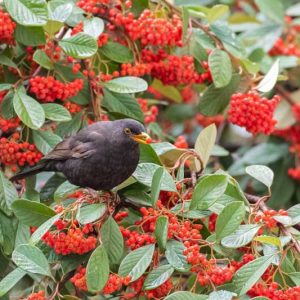
| Wildlife value | Flowers for pollinators in spring. Berries for birds in fall and winter. Dense evergreen cover for roosting. |
| Safety | Treat all berries as ornamental. Yew seeds are highly toxic. Nandina berries can harm birds if eaten in large quantities. Keep kids and pets from snacking. |
| Design tip | Back red berries with dark conifers or brick so color pops. Echo red with grasses and stems for a cohesive winter palette. |
| Plant Type | Shrubs, Trees |
|---|---|
| Genus | Cotoneaster, Ilex, Pyracantha |
| Season of Interest | Fall, Winter |
| Maintenance | Low |
| Characteristics | Evergreen, Fruit & Berries |
| Plant | Size | Sun | Notes |
|---|---|---|---|
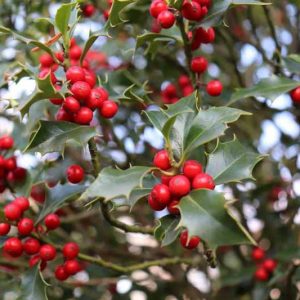
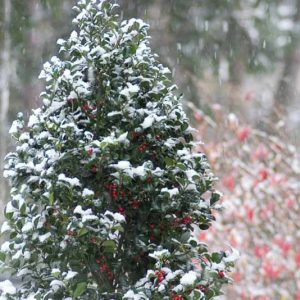
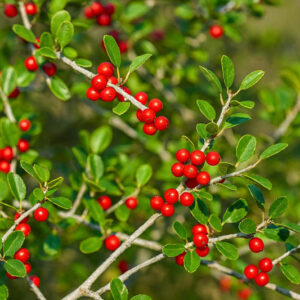
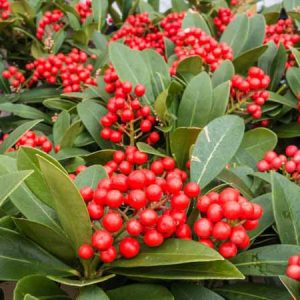
| Ilex × meserveae (Blue hollies) | 6–15 ft, variety dependent | Sun to part shade | Female needs male nearby (e.g., Blue Princess + Blue Prince). Cold hardy; heavy berry set. |
| Ilex opaca (American holly) | 15–30 ft (to 50 ft in time) | Sun to part shade | Native; female needs male. Heat/humidity tolerant; best in acidic, well-drained soils. |
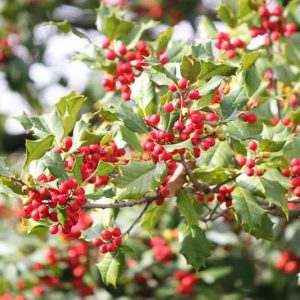
| Ilex vomitoria (Yaupon holly) | 8–20 ft (dwarf forms 3–6 ft) | Sun to part shade | Female fruits heavily; very drought/salt tolerant. Many compact cultivars for hedges or pots. |
| Ilex cassine (Dahoon holly) | 15–30 ft | Sun to part shade | Great near moist or coastal sites; female needs male. glossy foliage with bright berries. |
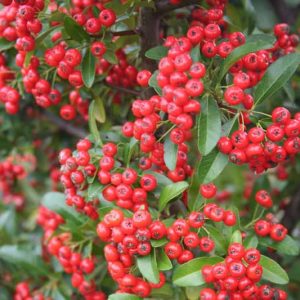
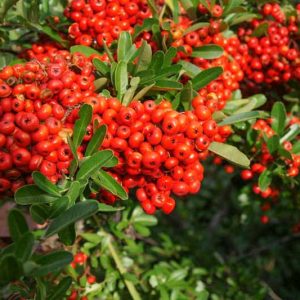
| Pyracantha (Firethorn) | 3–10 ft + trained height | Sun to part shade | Trains flat on wires. Choose improved cultivars for disease resistance; wear gloves (thorns!). |
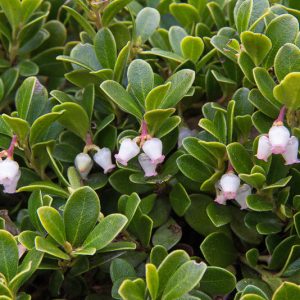
| Skimmia japonica | 3–4 ft | Shade to part shade | Females carry berries; fragrant spring bloom. Perfect for north sides and courtyards. |
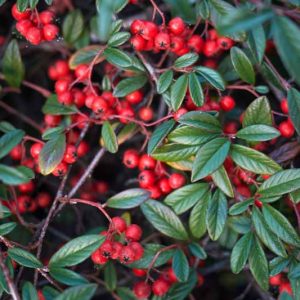
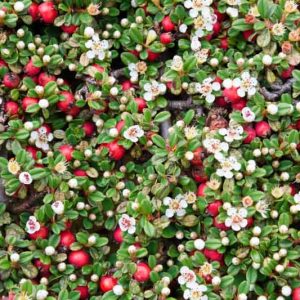
| Cotoneaster dammeri | 9–18 in tall, spreading | Sun to part shade | Cascading groundcover for banks/walls. White spring bloom; long red-berry display. |
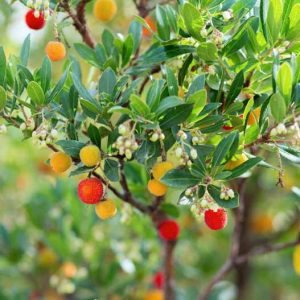
| Arbutus unedo (Strawberry tree) | 8–25 ft (multi-stem or tree) | Sun to light shade | Flowers and fruit overlap; showy bark and winter interest; drought tolerant once established. |
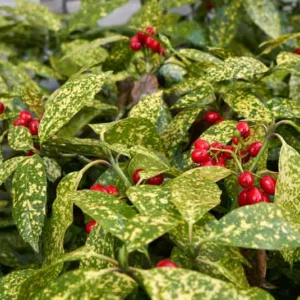
| Aucuba japonica | 6–10 ft | Shade champion | Females with males produce berries. Variegated leaves light up dark sites. |
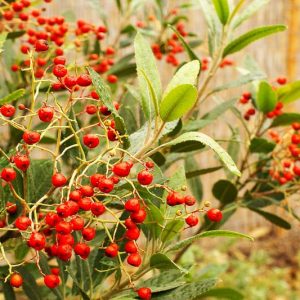
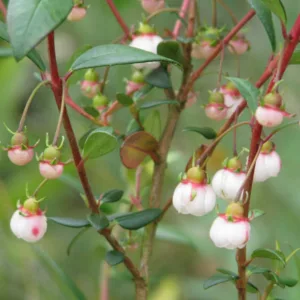
| Ugni molinae (Chilean guava) | 3–6 ft | Sun to part shade | Edible red berries in mild zones; scented urn-flowers. Protect from hard frost. |
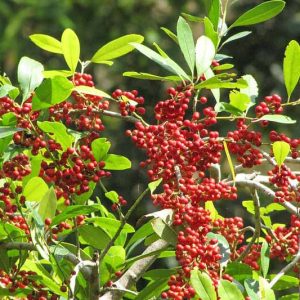
| Heteromeles arbutifolia (Toyon) | 8–20 ft | Sun to part shade | California native; drought-tough. Summer bloom for pollinators; big winter berry clusters for birds. |
Cold climates 4 to 5 – blue hollies, bearberry, some cotoneasters, yew with caution.
Temperate 6 to 8 – broadleaf hollies, firethorn, skimmia, aucuba, nandina, cotoneaster.
Mild coastal 8 to 10 – strawberry tree, evergreen dogwood, Chilean guava, broadleaf hollies.
Do hollies need a pollinator to make berries
Usually yes. Most hollies are either male or female. Plant at least one male that blooms at the same time within 30 to 50 feet of your female berry plant. Some hybrids set a few berries solo but a partner boosts the display.
Which red-berried evergreens are best for shade
Skimmia and aucuba thrive in shade and still carry good clusters. In bright shade, blue hollies also perform well. Deep shade reduces fruit on most plants, so aim for morning sun if you can.
What about thorny plants near paths
Firethorn berries are fantastic but shrubs are armed. Keep at least 2 feet back from walks and train flat on walls to avoid snags. Wear gloves when pruning.
How do I get the heaviest berry display
Choose a sunny site, avoid heavy spring nitrogen, prune lightly after flowering, water steadily through fruit set, and provide a compatible pollinator for dioecious species like holly or skimmia.
Will birds strip the berries immediately
It depends on species and weather. Firethorn and cotoneaster often go first after frosts soften fruit. Hollies and skimmia can hold longer. Plant a mix so something always remains for winter color.
Updated: November 2025 • Reviewed by Garden Editors
| Plant Type | Shrubs, Trees |
|---|---|
| Genus | Cotoneaster, Ilex, Pyracantha |
| Season of Interest | Fall, Winter |
| Maintenance | Low |
| Characteristics | Evergreen, Fruit & Berries |
Create a membership account to save your garden designs and to view them on any device.
Becoming a contributing member of Gardenia is easy and can be done in just a few minutes. If you provide us with your name, email address and the payment of a modest $25 annual membership fee, you will become a full member, enabling you to design and save up to 25 of your garden design ideas.
Join now and start creating your dream garden!
Create a membership account to save your garden designs and to view them on any device.
Becoming a contributing member of Gardenia is easy and can be done in just a few minutes. If you provide us with your name, email address and the payment of a modest $25 annual membership fee, you will become a full member, enabling you to design and save up to 25 of your garden design ideas.
Join now and start creating your dream garden!