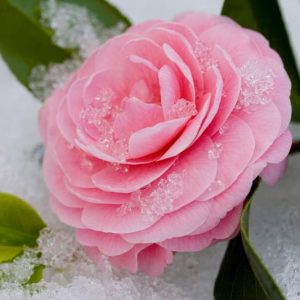
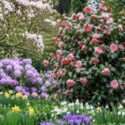
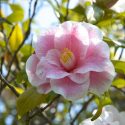
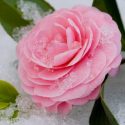
Winter-blooming camellias transform quiet gardens with exquisite white, pink, striped, and red flowers above glossy evergreen foliage. Compare 18 exceptional japonicas and hybrids by bloom season, size, fragrance, hardiness, and flower form, then discover how to place, grow, protect, and combine them for spectacular color from winter through spring.
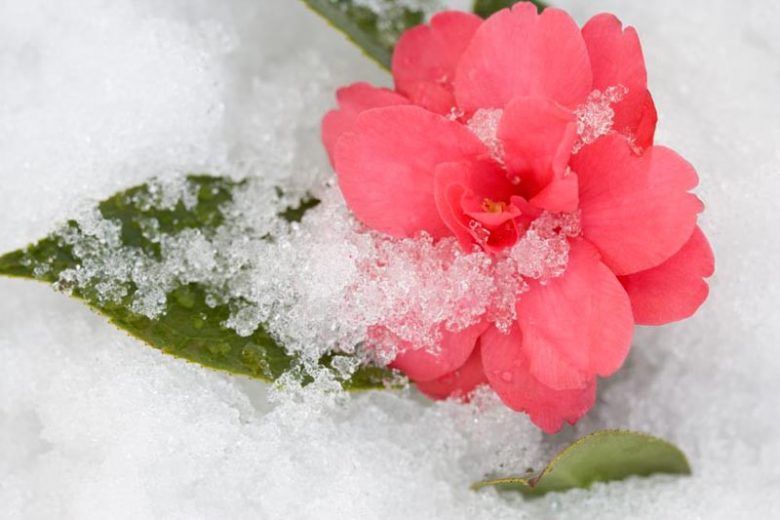


Winter-blooming camellias bring polished evergreen foliage and spectacular flowers to the garden when most deciduous shrubs are bare. Their white, blush, pink, striped, crimson, and deep red blooms can transform shaded borders, courtyards, woodland gardens, entrances, containers, and foundation plantings during the quietest part of the year.
After fall-flowering sasanquas open the camellia season, Camellia japonica and Camellia × williamsii hybrids become the stars of winter. The featured cultivars in this guide all begin in midwinter, but their flowering periods vary considerably. Some finish in early spring, while long-season selections continue into late spring.
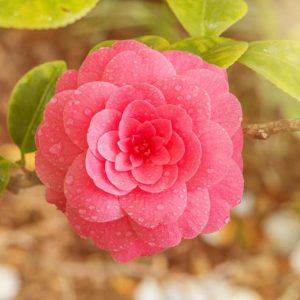
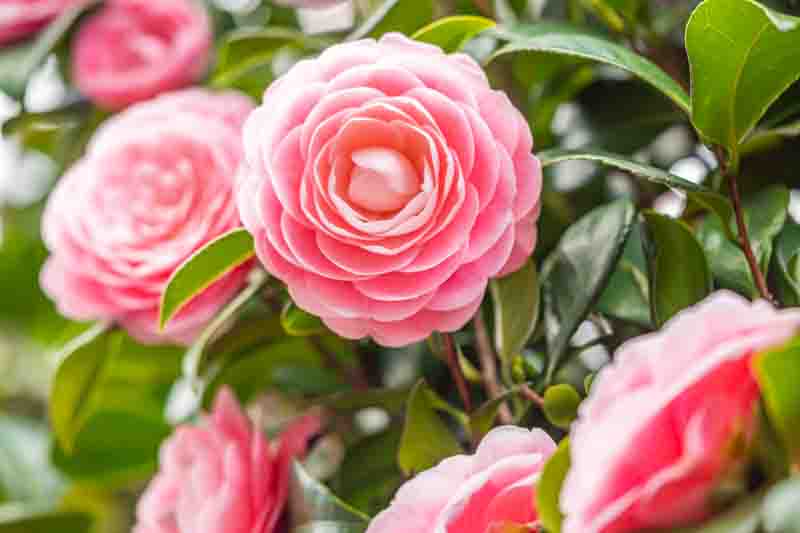
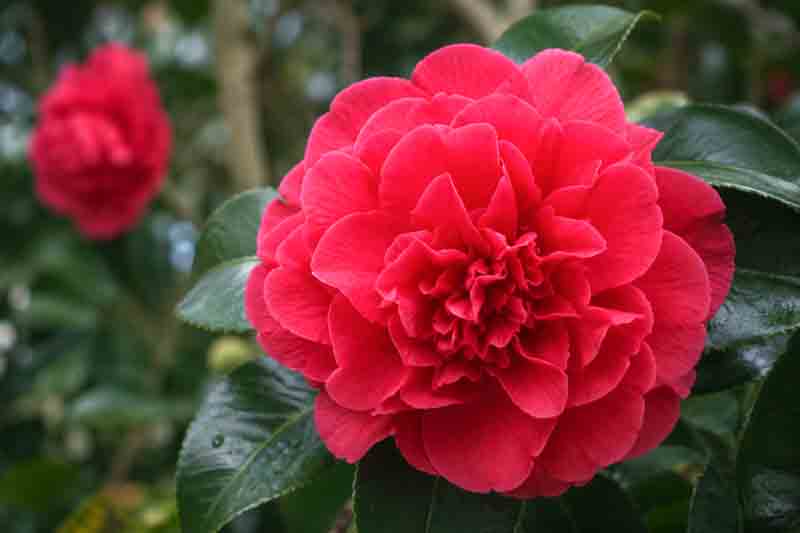
Japanese camellias are celebrated for their extraordinary range of flower forms. Depending on cultivar, the blooms may be single, semi-double, anemone-form, peony-form, rose-form double, or perfectly symmetrical formal double. Some reach approximately 5 inches (12 cm) across.
Williamsii hybrids bring additional strengths. Many are vigorous, exceptionally floriferous, and more likely to shed spent flowers cleanly. Other hybrids contribute fragrance, compact growth, or an unusually long flowering season.
This guide compares 18 outstanding winter camellias by bloom period, mature height, hardiness, flower character, and garden use so you can choose plants that suit your space and extend the display from winter through spring.
Winter flowering does not mean one fixed month. Gardenia records these cultivars as beginning in midwinter. In a mild garden, midwinter may translate roughly to January, while colder or more exposed sites may bloom several weeks later.
The winter camellia season is a progression rather than one brief floral event. Midseason cultivars begin during the central part of winter and finish in early spring. Mid-to-late-season cultivars begin at approximately the same stage but remain in flower longer, often extending well into spring.
Temperature strongly affects the calendar. Mild conditions encourage buds to open earlier, while prolonged cold can pause flowering. Open blooms may be damaged by frost even when unopened buds remain healthy and resume flowering during the next mild period.
| Flowering Group | Bloom Start | Bloom End | Representative Cultivars |
|---|---|---|---|
| Classic midseason camellias | Midwinter | Early spring | ‘Bonomiana’, ‘Kramer’s Supreme’, ‘Bob Hope’, ‘Hermé’, ‘Australis’, ‘Tricolor’ |
| Winter-flowering williamsii hybrids | Midwinter | Early spring | ‘Debbie’, ‘Les Jury’, ‘Elegant Beauty’ |
| Long winter-to-spring bloomers | Midwinter | Late spring | ‘Lavinia Maggi’, ‘Drama Girl’, ‘Hagoromo’, ‘Pink Perfection’, ‘Sweet Emily Kate’, ‘Scentuous’, ‘E.G. Waterhouse’ |
Climate note: These are Gardenia’s seasonal classifications. Actual flowering dates vary with cultivar, latitude, elevation, exposure, and winter weather.
The cultivars below are the 18 plants featured in this guide. Bloom start, bloom end, mature height, spread, and USDA hardiness follow Gardenia’s cultivar records. Flower descriptions summarize the distinguishing visual character of each selection.
| Cultivar | Flower Character | Bloom Start | Bloom End | Height | Spread | USDA |
|---|---|---|---|---|---|---|
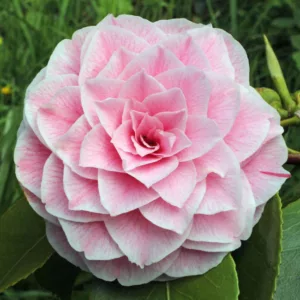
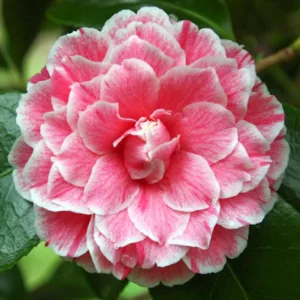
| ‘Bonomiana’ | White to pale pink, finely streaked darker pink; formal double | Midwinter | Early spring | 6-10 ft. | 6-7 ft. | 7-9 |
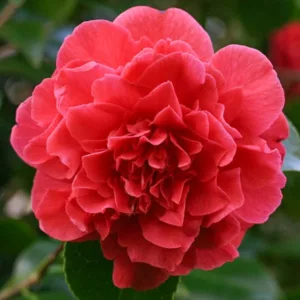
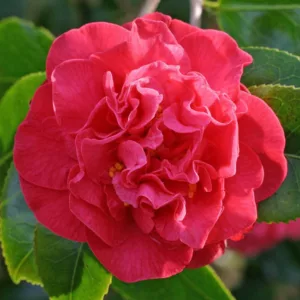
| ‘Kramer’s Supreme’ | Brilliant red, peony-form, mildly fragrant | Midwinter | Early spring | 8-10 ft. | 6-10 ft. | 7-9 |
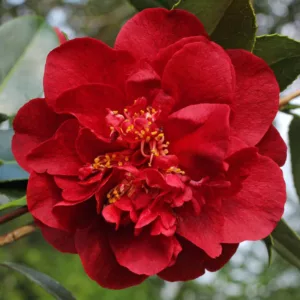
| ‘Bob Hope’ | Very large deep-red, ruffled semi-double flowers | Midwinter | Early spring | 6-8 ft. | 6-8 ft. | 7-9 |
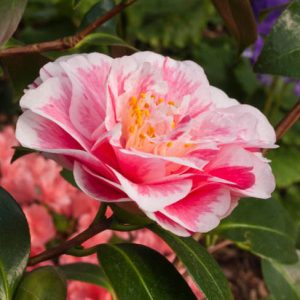
| ‘Lavinia Maggi’ | White formal-double flowers striped cerise pink | Midwinter | Late spring | 8-10 ft. | 6-8 ft. | 7-9 |
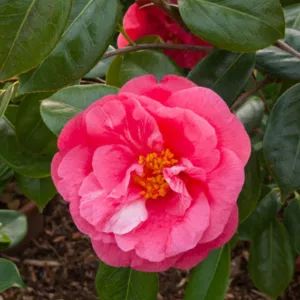
| ‘Hermé’ | Rose-pink flowers with white margins and darker streaking; mildly fragrant | Midwinter | Early spring | 6-8 ft. | 6-8 ft. | 7-9 |
| ‘Australis’ | Large brilliant-red, peony-form flowers | Midwinter | Early spring | 8-12 ft. | 5-8 ft. | 7-9 |
| ‘Drama Girl’ | Very large salmon-rose flowers with dramatic lighter streaks | Midwinter | Late spring | 4-10 ft. | 6-10 ft. | 7-9 |
| ‘Scentsation’ | Large silvery-pink, peony-form flowers | Midwinter | Early spring | 8-12 ft. | 6-10 ft. | 7-9 |
| ‘Tricolor’ | Pale pink, semi-double flowers streaked and splashed red | Midwinter | Early spring | 6-10 ft. | 4-6 ft. | 7-9 |
| ‘Ballet Dancer’ | Creamy-pink peony-form flowers with coral-pink accents | Midwinter | Early spring | 6-12 ft. | 6-10 ft. | 7-9 |
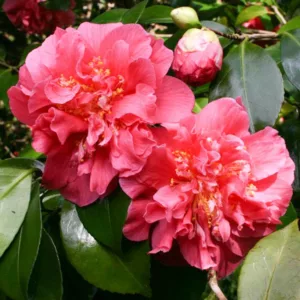
| ‘Debbie’ | Rose-pink, peony-form flowers produced freely | Midwinter | Early spring | 6-15 ft. | 3-10 ft. | 7-8 |
| ‘Les Jury’ | Deep crimson-red formal-double flowers | Midwinter | Early spring | 4-6 ft. | 6-8 ft. | 7-8 |
| ‘Elegant Beauty’ | Rose-pink, anemone-form to peony-form flowers | Midwinter | Early spring | 4-8 ft. | 6-8 ft. | 7-8 |
| ‘Hagoromo’ | Pale blush-pink, semi-double flowers with graceful recurved petals | Midwinter | Late spring | 6-8 ft. | 4-5 ft. | 7-9 |
| ‘Pink Perfection’ | Perfectly arranged shell-pink formal-double flowers | Midwinter | Late spring | 8-10 ft. | 6-8 ft. | 7-9 |
| ‘Sweet Emily Kate’ | Blush-pink flowers with a mild fragrance | Midwinter | Late spring | 6-8 ft. | 6-8 ft. | 7-9 |
| ‘Scentuous’ | Small white flowers flushed pink, with a mild fragrance | Midwinter | Late spring | 4-6 ft. | 3-4 ft. | 7-9 |
| ‘E.G. Waterhouse’ | Rich pink formal-double flowers on an upright shrub | Midwinter | Late spring | 8-15 ft. | 6-15 ft. | 7-8 |
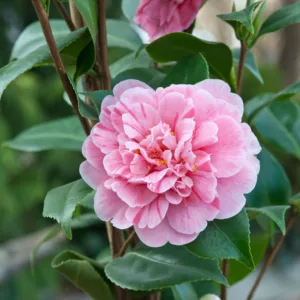
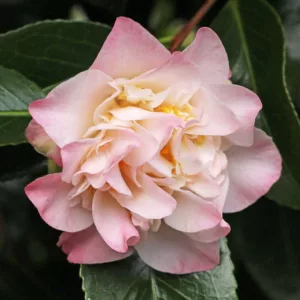
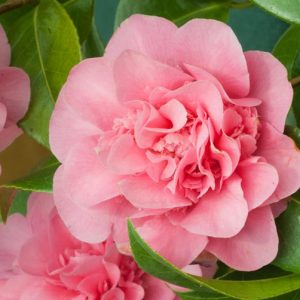
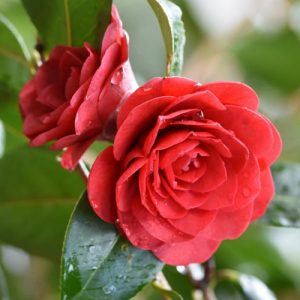
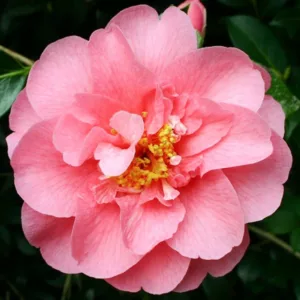
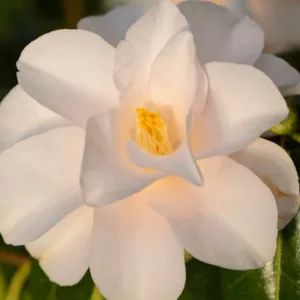
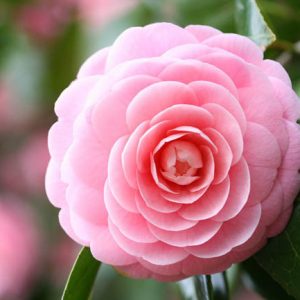
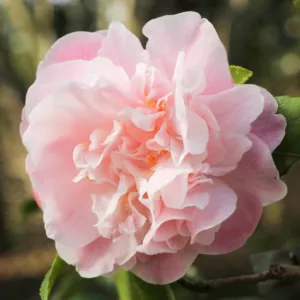
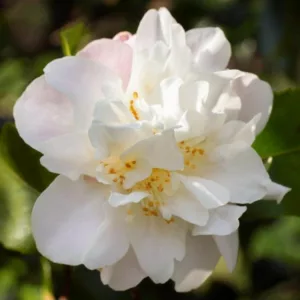
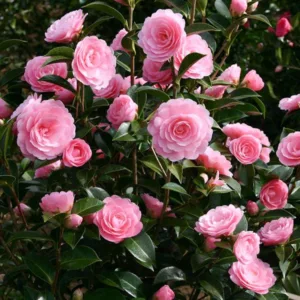
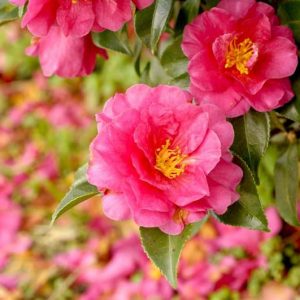
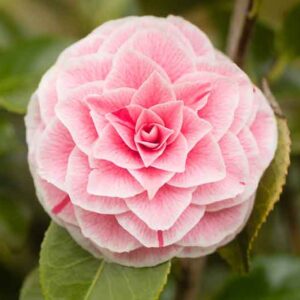
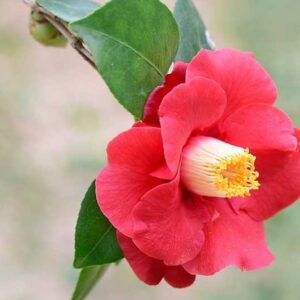
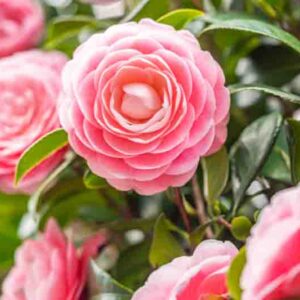
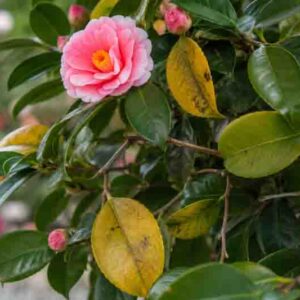
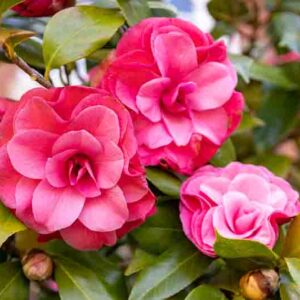
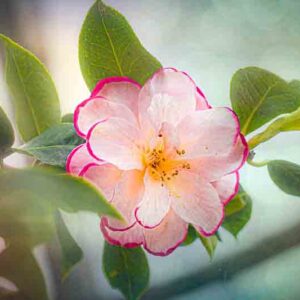
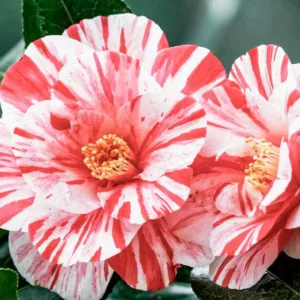
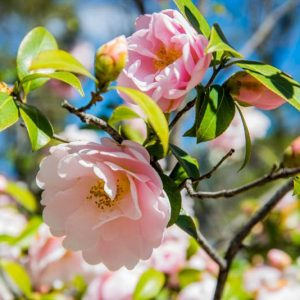
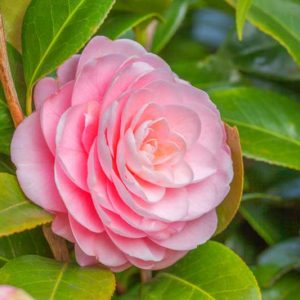
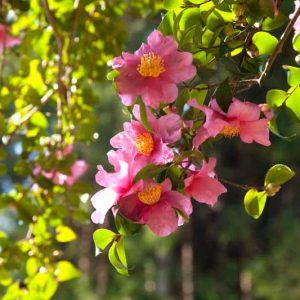
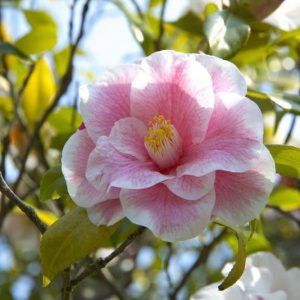
Browse the photographs below to compare flower colors, forms, foliage, and overall plant character. Select a cultivar to open its complete Gardenia profile, including detailed descriptions, growing requirements, landscape uses, and care information.
| Hardiness |
6 - 9 |
|---|---|
| Heat Zones |
7 - 8 |
| Climate Zones | 4, 5, 6, 7, 8, 9, 12, 14, 15, 16, 17, 18, 19, 20, 21, 22, 23, 24 |
| Plant Type | Shrubs |
| Plant Family | Theaceae |
| Genus | Camellia |
| Exposure | Full Sun, Partial Sun, Shade |
| Season of Interest | Spring (Early), Winter |
| Maintenance | Low |
| Water Needs | Average |
| Soil Type | Clay, Loam, Sand |
| Soil pH | Acid, Neutral |
| Soil Drainage | Moist but Well-Drained, Well-Drained |
| Characteristics | Cut Flowers, Plant of Merit, Showy |
| Landscaping Ideas | Beds And Borders, Patio And Containers, Wall-Side Borders, Walls And Fences |
| Garden Styles | City and Courtyard, Informal and Cottage, Japanese Garden, Traditional Garden |
‘Scentuous’ is the most compact and narrow featured choice at approximately 4-6 feet tall and 3-4 feet wide. ‘Les Jury’ remains relatively low at 4-6 feet but develops a broader 6-8-foot spread.
‘Kramer’s Supreme’, ‘Bob Hope’, ‘Australis’, and ‘Les Jury’ offer tones ranging from brilliant red to deep crimson.
‘Bonomiana’, ‘Lavinia Maggi’, ‘Hermé’, ‘Drama Girl’, and ‘Tricolor’ provide some of the most distinctive striped, streaked, or splashed flowers.
‘Bonomiana’, ‘Lavinia Maggi’, ‘Les Jury’, ‘Pink Perfection’, and ‘E.G. Waterhouse’ offer highly organized, geometric rows of petals.
‘Kramer’s Supreme’, ‘Hermé’, ‘Sweet Emily Kate’, and ‘Scentuous’ are recorded as mildly fragrant.
‘Lavinia Maggi’, ‘Drama Girl’, ‘Hagoromo’, ‘Pink Perfection’, ‘Sweet Emily Kate’, ‘Scentuous’, and ‘E.G. Waterhouse’ continue into late spring.
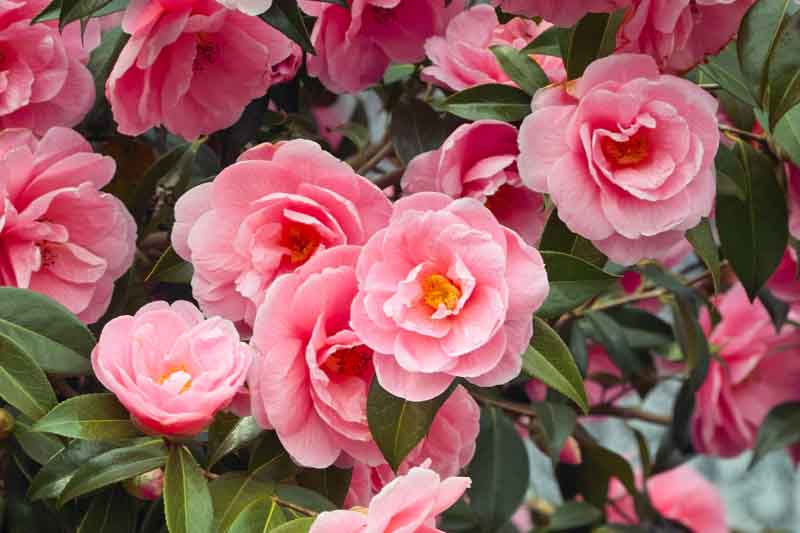
Camellia japonica provides most of the classic winter camellias. It is prized for its large flowers, broad range of colors, glossy evergreen leaves, and exceptional variety of bloom forms.
Japanese camellias generally develop dense, shapely shrubs. Many grow slowly or moderately and eventually reach 6-12 feet, although cultivar dimensions vary considerably.
The flowers may remain attached as they fade, particularly on densely petaled formal-double cultivars. Removing spent blooms can improve appearance, although deadheading is not necessary for future flowering.
Camellia × williamsii hybrids arose primarily from crosses involving Camellia japonica and Camellia saluenensis. They generally flower from winter into spring and are valued for vigor, heavy flowering, and attractive evergreen foliage.
Many williamsii hybrids shed their faded flowers cleanly instead of retaining browned petals on the plant. This makes them particularly useful near entrances, paths, patios, and other prominent locations.
The featured cultivars ‘Debbie’, ‘Les Jury’, ‘Elegant Beauty’, and ‘E.G. Waterhouse’ are listed for USDA Zones 7-8.
Fragrance is uncommon among traditional camellias, but hybridization has introduced noticeable scent into selected cultivars. ‘Sweet Emily Kate’ and ‘Scentuous’ combine a long winter-to-spring flowering season with mild fragrance.
| Growing Region | Likely Flowering Pattern | Best Strategy |
|---|---|---|
| Mild coastal or warm-winter climate | Midwinter buds may begin opening relatively early and flowering can extend over many weeks. | Combine early-spring and late-spring finishers to extend the sequence. |
| Cool coastal or temperate climate | Flowering often begins later but may proceed steadily through spring. | Use seasonal classifications rather than expecting one exact opening month. |
| Cold or exposed inland garden | Open flowers may be browned by freezing weather or drying winds. | Choose the most sheltered available site and protect plants from winter wind and early morning sun. |
| Protected courtyard or wall-side position | Stored warmth and wind protection may advance bud opening. | Avoid an east-facing frost pocket where early sun reaches frozen flowers. |
Winter camellias deserve positions where their flowers can be enjoyed from indoors and along frequently used paths. Plant them within view of a kitchen, living-room, or bedroom window, or use a compact cultivar near a sheltered entrance.
Fragrant cultivars such as ‘Scentuous’, ‘Sweet Emily Kate’, and ‘Kramer’s Supreme’ are particularly appealing near paths and doors where their subtle scent can be appreciated.
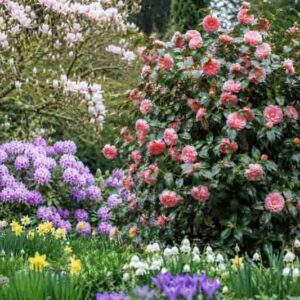
Camellias thrive in the bright filtered shade found beneath high tree canopies and along woodland edges. Their glossy evergreen foliage provides structure while deciduous companion plants are dormant.
Combine them with hellebores, ferns, pieris, azaleas, rhododendrons, sarcococca, cyclamen, snowdrops, and other plants that prefer acidic, humus-rich soil.
Use large, upright cultivars toward the back of a border and smaller selections closer to paths. Winter flowers contrast beautifully with colored stems, ornamental bark, evergreen foliage, winter berries, and early bulbs.
Dense japonicas and vigorous williamsii hybrids can create attractive informal screens. Space plants according to their mature spread and intended use rather than following one universal distance.
Frequent formal shearing reduces flowering and creates a dense outer shell. Selective post-flowering pruning preserves a more natural outline and more flower-bearing shoots.
‘Scentuous’ is the clearest long-term container choice among the featured cultivars because of its relatively compact, narrow habit. ‘Les Jury’ and ‘Elegant Beauty’ may also be grown in substantial containers, but their broad mature spread makes them better suited to large patios or eventual planting in the ground.
Container-grown camellias need dependable moisture throughout bud development and flowering. Protect pots from severe freezing, and never allow the root ball to remain waterlogged.
A sheltered wall can protect flowers from wind and create a favorable microclimate. Camellias may also be trained as espaliers where garden width is limited.
Use Gardenia’s camellia espalier guide for training and pruning instructions.
Partial shade, filtered light, or bright shade suits most winter-blooming japonicas and williamsii hybrids. Morning sun followed by afternoon shade can be effective, but avoid sites where strong early sun strikes frozen flowers and buds.
Deep shade can reduce flowering, while intense summer afternoon sun may scorch foliage and dry the shallow root system.
Grow camellias in acidic to neutral soil that is rich in organic matter, moisture-retentive, and well-drained. Prolonged saturation encourages root decline, while strongly alkaline soil can cause chlorosis and weak growth.
Where native soil is unsuitable, use a raised bed or grow a manageable cultivar in a container filled with ericaceous potting mix.
Maintain consistent moisture during establishment and throughout dry periods. Water is especially important from late summer onward, when flower buds are developing and enlarging.
Apply water deeply to the root zone, but do not keep the soil continuously saturated. Container plants may require watering even during cool weather when rainfall does not reach pots beneath eaves.
Apply approximately 2-3 inches (5-7 cm) of leaf mold, shredded bark, pine bark, or another organic mulch over the root zone. Keep mulch away from direct contact with the trunk and major stems.
Healthy established camellias growing in fertile soil may need little supplemental fertilizer. If growth is weak or a deficiency is confirmed, feed lightly after flowering with a fertilizer formulated for acid-loving plants.
Avoid excessive nitrogen and late feeding. Soft late growth is more vulnerable to cold and may develop at the expense of normal flower-bud formation.
Winter camellias generally require little routine pruning. Remove dead, diseased, broken, crossing, and badly positioned branches, and shorten overly long shoots only when necessary.
Prune immediately after flowering. Waiting until late summer or fall may remove shoots carrying the following season’s flower buds.
| Symptom | Possible Cause | What to Do |
|---|---|---|
| Buds remain closed | Cold weather or the cultivar naturally flowers later | Wait for milder conditions and confirm the plant’s normal seasonal classification. |
| Few or no flower buds | Deep shade, late pruning, excessive nitrogen, drought, or poor establishment | Improve light where practical, water in dry weather, and prune only after flowering. |
| Buds fall before opening | Drought, waterlogged roots, temperature stress, transplant shock, or natural thinning | Maintain even moisture, correct drainage, and protect the plant from harsh exposure. |
| Open flowers turn brown suddenly | Frost or cold wind | Choose a sheltered site; wait for later buds to open during milder weather. |
| Brown patches spread across petals | Petal blight or Botrytis gray mold | Inspect the pattern carefully and remove fallen diseased flowers. |
| Leaves become yellow | Alkaline soil, root damage, waterlogging, or nutrient deficiency | Check soil pH, drainage, irrigation, and root health before fertilizing. |
Winter-blooming camellias may be affected by camellia petal blight, Botrytis gray mold, leaf blight, dieback and canker, Phytophthora root rot, sooty mold, scale insects, aphids, mites, thrips, and root weevils.
Good drainage, suitable spacing, removal of fallen diseased flowers, and regular inspection of leaf undersides help prevent many problems from becoming severe.
Use Gardenia’s camellia disease and pest guide to compare symptoms and treatments once that article is live.
Winter camellias form the center of a much longer flowering sequence. By combining plants from different seasonal groups, gardeners in mild climates can aim for camellia flowers from fall through spring.
Explore Gardenia’s related guides:
A spectacular bloom is only one part of the decision. Compare mature height, spread, hardiness, flowering length, habit, and intended garden use before choosing a winter camellia.
Select narrow or compact cultivars for smaller spaces, vigorous shrubs for screening, formal doubles for intricate flower form, williamsii hybrids for heavy flowering and cleaner petal fall, and fragrant hybrids for paths, entrances, and containers.
Winter-blooming camellias provide some of the most refined flowers of the gardening year. The 18 featured cultivars all begin in midwinter, but their seasons differ: some finish in early spring, while others continue into late spring.
Camellia japonica offers the widest range of flower colors and forms. Camellia × williamsii hybrids contribute vigorous growth, abundant flowers, and cleaner shedding of faded blooms, while selected hybrids add fragrance or compact size.
Use the comparison table to match bloom period, mature size, spread, and hardiness to your garden. Then browse the 18 image profiles to compare the flowers and growth habits before making a final choice.
The featured winter camellias begin in midwinter. Some finish in early spring, while longer-flowering cultivars continue into late spring. Exact calendar dates vary with cultivar, climate, and weather.
The best choice depends on the garden. ‘Kramer’s Supreme’ and ‘Bob Hope’ offer red flowers, ‘Bonomiana’ and ‘Lavinia Maggi’ provide striking variegation, ‘Scentuous’ is compact and fragrant, and ‘Pink Perfection’ has exceptionally symmetrical formal-double blooms.
‘Lavinia Maggi’, ‘Drama Girl’, ‘Hagoromo’, ‘Pink Perfection’, ‘Sweet Emily Kate’, ‘Scentuous’, and ‘E.G. Waterhouse’ begin in midwinter and continue into late spring in Gardenia’s cultivar records.
Camellia japonica offers the broadest range of large flower forms and colors. Camellia × williamsii hybrids are often vigorous and floriferous, and many shed their faded flowers more cleanly than densely petaled japonicas.
‘Kramer’s Supreme’, ‘Hermé’, ‘Sweet Emily Kate’, and ‘Scentuous’ are recorded as mildly fragrant. Camellia fragrance is usually subtle rather than powerful.
Yes. Choose a manageable cultivar such as ‘Scentuous’, ‘Les Jury’, or ‘Elegant Beauty’ and use a large container with acidic, freely draining potting mix. Maintain consistent moisture and protect the root ball from severe freezing.
Sudden browning may result from frost or cold wind. Expanding tan or brown petal patches may indicate camellia petal blight or Botrytis gray mold. Inspect the pattern and remove fallen diseased flowers.
Complete routine pruning immediately after flowering. Pruning later in the growing season may remove shoots carrying the flower buds for the following winter and spring.
Updated: July 2026 • Cultivar data derived from Gardenia plant records • Reviewed by Gardenia Editors
Picture courtesy of: Copyright: / 123RF Stock Photo
| Hardiness |
6 - 9 |
|---|---|
| Heat Zones |
7 - 8 |
| Climate Zones | 4, 5, 6, 7, 8, 9, 12, 14, 15, 16, 17, 18, 19, 20, 21, 22, 23, 24 |
| Plant Type | Shrubs |
| Plant Family | Theaceae |
| Genus | Camellia |
| Exposure | Full Sun, Partial Sun, Shade |
| Season of Interest | Spring (Early), Winter |
| Maintenance | Low |
| Water Needs | Average |
| Soil Type | Clay, Loam, Sand |
| Soil pH | Acid, Neutral |
| Soil Drainage | Moist but Well-Drained, Well-Drained |
| Characteristics | Cut Flowers, Plant of Merit, Showy |
| Landscaping Ideas | Beds And Borders, Patio And Containers, Wall-Side Borders, Walls And Fences |
| Garden Styles | City and Courtyard, Informal and Cottage, Japanese Garden, Traditional Garden |
Create a membership account to save your garden designs and to view them on any device.
Becoming a contributing member of Gardenia is easy and can be done in just a few minutes. If you provide us with your name, email address and the payment of a modest $25 annual membership fee, you will become a full member, enabling you to design and save up to 25 of your garden design ideas.
Join now and start creating your dream garden!
Create a membership account to save your garden designs and to view them on any device.
Becoming a contributing member of Gardenia is easy and can be done in just a few minutes. If you provide us with your name, email address and the payment of a modest $25 annual membership fee, you will become a full member, enabling you to design and save up to 25 of your garden design ideas.
Join now and start creating your dream garden!