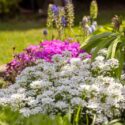
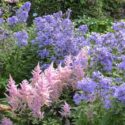
Turn bare soil into a carpet of purple flowers with 18 beautiful ground covers for sunny slopes, garden paths, and shaded borders. Discover fragrant creeping thyme, colorful phlox, violet-flowered ice plants, and woodland favorites. Compare flowering seasons, spreading habits, and growing needs to find the perfect plants for your garden.
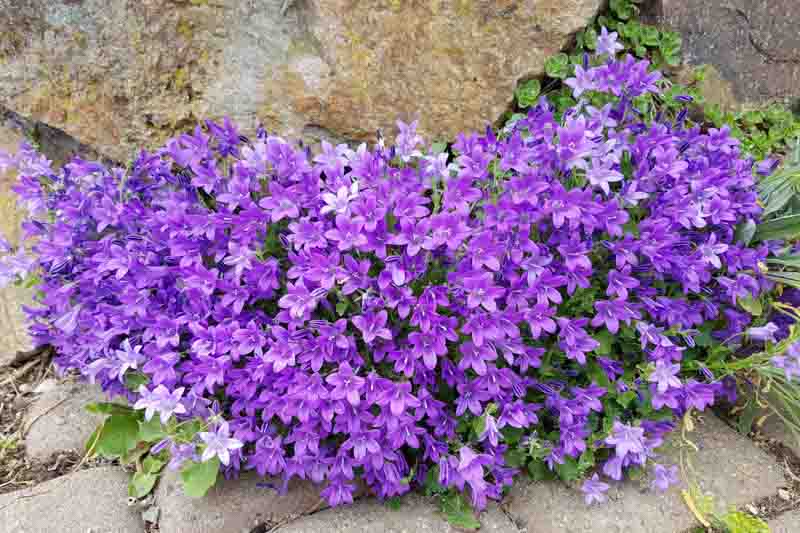


A carpet of purple flowers can transform an ordinary garden. Imagine violet blossoms cascading over a sunny wall, fragrant thyme weaving between stepping stones, or deep-purple geraniums bringing color to a shaded woodland border.
The secret is choosing plants that cover the ground in different ways. Some form dense evergreen mats, others trail across slopes, while spreading perennials gradually create attractive colonies. Their growing requirements vary just as much: creeping thyme loves hot sunshine and dry soil, while woodland phlox and dusky cranesbill prefer cooler, partially shaded conditions.
These 18 purple flowering ground covers and spreading perennials offer beautiful choices for full sun, partial shade, and woodland gardens. Discover how they grow, when they flower, and which are best for slopes, paths, borders, or planting beneath trees.
What are the best purple flowering ground covers? For sunny slopes, choose Creeping Phlox ‘Purple Beauty’, ‘Purple Carpet’ Thyme, or ‘Violet Wonder’ Ice Plant. For partial shade, try Creeping Mazus, Dalmatian Bellflower, or Geranium ‘Sweet Heidy’. For shaded borders, Geranium phaeum ‘Lily Lovell’, Lamium ‘Purple Dragon’, and Creeping Woodland Phlox bring colorful flowers and attractive foliage.
Before choosing by flower color, consider how you want the plant to grow. Not every low-growing perennial forms a carpet capable of covering a large area.
Next, match sunlight and water needs. A sun-loving ground cover may produce few flowers beneath trees, while a woodland perennial can struggle on a hot, exposed slope. Purple flowers also come in shades of violet, lavender, and magenta-purple, so choose the tones that work best with your garden’s color scheme.
Planning a flowering ground cover? Find plants suited to your USDA zone, sunlight, soil, and water needs, then compare mature spread and estimate planting quantities.
These six choices flourish in sunny positions, ranging from low, flowering carpets to spreading perennials suitable for edging and mass planting.
USDA Zones 2-9 | 4-6 in. tall | Mid to late spring
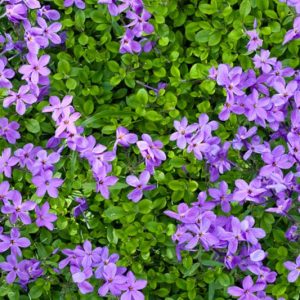
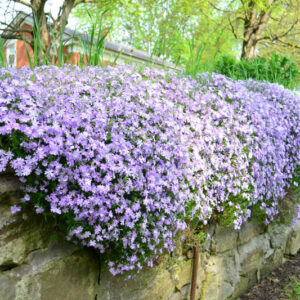
For several glorious weeks, purple flowers with darker violet eyes almost completely conceal the fine evergreen foliage. This vigorous, mat-forming phlox is ideal for sunny banks, rock gardens, and spilling over low walls. It prefers freely draining soil and tolerates drought once established. Expect an impressive spring display rather than continuous summer flowering. Explore this plant.
USDA Zones 5-8 | 3-6 in. tall | Summer
Brush its tiny leaves and they release a delicious herbal fragrance. In summer, clusters of purple-pink flowers attract bees above a dense, low-growing mat. This creeping thyme is especially charming between stepping stones and along gravel paths. Give it full sun, lean soil, and excellent drainage. It tolerates occasional footsteps, not constant traffic. Explore this plant.
USDA Zones 4-9 | 4-9 in. tall | Mid-spring to early summer
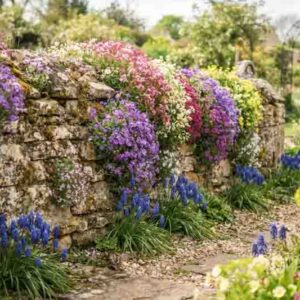
Violet-purple to reddish-purple flowers tumble over cushions of gray-green evergreen foliage, creating a waterfall effect along stone walls. Aubrieta is especially beautiful in rock gardens and raised beds where its trailing stems can spill freely. Provide sun and well-drained soil, then trim lightly after flowering to maintain compact growth. Explore this plant.
| Genus | Campanula, Delosperma, Epimedium, Geranium, Lamium, Phlox, Thymus, Verbena, Viola |
|---|---|
| Landscaping Ideas | Ground Covers |
USDA Zones 6-10 | About 12 in. tall | Late spring to frost
If you want purple flowers for months rather than weeks, ‘Homestead Purple’ is an excellent candidate. Rich violet-purple flower clusters cover spreading stems, attracting butterflies across the warmer seasons. It thrives in sunny, well-drained soil and is useful on slopes or cascading over containers. Winter survival varies in colder climates. Explore this plant.
USDA Zones 6-10 | 4-6 in. tall | Early summer to fall
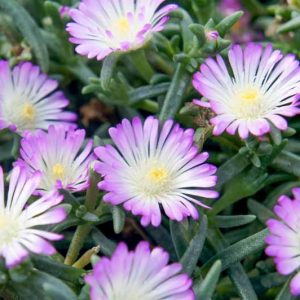
Brilliant violet daisies with contrasting white centers open above succulent blue-green leaves, producing a remarkably colorful carpet. This heat-loving ice plant spreads across gravelly soil, dry banks, and sunny rock gardens. Excellent drainage is essential, particularly in winter. Unlike many purplish-pink ice plants, this selection offers distinctly violet flowers. Explore this plant.
USDA Zones 4-8 | 12-18 in. tall, spreading 18-24 in. | Early to late summer
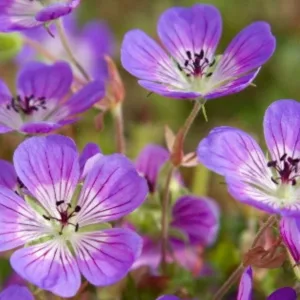
Few hardy geraniums offer such an appealing mix of colors. The delicate, bowl-shaped flowers open pink before developing purple tones, with dark veining and bright white centers. Blooming generously throughout summer, ‘Sweet Heidy’ forms a spreading mound of deeply lobed green foliage that makes an attractive ground cover. It thrives in full sun or partial shade, tolerates deeper shade, and handles occasional drought once established. Lovely beneath shrubs, along border edges, or spilling between neighboring perennials. Explore this plant.
These versatile plants grow where sunlight changes throughout the day, although most flower more freely with several hours of direct light.
USDA Zones 3-9 | 4-6 in. tall | Late spring to early summer
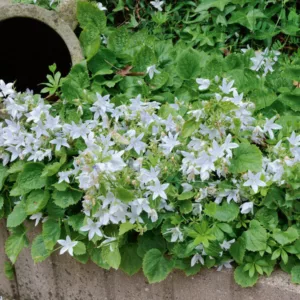
Hundreds of pale violet-blue stars spill across spreading stems, softening steps, walls, and border edges. Serbian bellflower thrives in sun or partial shade with moderately moist, well-drained soil. It can spread aggressively through underground runners, so reserve it for areas where vigorous growth is welcome. Explore this plant.
USDA Zones 5-8 | 1-2 in. tall | Late spring to early summer
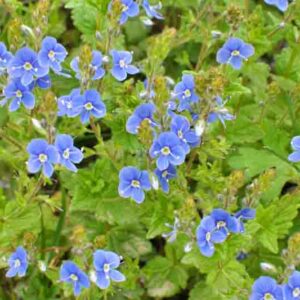
This tiny ground cover hugs the soil, producing purplish-blue flowers marked with white and yellow. Its rooting stems gradually weave into a soft carpet around stepping stones and lightly used paths. Unlike thyme, mazus prefers dependable moisture. It is a lovely choice for cooler, partially shaded gardens where the soil does not dry completely. Explore this plant.
USDA Zones 4-9 | Low foliage, taller flower spikes | Late spring to early fall
Violet-purple flowers crowd into short spikes above creeping green leaves, attracting bees and other pollinators. Selfheal works particularly well in informal meadow-style plantings and wildlife-friendly lawns with limited traffic. Its creeping stems and abundant seedlings can spread readily, making it less appropriate for tightly controlled borders. Explore this plant
USDA Zones 4-9 | 4-6 in. tall | Early summer to early fall
Violet-blue bells rise from a low, trailing mound of bright-green leaves, creating a surprisingly long flowering display. ‘Birch Hybrid’ is particularly attractive in rock gardens, raised beds, and wall crevices. Unlike some more aggressive bellflowers, it generally maintains a manageable spread. Provide well-drained soil and regular moisture during dry spells. Explore this plant.
USDA Zones 3-8 | 3-6 in. tall | Spring
Small lavender-violet flowers appear above heart-shaped leaves tinged with purple, creating a charming ground-level display. Labrador violet spreads through creeping stems and self-seeding, gradually colonizing suitable gaps. It prefers cool conditions and moist, well-drained soil. Use it along woodland paths or beneath deciduous shrubs rather than on hot, dry banks. Explore this plant.
USDA Zones 3-9 | 8-12 in. tall | Early to late summer
Deep lavender-purple bells cover spreading evergreen foliage, turning walls and raised borders into cascades of color. Dalmatian bellflower performs well in sun or partial shade with moderately moist, well-drained soil. Vigorous spreading can be helpful on larger banks but troublesome in small, mixed rock gardens. Explore this plant.
In partial or woodland shade, flowers may be less abundant, but attractive foliage helps maintain interest after blooming.
USDA Zones 3-7 | 18-30 in. tall, spreading 12-18 in. | Late spring to early summer
Deep, dusky-purple flowers with contrasting white centers float above handsome, deeply lobed green foliage, bringing rich color to woodland gardens. ‘Lily Lovell’ is one of the more shade-tolerant hardy geraniums, thriving in partial to nearly full shade. This rhizomatous perennial gradually forms attractive colonies, making it useful for mass planting beneath shrubs and along woodland borders. It prefers moist, well-drained soil and cooler summers, with occasional repeat flowers later in the season. Explore this plant.
USDA Zones 3-8 | 6-8 in. tall | Late spring, with later flowers
Rich purple-magenta flowers stand out against silver leaves edged in green, illuminating shady borders long after the blossoms fade. This spreading perennial is especially useful beneath shrubs where soil remains reasonably well drained. It may grow vigorously in cool conditions and can escape garden boundaries, so avoid planting near sensitive natural habitats. Explore this plant.
USDA Zones 4-8 | 3-8 in. foliage | Mid-spring to early summer
Fragrant flowers in violet, lavender-blue, pink, or white appear above rooting evergreen to semi-evergreen runners. For a purple-themed garden, choose a violet-flowered selection rather than relying on an unspecified seedling. This Appalachian native creates an attractive woodland carpet in humus-rich, moderately moist, well-drained soil. Explore this plant.
USDA Zones 3-9 | 4-8 in. tall | Spring
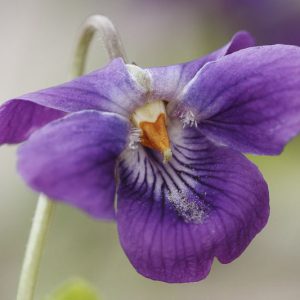
Violet-purple flowers appear among heart-shaped leaves, bringing early color to woodland gardens and naturalistic lawns. Native to much of eastern North America, common blue violet gradually forms colonies through rhizomes and self-seeding. It supports early pollinators but may spread beyond its intended planting area, particularly into lawns. Explore this plant.
USDA Zones 5-8 | 12-18 in. tall | Mid to late spring
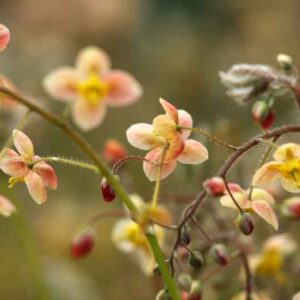
Deep purple petals framed by rose-pink sepals hover above evergreen leaves beautifully flushed maroon-red in spring. This distinctive barrenwort forms spreading woodland colonies and tolerates seasonal dryness after establishment. It is better suited to underplanting shrubs and trees than creating a very low lawn-like carpet. Explore this plant.
USDA Zones 4-8 | 8-12 in. tall | Late spring to early summer
Spicy-scented leaves spread into a dense, weed-suppressing carpet, topped with clusters of deep magenta flowers. ‘Czakor’ is one of the more useful ground covers for difficult partial shade, including beneath established shrubs. It tolerates seasonal dryness once rooted and develops attractive reddish-purple foliage in fall. Explore this plant.
Which purple-flowering ground cover should you choose? The answer depends on more than flower color. Some plants create low, continuous carpets, others cascade over walls, while spreading perennials gradually fill gaps between shrubs and taller plants.
Gardenia’s recommendations match each planting goal with a plant’s growing conditions, flowering habits, and ability to cover the ground.
| Your gardening goal | Gardenia’s suggested plant | Why it fits |
|---|---|---|
| Purple carpet on a sunny slope | Phlox ‘Purple Beauty’ | Dense evergreen mat with abundant spring flowers |
| Fragrant flowers between stepping stones | Thyme ‘Purple Carpet’ | Aromatic foliage and tolerance of light foot traffic |
| Violet flowers in a sunny gravel garden | Ice Plant ‘Violet Wonder’ | Low succulent carpet, summer-to-fall flowers, and drought tolerance |
| Long-blooming ground cover for a sunny bank | Verbena ‘Homestead Purple’ | Trailing stems and an extended flowering season |
| Summer color along a sunny or partially shaded border | Geranium ‘Sweet Heidy’ | Long-flowering, spreading mounds with pink-to-purple blooms |
| Very low carpet in moist partial shade | Creeping Mazus | Ground-hugging foliage and flowers suitable for path edges |
| Purple flowers cascading over a low wall | Dalmatian Bellflower | Trailing growth and generous lavender-purple summer flowers |
| Deep-purple flowers in a shaded woodland border | Geranium phaeum ‘Lily Lovell’ | Excellent shade tolerance and gradually expanding clumps; best for mass planting |
| Native violet flowers beneath deciduous trees | Violet-flowered Phlox stolonifera | Rooting runners and fragrant spring flowers |
| Dense ground cover beneath established shrubs | Geranium ‘Czakor’ | Rhizomatous spread and tolerance of seasonal dry shade |
These are Gardenia editorial recommendations based on plant growth habits and documented growing requirements, not comparative field-trial results. Flower color, spreading speed, and performance vary with climate, soil, and light conditions.
Gardenia’s key distinction: Not every flowering ground cover creates a low carpet. Choose creeping thyme or moss phlox for continuous mats, woodland phlox or bigroot geranium for spreading colonies, and Geranium ‘Sweet Heidy’ or ‘Lily Lovell’ for fuller, mass-planted perennial coverage. The latter two grow taller and are not substitutes for lawn-like ground covers.
Ready to plan your purple-flowering ground cover? Use Gardenia’s Plant Finder to discover more plants by flower color, sunlight, soil, water needs, and USDA zone. Then open the Garden Design Tool to check compatibility, mature spread, and planting quantities before buying.
Ground covers become more effective as they fill the space, but successful planting depends on choosing the right spacing and growing conditions.
Can flowering ground covers replace a lawn? Very low plants such as creeping thyme and mazus can work in lightly used areas where their growing conditions are suitable. Taller geraniums and woodland perennials are better for borders and underplanting. None should be expected to withstand the regular heavy traffic of conventional turf.
Creeping Phlox ‘Purple Beauty’, ‘Purple Carpet’ Creeping Thyme, and ‘Violet Wonder’ Ice Plant are good choices for sunny, well-drained sites. Verbena ‘Homestead Purple’ provides a longer flowering season, while Geranium ‘Sweet Heidy’ forms taller spreading mounds.
Lamium ‘Purple Dragon’, violet-flowered Creeping Woodland Phlox, and selected Epimediums provide flowering ground cover in partial shade. Geranium phaeum ‘Lily Lovell’ offers deep-purple flowers in shadier woodland borders, although it grows taller than a conventional ground cover.
Verbena ‘Homestead Purple’ can bloom from late spring to frost in suitable sunny climates, while ‘Violet Wonder’ Ice Plant flowers from summer into fall. Geranium ‘Sweet Heidy’ also offers a long summer flowering season. Bloom duration varies with climate and care.
Creeping thyme, creeping phlox, and ‘Violet Wonder’ Ice Plant tolerate drought once established in suitable well-drained soil. Geranium ‘Czakor’ can tolerate seasonal dryness in shade, while creeping mazus and woodland phlox generally need more moisture.
Very low plants such as creeping thyme or creeping mazus can replace turf in lightly used areas when their growing needs are met. Taller flowering geraniums are better for mass planting or borders. Use stepping stones along frequently walked routes.
Updated and reviewed by Gardenia: October 2026
| Genus | Campanula, Delosperma, Epimedium, Geranium, Lamium, Phlox, Thymus, Verbena, Viola |
|---|---|
| Landscaping Ideas | Ground Covers |
Create a membership account to save your garden designs and to view them on any device.
Becoming a contributing member of Gardenia is easy and can be done in just a few minutes. If you provide us with your name, email address and the payment of a modest $25 annual membership fee, you will become a full member, enabling you to design and save up to 25 of your garden design ideas.
Join now and start creating your dream garden!