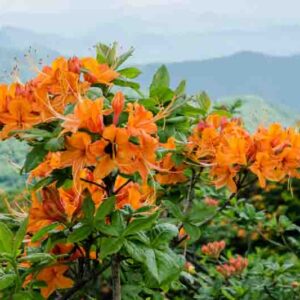
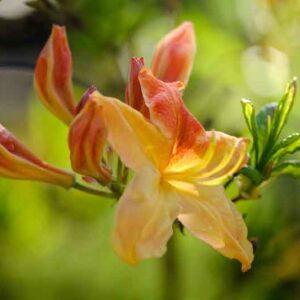
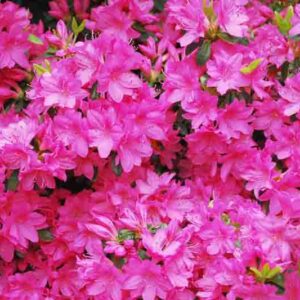
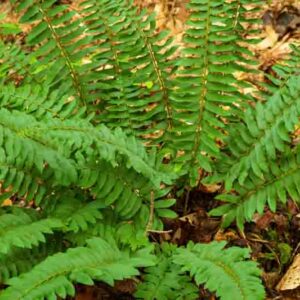
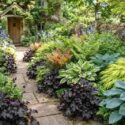
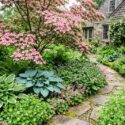
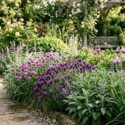
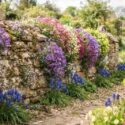
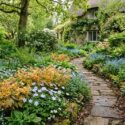
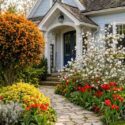
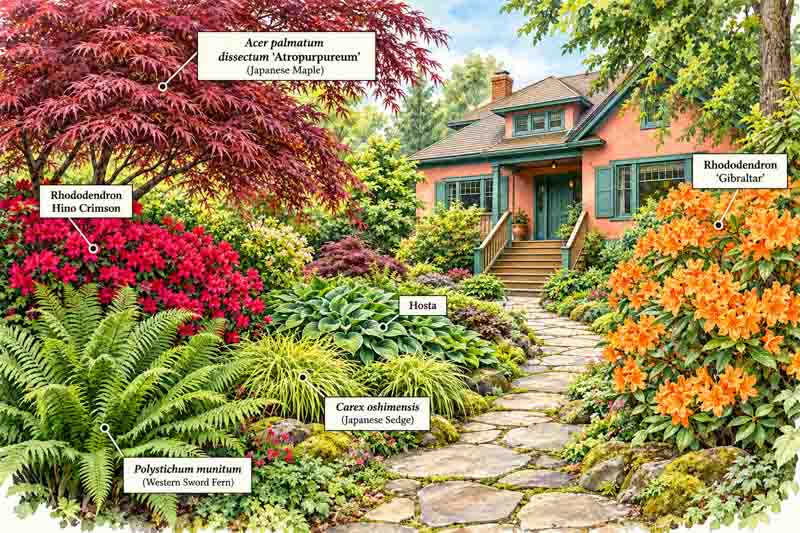
A colorful woodland garden pairing late-spring flowering 'Gibraltar', a deciduous Exbury Azalea, with spring-blooming evergreen 'Hino Crimson' Azalea. A red laceleaf Japanese maple provides burgundy foliage, while evergreen Western Sword Fern, Japanese Sedge, and bold-leaved Hostas create lush, contrasting layers around a welcoming stone path.
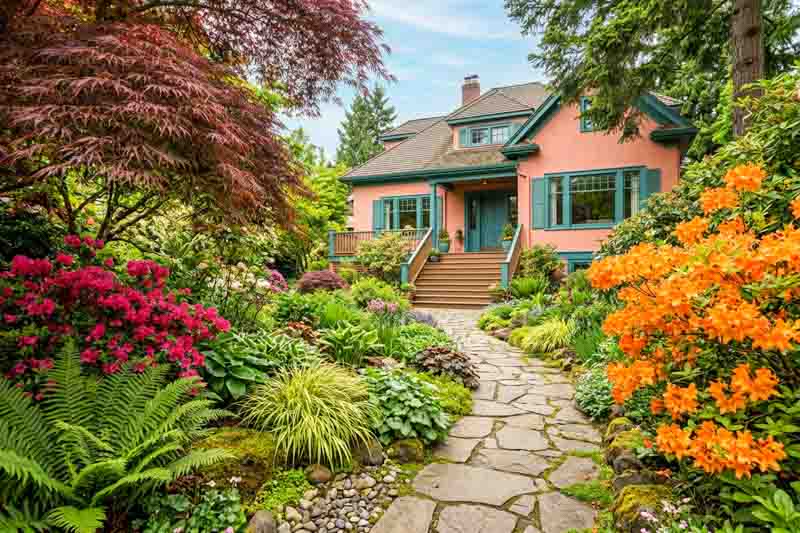


This welcoming garden turns a simple walk to the front door into a journey through layers of color and foliage. Brilliant orange Rhododendron ‘Gibraltar’ lights up one side of the path, while crimson ‘Hino Crimson’ creates a deeper pool of color opposite it. Above them, a laceleaf Japanese maple spreads finely cut burgundy foliage, giving the garden a strong focal point even when the azaleas are no longer in bloom.
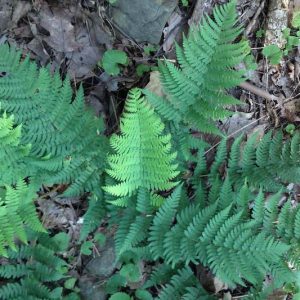
The lower layer is almost entirely about foliage. Bold Hostas, arching Polystichum munitum, and cascading Carex oshimensis soften the rocks and flagstone path. Their different leaf shapes keep the planting interesting without relying on continuous flowers.
Main plants used: Rhododendron ‘Gibraltar’, Rhododendron ‘Hino Crimson’, a red laceleaf Acer palmatum Dissectum cultivar, Polystichum munitum, Carex oshimensis, and Hosta.
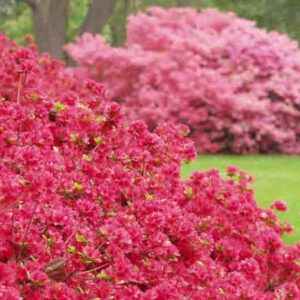
Color provides the first impression. ‘Gibraltar’ produces large clusters of vivid orange flowers, while ‘Hino Crimson’ answers with intense crimson-red blooms. Instead of blending together, the two azaleas occupy separate areas, allowing each color to make an impact.
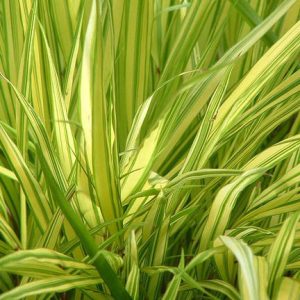
The Japanese maple provides the bridge between them. Its finely divided burgundy leaves echo the red tones of ‘Hino Crimson’ but contrast beautifully with the larger green leaves of the Hostas below. Sword Fern and Japanese Sedge add two more textures: upright, arching fern fronds and narrow, cascading grass-like foliage.
The stone path is equally important. Plants are allowed to approach its irregular edges, while rocks and small pockets of groundcover break up the planting. The result feels generous and established rather than rigidly landscaped.
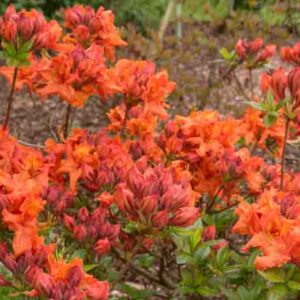
Rhododendron ‘Gibraltar’ is a deciduous Exbury Azalea prized for its spectacular orange flowers in late spring. Give it a prominent position where the flowers can be seen from the path or house.
Rhododendron ‘Hino Crimson’ is a compact evergreen Kurume Azalea smothered in vivid crimson-red flowers in spring. Its dense habit makes it useful toward the front or middle of a border.
Red laceleaf Acer palmatum provides the garden’s sculptural focal point. Its cascading branches and finely dissected burgundy foliage contrast with the rounded azaleas and broad Hosta leaves.
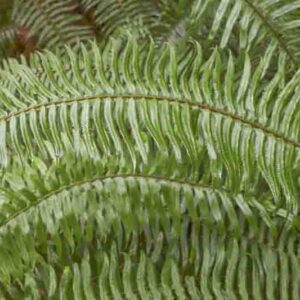
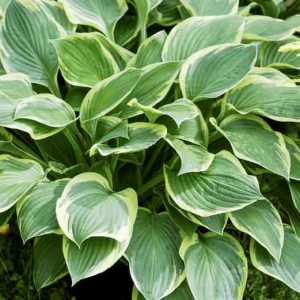
Polystichum munitum, or Western Sword Fern, creates substantial evergreen clumps of arching green fronds. Carex oshimensis forms smaller fountains of narrow foliage, while Hostas contribute broad leaves that make an excellent counterpoint to both.
Create a lush, colorful path garden with spectacular spring azaleas above contrasting layers of burgundy, broad-leaved, ferny, and grass-like foliage.
Position the Japanese maple where its branching can arch over part of the planting without blocking the path. Place ‘Gibraltar’ and ‘Hino Crimson’ in separate pockets to create distinct areas of orange and crimson. Repeat Western Sword Ferns and Hostas beneath and between the woody plants, then tuck Japanese Sedge beside stones and path edges where its fine foliage can spill naturally outward.
Spring brings the biggest color display as the azaleas flower and the Japanese maple unfurls its red-purple leaves. Hostas and ferns emerge below, quickly filling the spaces between the shrubs.
After the azalea flowers fade, foliage takes over. Burgundy maple leaves, broad Hostas, upright fern fronds, and fine sedges create enough contrast to carry the garden through summer. Autumn gives the Japanese maple another opportunity to take center stage.
These plants share a preference for sheltered, moisture-retentive conditions, but their needs are not identical. ‘Gibraltar’ benefits from enough light to flower generously, while Hostas and ferns are comfortable in shadier pockets. Place each plant according to the changing light across the garden rather than treating the entire border alike.
Most importantly, leave some stone and open ground visible. Those quiet spaces prevent the foliage from becoming a solid green mass and make the orange flowers, crimson azaleas, burgundy maple, and beautifully varied leaf shapes stand out.
| Hardiness |
5 - 8 |
|---|---|
| Heat Zones |
5 - 8 |
| Climate Zones | 3, 3A, 3B, 4, 5, 6, 7, 8, 9, 14, 15, 16, 17 |
| Exposure | Partial Sun |
| Season of Interest | Spring (Mid, Late) |
| Maintenance | Low |
| Water Needs | Average |
| Soil Type | Clay, Loam |
| Soil pH | Acid, Neutral |
| Soil Drainage | Moist but Well-Drained |
| Characteristics | Showy |
| Tolerances | Clay Soil |
| Attracts | Bees, Butterflies, Hummingbirds |
| Landscaping Ideas | Beds And Borders |
| Garden Styles | Informal and Cottage, Pollinator Garden, Woodland Garden |



| Hardiness |
5 - 8 |
|---|---|
| Heat Zones |
5 - 8 |
| Climate Zones | 3, 3A, 3B, 4, 5, 6, 7, 8, 9, 14, 15, 16, 17 |
| Exposure | Partial Sun |
| Season of Interest | Spring (Mid, Late) |
| Maintenance | Low |
| Water Needs | Average |
| Soil Type | Clay, Loam |
| Soil pH | Acid, Neutral |
| Soil Drainage | Moist but Well-Drained |
| Characteristics | Showy |
| Tolerances | Clay Soil |
| Attracts | Bees, Butterflies, Hummingbirds |
| Landscaping Ideas | Beds And Borders |
| Garden Styles | Informal and Cottage, Pollinator Garden, Woodland Garden |
Recreate this garden. Specify the percentages you would like to have of each plant and input the dimensions of your garden space.We'll give you a shopping list so you know how many plants you need.
| Plant | Quantity | |
|---|---|---|
| Rhododendron 'Gibraltar' | N/A | Buy Plants |
| Rhododendron 'Hino Crimson' | N/A | Buy Plants |
| Acer palmatum 'Dissectum Atropurpureum' (Laceleaf Japanese Maple) | N/A | Buy Plants |
| Polystichum munitum (Western Sword Fern) | N/A | Buy Plants |
| Carex oshimensis 'Evergold' (Japanese Sedge) | N/A | Buy Plants |
| Hosta fortunei var. aureomarginata (Gold-Edged Plantain Lily) | N/A | Buy Plants |
Create a membership account to save your garden designs and to view them on any device.
Becoming a contributing member of Gardenia is easy and can be done in just a few minutes. If you provide us with your name, email address and the payment of a modest $25 annual membership fee, you will become a full member, enabling you to design and save up to 25 of your garden design ideas.
Join now and start creating your dream garden!