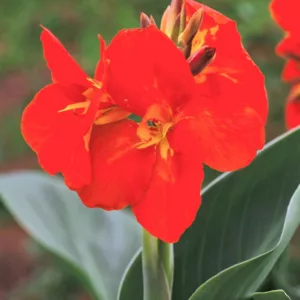
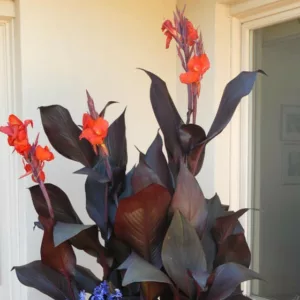
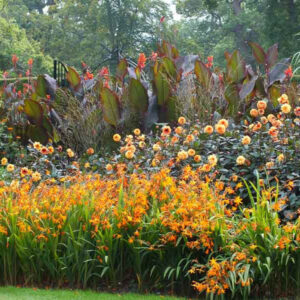
Do deer eat cannas? Sometimes, but these bold tropical-looking plants have a strong resistance record. Learn how Rutgers rates cannas, when deer may still sample fresh shoots, how to distinguish deer damage from leaf rollers and slugs, and which deer-tolerant canna varieties best fit your garden.
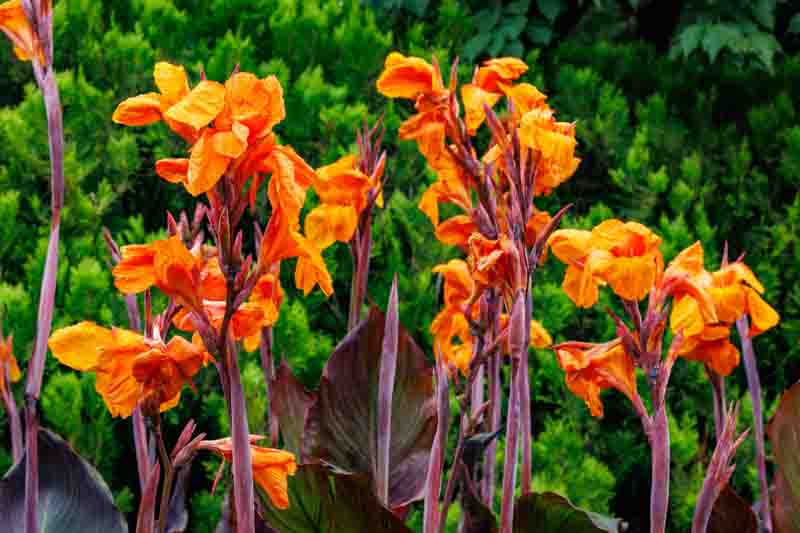


If deer wander through your garden, cannas are usually a fairly safe choice. Deer can eat cannas, but Canna has a good deer-resistance record and is seldom severely damaged.
Rutgers places Canna in its B – Seldom Severely Damaged category. That is more useful than calling cannas “deer-proof.” A deer may still take a bite from a tender new leaf or flower stalk, particularly when plants are young or food is scarce, but repeated heavy browsing is not what gardeners normally expect.
There is another reason not to blame deer too quickly. Canna leaves attract several pests, and damage from leaf rollers, slugs, snails, caterpillars, or beetles can look dramatic. A badly chewed leaf does not necessarily mean a large animal was responsible.
Do deer eat cannas? Sometimes, but cannas are generally deer resistant. Rutgers rates Canna B – Seldom Severely Damaged, and many popular cultivars are recorded as deer tolerant. Young shoots may still be sampled under heavy deer pressure, but severe repeated browsing is uncommon.
Cannas have a solid reputation in deer-prone gardens. Rutgers rates the genus Canna B – Seldom Severely Damaged, which means some browsing may occur but serious damage is uncommon.
There is species-level support too. North Carolina State Extension lists golden canna (Canna flaccida) as resistant to both deer and rabbits.
Gardenia’s canna records tell a similar story. Many popular cultivars, including ‘Lucifer’, ‘Pretoria’, ‘Phasion’, ‘Tropicanna Black’, ‘Tropicanna Gold’, and ‘South Pacific Scarlet’, are recorded as deer tolerant.
For gardeners, the practical message is straightforward: cannas are a sensible lower-browse choice, but watch what actually happens in your own garden.
Gardenia’s Canna Browse Check: one damaged leaf is not enough to diagnose a deer problem. Repeated loss of shoots, flower stalks, or fresh foliage is the pattern that matters.
There is no need to pin canna resistance on one trait. Deer preferences are influenced by plant texture, taste, chemistry, local herd behavior, hunger, season, and what other food is available.
What matters most is the observed browse record. Cannas are generally damaged less severely than many more palatable garden plants.
Their broad, lush leaves can look surprisingly tempting, but appearance is not a reliable guide to deer preference. A canna may remain untouched while nearby Hostas, tulips, roses, or daylilies are repeatedly browsed.
Cannas are deer resistant, not deer repellents. They may be left alone themselves, but they will not protect more palatable plants growing beside them.
Even a lower-browse plant can be sampled when conditions change. Cannas are particularly soft and succulent as they emerge, so young shoots can be more vulnerable than mature foliage.
Browsing becomes more likely when:
A single clipped shoot usually does not justify a major response. If the plant quickly replaces the growth and deer do not return, monitoring is enough. Repeated removal of fresh shoots is a different problem because the canna never gets a chance to build enough foliage.
This is the section worth checking carefully before reaching for deer repellent. Canna leaves are large, and relatively small pests can make them look spectacularly damaged.
Tracks, droppings, and similar browsing on neighboring plants make deer a more convincing suspect. If the stems remain standing but the leaves are riddled with holes, look for insects or mollusks first.
Big holes do not necessarily mean a big animal. On cannas, leaf rollers, slugs, snails, and beetles can make foliage look badly browsed even when deer have not touched it.
The amount of damage should determine the response. Cannas grow vigorously in warm weather, and an established clump can often replace modest foliage loss without help.
Do not follow an arbitrary repellent schedule. Rain, irrigation, weathering, and fresh growth can all affect protection, so reapply only as directed on the product label.
Once deer resistance has stopped being the main concern, choose cannas for height, foliage, flower color, and the role they need to play in the garden. These Gardenia selections are all recorded with deer tolerance.
| Plant Type | Annuals, Bulbs, Perennials |
|---|---|
| Genus | Canna |
| Tolerances | Deer |
Cannas generally flower best in full sun and rich, moist, well-drained soil, although some tolerate wetter conditions. Many garden cultivars are tender outside warm climates, so gardeners in colder regions may need to lift and store the rhizomes after frost.
For complete planting and care advice, see Gardenia’s Canna Growing Guide.
There is no need to search for the “most deer-resistant” canna. Once you are choosing among plants with good browse records, pick the cultivar that gives you the right height, foliage color, flower color, and garden effect.
Cannas are good lower-browse plants, but the right cultivar still has to fit your garden.
Use the Gardenia Plant Finder to find deer-resistant plants suited to your sun, soil, drainage, water needs, climate, mature size, and garden style. Browse Deer-Resistant Garden Ideas for inspiration, then use the Garden Design Tool to see how cannas and other lower-browse plants work together in a complete planting.
Deer may occasionally eat cannas, but Canna is generally deer resistant. Rutgers rates the genus B – Seldom Severely Damaged, and many popular cultivars are recorded as deer tolerant.
Yes. Cannas have a good deer-resistance record, although tender shoots and newly planted cannas may still be sampled when deer pressure is high.
Some cannas also have documented rabbit resistance. North Carolina State Extension specifically lists golden canna, Canna flaccida, as resistant to both deer and rabbits.
Deer are not always responsible. Canna leaf rollers, caterpillars, Japanese beetles, slugs, and snails can all damage canna foliage. Rolled leaves, irregular holes, or skeletonized areas often point to pests rather than deer.
Usually, established cannas can recover from modest browsing because they grow vigorously in warm weather. Repeated removal of fresh shoots can slow establishment and may justify temporary protection.
Minor browsing usually needs no treatment. If deer repeatedly browse fresh shoots, use a temporary barrier or a labeled deer repellent. Under heavy deer pressure, fencing or another form of physical exclusion is more dependable.
No. Cannas are often called canna lilies, but they are not true lilies. They belong to the Cannaceae family rather than the lily family.
Updated: September 2026 – Reviewed by Gardenia Editors
| Plant Type | Annuals, Bulbs, Perennials |
|---|---|
| Genus | Canna |
| Tolerances | Deer |
Create a membership account to save your garden designs and to view them on any device.
Becoming a contributing member of Gardenia is easy and can be done in just a few minutes. If you provide us with your name, email address and the payment of a modest $25 annual membership fee, you will become a full member, enabling you to design and save up to 25 of your garden design ideas.
Join now and start creating your dream garden!