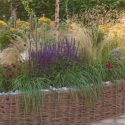
Do deer eat Sweet William? Sometimes, but this cottage-garden favorite has a strong resistance record. See how Rutgers rates it, when deer may still sample young plants, how to distinguish browsing from rabbit or slug damage, and when a missing stem is harmless sampling rather than a problem that needs protection.



If deer visit your garden, Sweet William is one of the better lower-browse choices for a cottage border. Deer can eat Sweet William, but Dianthus barbatus has a strong deer-resistance record and is usually browsed far less heavily than many familiar garden flowers.
Rutgers rates Sweet William B – Seldom Severely Damaged, while North Carolina State Extension lists it as resistant to both deer and rabbits. That does not mean every flower stem will remain untouched. A hungry deer may still take an exploratory bite, especially from young or newly planted Sweet William.
The important distinction is between sampling and repeated browsing. One missing bloom rarely matters. Plants that repeatedly lose their fresh shoots or flower stems may need temporary protection.
Do deer eat Sweet William? Sometimes, but Sweet William (Dianthus barbatus) is generally deer resistant. Rutgers rates it B – Seldom Severely Damaged, and NC State lists it as resistant to deer and rabbits. Young plants may still be sampled when deer pressure is high or other food is scarce.
Sweet William has one of the clearer resistance records among traditional cottage-garden flowers.
Rutgers places Dianthus barbatus in category B – Seldom Severely Damaged. That wording is more useful than simply calling the plant “deer-proof.” It acknowledges that browsing can happen while making clear that serious damage is not typical.
North Carolina State Extension independently lists Sweet William as resistant to both deer and rabbits. Gardenia also records the species as deer resistant.
In practical terms, Sweet William is a lower-browse plant, not an untouchable one. A deer may clip a stem and never return. That is very different from a plant that is repeatedly eaten back whenever fresh growth appears.
Gardenia’s Sweet William Browse Check: distinguish sampling from a pattern. One damaged stem is usually incidental. Repeated loss of flower stems or new shoots is when protection becomes worthwhile.
It is tempting to explain deer resistance with one tidy answer – scent, taste, foliage texture, or plant chemistry – but deer preferences are rarely that simple. For Sweet William, the strongest evidence is the browsing record itself.
Rutgers finds the species is seldom severely damaged, and NC State independently classifies it as deer resistant. Those observations are more useful than assigning Sweet William’s resistance to a single unproven trait.
Its lower browse risk also applies only to Sweet William itself. Planting Dianthus around a vulnerable plant does not create a protective barrier. Deer can walk past an untouched clump of Sweet William and eat the Hostas, tulips, roses, or daylilies beside it.
Sweet William is deer resistant, not deer repellent. Grow it because deer tend to browse it less, not because you expect it to protect neighboring plants.
Even a flower with a good resistance record can be tested when conditions change. Tender new growth is easier to browse than mature foliage, and a small transplant offers little woody or older growth for a deer to avoid.
Sweet William is more likely to be sampled when:
If one stem disappears and the rest of the planting carries on normally, monitoring may be all that is needed. Repeated clipping of new shoots or flower stems is the point at which browsing becomes a real problem.
Before reaching for deer repellent, look closely at what happened to the plant. Sweet William has several potential visitors, and the damage they leave behind is not identical.
Tracks, droppings, or similar browsing on nearby plants strengthen the case for deer. A few small holes in individual leaves usually point elsewhere.
Look at the type of damage, not simply the fact that something was eaten. Missing shoot tips and ragged flower stems fit deer browsing. Small holes, shredded leaf edges, or low clean cuts suggest another visitor.
Match the response to the amount of damage. A resistant plant does not need intensive protection because of one exploratory bite.
Pay attention to fresh growth too. A repellent applied earlier in the season does not automatically protect stems and leaves that emerged afterward. Reapplication should follow the label, weather conditions, and new growth rather than an arbitrary calendar.
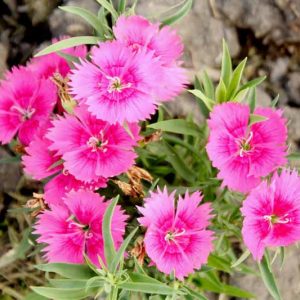
Sweet William is generally grown as a biennial or short-lived perennial and performs best in sun and fertile, well-drained soil. Most plants stay around 12-24 inches tall, making them easy to use in cottage borders, cutting gardens, containers, and pollinator plantings.
Once the site suits Sweet William, flower color, fragrance, height, and garden role matter more than trying to rank cultivars by deer resistance. These Gardenia selections offer several distinctly different looks.
There is no need to hunt for the “most deer-resistant” Sweet William. Once you are choosing within Dianthus barbatus, select the plant that gives you the flower color, height, fragrance, and garden effect you actually want.
Sweet William is a good lower-browse choice, but it still has to suit your garden.
Use the Gardenia Plant Finder to find deer-resistant flowers suited to your sun, soil, drainage, climate, bloom season, and available space. Browse Deer-Resistant Garden Ideas for inspiration, then use the Garden Design Tool to see how Sweet William and other lower-browse plants work together in a complete planting.
Deer may occasionally eat Sweet William, but Dianthus barbatus has a good deer-resistance record. Rutgers rates it B – Seldom Severely Damaged, while North Carolina State Extension lists it as deer and rabbit resistant.
Yes. Sweet William is generally deer resistant. Deer may still sample young plants or tender growth, but severe repeated browsing is uncommon.
North Carolina State Extension also lists Sweet William as rabbit resistant. Hungry rabbits may occasionally sample young plants, so resistance should not be treated as a guarantee.
Usually, yes, if damage is modest. Sweet William can continue growing after losing some leaves or flower stems. Repeated browsing on young plants may justify temporary protection.
Deer often remove shoot tips or flower stems and may leave torn or ragged tissue. Small holes, chewed leaf edges, or low clean cuts are more likely to indicate insects, slugs, snails, or rabbits.
Minor browsing usually needs no treatment. If deer repeatedly return to young plants, use a temporary barrier or a labeled deer repellent. Under heavy deer pressure, fencing or other physical exclusion is more dependable.
Sweet William is commonly grown as a biennial or short-lived perennial. In favorable conditions it may reseed, allowing Sweet William to persist in the garden from year to year.
Updated: September 2026 – Reviewed by Gardenia Editors
| Hardiness |
5 - 9 |
|---|---|
| Plant Type | Perennials |
| Plant Family | Caryophyllaceae |
| Genus | Dianthus |
| Exposure | Full Sun |
| Maintenance | Low |
| Soil Type | Chalk, Loam, Sand |
| Soil pH | Alkaline, Neutral |
| Soil Drainage | Well-Drained |
| Characteristics | Fragrant |
| Tolerances | Deer |
| Garden Styles | City and Courtyard, Coastal Garden, Cutting Garden, Gravel and Rock Garden, Informal and Cottage, Mediterranean Garden |
Create a membership account to save your garden designs and to view them on any device.
Becoming a contributing member of Gardenia is easy and can be done in just a few minutes. If you provide us with your name, email address and the payment of a modest $25 annual membership fee, you will become a full member, enabling you to design and save up to 25 of your garden design ideas.
Join now and start creating your dream garden!