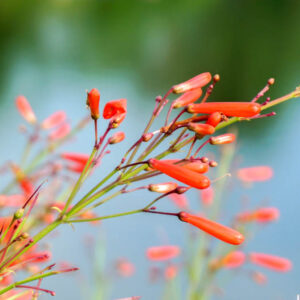
Do deer eat Penstemon? Usually not heavily, but no beardtongue is completely deer-proof. Learn how deer resistant Penstemon really is, which species have the strongest resistance records, when browsing is most likely, and how to protect young plants while choosing varieties that fit your climate, soil, and garden style.


If you are thinking about planting Penstemon in a deer-prone garden, the answer is encouraging but not absolute. Deer may eat Penstemon, but many species and cultivars are considered relatively deer resistant. Some are rarely bothered in one garden and sampled in another.
That variation matters. Penstemon is a large genus, and it is more accurate to judge deer resistance at the species or cultivar level than to assume every beardtongue behaves the same way.
For gardeners, the practical takeaway is simple: Penstemon is often a good lower-browse choice, but it should not be treated as untouchable. Local deer pressure, season, drought, available forage, and the particular Penstemon you grow can all influence what happens.
Do deer eat Penstemon? Sometimes. Many Penstemon species and cultivars are considered deer resistant or deer tolerant, but resistance varies. Deer are more likely to browse plants when pressure is high, other food is scarce, or tender new growth is available. Choose species with documented resistance and protect plants if browsing becomes repeated.
Penstemon is often a good choice for deer-prone gardens, but there is no single deer-resistance rating that accurately describes the entire genus.
Resistance varies by species, cultivar, local deer pressure, season, weather, and available forage. A plant that is usually ignored may still be sampled during drought, winter food shortages, or periods of heavy browsing pressure.
North Carolina State Extension illustrates that nuance with Penstemon canescens. It classifies the species as moderately resistant to deer damage, while also noting that white-tailed deer may browse the foliage heavily. That is a useful reminder that deer resistant does not mean consistently untouched.
For gardeners, the best approach is to check the record of the specific Penstemon you want to grow rather than assuming every beardtongue behaves the same way.
Gardenia’s Penstemon Deer Rule: Treat Penstemon as lower-risk, not untouchable. One exploratory bite does not mean the plant is a deer favorite. Repeated feeding is the signal that protection needs to increase.
If deer resistance is an important part of your plant selection, start with species or cultivars that have a documented record rather than relying on the genus name alone.
| Hardiness |
3 - 10 |
|---|---|
| Climate Zones | 1, 1A, 1B, 2, 2A, 2B, 3, 3A, 3B, 4, 5, 6, 7, 8, 9, 10, 11, 12, 13, 14, 15, 16, 17, 18, 19, 20, 21, 22, 23, 24 |
| Plant Type | Perennials, Shrubs |
| Plant Family | Plantaginaceae |
| Genus | Penstemon |
| Exposure | Full Sun, Partial Sun |
| Season of Interest | Spring (Mid, Late), Summer (Early, Mid, Late), Fall |
| Height | 1' - 6' (30cm - 180cm) |
| Spread | 1' - 5' (30cm - 150cm) |
| Maintenance | Low |
| Water Needs | Average, Low |
| Soil Type | Clay, Loam, Sand |
| Soil pH | Acid, Alkaline, Neutral |
| Soil Drainage | Well-Drained |
| Characteristics | Showy, Cut Flowers |
| Tolerances | Deer |
| Attracts | Bees, Butterflies, Hummingbirds |
| Landscaping Ideas | Beds And Borders, Patio And Containers, Wall-Side Borders |
| Garden Styles | City and Courtyard, Coastal Garden, Gravel and Rock Garden, Informal and Cottage |
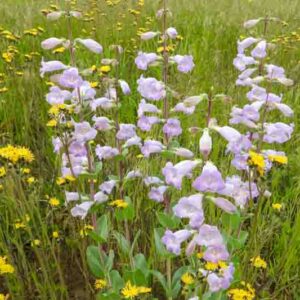
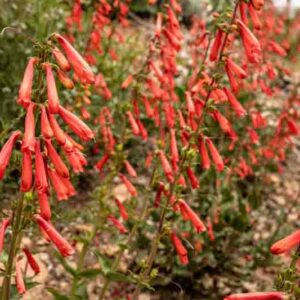
These plants are not interchangeable. Penstemon grandiflorus fits naturally into prairie-style plantings, while P. palmeri and P. spectabilis are better suited to dry western conditions. Choosing for deer resistance without matching climate, drainage, and mature size can simply trade one garden problem for another.
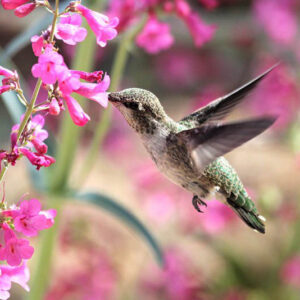
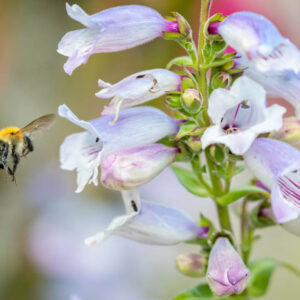
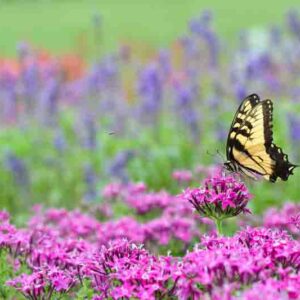
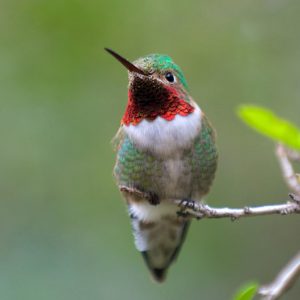
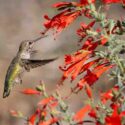
Many Penstemons also add strong wildlife value, with tubular flowers that attract hummingbirds, bees, and other pollinators. That makes them especially useful where you want lower browse risk without sacrificing color or ecological value.
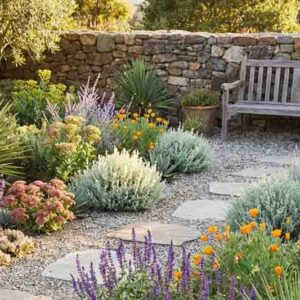
Looking for planting inspiration? Browse Gardenia’s deer-resistant garden ideas featuring Penstemon to see how beardtongues can be combined with other lower-browse plants in attractive, garden-ready combinations.
Deer resistance is not a fixed property in the way flower color or mature height is. Browsing is an interaction between the plant and the animals using the landscape.
A Penstemon that normally receives little attention may be sampled when:
This is why gardeners can report completely different experiences with the same plant. One population may leave it alone for years, while another herd browses it during a difficult season.
The response should depend on whether you are seeing occasional sampling or a developing feeding habit.
Repellents can help reduce browsing, but follow the product label rather than using an arbitrary reapplication schedule. Rain, irrigation, fresh growth, and local deer pressure can all affect performance.
If several supposedly resistant plants are being eaten, the problem is no longer really a Penstemon problem. It is evidence that deer pressure in the garden is high enough to overwhelm normal plant preferences.
For a broader strategy, see Gardenia’s complete Deer-Resistant Plants Guide.
A deer-resistant Penstemon is only a good choice if it also fits the site. Gardenia’s Penstemon Deer-Smart Match looks at five things together: documented browse resistance, climate, drainage, mature size, and garden role.
A Great Plains beardtongue and a California native may both resist browsing, but they are not interchangeable. Match the plant to your conditions first, then decide whether you want hummingbird value, drought tolerance, native habitat, vertical color, or a compact plant for a rock or gravel garden.
The Gardenia question: “Which lower-browse Penstemon actually fits this garden?”
Use the Gardenia Plant Finder to narrow Penstemons by deer resistance, hardiness, sun, soil, drainage, water needs, mature size, and wildlife value. If you are planning a complete planting rather than choosing one plant, use the Garden Design Tool to check compatibility, mature dimensions, and seasonal interest before planting.
They may. Many Penstemon species and cultivars are considered deer resistant or deer tolerant, but resistance varies. Browsing becomes more likely when deer pressure is high, other forage is scarce, or growth is especially tender.
Many Penstemons are deer resistant, but the strength of that resistance varies by species and cultivar. It is better to check the record of the specific Penstemon you want to grow rather than treating the entire genus the same way.
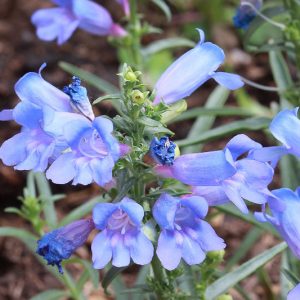
Penstemons with good deer-resistance records include Penstemon grandiflorus, Penstemon eatonii, Penstemon palmeri, Penstemon spectabilis, Penstemon heterophyllus, and selected hybrids and cultivars.
Yes. North Carolina State Extension describes Penstemon canescens as moderately resistant to deer damage but also notes that white-tailed deer may browse its foliage heavily. This illustrates why deer resistance should not be treated as a guarantee.
They may sample young plants, particularly where deer pressure is high or other food is limited. Temporary cages or another physical barrier can help vulnerable new plants establish.
Occasional browsing may only require monitoring or a labeled repellent. If deer return repeatedly, a cage or barrier is more dependable. Under heavy garden-wide pressure, physical exclusion provides stronger protection than plant resistance alone.
Yes, many Penstemons are excellent candidates. They combine useful deer resistance with tubular flowers that provide nectar for hummingbirds, bees, and other pollinators. Choose species suited to your climate, soil, and drainage.
Updated: September 2026 – Reviewed by Gardenia Editors
| Hardiness |
3 - 10 |
|---|---|
| Climate Zones | 1, 1A, 1B, 2, 2A, 2B, 3, 3A, 3B, 4, 5, 6, 7, 8, 9, 10, 11, 12, 13, 14, 15, 16, 17, 18, 19, 20, 21, 22, 23, 24 |
| Plant Type | Perennials, Shrubs |
| Plant Family | Plantaginaceae |
| Genus | Penstemon |
| Exposure | Full Sun, Partial Sun |
| Season of Interest | Spring (Mid, Late), Summer (Early, Mid, Late), Fall |
| Height | 1' - 6' (30cm - 180cm) |
| Spread | 1' - 5' (30cm - 150cm) |
| Maintenance | Low |
| Water Needs | Average, Low |
| Soil Type | Clay, Loam, Sand |
| Soil pH | Acid, Alkaline, Neutral |
| Soil Drainage | Well-Drained |
| Characteristics | Showy, Cut Flowers |
| Tolerances | Deer |
| Attracts | Bees, Butterflies, Hummingbirds |
| Landscaping Ideas | Beds And Borders, Patio And Containers, Wall-Side Borders |
| Garden Styles | City and Courtyard, Coastal Garden, Gravel and Rock Garden, Informal and Cottage |
Create a membership account to save your garden designs and to view them on any device.
Becoming a contributing member of Gardenia is easy and can be done in just a few minutes. If you provide us with your name, email address and the payment of a modest $25 annual membership fee, you will become a full member, enabling you to design and save up to 25 of your garden design ideas.
Join now and start creating your dream garden!