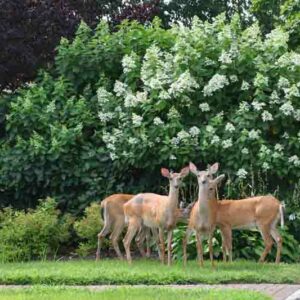
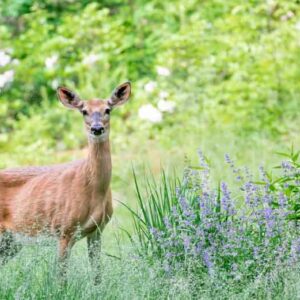
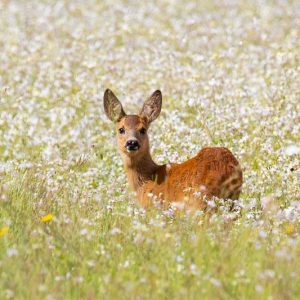
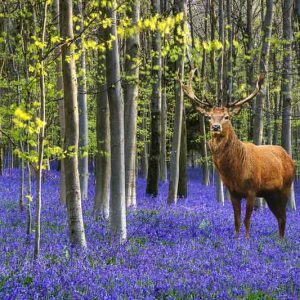
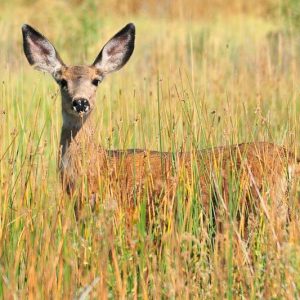
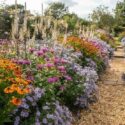
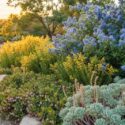
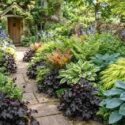
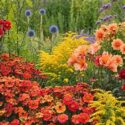
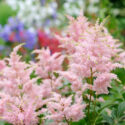
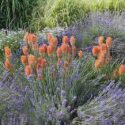
Build a native garden that supports pollinators, birds, and local wildlife without becoming an easy meal for deer. Discover deer-resistant native flowers, shrubs, grasses, ferns, sedges, and groundcovers for sun and shade - plus how to match regional nativity, browsing resistance, site conditions, and ecological value before planting.


Native plants are often recommended as the foundation of a resilient, wildlife-friendly garden. But when deer regularly browse your yard, choosing natives becomes a little more complicated. A plant can be perfectly native to your region and still be something deer are very happy to eat.
That is why the most useful question is not simply, “Is this plant native?” It is: Is it native to my region, suited to my site, and reasonably resistant to deer browsing?
Fortunately, there are many deer-resistant native plants that can bring flowers, foliage, berries, seeds, winter structure, and wildlife value to the garden without becoming the first plants deer target. The best choices range from aromatic mountain mints and bee balms to tough native grasses, woodland ferns, sedges, evergreen shrubs, and flowering plants for both sun and shade.
Deer-resistant native plants are species indigenous to a particular region that deer tend to browse less readily than more palatable plants. No native plant is completely deer-proof. Browsing can change with deer density, season, drought, local herd preferences, tender new growth, and the availability of other food.
| Garden Situation | Strong Starting Points |
|---|---|
| Sunny pollinator garden | Wild bergamot, mountain mint, butterfly weed |
| Dry sunny sites | Little bluestem, butterfly weed, Eastern columbine |
| Woodland shade | Christmas fern, Pennsylvania sedge, wild ginger |
| Native shrubs | Summersweet, spicebush, mountain laurel |
| Native grasses | Little bluestem, switchgrass |
This is the most important distinction to make before choosing plants. Many native species are part of the natural diet of white-tailed deer. Some are browsed lightly, some only occasionally, and others can be heavily damaged where deer populations are high.
In other words, native status and deer resistance are separate characteristics. A plant may be ecologically valuable and perfectly adapted to your region yet still need protection from deer.
That is why choosing deer-resistant natives works best when you use several filters rather than relying on one label.
Sunny native gardens offer some of the richest choices because many prairie and meadow plants have aromatic foliage, coarse textures, tough stems, or other traits that make them less attractive to deer.
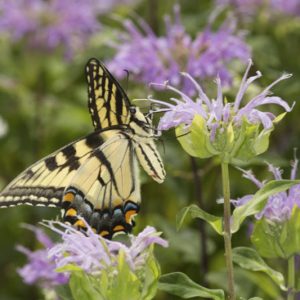
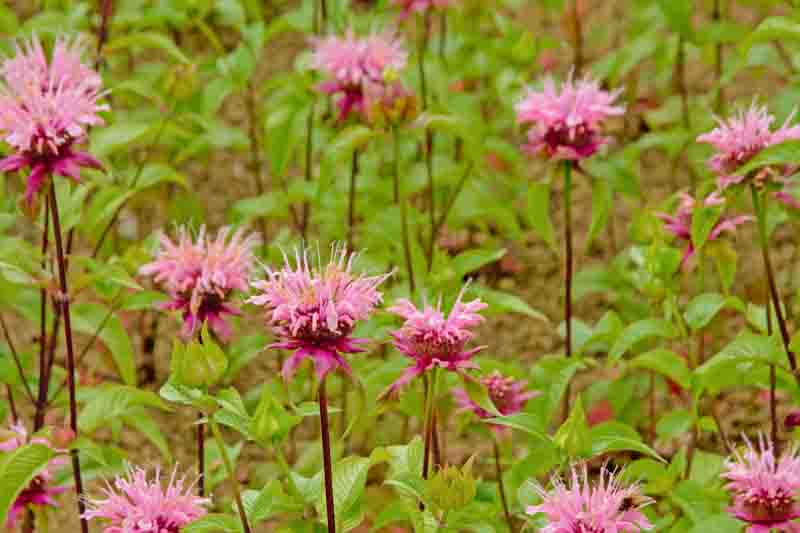
Wild bergamot is one of the strongest all-around choices for a deer-resistant native pollinator garden. Its aromatic foliage is generally avoided by deer, while lavender flowers draw bees, butterflies, and hummingbirds through summer.
It grows best in sun or light shade and handles dry to average, well-drained soil. Give it good air circulation because powdery mildew can become a problem in humid conditions. It spreads by rhizomes and self-seeding, so it is most convincing where there is room for a natural colony to develop.
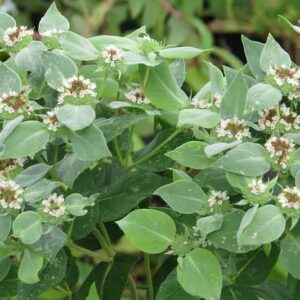
Clustered mountain mint is an outstanding pollinator plant with strongly aromatic foliage and silver-white bracts that shimmer above the leaves in summer.
It attracts an extraordinary range of bees, wasps, butterflies, and other beneficial insects and is usually highly resistant to deer browsing. The tradeoff is vigor: it spreads assertively by rhizomes, so give it room or be prepared to control the edges of the colony.
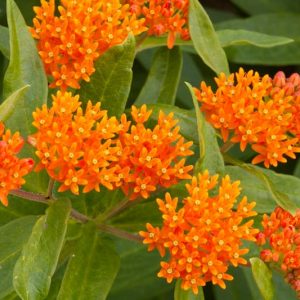
Butterfly weed brings intense orange flowers to hot, sunny native gardens while serving as a host plant for monarch caterpillars and a nectar source for many pollinators.
It thrives in well-drained soil and is especially useful in dry meadows, prairie gardens, and gravelly sites. Its deep taproot makes established plants drought tolerant but also means they dislike unnecessary transplanting.
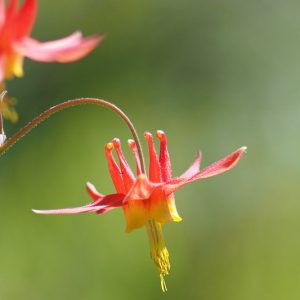
Eastern columbine is particularly useful at woodland edges, rocky slopes, and lightly shaded borders. Its red-and-yellow spring flowers are magnets for hummingbirds, while the foliage is generally much less appealing to deer than many other spring perennials.
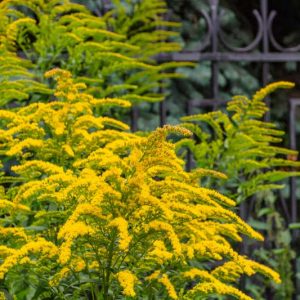
Rough goldenrod provides a tremendous late-season wildlife payoff. Arching yellow flower sprays feed bees, butterflies, and other insects in late summer and fall, while seeds may support birds later in the season.
The species spreads by rhizomes and self-seeding, making it better suited to naturalistic plantings than tiny borders. More restrained cultivars such as ‘Fireworks’ are easier to manage where space is limited.
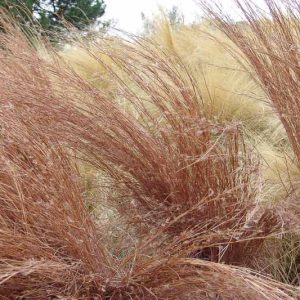
Little bluestem is a native warm-season grass with blue-green summer foliage, coppery fall color, delicate seed heads, and strong winter presence.
It thrives in full sun and well-drained soil and handles heat, drought, lean soils, and deer pressure remarkably well. It is especially useful when you want a native planting to have clear structure rather than reading as an undifferentiated meadow.
| Genus | Aquilegia, Asarum, Asclepias, Carex, Clethra, Monarda, Pachysandra, Panicum, Polystichum, Schizachyrium, Solidago |
|---|---|
| Native Plants | United States |
| Tolerance | Deer |
Shade is where native planting can provide especially good alternatives to traditional deer favorites. Instead of relying on hostas and other frequently browsed plants, a woodland palette can combine ferns, sedges, low groundcovers, and flowering natives into a rich layered planting.
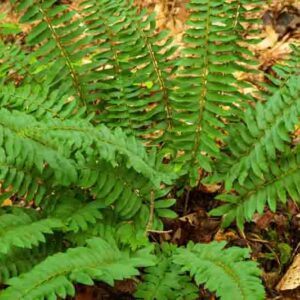
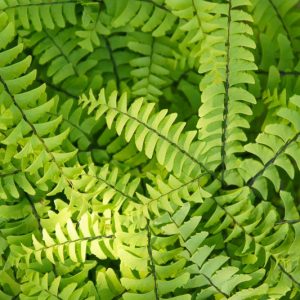
Christmas fern is one of the most dependable native ferns for deer-prone shade. Its glossy evergreen fronds provide year-round texture, and established plants tolerate dry, rocky woodland conditions better than many moisture-loving ferns.
It grows in part to full shade, forms tidy clumps rather than invasive colonies, and works beautifully beneath trees, along woodland slopes, and between native shrubs.
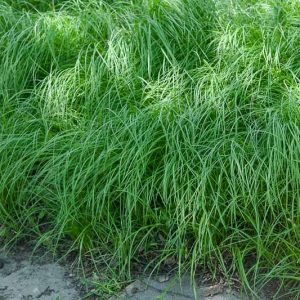
Pennsylvania sedge forms a soft, grass-like layer beneath trees. It is particularly useful in dry to average woodland shade and can replace conventional groundcovers in naturalistic eastern native gardens.
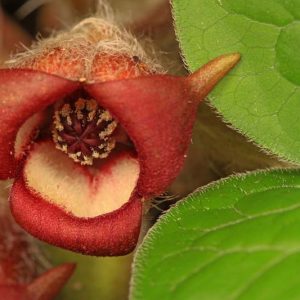
Wild ginger spreads gradually into colonies of broad, heart-shaped foliage. It prefers cool woodland conditions and is useful where a softer leafy ground layer is wanted beneath shrubs and taller perennials.
Despite its common name, this is not culinary ginger and should not be used as a substitute for it.
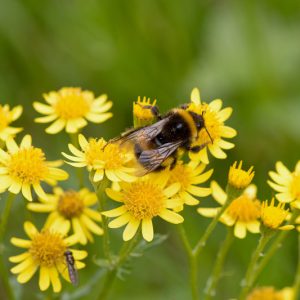
Golden ragwort can form a substantial colony in moist to average shade, producing masses of bright yellow flowers in spring. It is especially useful along woodland edges, in rain gardens, and in naturalized areas where spreading growth is welcome.
Northern maidenhair fern brings unusually delicate texture to moist woodland shade. Its dark stems and fan-shaped fronds contrast beautifully with broad-leaved groundcovers and sedges, though it is less tolerant of drying than Christmas fern.
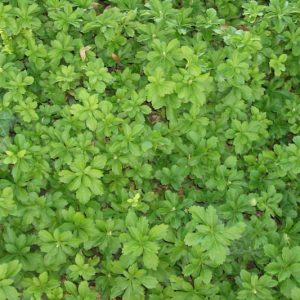
Allegheny spurge is a slow-spreading native groundcover for shaded woodland gardens in parts of the southeastern United States. Its mottled leaves and fragrant spring flowers make it an elegant alternative to more aggressive traditional groundcovers.
Woody plants give a native garden structure through every season, but this is also where deer pressure can become expensive. Tender twigs, buds, young foliage, and trunks may be vulnerable even when the mature plant is considered relatively resistant.
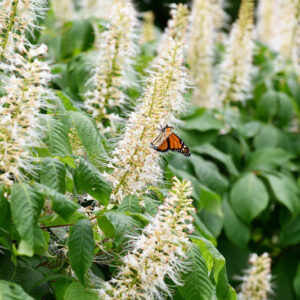
Summersweet is a fragrant native shrub for sun to shade, with white or pink summer flower spikes that attract bees, butterflies, hummingbirds, and other pollinators.
It performs especially well in acidic, moisture-retentive soil and is useful near ponds, streams, rain gardens, and woodland edges. It is generally considered one of the better native shrub choices where deer pressure is a concern.
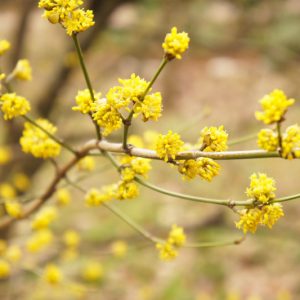
Spicebush is a multi-stemmed woodland shrub with small yellow flowers in early spring, rich yellow fall color, and red berries on female plants when pollinated.
It thrives in part shade and moisture-retentive soil and is an important host plant for the spicebush swallowtail butterfly. Deer resistance is more nuanced than with the strongest plants on this list: established plants may be browsed less heavily, but deer can feed on twigs and foliage, particularly on young shrubs or where deer pressure is high. Protect new plants if browsing is frequent in your garden.
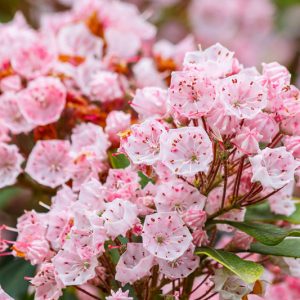
Mountain laurel is one of the most beautiful broadleaf evergreen shrubs native to eastern North America. Intricate spring flowers appear above leathery foliage, making it a superb structural plant for acidic woodland gardens.
Mountain laurel is generally considered resistant to deer damage, but it should not be described as untouchable. Deer may browse leaves and young twigs, particularly during winter, early spring, or periods of heavy pressure. Give it acidic, organic, well-drained soil and protection from harsh exposure. All parts are toxic if ingested.
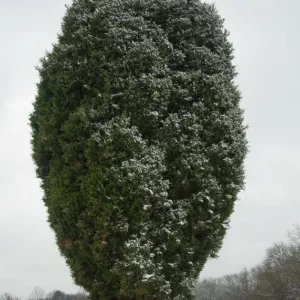
Eastern red cedar is an adaptable evergreen native tree that supplies winter cover and berry-like cones for wildlife. Its aromatic foliage is generally less palatable than many broadleaf woody plants.
Yet even here, “deer resistant” does not mean untouched. Lower branches may be browsed under severe pressure, and young trunks can be damaged by antler rubbing.
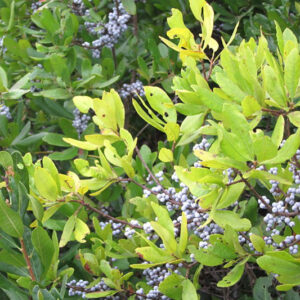
Northern bayberry is a tough, aromatic native shrub from eastern North America. Its gray-green foliage is highly resistant to deer browsing, while female plants can produce waxy gray berries that provide food for birds.
It is especially valuable in challenging sites because it tolerates drought, poor sandy soils, wind, and salt once established. It can spread by suckers, so give it room where a natural colony is welcome.
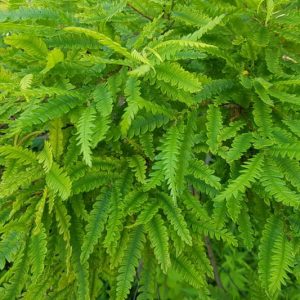
Sweet fern is not actually a fern but a low, spreading native shrub with narrow, deeply cut, aromatic leaves. Deer usually leave it alone, and it performs particularly well in sunny to partly shaded sites with sandy, gravelly, acidic, well-drained soil.
It is a useful choice for dry banks, naturalized areas, and difficult poor soils, but it can spread into broad colonies where conditions suit it.
Native grasses and sedges are among the easiest ways to add movement, winter structure, and habitat to a deer-resistant landscape.
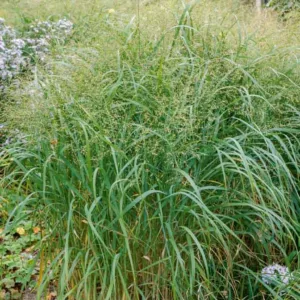
Little bluestem is excellent for hot, dry sites and brings exceptional autumn color. Switchgrass is taller and more architectural, with airy flower panicles and strong winter presence.
For shade, Pennsylvania sedge creates a completely different effect, forming a low, flowing ground layer beneath deciduous trees.
These plants also perform ecological jobs that flowering perennials do not necessarily provide in the same way. Depending on species and site, they can supply seed, nesting material, shelter, overwintering habitat, soil cover, and structure long after summer flowers have faded.
A useful native-plant guide also needs to tell you what not to assume.
Some ecologically valuable natives are highly attractive to deer. Native azaleas, lilies, Solomon’s seal relatives, and many tender woodland plants can suffer substantial browsing where deer populations are high.
Even familiar garden favorites such as coneflowers and black-eyed Susans can be variable. They may perform beautifully in a garden with moderate deer pressure and be repeatedly browsed a few miles away, especially when plants are young or producing fresh growth.
The practical lesson is simple: do not downgrade a plant’s ecological value simply because deer like it, but do not call it reliably deer resistant either. If a native plant matters to your garden for pollinators, host-plant value, berries, seed, or another ecological purpose, protect it rather than pretending the browsing risk does not exist.
A strong native garden is not built from a list of isolated species. It works in layers and over time.
Start with woody structure where space allows. Add grasses and substantial perennials for height and movement. Use ferns, sedges, and low woodland plants to cover the ground. Then stagger flowering periods so different plants provide nectar and pollen through the growing season.
In a sunny eastern native planting, for example, wild bergamot, mountain mint, butterfly weed, and little bluestem contribute different functions rather than simply repeating the same one.
Butterfly weed provides monarch host-plant value. Mountain mint is exceptional for nectar-feeding insects. Little bluestem adds seed, shelter, and winter structure. Wild bergamot supplies summer nectar and a substantial flowering layer.
In shade, Christmas fern, Pennsylvania sedge, wild ginger, and spicebush create an entirely different woodland community, with foliage, cover, host-plant value, and seasonal interest taking precedence over the prairie-style flower display.
Where practical, leave some stems and seed heads standing through winter. Allow fallen leaves to remain in garden beds instead of removing every trace of organic material. Native gardens support wildlife not only through flowers but through stems, leaves, seed, fruit, shelter, host relationships, and overwintering habitat.
For a broader introduction to native gardening, see Gardenia’s What Are Native Plants? and Native Garden Design Guide.
A native plant is only a good deer-resistant choice if it also belongs in your region and suits the site. Gardenia’s Deer-Smart Native Match looks at regional nativity, deer resistance, growing conditions, mature size, ecological value, and garden goals together.
The key question: “Is this plant native here, relatively low-browse, and genuinely suited to this garden?”
Use the Gardenia Plant Finder to find deer-resistant native plants suited to your climate, light, soil, drainage, moisture, and available space. Browse Native Plant Garden Ideas for inspiration, then use the Garden Design Tool to see how your choices work together in a complete planting.
| Garden Need | Good Starting Points | Watch For |
|---|---|---|
| Hot, dry sun | Little bluestem, butterfly weed | Poor drainage |
| Sunny pollinator border | Wild bergamot, mountain mint, rough goldenrod | Rhizomatous spread and mature width |
| Dry woodland shade | Christmas fern, Pennsylvania sedge | Tree-root competition during establishment |
| Moist woodland garden | Wild ginger, golden ragwort, spicebush | Native range, moisture requirements, and browsing of young spicebush |
| Evergreen native structure | Mountain laurel, Eastern red cedar | Soil requirements, mature size, and young-plant protection |
For a broader selection of shrubs, perennials, grasses, bulbs, trees, and groundcovers, see Gardenia’s Deer-Resistant Plants Guide. For native plant selection and design beyond deer resistance, explore Native Plants for Gorgeous Gardens.
Good choices depend on your region, but examples include wild bergamot, mountain mint, butterfly weed, little bluestem, Christmas fern, Pennsylvania sedge, summersweet, and mountain laurel. Always confirm both local native status and suitability for your site.
No. Native status and deer resistance are separate traits. Many native species are part of the natural diet of white-tailed deer. Choose plants for both regional nativity and browsing resistance when deer pressure is high.
Wild bergamot, clustered mountain mint, butterfly weed, rough goldenrod, and Eastern columbine are excellent examples, depending on region and growing conditions. Different plants support different pollinators and ecological functions.
Depending on your region, useful choices include Christmas fern, Pennsylvania sedge, wild ginger, golden ragwort, Allegheny spurge, and maidenhair fern. Spicebush is also useful in woodland gardens, although young plants may be browsed.
Little bluestem and switchgrass are two useful native grasses that deer generally avoid. Both prefer sun, provide winter structure, and support wildlife, although their moisture and soil preferences differ.
Depending on region, summersweet and mountain laurel can be relatively deer resistant. Spicebush may become less vulnerable as it matures, but young plants and fresh growth can still be browsed. No native shrub is completely deer-proof.
Check state, ecoregional, or local native-plant references rather than relying on a general North American native label. A species native to one part of the United States may be outside its natural range in another.
No. Deer-resistant native plants are less likely to be browsed, but deer may sample almost any plant when populations are high, food is scarce, drought reduces forage, or tender new growth is available.
Updated: September 2026
| Genus | Aquilegia, Asarum, Asclepias, Carex, Clethra, Monarda, Pachysandra, Panicum, Polystichum, Schizachyrium, Solidago |
|---|---|
| Native Plants | United States |
| Tolerance | Deer |
Create a membership account to save your garden designs and to view them on any device.
Becoming a contributing member of Gardenia is easy and can be done in just a few minutes. If you provide us with your name, email address and the payment of a modest $25 annual membership fee, you will become a full member, enabling you to design and save up to 25 of your garden design ideas.
Join now and start creating your dream garden!
Create a membership account to save your garden designs and to view them on any device.
Becoming a contributing member of Gardenia is easy and can be done in just a few minutes. If you provide us with your name, email address and the payment of a modest $25 annual membership fee, you will become a full member, enabling you to design and save up to 25 of your garden design ideas.
Join now and start creating your dream garden!