Create Your Garden

Lavender Companion Plants: A Guide to Perfect Pairings

Pairing lavender with the right companion plants boosts pest control, attracts pollinators, and enhances beauty.
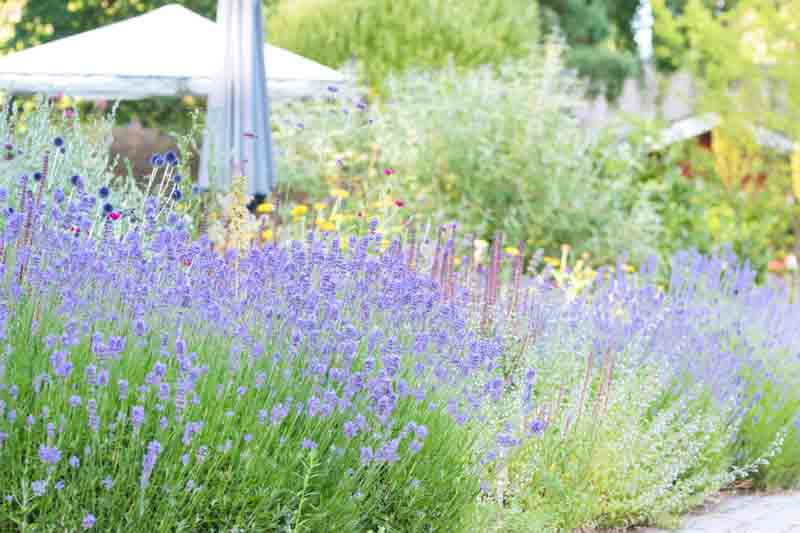
Lavender, Lavender Companion Plants, Lavender Flowers, Lavender Hedge, Lavender Garden

Perfect Partners for Lavender: The Ultimate Companion Planting Guide

Quick Facts — Drought-Tolerant Companion Plants for Lavender

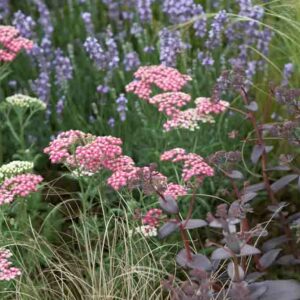
Lavender and yarrow in a dry border

Summary: Lavender (Lavandula spp.) thrives in full sun and dry, well-drained soils and makes a striking focal point in xeric and Mediterranean gardens. Companion plants that share its drought tolerance—like yarrow, sedum, coneflowers, cosmos, santolina, thyme, and red hot poker—help build low-water, pollinator-friendly, and pest-resilient planting schemes. These pairings add texture, color contrast, and continuous bloom while staying low-maintenance and water-wise. Key Benefit: Enhances pollinator attraction, suppresses pests, and creates long-lasting, visually appealing, drought-adapted borders.

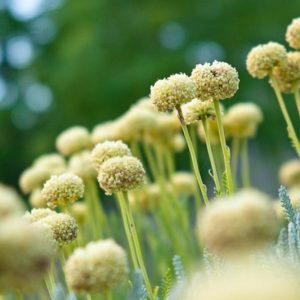
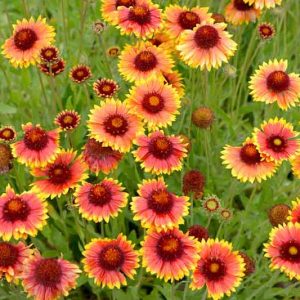
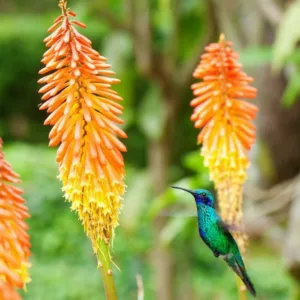
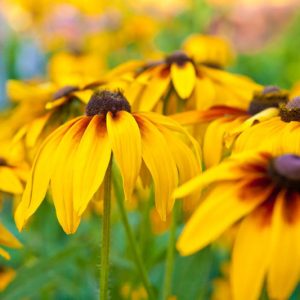
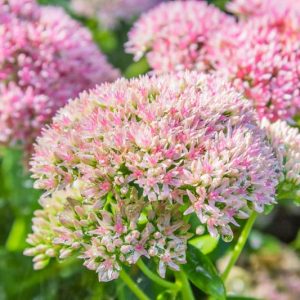
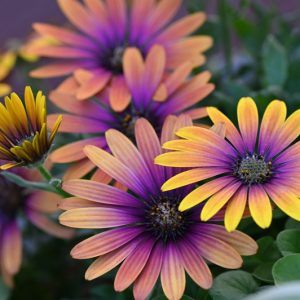
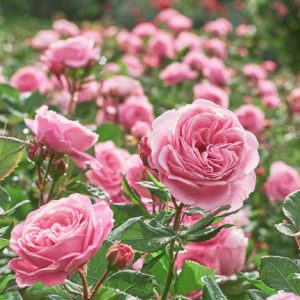
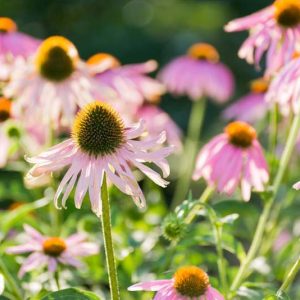
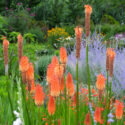
Companion Plant Groups Yarrow (Achillea), Sedum, Coneflower (Echinacea), Black-Eyed Susan, Cosmos, Santolina, Red Hot Poker (Kniphofia), Thyme, Rosemary, Salvia, Ornamental grasses, African Daisy (Osteopsermum).
Common Garden Uses Gravel/rock gardens, Mediterranean-style borders, wildflower meadows, container plantings, pollinator gardens, low-water cottage gardens.
Soil & Water Needs Well-drained, sandy or gravelly soils; low to moderate water once established; minimal irrigation.
Design Tips Group by height (tall behind, low at front), mix textures and bloom times to maintain seasonal interest; use gravel or stone edging to complement drought-tolerant designs.
Wildlife & Pest Notes Lavender and its companions attract bees, butterflies, and beneficial insects while helping repel pests such as moths and aphids. Deer and rabbit resistance varies, but many of the suggested companions are also less attractive to grazing animals.
Care (Quick)
  • Plant in full sun with excellent drainage; avoid heavy clay unless amended.
  • Water sparingly once plants are established—lavender and its drought-tolerant companions prefer infrequent, deep watering.
  • Prune lavender lightly each year to maintain shape and air circulation; deadhead or trim companions to prolong bloom and avoid legginess.
  • Use gravel or stone mulch to help keep soil dry and reflect heat; avoid rich, moisture-holding mulches near plant bases.

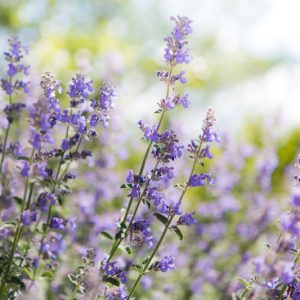
Lavender (Lavandula) is not only cherished for its aromatic flowers and essential oils but also serves as a valuable asset in the garden when paired with the right companion plants. It’s drought-tolerant, attracts pollinators, and offers a visually appealing addition to various landscapes. However, to maximize its benefits and promote a thriving garden ecosystem, pairing lavender with the right companion plants is essential.

Benefits of Companion Planting with Lavender

Pest Control: Lavender is known for its natural ability to repel pests like aphids, mosquitoes, and moths. Planting it alongside more susceptible plants can help keep these pests at bay, reducing the need for chemical pesticides. Attracting Pollinators: The fragrant flowers of lavender attract bees, butterflies, and other beneficial insects, enhancing the pollination of neighboring plants. This can lead to better yields in fruiting and flowering plants. Improved Growth Conditions: Lavender thrives in well-draining, sandy, or rocky soil, making it an excellent companion for drought-tolerant plants. It can help create a favorable microclimate for its companions, especially in full sun. Aesthetic Appeal: Lavender’s beautiful purple blooms and gray-green foliage can complement various plant colors and textures, enhancing the overall visual appeal of the garden. Soil Health: Lavender’s deep root system can help improve soil structure and drainage. When paired with shallow-rooted plants, lavender can promote healthier soil conditions.

30 Great Companion Plants for Lavender

When selecting companion plants for lavender, consider those that share similar growing conditions and can benefit from lavender’s pest-repellent qualities. Here’s a list of 30 plants that make excellent companions for lavender:

Guide Information

Hardiness 5 - 11
Heat Zones 5 - 8
Climate Zones 2, 3, 4, 5, 6, 7, 8, 9, 10, 11, 12, 13, 14, 15, 16, 17, 18, 19, 20, 21, 22, 23, 24
Plant Type Perennials, Shrubs
Plant Family Lamiaceae
Genus Lavandula
Exposure Full Sun
Season of Interest Spring (Mid, Late), Summer (Early, Mid, Late)
Maintenance Average
Water Needs Low
Soil Type Chalk, Loam, Sand
Soil pH Acid, Alkaline, Neutral
Soil Drainage Well-Drained
Characteristics Dried Arrangements, Cut Flowers, Fragrant, Showy
Tolerance Drought, Deer, Rabbit, Dry Soil, Rocky Soil
Attracts Bees, Butterflies
Landscaping Ideas Beds And Borders, Edging, Hedges And Screens, Patio And Containers
Garden Styles City and Courtyard, Coastal Garden, Gravel and Rock Garden, Informal and Cottage, Mediterranean Garden, Traditional Garden

Great Lavender Companion Plants

Discover More Lavender Companion Plants with Our Plant Finder!


Plants to Avoid Pairing with Lavender

Not all plants are suitable companions for lavender. Some require different soil types, light conditions, or moisture levels. Here are some plants to avoid:
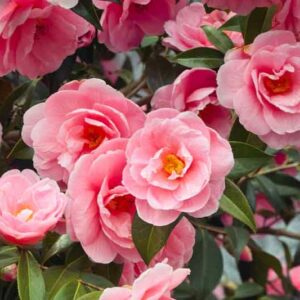
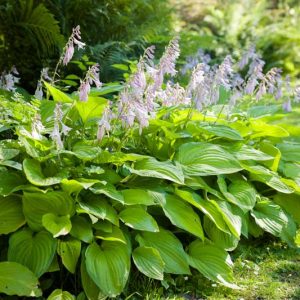
Bad Lavender Companion Plants

Garden Design with Lavender Plants

Lavender is a beautiful addition to any garden, and when paired with the right companion plants, it creates a harmonious and vibrant landscape. Below are design ideas incorporating recommended companion plants for lavender, focusing on enhancing aesthetics, functionality, and ecological benefits.
Cottage Garden Design

  • Layout: Create a whimsical, informal layout by grouping lavender with a mix of flowering perennials and herbs. Use a combination of echinacea, achillea, and sedum interspersed with lavender plants.
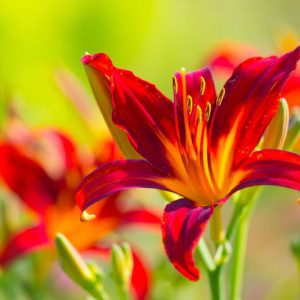
  • Color Scheme: Choose various colors to enhance visual appeal; combine lavender’s purple with the yellows of yarrow and the pinks or reds of coneflowers for a lively atmosphere.
  • Pathways: Add winding pathways using gravel or stepping stones lined with lavender to lead visitors through the garden, enhancing the cottage feel.

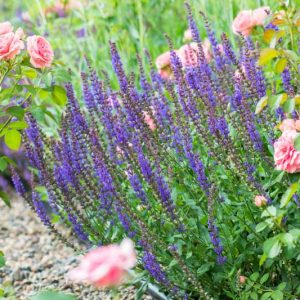
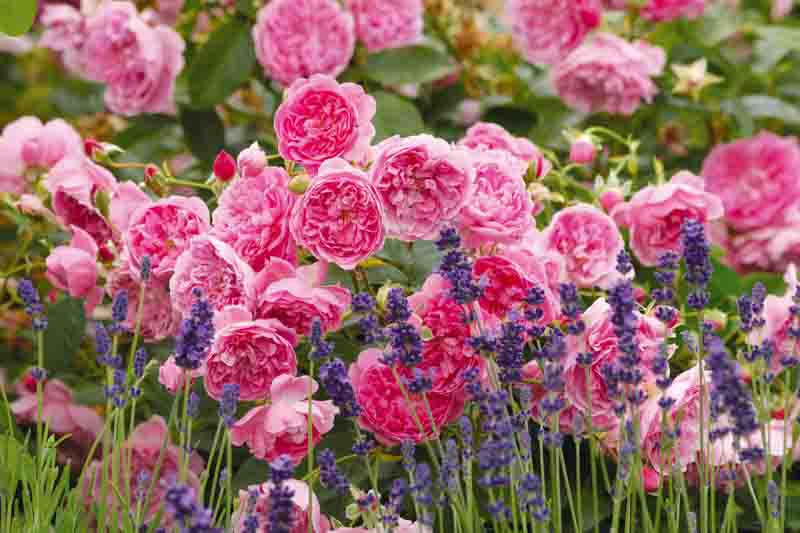
English Rose, Lavender, English Lavender, Harlow Carr Rose, English Rose, Harlow Carr, Pink RoseEnglish Rose ‘Harlow Carr’ and English Lavender ‘Hidcote’
Mediterranean Herb Garden

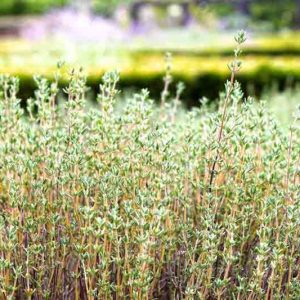
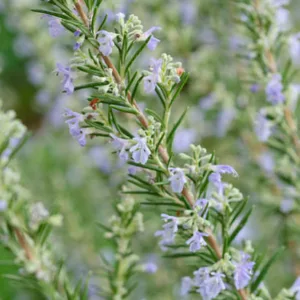
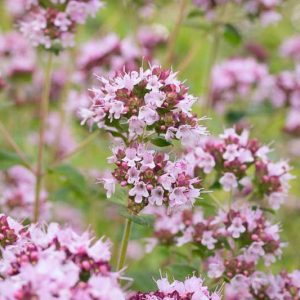
  • Layout: Design a sun-drenched herb garden featuring lavender at the center, surrounded by rosemaryoregano, thyme, and sage.
  • Soil and Drainage: Use raised beds or rocky soil to ensure proper drainage, mimicking lavender’s native Mediterranean habitat.
  • Textures: Incorporate different textures, such as the soft foliage of lavender against the more upright structure of rosemary, creating visual interest.

Formal Garden Border

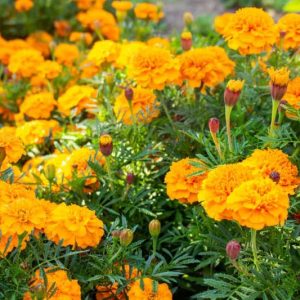
  • Layout: Create a structured border with lavender plants evenly spaced along a pathway, flanked by marigolds or black-eyed Susans for a burst of color.
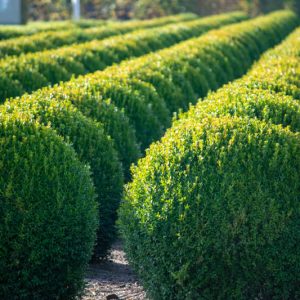
  • Design Elements: Use geometric shapes and symmetry to maintain a formal aesthetic. Consider low boxwood hedges or stone edging to define the space.
  • Seasonal Interest: Choose lavender varieties with staggered bloom times to maintain visual interest throughout the growing season.

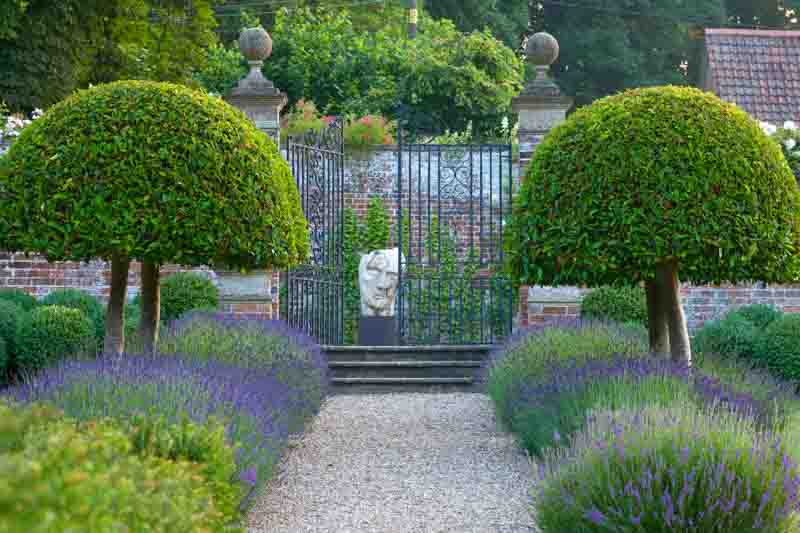
Lavender Path, Lavender Hedge, Bay Laurel, Mediterranean gardenPortugal Laurel (Prunus lusitanica) and English lavender (Lavandula angustifolia)
Pollinator Garden

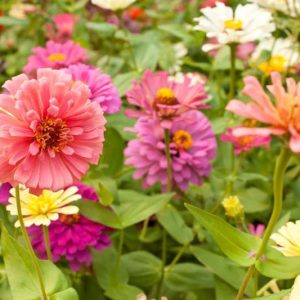
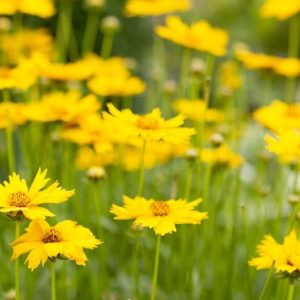
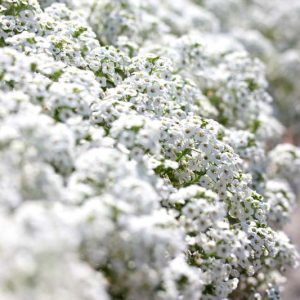
  • Layout: Focus on attracting bees and butterflies by planting lavender alongside coreopsis, alyssum, and zinnias.
  • Cluster Planting: Group these plants in clusters to create patches of color that are inviting to pollinators.
  • Diversity: Ensure a diversity of flower shapes and colors to attract a range of beneficial insects, enhancing the garden’s ecosystem.

Wildflower Meadow Style

  • Layout: Combine lavender with yarrow, coreopsis, and other drought-tolerant wildflowers to create a naturalistic meadow look.
  • Planting Technique: Use a mix of taller plants (like yarrow) with lavender and lower-growing flowers to create layers and depth.
  • Maintenance: Opt for a no-mow approach in certain areas, allowing wildflowers to self-seed and create a vibrant, ever-changing landscape.

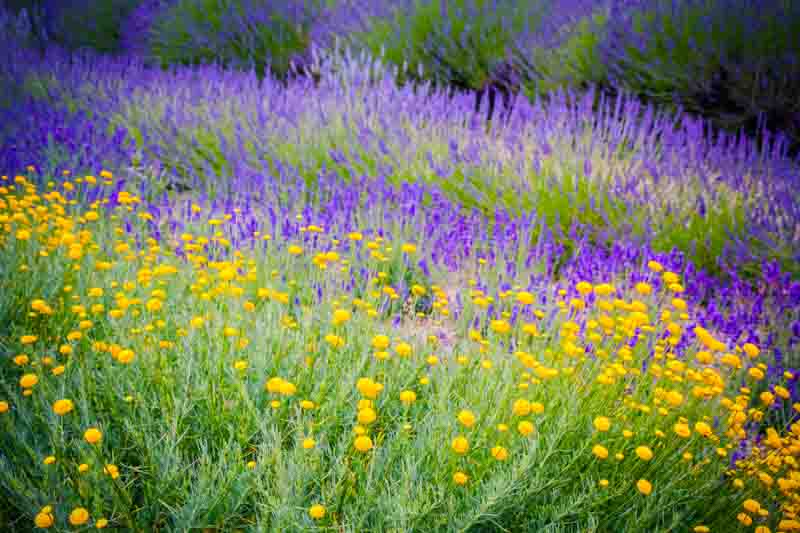
Green Santolina, English Lavender, Lavandula angustifolia, Santolina rosmarinifolia, Drought Tolerant Garden, Mediterranean Garden, Evergreen PlantsLavender and Santolina – The Perfect Xeriscape Duo

Container and Patio Design

  • Layout: Use large pots or troughs to house lavender, paired with companion plants like creeping thyme and sedum for ground cover.
  • Visual Appeal: Arrange pots in varying heights to create visual interest on patios or entryways. Consider adding ornamental grasses for added texture.
  • Accessibility: This design makes it easy to care for plants while enjoying the fragrance and beauty close to living spaces.


Get Great Garden Design Ideas with Lavender

Frequently Asked Questions

Why is it important to choose drought-tolerant companion plants for lavender?

Lavender naturally prefers dry, well-drained soils and full sun. Companion plants that also tolerate dry conditions avoid competition for water and help ensure that the whole planting thrives without frequent watering. Drought-tolerant companions also reduce rot risk and maintenance challenges in gravel or Mediterranean-style gardens.

Can lavender be planted with flowering annuals, or should companions always be perennials?

Lavender can be successfully paired with both perennials and annuals—provided the companions share similar water and soil preferences. For example, annuals such as cosmos are mentioned as good partners because they tolerate dry soils and mirror lavender’s bloom period.

Will companion plants compete with lavender for nutrients and water?

If the companion plants are well-matched in their water and soil needs, competition is minimal. Problems arise when plants that prefer richer, wetter soil are placed next to lavender in dry, well-drained settings. That’s why plant selection and matching site conditions are key.

How should I arrange lavender and its companions in a garden bed or border?

A common layout is to place taller companions (like red hot poker or ornamental grasses) behind lavender and shorter or spreading plants (like thyme, sedum, or santolina) in front or around the edges. This layering helps maintain visual balance, ensures good airflow around plants, and makes maintenance easier.

Are these companion plantings low maintenance?

Yes—the drought-tolerant lavender and companion combinations are generally low-maintenance, needing little supplemental water once established, minimal fertilization, and simple pruning. Designs like gravel or rock gardens also minimize weed growth and watering needs.

Can these companion plants help keep pests away from lavender or other garden plants?

Yes. Lavender is known to help repel pests such as moths, aphids, and mosquitoes, and in turn can benefit nearby plants. Some of the chosen companion plants also have pest-repellent qualities or are unattractive to deer and rabbits, contributing to an integrated pest management effect in the planting.

I live in a hot, dry climate (like southern California). Will these recommendations work?

Absolutely. The plants discussed are well-suited for Mediterranean-type climates with hot, dry summers and mild, wet winters—just like southern California. So long as the soil is well-draining and plants are given time to establish, these pairings should flourish.

Garden Examples

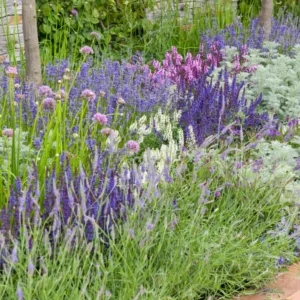
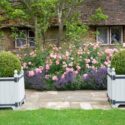
A Pretty Mediterranean Border Idea
For A Naturalistic Look
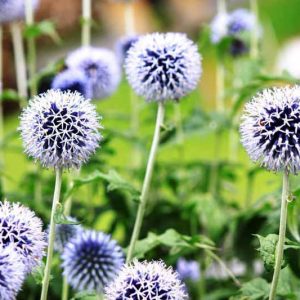
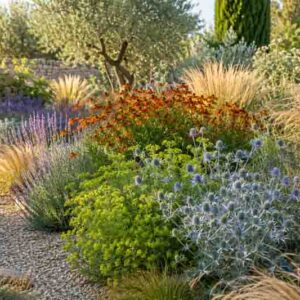
A Mediterranean Garden Idea with Eryngium, Helenium and Lavandula
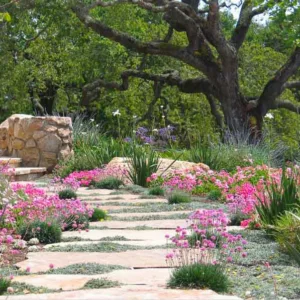
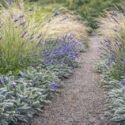
A Charming Mediterranean Flagstone Pathway
A Long-Lasting Summer Idea for your Borders with Lavender, Achillea and Sedum
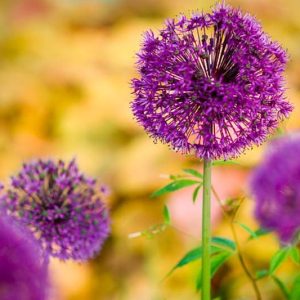
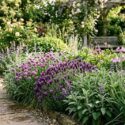
An Eye-Catching Border with Allium, Salvia and Lavender
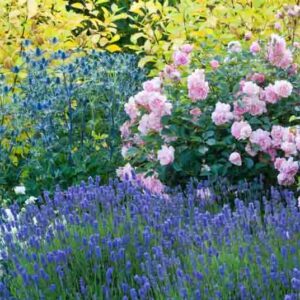
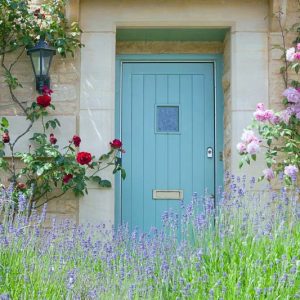
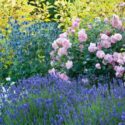
A Fragrant Summer Border with Roses, Lavender, Pinks and Sea Holly
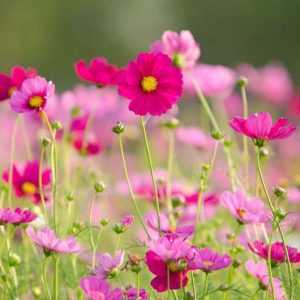
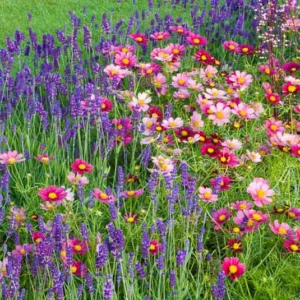
A Long-Lasting Summer Duo for your Borders: Lavender and Cosmos
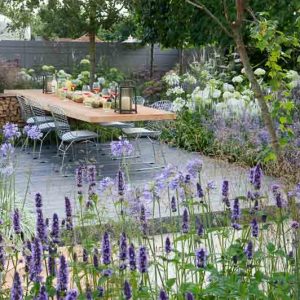
A Lovely Contemporary Garden Idea

Recommended Guides

Lavender: How to choose the right one?
Grow the Best Lavender: 25 Top-Rated Flowers for Your Garden
Learn How To Plant, Care and Grow Gorgeous Lavender
How to Harvest Lavender: Picking and Preserving Lavender Flowers
Lavender Oil: Benefits and How to Make Your Own
Sip Your Way to Calm: How to Make Lavender Tea + Top Benefits
Lavender Lemonade: Benefits and How to Make Your Own
Lavender Syrup: Benefits and How to Make Your Own
How to Grow Lavender from Seeds: A Guide to Growing Fragrant Flowers
How to Propagate Lavender: From Seeds to Cuttings and Beyond
Is Lavender Toxic to Cats?
How to Dry Lavender and Preserve its Fragrance
Planting and Caring for Lavender in Pots
How to Prune Lavender: Keep Your Garden Fragrant and Blooming
Lavender Flower Varieties and Blooming Seasons
Best Lavenders for Pots and Containers
Creating a Lavender Hedge
Compare All Lavandula (Lavender)
Compare Now
Explore Great Plant Combination Ideas
Lavandula (Lavender)
While every effort has been made to describe these plants accurately, please keep in mind that height, bloom time, and color may differ in various climates. The description of these plants has been written based on numerous outside resources.

Guide Information

Hardiness 5 - 11
Heat Zones 5 - 8
Climate Zones 2, 3, 4, 5, 6, 7, 8, 9, 10, 11, 12, 13, 14, 15, 16, 17, 18, 19, 20, 21, 22, 23, 24
Plant Type Perennials, Shrubs
Plant Family Lamiaceae
Genus Lavandula
Exposure Full Sun
Season of Interest Spring (Mid, Late), Summer (Early, Mid, Late)
Maintenance Average
Water Needs Low
Soil Type Chalk, Loam, Sand
Soil pH Acid, Alkaline, Neutral
Soil Drainage Well-Drained
Characteristics Dried Arrangements, Cut Flowers, Fragrant, Showy
Tolerance Drought, Deer, Rabbit, Dry Soil, Rocky Soil
Attracts Bees, Butterflies
Landscaping Ideas Beds And Borders, Edging, Hedges And Screens, Patio And Containers
Garden Styles City and Courtyard, Coastal Garden, Gravel and Rock Garden, Informal and Cottage, Mediterranean Garden, Traditional Garden
Compare All Lavandula (Lavender)
Compare Now
Explore Great Plant Combination Ideas
Lavandula (Lavender)

Related Items

Please Login to Proceed

You Have Reached The Free Limit, Please Subscribe to Proceed

Subscribe to Gardenia

To create additional collections, you must be a paid member of Gardenia
  • Add as many plants as you wish
  • Create and save up to 25 garden collections
Become a Member

Plant Added Successfully

You have Reached Your Limit

To add more plants, you must be a paid member of our site Become a Member

Update Your Credit
Card Information

Cancel

Create a New Collection

Sign Up to Our Newsletter

    You have been subscribed successfully

    Join Gardenia.net

    Create a membership account to save your garden designs and to view them on any device.

    Becoming a contributing member of Gardenia is easy and can be done in just a few minutes. If you provide us with your name, email address and the payment of a modest $25 annual membership fee, you will become a full member, enabling you to design and save up to 25 of your garden design ideas.

    Join now and start creating your dream garden!

    Join Gardenia.net

    Create a membership account to save your garden designs and to view them on any device.

    Becoming a contributing member of Gardenia is easy and can be done in just a few minutes. If you provide us with your name, email address and the payment of a modest $25 annual membership fee, you will become a full member, enabling you to design and save up to 25 of your garden design ideas.

    Join now and start creating your dream garden!
    Find your Hardiness Zone

    Find your Heat Zone

    Find your Climate Zone