Grapes split before harvest when berries swell faster than their skins can stretch, usually after rain or uneven watering near ripening. Thin-skinned varieties, tight clusters, humidity, and delayed harvest make it worse. The best prevention is consistent moisture, open pruning, good airflow, timely picking, and climate-appropriate cultivars.
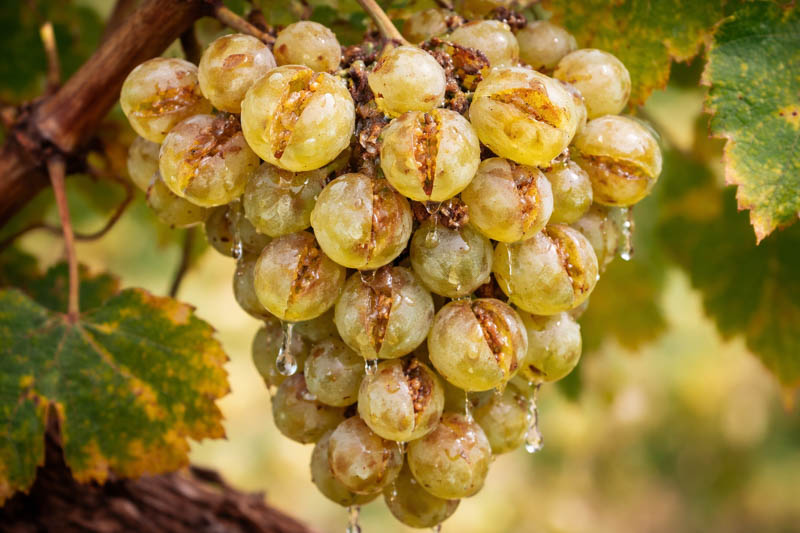


Grapes can look perfect for weeks and then split just before harvest, right when sugar is rising, and the crop is finally within reach. It is one of the most common late-season frustrations in home vineyards and backyard gardens. The good news is that grape splitting is usually understandable. The better news is that it is often manageable once you know what is actually happening inside the berry.
Grape splitting is a physiological berry disorder that happens when rapid late-season berry expansion pushes internal pressure beyond what the skin can tolerate. In most cases, grapes split before harvest because the berry takes up water or swells faster than the skin can stretch. Rain after dry weather, uneven irrigation, tight clusters, cultivar sensitivity, late harvest, and berry diseases can all play a role. Some growers blame rain alone, but that is often only the trigger, not the whole cause.
Jump to: Why Grapes Split | Why Veraison Matters | Berry Growth Stages | Main Causes | How to Diagnose Split Grapes Correctly | Which Grapes Split More Easily | How to Prevent Grape Splitting | What to Do Right Now | FAQ
Grape splitting is a physiological problem first and a disease problem second. The split usually begins when the berry expands under internal pressure and the skin gives way. That can happen after rain, after a sudden irrigation surge, or when berries in a tight cluster physically press against one another as they enlarge.
In most cases, water uptake happens primarily through the vine’s vascular system after rainfall or irrigation changes, although prolonged wetness on the fruit surface may also contribute under some conditions. What matters most for growers is the speed of change. When berry enlargement accelerates late in ripening, the skin may fail before the fruit can adjust.
The damage matters because splitting rarely stays cosmetic. Once the berry skin breaks, insects, yeasts, bacteria, and fungi gain easy access to the fruit. What started as a crack can quickly turn into sour rot, bunch rot, leaking juice, foul smells, and a fast collapse of the cluster.
If you want to understand why splitting is worst late in the season, focus on veraison. Veraison is the stage when grapes begin to soften, sweeten, and change color. After that point, berries enter the final ripening phase. Sugar rises, texture changes, and the fruit becomes far more vulnerable to weather swings than it was earlier in summer.
This is why a rain event in early development may do little, while a rain event close to harvest can split berries badly. In practical terms, grapes become more delicate as they approach maturity. The ripening berry has more to lose and less structural margin for error.
Grape berries do not develop at a constant pace. They move through three broad growth stages, and the final stage is the one most closely tied to splitting risk.
This stage-based view helps explain why split grapes are mainly a pre-harvest problem rather than a season-long one. The disorder is tied not just to moisture, but to when that moisture shift happens in the berry’s development.
This is the classic pattern. Soil has been relatively dry, berry expansion has been steady or slowed, and then a major rain arrives. The vine takes up water quickly, berries swell, and the skin may rupture. This is one of the best-documented causes of grape cracking.
Backyard growers can create the same problem without realizing it. Letting vines dry hard and then giving them a deep soaking can produce the same kind of rapid berry swelling seen after a storm. Grapes do not want waterlogged roots, but they also do not perform well under extreme moisture swings.
Some cultivars pack berries tightly enough that berries physically squeeze one another as ripening advances. In those clusters, even moderate swelling can create burst berries or cracks, especially when rain, rot, or insects enter the picture.
Not every grape responds the same way. Extension sources note that splitting risk varies by cultivar. Some tight-clustered or thinner-skinned grapes are more prone to split or to develop sour rot after splitting, while some tougher-skinned or looser-clustered cultivars tolerate wet periods better.
Once grapes are ripe, every extra day on the vine during wet or humid weather increases the risk. Overripe fruit is more vulnerable to cracking, leakage, insect feeding, and fruit rots. Grapes do not improve after picking, but ripe grapes also do not become safer by waiting through rain.
Berry diseases such as botrytis bunch rot, sour rot, or earlier skin injury from pests can weaken fruit before a visible split appears. In other words, what looks like a pure rain-split berry may actually be a weakened berry that finally failed under pressure.
Not every damaged berry is a true rain split. Correct diagnosis matters because the long-term fix depends on the real cause.
Usually shows up suddenly after rainfall or erratic watering, especially near harvest. Multiple berries may crack within a cluster or across the vineyard at the same time.
More common in very tight clusters. Berries may burst where they are compressed against neighboring fruit or where they separate from the pedicel.
Usually starts as punctures, tears, or peck marks rather than a clean skin failure from internal pressure. These wounds can later widen and resemble splitting.
Botrytis, sour rot, and other berry rots may show mold, browning, leaking juice, off odors, or soft decay before or after cracking. In these cases, the split is often part of a larger fruit-health problem.
If damage appears right after rain and many berries are affected at once, splitting is likely the primary issue. If the injury is patchy, moldy, or obviously punctured, pests or disease may be the real starting point.
Cultivar choice matters more than many gardeners realize. Research and extension observations show that susceptibility differs widely. Missouri sources note that Concord and Zinfandel can be more susceptible to splitting, while Villard blanc has shown greater tolerance in some observations. Purdue has also highlighted sour-rot risk in thin-skinned, tight-clustered varieties such as Vignoles, Chardonel, and Seyval when wet weather arrives near harvest.
That does not mean every thin-skinned grape will always split, or that skin thickness alone explains the disorder. It means that cultivar response varies, and growers should treat local field performance as more important than catalog promises. A grape that thrives in a dry region may be the wrong choice in a humid backyard.
For broader grape-growing context, keep these original URLs where relevant: NC State Extension – Bunch Grapes in the Home Garden, NC State Extension – Muscadine Grapes in the Home Garden, and Penn State Extension – Table Grape Production.
The best prevention plan is built around stability, airflow, and timing.
Avoid the drought-then-drench cycle. Water deeply when needed, but do not let vines swing from severe dryness to saturation. Grapes tolerate moderate dryness better than many gardeners think, but sudden rehydration near harvest is risky.
Good pruning, shoot positioning, and sensible leaf management improve airflow and help clusters dry faster after dew or rain. That reduces not only split-related rot, but also the severity of late-season fruit breakdown. How to Prune Grapevines for Bigger Harvests: Cane Pruning vs Spur Pruning
Overcropped vines often ripen unevenly and tempt growers to leave fruit hanging too long. Balanced vines usually produce more uniform ripening and fewer late-season problems.
If rain is in the forecast and the crop is already ripe, harvesting early is often smarter than gambling on extra hang time. Quality can disappear quickly once splitting begins.
If splitting is a recurring pattern, the variety may be wrong for the site. Looser clusters, tougher skins, and strong local performance often matter more than fruit color or reputation.
Once berry skin is weakened by powdery mildew, botrytis bunch rot, insects, or other injury, the fruit has less resilience when the weather turns. Season-long vine health affects pre-harvest splitting outcomes.
Too much nitrogen can push dense growth and trap humidity. Some extension guidance also notes that good calcium status may help berries resist cracking, but this should be treated as one supporting factor, not a stand-alone cure.
When splitting starts, speed matters.
If the fruit is already showing sour smells, juice leakage, or swarms of fruit flies and wasps, the issue is no longer just splitting. It has become a rot-management problem as well.
One common mistake is trying to enlarge berries late in the season with extra irrigation. Another is letting the canopy stay dense and humid because the vine “looks healthy.” A third is waiting too long to harvest after ripeness has already arrived. The last big mistake is ignoring the first few split berries. By the time many berries are leaking, the clean harvest window may already be closing fast.
Grapes split after rain because berries near ripening can take up water and swell faster than their skins can withstand, especially after earlier dry conditions.
Yes. Uneven irrigation or heavy watering after dry stress can trigger the same rapid berry swelling that follows a major rain event.
Slightly cracked grapes may still be usable immediately if they are firm and clean, but badly split fruit spoils quickly and is often contaminated by insects, yeasts, bacteria, or mold. Discard leaking, moldy, soft, or foul-smelling berries.
Yes. Susceptibility varies by cultivar. Tight-clustered and some thinner-skinned grapes are often more prone to splitting or sour rot near harvest, especially in wet conditions.
Keep moisture consistent, avoid severe dry-down followed by heavy watering, prune for airflow, protect berry health, harvest promptly when ripe, and choose cultivars that perform well in your local climate.
Humidity alone is not usually the primary trigger, but humid, slow-drying canopies increase berry breakdown, disease pressure, and post-split rot once cracks occur.
If the fruit is already ripe and your cultivar is splitting-prone, harvesting before a major rain event is often safer than waiting and risking cracking, sour rot, and insect damage.
Grapes split before harvest because ripening fruit is living on a narrow margin. The berries are sweeter, softer, and more fragile, and a sudden weather or watering swing can push them past their limit. That is why the best answer is rarely a rescue spray or a last-minute fix. It is a system: stable moisture, good airflow, smart variety choice, healthy berries, and harvest timing that matches the weather.
If you get those pieces right, grape splitting becomes far less mysterious and far more preventable. And when you do see it, you will know whether you are dealing with a true rain-split berry, a tight-cluster problem, a rot issue, or a harvest-timing mistake. That is the kind of clarity that saves future crops.
Updated: March 2026 • Reviewed by Gardenia Editors
| Hardiness |
3 - 10 |
|---|---|
| Plant Type | Climbers, Fruits |
| Plant Family | Vitaceae |
| Genus | Vitis |
| Exposure | Full Sun |
| Maintenance | High |
| Water Needs | Average |
| Soil Type | Chalk, Loam, Sand |
| Soil pH | Alkaline, Neutral |
| Soil Drainage | Well-Drained, Moist but Well-Drained |
| Attracts | Bees, Birds |
| Hardiness |
3 - 10 |
|---|---|
| Plant Type | Climbers, Fruits |
| Plant Family | Vitaceae |
| Genus | Vitis |
| Exposure | Full Sun |
| Maintenance | High |
| Water Needs | Average |
| Soil Type | Chalk, Loam, Sand |
| Soil pH | Alkaline, Neutral |
| Soil Drainage | Well-Drained, Moist but Well-Drained |
| Attracts | Bees, Birds |
Create a membership account to save your garden designs and to view them on any device.
Becoming a contributing member of Gardenia is easy and can be done in just a few minutes. If you provide us with your name, email address and the payment of a modest $25 annual membership fee, you will become a full member, enabling you to design and save up to 25 of your garden design ideas.
Join now and start creating your dream garden!
Create a membership account to save your garden designs and to view them on any device.
Becoming a contributing member of Gardenia is easy and can be done in just a few minutes. If you provide us with your name, email address and the payment of a modest $25 annual membership fee, you will become a full member, enabling you to design and save up to 25 of your garden design ideas.
Join now and start creating your dream garden!