Pigface, Karkalla, Native Pigface, Sea Fig, Beach Banana, Ross's Noonflower, Coast Pigface, Mesembryanthemum rossii
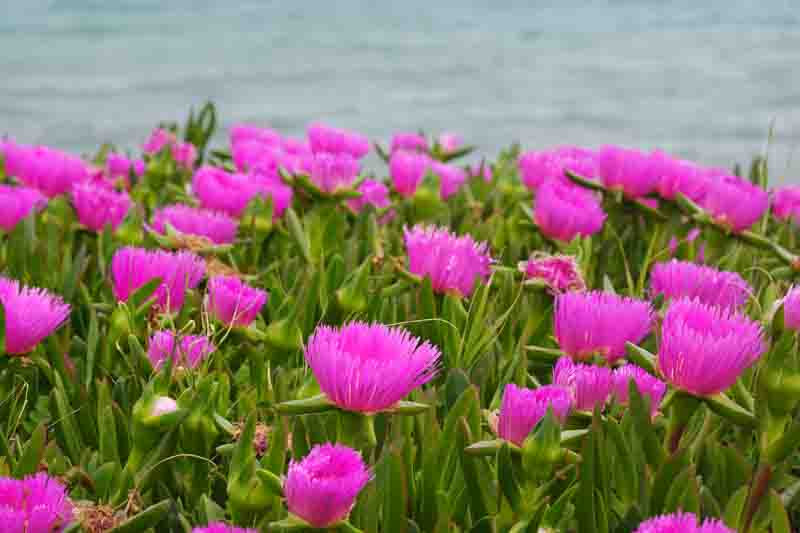
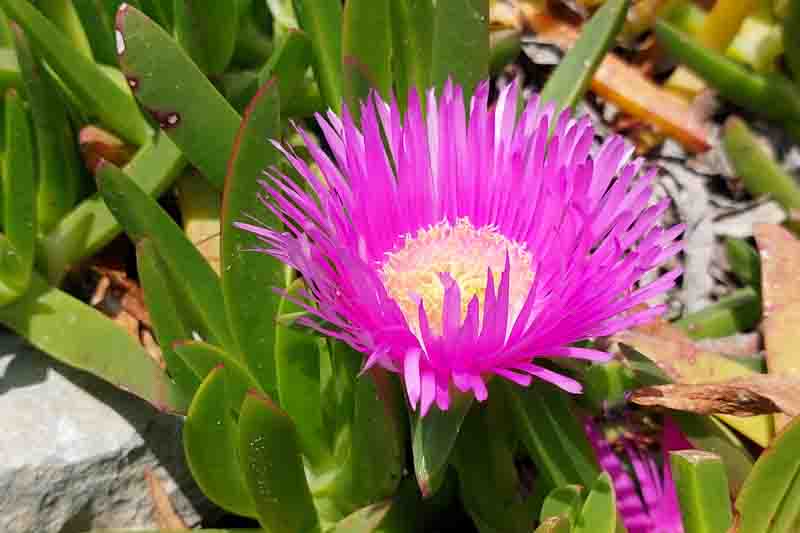
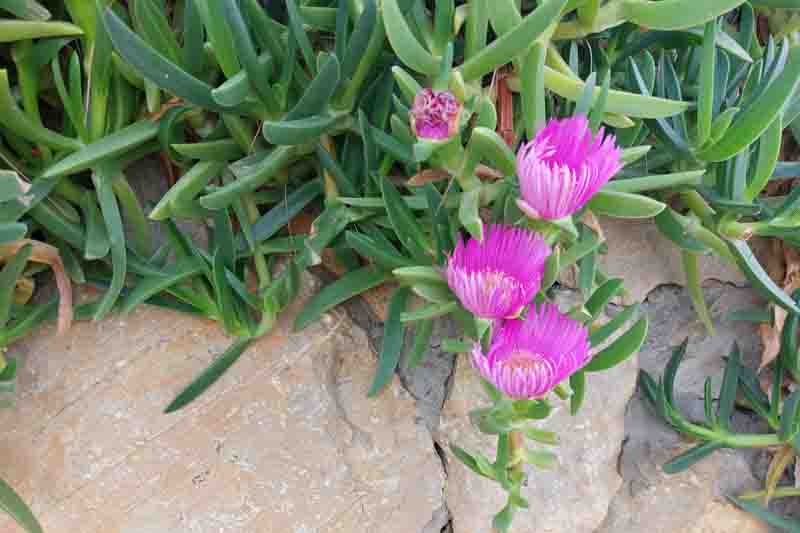


Carpobrotus rossii, commonly known as Karkalla, native pigface, coast pigface, or Australian pigface, is a tough, spreading succulent ground cover prized for its vivid purple-pink flowers, edible fruits, fleshy green leaves, coastal resilience, drought tolerance, salt tolerance, and outstanding performance in sandy, exposed, low-water landscapes. Native to southern Australia, it is especially valuable in coastal gardens, dune restoration, rock gardens, dry slopes, embankments, retaining walls, native gardens, edible landscapes, and low-fuel succulent plantings where a handsome, low-maintenance ground cover is needed.
This is a plant with real personality. Karkalla looks relaxed and beachy, but it works hard. Its trailing stems knit across open soil, its succulent leaves store moisture, and its large daisy-like flowers open in sunshine with a bright, silky glow. In the right site, Carpobrotus rossii can turn hot, dry, exposed ground into a colorful, useful, wildlife-friendly living carpet.
Carpobrotus rossii is a low-growing Australian succulent ground cover grown for full sun, coastal exposure, sandy soil, drought tolerance, erosion control, edible leaves and fruit, and showy purple-pink flowers. It performs best in well-drained soil, tolerates salt wind and dry conditions once established, and is ideal for slopes, dunes, rock gardens, native plantings, and waterwise landscapes.
Use: Ground cover, coastal planting, dune stabilization, slope planting, erosion control, rock gardens, dry borders, native gardens, edible gardens, and low-fuel succulent plantings.
Highlight: Forms a spreading mat of fleshy succulent leaves topped with large purple, mauve, or pink daisy-like, sun-opening flowers, followed by edible reddish-purple fruits.
Design note: Let it spill, trail, and weave. Karkalla is most effective when used in generous drifts along banks, walls, paths, and sunny coastal edges.
| Botanical Name | Carpobrotus rossii |
|---|---|
| Family | Aizoaceae |
| Common Names | Karkalla, Native Pigface, Coast Pigface, Australian Pigface, Pig Face |
| Native Range | Southern Australia, especially coastal dunes, cliffs, sandy soils, and rocky ground |
| Plant Type | Evergreen succulent perennial ground cover |
| Hardiness | Best in mild climates; often suitable for USDA Zones 9-11; tolerates light frost once established |
| Height | Usually 4-8 in. tall |
| Spread | Often 3-10 ft. wide, sometimes wider in ideal coastal conditions |
| Sun Exposure | Full sun to part shade; best flowering in full sun |
| Soil | Well-drained sandy soil, gravelly soil, coastal soil, loam, or clay loam if drainage is good |
| Bloom Time | Spring to summer; flowers may appear over a long season in mild sunny climates |
| Flower Color | Purple, mauve, pink, or magenta with a pale center |
| Foliage | Evergreen, fleshy, triangular to three-sided, succulent green leaves |
| Water Needs | Low once established; water occasionally in extreme heat for fresher growth |
| Attracts | Bees, beneficial insects, and wildlife that may feed on the fruit |
| Best Uses | Coastal gardens, erosion control, dune planting, dry slopes, rock gardens, native gardens, edible landscapes, and firewise ground cover |
Carpobrotus rossii is a prostrate, mat-forming succulent perennial in the ice plant family. Its stems creep across the soil, carrying thick, three-angled leaves that help the plant conserve water through heat, wind, and dry spells. The growth habit is low and spreading rather than upright, making it a natural choice for covering bare ground.
The flowers are the showpiece. They are large for a ground cover, often 1.5-2 in. across, with purple, mauve, pink, or magenta petal-like structures surrounding a pale center. They typically open in bright sun, giving the plant that cheerful coastal look gardeners love. After flowering, rounded reddish-purple fruits can form. Both the leaves and fruit have a long history as edible bush food, although any edible use should be based on correct identification and clean, unsprayed plants.
Garden truth: Karkalla is not just a pretty succulent. It is a practical ground cover for hard places – coastal wind, sandy soil, hot banks, and dry open spaces where many ornamental plants sulk.
Carpobrotus rossii is native to southern Australia and is strongly associated with coastal environments, including dunes, cliffs, rocky ground, and sandy soils. This natural habitat explains its excellent salt tolerance, wind tolerance, drought resilience, and ability to stabilize loose soil.
Karkalla usually stays low, around 4-8 inches tall, but it can spread several feet wide. In warm, sunny, well-drained conditions, growth can be fast. A single plant may eventually form a broad mat, so give it space rather than squeezing it between delicate neighbors.
The foliage is evergreen in mild climates, fleshy, smooth, and coastal green, sometimes taking on reddish tones in cold or dry weather. The flowers appear mainly from spring into summer, although bloom can continue sporadically in mild areas. The combination of succulent foliage and bright flowers makes Carpobrotus rossii especially useful where a garden needs both texture and seasonal color.
Karkalla is best in mild-winter regions and is commonly treated as a Zone 9-11 plant. It can tolerate light frost once established, but hard freezes may damage stems and foliage. In cooler areas, grow it in containers, raised beds, gravel gardens, or protected sunny microclimates.
Full sun produces the densest growth and best flowering. Part shade is acceptable, especially in hot climates, but too much shade reduces bloom and can make the plant stretch. For the classic carpet of succulent leaves and bright pigface flowers, choose an open, sunny position.
Drainage is essential. Carpobrotus rossii thrives in sandy soil, coastal soil, gravelly soil, and poor soil where many plants struggle. It can also grow in clay loam if water drains away quickly. Avoid low, soggy areas, heavy irrigated borders, and sites where winter wet lingers around the roots.
Water new plants regularly but lightly enough to avoid saturation. Once established, Karkalla is drought tolerant and usually needs little supplemental water in suitable climates. During long heat waves, occasional deep watering can keep leaves plump and fresh, but constant irrigation is more harmful than helpful.
This is not a hungry plant. In most gardens, feeding is unnecessary. If growth is weak in very poor soil, use a light application of compost or a low-strength slow-release fertilizer in spring. Avoid high-nitrogen feeding, which can encourage soft growth at the expense of compact form and flowers.
Use gravel, coarse sand, decomposed granite, or a thin layer of coarse organic mulch. Keep mulch away from the crown and do not bury the succulent stems under damp material. In coastal and rock garden designs, mineral mulch often looks more natural and helps maintain the dry, free-draining conditions Karkalla prefers.
Care tip:
The fastest way to ruin Carpobrotus rossii is to love it with too much water. Give it sun, drainage, and breathing room, then let its succulent nature do the work.
Carpobrotus rossii is one of the best native-style ground covers for dry, sunny, coastal landscapes. It is useful on slopes because the stems help shade and bind the soil. It is also excellent spilling over retaining walls, softening rock edges, filling sandy gaps, and creating a colorful foreground beneath tougher coastal shrubs.
Maintenance is simple. Trim stems that move into paths, smother smaller plants, or become too woody. Remove dead or weather-damaged growth in spring. If a patch becomes old and open in the center, cut out tired sections and encourage younger rooted stems to fill the gap.
Because stems may root where they touch soil, Karkalla can be renewed easily. Pin healthy stems onto bare soil, keep them lightly moist until established, and trim away unproductive older growth once new roots form.
Carpobrotus rossii struggles in wet soil, deep shade, cold climates with hard freezes, and rich irrigated beds designed for thirsty perennials. It may also look poor where overhead watering keeps the foliage damp or where compacted clay holds winter moisture. In humid climates, provide maximum sun, airflow, and sharp drainage.
| Task | Best Time |
|---|---|
| Planting | Spring, or fall in mild coastal climates |
| Flowering | Spring to summer, with possible sporadic flowers in mild climates |
| Pruning | After flowering, or in spring as new growth begins |
| Cuttings | Warm growing season, using stem cuttings allowed to callus briefly before planting |
Karkalla is easy to propagate from cuttings. Take healthy stem pieces during active growth, allow the cut ends to dry briefly, then insert them into sandy, free-draining mix. Keep lightly moist, not wet. Stems that have already rooted naturally can also be lifted and replanted.
Root rot is the main problem. Yellowing, collapse, mushy stems, or sudden thinning usually points to wet soil or overwatering. Improve drainage, reduce irrigation, and avoid planting in low spots.
Too much shade is the most common reason for weak flowering. Move plants to brighter conditions or cut back nearby growth that blocks sun.
Older mats can become woody. Refresh them by removing tired stems, encouraging new rooted runners, and trimming lightly after flowering.
Be careful not to confuse native Australian pigface with introduced or invasive ice plant species, especially outside its native range. In some regions, Carpobrotus rossii can hybridize with invasive South African species, so use nursery-grown, correctly identified plants and check local weed guidance before planting or propagating.
Fast diagnostic: Soft, collapsing stems usually mean too much water. Few flowers usually mean too little sun. Red-tinged leaves often reflect cold, drought, or seasonal stress rather than disease.
Good companions for Carpobrotus rossii should enjoy full sun, coastal exposure, well-drained soil, low to moderate water, and mild climates. Avoid pairing Karkalla with plants that need constantly moist, rich soil, because the irrigation that keeps those plants happy can damage this succulent ground cover.
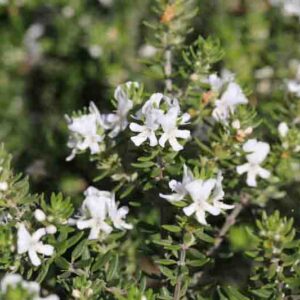
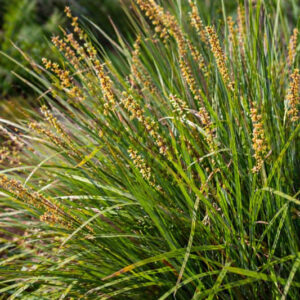
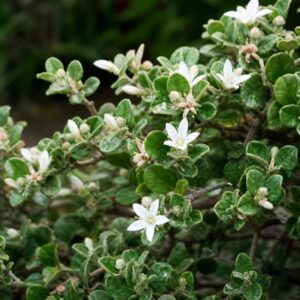
Excellent companions include Westringia fruticosa for a salt- and wind-tolerant evergreen coastal shrub layer, Banksia integrifolia for larger coastal structure, nectar-rich flowers, and excellent tolerance of salt air and exposed seaside conditions, Coprosma repens for glossy evergreen foliage in windy coastal gardens where it is not considered weedy or invasive, Yucca gloriosa for bold architectural form in dry, sandy, salt-exposed sites, and Artemisia pycnocephala for a silver, drought-tolerant, salt- and wind-tolerant foreground that echoes the dry coastal conditions favored by Carpobrotus rossii.
Yes. Carpobrotus rossii is an excellent succulent ground cover for sunny, well-drained sites, especially coastal gardens, dunes, slopes, rock gardens, erosion-control plantings, and low-water landscapes.
Carpobrotus rossii grows quickly in warm, sunny, well-drained conditions. It stays low but can spread several feet wide, making it useful for banks, open ground, and coastal stabilization.
Carpobrotus rossii tolerates part shade, but it flowers best and grows most densely in full sun. Too much shade can reduce flowering and make growth thinner.
Yes. Carpobrotus rossii is drought tolerant once established. Water new plants during establishment, then grow them on the dry side in well-drained soil.
Yes. The leaves and fruits of Carpobrotus rossii are edible and have been used as bush food. Only eat plants that are correctly identified, clean, and free from pesticides or pollution.
Yes. Carpobrotus rossii is highly useful in coastal gardens because it tolerates salt wind, sandy soil, drought, and exposed conditions once established.
Dieback is most often caused by overwatering, poor drainage, root rot, heavy shade, cold damage, or old woody growth. Check soil moisture and drainage before fertilizing.
Updated: May 2026 • Reviewed by Gardenia Editors
| Hardiness |
9 - 11 |
|---|---|
| Plant Type | Cactus & Succulents |
| Plant Family | Aizoaceae |
| Exposure | Full Sun, Partial Sun |
| Season of Interest | Spring (Early, Mid, Late), Summer (Early, Mid, Late), Fall, Winter |
| Height | 4" - 8" (10cm - 20cm) |
| Spread | 3' - 10' (90cm - 3m) |
| Spacing | 36" - 120" (90cm - 3m) |
| Maintenance | Low |
| Water Needs | Low |
| Soil Type | Loam, Sand |
| Soil pH | Acid, Neutral, Alkaline |
| Soil Drainage | Well-Drained |
| Characteristics | Showy, Evergreen, Fruit & Berries |
| Native Plants | Australia |
| Tolerance | Drought, Salt, Dry Soil, Rocky Soil, Deer |
| Attracts | Bees, Birds |
| Garden Uses | Banks And Slopes, Ground Covers |
| Garden Styles | Coastal Garden, Gravel and Rock Garden, Informal and Cottage, Mediterranean Garden, Pollinator Garden |


| Hardiness |
9 - 11 |
|---|---|
| Plant Type | Cactus & Succulents |
| Plant Family | Aizoaceae |
| Exposure | Full Sun, Partial Sun |
| Season of Interest | Spring (Early, Mid, Late), Summer (Early, Mid, Late), Fall, Winter |
| Height | 4" - 8" (10cm - 20cm) |
| Spread | 3' - 10' (90cm - 3m) |
| Spacing | 36" - 120" (90cm - 3m) |
| Maintenance | Low |
| Water Needs | Low |
| Soil Type | Loam, Sand |
| Soil pH | Acid, Neutral, Alkaline |
| Soil Drainage | Well-Drained |
| Characteristics | Showy, Evergreen, Fruit & Berries |
| Native Plants | Australia |
| Tolerance | Drought, Salt, Dry Soil, Rocky Soil, Deer |
| Attracts | Bees, Birds |
| Garden Uses | Banks And Slopes, Ground Covers |
| Garden Styles | Coastal Garden, Gravel and Rock Garden, Informal and Cottage, Mediterranean Garden, Pollinator Garden |
How many Carpobrotus rossii (Karkalla) do I need for my garden?
| Plant | Quantity | |
|---|---|---|
| Carpobrotus rossii (Karkalla) | N/A | Buy Plants |
Create a membership account to save your garden designs and to view them on any device.
Becoming a contributing member of Gardenia is easy and can be done in just a few minutes. If you provide us with your name, email address and the payment of a modest $25 annual membership fee, you will become a full member, enabling you to design and save up to 25 of your garden design ideas.
Join now and start creating your dream garden!
Create a membership account to save your garden designs and to view them on any device.
Becoming a contributing member of Gardenia is easy and can be done in just a few minutes. If you provide us with your name, email address and the payment of a modest $25 annual membership fee, you will become a full member, enabling you to design and save up to 25 of your garden design ideas.
Join now and start creating your dream garden!