Coast Banksia, Coastal Banksia, Coast Honeysuckle, Australian Honeysuckle, White Banksia, White Bottlebrush, White Honeysuckle, Honeysuckle Oak, Isostylis integrifolia, Sirmuellera integrifolia
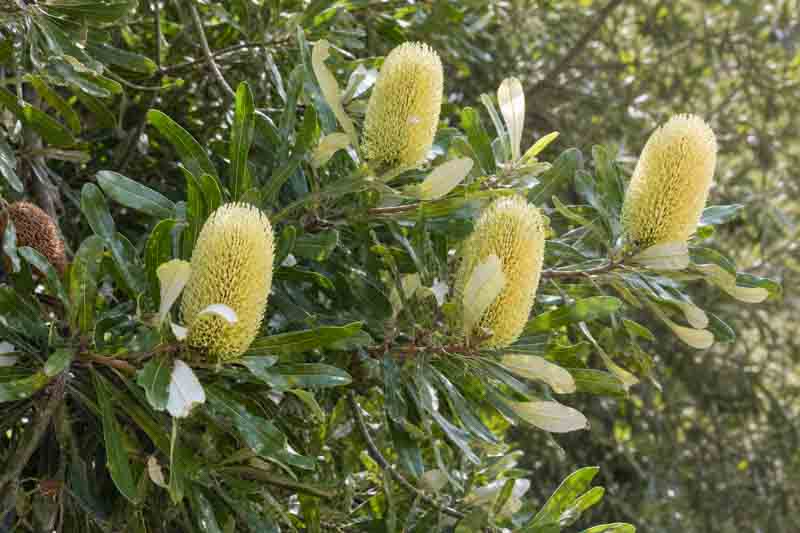


Banksia integrifolia, commonly known as coast banksia, coastal banksia, white banksia, white honeysuckle, or entire-leaved banksia, is a striking evergreen tree or large shrub from eastern and southeastern Australia. Loved for its upright form, leathery green leaves with silvery-white undersides, golden flower spikes, salt tolerance, wind resistance, and wildlife value, it is one of the most useful Australian native trees for coastal gardens, Mediterranean-style landscapes, habitat plantings, and architectural evergreen structure.
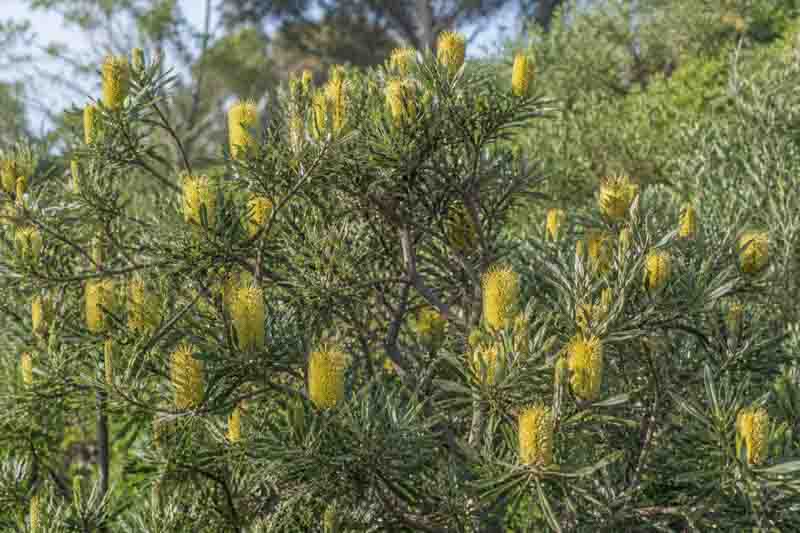
This is not a quiet background plant. Coast banksia has presence. Its cylindrical yellow flower spikes glow against dark foliage, its old cones add sculptural texture, and its leaves flash silver when the wind moves through the canopy. In the right climate, Banksia integrifolia works as a small shade tree, coastal screen, street tree, erosion-control plant, nectar tree, specimen, wildlife magnet, and dramatic evergreen focal point.
Banksia integrifolia is a tough evergreen Australian banksia grown for golden nectar-rich flower spikes, handsome green-and-silver foliage, excellent coastal tolerance, wildlife value, and year-round architectural form. It performs best in full sun, sharply drained soil, and mild climates, where it can become a resilient small tree, screen, windbreak, or coastal garden centerpiece.
Use: Coastal gardens, wildlife gardens, evergreen screens, windbreaks, erosion control, street planting, native plant gardens, Mediterranean landscapes, large containers when young, and architectural specimen planting.
Highlight: Golden flower spikes are rich in nectar and highly attractive to birds, bees, and beneficial wildlife.
Design note: Plant where its silver-backed leaves can catch the wind and where fallen cones and flowers will not be a nuisance on formal paving.
| Botanical Name | Banksia integrifolia |
|---|---|
| Family | Proteaceae |
| Common Names | Coast Banksia, Coastal Banksia, White Banksia, White Honeysuckle, Entire-leaved Banksia |
| Native Range | Eastern and southeastern Australia, especially coastal Queensland, New South Wales, Victoria, and accepted records in South Australia |
| Plant Type | Evergreen tree or large shrub |
| Hardiness | Best in USDA Zones 9-11; some established plants tolerate light frost in sheltered, well-drained sites |
| Height | Often 30-40 ft. in gardens; potentially up to 60 ft. or more in ideal Australian conditions |
| Spread | Usually 15-30 ft. wide, depending on climate, pruning, and exposure |
| Sun Exposure | Full sun is best; light shade tolerated, especially in hot inland gardens |
| Soil | Well-drained sandy, loamy, gravelly, rocky, or lightly clay-based soil; avoid soggy sites |
| Bloom Time | Often fall to spring in cultivation; PlantNET records flowering mainly January-June in New South Wales |
| Flower Color | Pale yellow, creamy yellow, golden yellow |
| Foliage | Evergreen, leathery, dark green above, pale to silvery-white beneath |
| Drought Tolerant | Moderately drought tolerant once established; best with occasional deep watering in dry climates |
| Coastal Tolerance | Excellent tolerance of salt air, wind, sandy soils, and exposed coastal conditions |
| Attracts | Nectar-feeding birds, bees, butterflies, beneficial insects, and other wildlife |
| Pet and Child Safety | Ornamental plant; not grown as an edible landscape plant |
Banksia integrifolia is a variable evergreen tree or large shrub in the Proteaceae family. In the wild, it grows across a remarkably broad range of eastern Australia, from coastal dunes and tidal inlets to rocky slopes and ranges. That flexibility explains why gardeners value it so highly: it can handle wind, salt-laden air, sandy soil, and exposed conditions that would make many ornamentals sulk.
The species name integrifolia means entire-leaved, referring to the mostly smooth leaf margins of mature foliage. Juvenile leaves may show some teeth, but mature leaves are typically long, leathery, and clean-edged. The upper surface is deep green, while the underside is pale, felted, and silvery. On breezy days, the canopy seems to shimmer.
Good to know: Coast banksia is one of the best banksias for gardens because it is more adaptable than many western Australian banksias and usually copes better with coastal exposure, heavier soils, and urban conditions.
Banksia integrifolia is native to Australia, primarily along the east coast and nearby ranges. It is strongly associated with Queensland, New South Wales, and Victoria, while Kew also recognizes South Australia in the native distribution for the subspecies Banksia integrifolia subsp. integrifolia. PlantNET notes Tasmania as uncertain. In gardens outside Australia, it is best treated as an Australian native ornamental rather than a locally native plant.
Coast banksia produces upright cylindrical flower spikes packed with hundreds of small flowers. Bloom timing varies with climate and location, but flowering is often strongest from fall through spring in mild-climate gardens. In New South Wales, PlantNET records flowering mainly from January to June. The nectar-rich flowers are a major reason this tree is so valuable for wildlife gardens.
The foliage gives Banksia integrifolia its year-round polish. Dark green leaves create a solid evergreen canopy, while the pale undersides add movement and light. After flowering, the woody fruiting cones remain on the tree, giving the branches a rugged, sculptural quality. This combination of flowers, foliage, bark, and cones makes coast banksia far more than a seasonal bloomer.
In gardens, coast banksia commonly grows about 30-40 feet tall and 15-30 feet wide. In exposed coastal sites, it may remain shorter and more wind-shaped. In sheltered, favorable Australian habitats, it can become a much taller tree. Give it room from buildings, narrow paths, overhead wires, and formal patios where litter may be inconvenient.
Banksia integrifolia is best suited to USDA Zones 9-11. Established plants can tolerate light frost, especially when grown in sharply drained soil, but prolonged freezes are risky. In marginal climates, plant it near a warm wall, on a slope, in a protected courtyard, or in a coastal microclimate with good air movement and fast drainage.
Coast banksia is a powerful wildlife plant. Its flower spikes provide nectar and pollen, attracting honeyeaters, lorikeets, bees, butterflies, and other beneficial insects. In Australia, banksias are deeply woven into nectar-feeding ecosystems. In gardens, they can help bridge seasonal gaps when fewer plants are flowering, especially in mild winter climates.
Banksia integrifolia is not usually planted as a preferred deer food, but no plant should be called fully deer-proof. Young trees may be browsed, rubbed, or damaged where deer pressure is high. Protect new plantings until the trunk is sturdy and the canopy is above browsing height.
Once established, coast banksia is moderately drought tolerant, especially in coastal climates with mild temperatures. Inland gardens, reflected heat, and long dry summers call for occasional deep watering. The goal is not constant moisture. It is deep, infrequent irrigation that encourages resilient roots without creating soggy soil.
Banksia integrifolia is grown as an ornamental tree, nectar plant, and landscape specimen. It is not typically treated as a major toxic garden plant, but it should not be promoted as an edible plant for children or pets. As with all ornamental plants, discourage chewing and wear gloves if you have sensitive skin when pruning.
Coast banksia is widely cultivated and valuable in suitable landscapes, but gardeners outside its native range should be thoughtful. In regions with similar climates, monitor seedlings and follow local invasive plant guidance. Near natural areas, use regionally appropriate plants and avoid dumping prunings or seed-bearing material into wildlands.
Water regularly during the first growing season so the young tree establishes a deep root system. After establishment, reduce frequency and water deeply during extended dry spells. In coastal areas, mature plants may need little supplemental irrigation, while inland sites benefit from occasional soaking during heat and drought.
Like many members of the Proteaceae family, banksias are adapted to low-nutrient soils and can be sensitive to excessive phosphorus. Avoid standard high-phosphorus bloom boosters. If feeding is needed, use a low-phosphorus fertilizer formulated for Australian native plants, and apply it lightly in spring.
Apply a thin layer of coarse mulch, gravel, leaf mold, or composted bark around the root zone to reduce weeds and moderate soil temperature. Keep mulch away from the trunk. A dry crown and open airflow are especially important in winter and in heavier soils.
Care tip:
The secret to growing Banksia integrifolia well is simple: full sun, fast drainage, deep establishment watering, and no high-phosphorus fertilizer.
Prune lightly after flowering or during active growth. Remove dead, crossing, or poorly placed branches while the tree is young. Early structural pruning creates a stronger framework and reduces the need for drastic cuts later.
For a tree form, select a main leader and gradually remove low competing growth. For a screening shrub, tip-prune lightly to encourage density. Avoid hard renovation pruning into old bare wood unless you know the plant has enough active buds to respond.
Banksia integrifolia can be grown in a large container while young, especially in courtyard and patio gardens, but it is naturally a tree. Use a free-draining potting mix, choose a container with generous drainage holes, and avoid water-holding saucers. Long-term container plants need careful watering and low-phosphorus feeding.
Coast banksia is most commonly propagated from seed. Fresh seed usually germinates reliably under suitable conditions, and seedlings are often vigorous. Propagation from cuttings may be possible but is less common for ordinary home gardeners. Named selections should be propagated vegetatively to preserve their exact form and characteristics.
This plant struggles in cold, wet soil; poorly drained clay; deep shade; prolonged hard freezes; and gardens where it is overfed. Yellowing, dieback, and poor growth often point to root stress or phosphorus sensitivity rather than hunger. Before adding fertilizer, check drainage, irrigation, and soil conditions.
| Task | Best Time |
|---|---|
| Planting | Spring, or fall in mild coastal climates |
| Flowering | Often fall to spring, with regional variation |
| Pruning | After flowering or during active growth |
| Feeding | Spring, lightly, with low-phosphorus native-plant fertilizer if needed |
| Winter Protection | Late fall to winter in marginal climates |
Yellowing foliage often indicates wet roots, poor drainage, compacted soil, or nutrient imbalance. Avoid automatically adding fertilizer. Banksias are adapted to lean soils and may react badly to heavy feeding, especially with phosphorus-rich products.
Poor flowering is usually linked to too much shade, youth, overwatering, or excessive nitrogen. Give the plant full sun, avoid lush feeding, and allow young trees time to mature.
Root rot is the most serious risk in poorly drained soil. Plant high, improve drainage before planting, and water deeply but not constantly.
Stressed plants may attract scale insects or other sap-feeding pests. Healthy banksias in sunny, airy, well-drained sites are usually far more resilient.
Fast diagnostic: Yellow leaves usually mean root stress. Sparse flowers often mean not enough sun. Sudden decline in wet soil may mean root rot. Soft, floppy growth often means too much fertilizer or water.
Use Banksia integrifolia where you want a plant that feels both wild and refined. It looks beautiful with gravel, sandstone, coastal grasses, silver foliage, low shrubs, and other Australian natives. Its upright flower spikes bring vertical drama, while the evergreen canopy gives structure through every season.
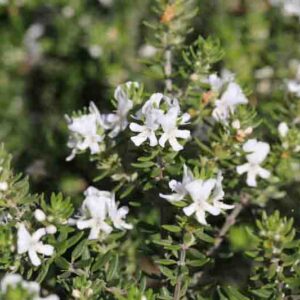
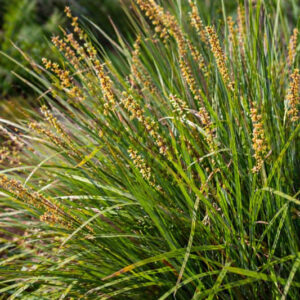
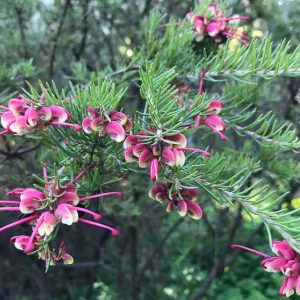
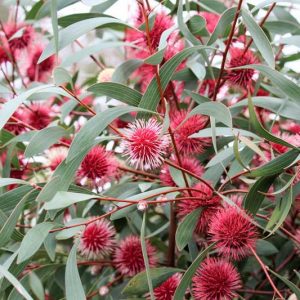
Good companions for Banksia integrifolia prefer full sun, well-drained soil, mild hardiness zones, and low to moderate moisture once established. Excellent companions include Westringia fruticosa, Lomandra longifolia, Grevillea rosmarinifolia, Hakea laurina, Callistemon citrinus, Callistemon viminalis, Anigozanthos flavidus, Anigozanthos, Gaura lindheimeri, Rosemary, Creeping Rosemary, Sea Thrift, English Lavender, Spanish Lavender.
No. Banksia integrifolia is not native to any U.S. state. It is native to Australia, especially eastern and southeastern coastal regions and nearby ranges.
Banksia integrifolia often grows 20 to 40 feet tall and 15 to 30 feet wide in gardens, though it can become taller in ideal Australian conditions or remain shorter in exposed coastal sites.
Yes. Banksia integrifolia is excellent for coastal gardens because it tolerates salt air, wind, sandy soil, and exposed conditions once established.
Yes. Banksia integrifolia is a valuable wildlife plant. Its nectar-rich flower spikes attract honeyeaters, lorikeets, bees, butterflies, and beneficial insects.
Banksia integrifolia can grow in some clay-based soils if drainage is excellent, but it should not sit in heavy, compacted, waterlogged soil. Raised planting and soil improvement may be needed.
Use a low-phosphorus fertilizer formulated for Australian native plants only if feeding is needed. Avoid high-phosphorus bloom boosters and heavy fertilizing.
Flowering varies by region and climate. In many gardens, Banksia integrifolia blooms from fall through spring, while PlantNET records flowering mainly January to June in New South Wales.
Updated: May 2026 • Reviewed by Gardenia Editors
| Hardiness |
9 - 11 |
|---|---|
| Climate Zones | 15, 16, 17, 18, 19, 20, 21, 22, 23, 24, H1 |
| Plant Type | Trees |
| Plant Family | Proteaceae |
| Exposure | Full Sun |
| Season of Interest | Spring (Early, Mid, Late), Summer (Early, Mid, Late), Fall, Winter |
| Height | 30' - 60' (9.1m - 18.3m) |
| Spread | 15' - 30' (4.6m - 9.1m) |
| Spacing | 180" - 360" (4.6m - 9.1m) |
| Maintenance | Low |
| Water Needs | Low |
| Soil Type | Loam, Sand |
| Soil pH | Acid, Neutral |
| Soil Drainage | Well-Drained |
| Characteristics | Showy, Evergreen |
| Native Plants | Australia |
| Tolerance | Drought, Salt, Dry Soil, Rocky Soil |
| Attracts | Bees, Butterflies, Birds |
| Garden Styles | Butterfly Garden, Coastal Garden, Informal and Cottage, Mediterranean Garden, Pollinator Garden |


| Hardiness |
9 - 11 |
|---|---|
| Climate Zones | 15, 16, 17, 18, 19, 20, 21, 22, 23, 24, H1 |
| Plant Type | Trees |
| Plant Family | Proteaceae |
| Exposure | Full Sun |
| Season of Interest | Spring (Early, Mid, Late), Summer (Early, Mid, Late), Fall, Winter |
| Height | 30' - 60' (9.1m - 18.3m) |
| Spread | 15' - 30' (4.6m - 9.1m) |
| Spacing | 180" - 360" (4.6m - 9.1m) |
| Maintenance | Low |
| Water Needs | Low |
| Soil Type | Loam, Sand |
| Soil pH | Acid, Neutral |
| Soil Drainage | Well-Drained |
| Characteristics | Showy, Evergreen |
| Native Plants | Australia |
| Tolerance | Drought, Salt, Dry Soil, Rocky Soil |
| Attracts | Bees, Butterflies, Birds |
| Garden Styles | Butterfly Garden, Coastal Garden, Informal and Cottage, Mediterranean Garden, Pollinator Garden |
How many Banksia integrifolia (Coast Banksia) do I need for my garden?
| Plant | Quantity | |
|---|---|---|
| Banksia integrifolia (Coast Banksia) | N/A | Buy Plants |
Create a membership account to save your garden designs and to view them on any device.
Becoming a contributing member of Gardenia is easy and can be done in just a few minutes. If you provide us with your name, email address and the payment of a modest $25 annual membership fee, you will become a full member, enabling you to design and save up to 25 of your garden design ideas.
Join now and start creating your dream garden!
Create a membership account to save your garden designs and to view them on any device.
Becoming a contributing member of Gardenia is easy and can be done in just a few minutes. If you provide us with your name, email address and the payment of a modest $25 annual membership fee, you will become a full member, enabling you to design and save up to 25 of your garden design ideas.
Join now and start creating your dream garden!