Angel Wings Sea Cabbage, Angel Wings Senecio, Angel Wings, Senecio candicans 'Senaw'
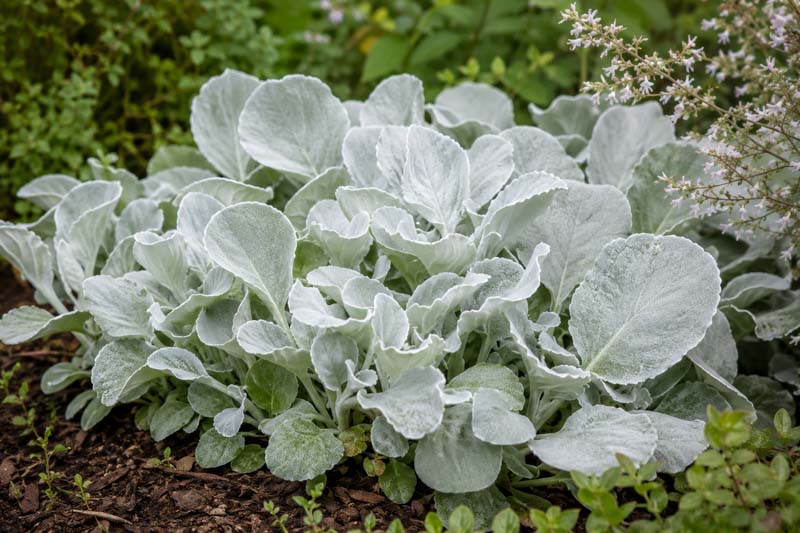


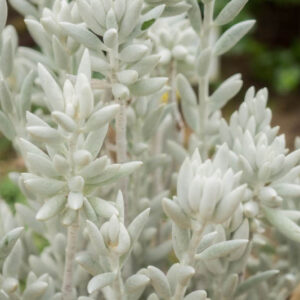
Senecio candicans Angel Wings® ‘Senaw’, also listed by some authorities as Senecio candidans Angel Wings (‘Senaw’PBR), is a dazzling silver foliage plant grown for its large, velvety, silvery-white leaves. Compact, tactile, and instantly eye-catching, it brings light and texture to containers, gravel gardens, coastal borders, sensory gardens, and sunny patios. Flowers are secondary; the real show is the foliage, which looks almost sculpted from soft felt and glows beautifully against purple, blue, burgundy, green, or terracotta.
Tender evergreen perennial or succulent-like foliage plant with large, rounded, velvety silver-white leaves and a compact, mounding habit.
Use: Excellent for containers, patio pots, coastal gardens, gravel gardens, rock gardens, sensory gardens, silver borders, drought-tolerant displays, and summer bedding.
Highlight: A high-impact foliage plant that brightens sunny designs, handles coastal exposure, and becomes drought tolerant once established.
| Botanical Name | Senecio candicans Angel Wings® ‘Senaw’; also listed as Senecio candidans Angel Wings (‘Senaw’PBR) |
|---|---|
| Family | Asteraceae |
| Common Names | Angel Wings Senecio, Angel Wings, Silky Groundsel, Shining-White Ragwort |
| Plant Type and Habit | Tender evergreen perennial; compact, mounding, clump-forming foliage plant |
| Hardiness | Usually perennial in mild USDA Zones 8 to 11; grown as an annual or overwintered under cover in colder regions |
| Size | Typically 12 to 18 inches tall and wide; often about 18 inches by 18 inches in favorable conditions |
| Sun and Exposure | Full sun to light partial sun; best silver color in bright light |
| Soil | Moderately fertile, gritty, sharply drained soil; excellent drainage is essential |
| Water | Water to establish; allow soil to dry between waterings; drought tolerant once established |
| Flowers | Occasional small yellow flowers in summer; usually removed to keep foliage strong |
| Special Tolerances | Drought once established, coastal conditions, salt-laden wind, fire-resistant landscaping, containers, heat with good drainage |
| Toxicity | Do not ingest; keep away from pets and children that chew plants |
Give Angel Wings sun, airflow, and gritty drainage. Think Mediterranean-style care, not thirsty bedding-plant care.
The main danger is wet soil, especially in winter. Soft, collapsing leaves usually mean drainage or watering needs correction.
Use Angel Wings like a living spotlight. One plant can brighten a patio pot, sharpen a gravel garden, or cool down hot flower colors.
Senecio candicans Angel Wings® ‘Senaw’ is a compact, tender evergreen perennial grown mainly for foliage. Its broad, softly rounded leaves are thick, felted, and silver-white to silver-gray, with fine hairs that reflect light and create the plant’s signature plush texture. In containers it acts as a bold centerpiece; in mild-climate borders it forms a low, glowing mound.
Angel Wings is clump-forming rather than running, making it easy to use in designed plantings. The large leaves provide color, texture, and contrast from spring through fall, especially when paired with purple flowers, blue grasses, burgundy foliage, gravel mulch, or terracotta pots. Small yellow flowers may appear in summer, but they are not usually showy. Many gardeners remove them to keep the plant focused on fresh foliage.
This plant is best outdoors year-round in mild gardens with excellent drainage. In colder or wet-winter regions, treat it as a premium annual or overwinter pots in a bright, cool, frost-free place.
Angel Wings is sometimes listed as deer resistant, and its thick, fuzzy, silver foliage may be less appealing than soft green growth. Still, no plant is completely deer proof. In high-pressure gardens, protect young plants and combine them with other deer-resistant plants.
Once established, Angel Wings is drought-tolerant, especially in open ground with free-draining soil. Container plants dry faster and still need regular checks in warm weather. The plant is also well suited to coastal gardens, where its felted leaves handle sun, wind, and salty air better than many tender ornamentals.
It is also a useful choice for fire-wise or fire-resistant planting schemes, especially where low-water, silver foliage plants are desired; as with all fire-wise landscaping, keep plants well maintained and remove dry debris.
Angel Wings should be treated as an ornamental plant and not ingested. Many plants in the Senecio group contain compounds that can be harmful if eaten, so keep it away from pets, children, and grazing animals that may chew foliage. Wear gloves if you have sensitive skin, and wash hands after pruning or handling damaged leaves.
Angel Wings is not generally considered invasive in typical garden use. It forms a compact clump and is usually grown as a selected ornamental. In mild climates where it survives year-round, remove flower stems before seed forms if you want a tidier planting.
Grow Angel Wings in full sun to light partial sun. Bright light gives the leaves their best silver-white color and keeps growth compact. In very hot inland climates, a little afternoon shade can reduce stress, but too much shade may make the plant looser and less vivid.
Drainage is essential. Angel Wings prefers moderately fertile, gritty, free-draining soil. Avoid heavy clay, soggy beds, and winter-wet sites. If your soil holds moisture, grow the plant in a raised bed or container where the mix and drainage can be controlled.
Water regularly while plants establish, then allow the top layer of soil or potting mix to dry before watering again. Deep, occasional watering is better than frequent shallow watering. In winter, water sparingly, especially for plants kept cool under cover.
Feed lightly during active growth. Container plants can receive a diluted balanced liquid feed every few weeks. In garden soil, a modest spring feed or compost topdressing is usually enough. Avoid lush, overfed growth, which is more vulnerable to rot and pests.
Plant after the last frost in a sunny, open position. In containers, use a pot with drainage holes and a free-draining mix improved with grit, perlite, or pumice if needed. Keep mulch away from the crown, or use a thin gravel mulch to reduce splashback and keep the leaves clean.
Angel Wings is outstanding in pots because its foliage reads well up close. Use it alone in a simple container for a sculptural look, or combine it with trailing silver plants, purple salvia, blue fescue, catmint, or dark-leaved annuals. Containers are also practical in cold climates because they can be moved under cover before frost.
Remove old, damaged, or yellowing leaves at the base. Cut off flower stems if you prefer a clean foliage mound. If growth becomes leggy, trim lightly to encourage fresh basal leaves, but avoid cutting into weak or rotting stems. Good airflow around the crown is important.
In cold regions, bring potted plants indoors before frost. Choose a bright, cool, frost-free location such as a greenhouse, enclosed porch, or sunny garage window. Water just enough to prevent shriveling. Reintroduce plants gradually to outdoor sun in spring.
Angel Wings can be propagated by cuttings or division where permitted. Because ‘Senaw’ is a protected cultivated selection in some markets, commercial propagation may be restricted. Check local plant breeders’ rights or patent rules before propagating beyond personal use.
Angel Wings is generally pest-free and low maintenance when grown in bright light, good airflow, and sharply drained soil. Most problems are linked to excess moisture, poor drainage, or cool, damp conditions, especially in winter.
Treat Angel Wings more like a silver succulent than a thirsty bedding plant: bright light, free drainage, and restraint with watering.
Angel Wings pairs best with companions that enjoy full sun, well-drained soil, and dry to medium moisture. The strongest combinations either echo its drought-tolerant, succulent-like character or contrast its broad silver-white leaves with fine texture, vivid flowers, or mounding groundcovers.
Senecio candicans Angel Wings ‘Senaw’ is a tender evergreen perennial grown for its large, velvety, silver-white leaves. It is used in containers, coastal gardens, gravel gardens, and sunny borders as a bold foliage plant.
Senecio Angel Wings is usually hardy only in mild climates, often USDA Zones 8 to 11. In colder or wet-winter areas, grow it as an annual or overwinter it in a bright, cool, frost-free place.
Full sun or very bright light is best for strong growth and bright silver-white foliage. In very hot climates, light afternoon shade may help, but too much shade can make the plant loose and less silvery.
Senecio Angel Wings typically grows about 12 to 18 inches tall and wide. Its broad leaves make it look full and substantial even though the plant stays compact.
Water regularly while the plant establishes, then let the soil or potting mix dry slightly between waterings. Container plants need closer checking in warm weather, but constantly wet soil should be avoided.
Rot is usually caused by wet soil, poor drainage, overwatering, or cold winter moisture around the crown. Improve drainage, reduce watering, remove damaged leaves, and protect the plant from winter wet.
Yes, you can remove the small yellow flowers if you prefer a cleaner foliage plant. The flowers are not usually ornamental, and cutting them off helps keep attention on the silver leaves.
RHS – Senecio candidans Angel Wings (‘Senaw’PBR): https://www.rhs.org.uk/plants/367752/senecio-candidans-angel-wings-%28-senaw-pbr%29/details
North Carolina Extension Gardener Plant Toolbox – Senecio candicans Angel Wings® ‘Senaw’: https://plants.ces.ncsu.edu/plants/senecio-candicans-angel-wings-senaw/
Gardenia – Senecio genus guide: https://www.gardenia.net/plants/genera/senecio
Updated: June 2026 • Reviewed by Gardenia Editors
| Hardiness |
8 - 11 |
|---|---|
| Plant Type | Cactus & Succulents, Shrubs |
| Plant Family | Asteraceae |
| Genus | Senecio |
| Exposure | Full Sun, Partial Sun |
| Season of Interest | Spring (Early, Mid, Late), Summer (Early, Mid, Late), Fall, Winter |
| Height | 1' - 2' (30cm - 60cm) |
| Spread | 1' - 2' (30cm - 60cm) |
| Spacing | 18" (50cm) |
| Maintenance | Low |
| Water Needs | Low |
| Soil Type | Clay, Chalk, Loam, Sand |
| Soil pH | Acid, Alkaline, Neutral |
| Soil Drainage | Well-Drained |
| Characteristics | Showy, Evergreen |
| Tolerances | Drought, Salt, Fire |
| Garden Uses | Beds And Borders, Patio And Containers |
| Garden Styles | City and Courtyard, Coastal Garden, Gravel and Rock Garden, Informal and Cottage, Mediterranean Garden |
| Toxic to Humans | No known toxicity |
| Toxic to Cats | Toxic |
| Toxic to Dogs | Toxic |
| Toxic to Horses | Toxic |


| Hardiness |
8 - 11 |
|---|---|
| Plant Type | Cactus & Succulents, Shrubs |
| Plant Family | Asteraceae |
| Genus | Senecio |
| Exposure | Full Sun, Partial Sun |
| Season of Interest | Spring (Early, Mid, Late), Summer (Early, Mid, Late), Fall, Winter |
| Height | 1' - 2' (30cm - 60cm) |
| Spread | 1' - 2' (30cm - 60cm) |
| Spacing | 18" (50cm) |
| Maintenance | Low |
| Water Needs | Low |
| Soil Type | Clay, Chalk, Loam, Sand |
| Soil pH | Acid, Alkaline, Neutral |
| Soil Drainage | Well-Drained |
| Characteristics | Showy, Evergreen |
| Tolerances | Drought, Salt, Fire |
| Garden Uses | Beds And Borders, Patio And Containers |
| Garden Styles | City and Courtyard, Coastal Garden, Gravel and Rock Garden, Informal and Cottage, Mediterranean Garden |
| Toxic to Humans | No known toxicity |
| Toxic to Cats | Toxic |
| Toxic to Dogs | Toxic |
| Toxic to Horses | Toxic |
How many Senecio candicans Angel Wings® ‘Senaw’ do I need for my garden?
| Plant | Quantity | |
|---|---|---|
| Senecio candicans Angel Wings® ‘Senaw’ | N/A | Buy Plants |
Create a membership account to save your garden designs and to view them on any device.
Becoming a contributing member of Gardenia is easy and can be done in just a few minutes. If you provide us with your name, email address and the payment of a modest $25 annual membership fee, you will become a full member, enabling you to design and save up to 25 of your garden design ideas.
Join now and start creating your dream garden!
Create a membership account to save your garden designs and to view them on any device.
Becoming a contributing member of Gardenia is easy and can be done in just a few minutes. If you provide us with your name, email address and the payment of a modest $25 annual membership fee, you will become a full member, enabling you to design and save up to 25 of your garden design ideas.
Join now and start creating your dream garden!