Adam’s Needle, Dragon Slayer Adam’s Needle
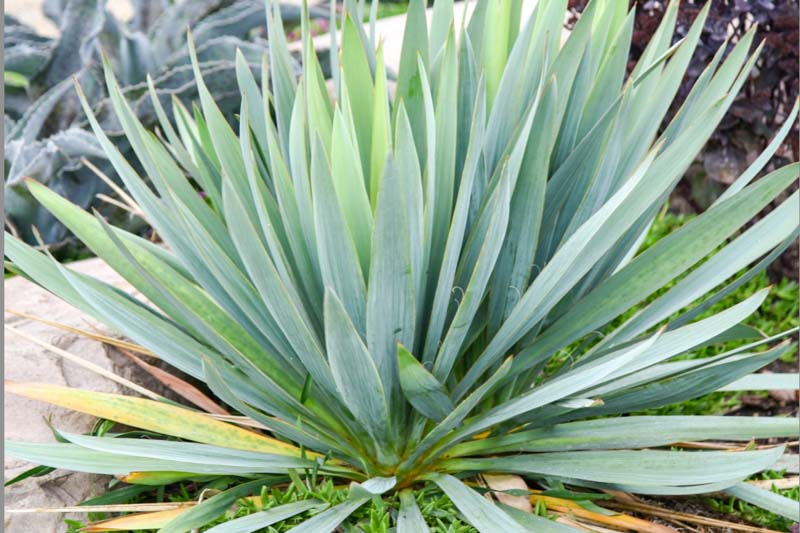
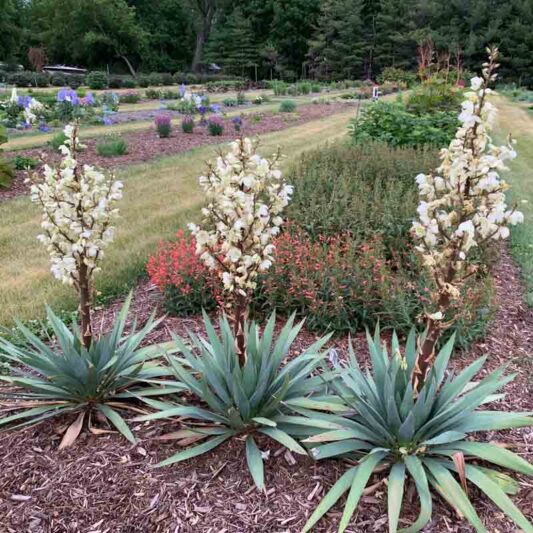
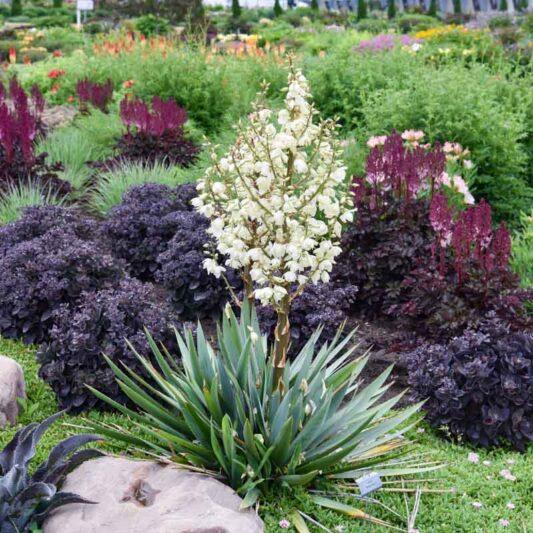


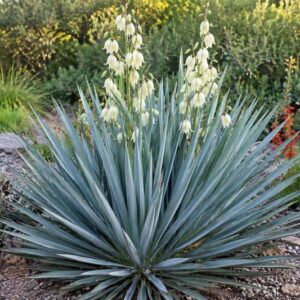
Yucca ‘Dragon Slayer’, commonly sold as Dragon Slayer Adam’s Needle, is a bold, evergreen, drought-tolerant perennial grown for its powdery blue to blue-green sword-like leaves, rounded architectural rosette, and dramatic creamy white flower spikes. Tough, sculptural, and remarkably low-maintenance, it brings year-round structure to hot, dry borders, rock gardens, gravel gardens, modern landscapes, containers, slopes, and water-wise plantings.
This is not a background perennial. Dragon Slayer is a focal-point plant with the durability of a desert survivor and the polish of a premium ornamental. Its rigid leaves form a tidy, symmetrical mound that stays handsome through winter, while the creamy white flowers rise in late spring to early summer, often on thick, showy stalks that add vertical drama without requiring staking.
Garden spotlight: Dragon Slayer is the yucca to plant when you want powder-blue foliage, evergreen structure, creamy white flowers, drought tolerance, deer resistance, and bold architectural style in a sunny, well-drained garden.
Summary: Compact evergreen yucca with powdery blue to blue-green sword-like foliage and creamy white bell-shaped flowers on sturdy stalks in late spring to early summer.
Use: Excellent for sunny borders, rock gardens, gravel gardens, xeriscapes, modern landscapes, containers, slopes, dry gardens, and coastal-inspired plantings.
Highlight: Rounded blue rosette delivers year-round structure with very little water once established.
Note: Best in full sun and sharply drained soil. Avoid wet, heavy, poorly drained sites, especially in winter.
| Botanical Name | Yucca ‘Dragon Slayer’, often listed as Yucca hybrid ‘Dragon Slayer’ or Yucca x ‘Dragon Slayer’ |
|---|---|
| Family | Asparagaceae |
| Common Names | Dragon Slayer Yucca, Dragon Slayer Adam’s Needle, Adam’s Needle, Hybrid Yucca |
| Native Range | A cultivated hybrid selection with North American yucca ancestry; related yuccas occur in dry, sunny, open habitats across North America. |
| Plant Type and Habit | Evergreen succulent perennial; rounded rosette, clump-forming, architectural habit |
| Hardiness | Generally hardy in USDA Zones 5-10 |
| Height | About 24 in. tall in foliage; flower scapes may reach up to 48 in. in bloom. |
| Spread | About 30-36 in. wide when mature |
| Spacing | 30-36 in. apart, or wider where the rosettes need room to be viewed as specimens |
| Sun Exposure | Full sun is best; part sun may be tolerated but can reduce density and flowering |
| Soil | Average to lean, sandy, gravelly, rocky, or sharply drained soil |
| Water Needs | Low once established; water during establishment and during prolonged drought |
| Bloom Time | Late spring to early summer; some sources describe early to midsummer bloom |
| Flower Color | Creamy white to white bell-shaped flowers |
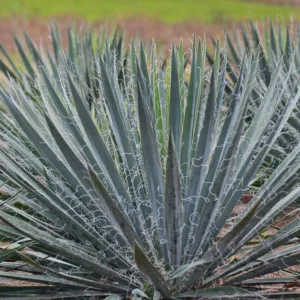
| Foliage Color | Powdery blue, blue-green, or glaucous blue foliage, often edged with fine white filaments |
| Pollinator Value | Flowers attract pollinators; yuccas are famously associated with yucca moths |
| Deer Resistance | Generally deer and rabbit resistant due to rigid, fibrous, sword-like foliage |
| Best Uses | Specimen plant, borders, containers, rock gardens, gravel gardens, xeriscapes, slopes, dry gardens, coastal-style plantings, modern landscapes |
Yucca ‘Dragon Slayer’ is a refined hybrid yucca introduced for compact size, strong blue foliage, and garden-worthy form. It is often marketed as Dragon Slayer Adam’s Needle because it belongs to the broader group of hardy yuccas grown for sword-like evergreen leaves, dramatic flower stalks, heat tolerance, and excellent drought resistance.
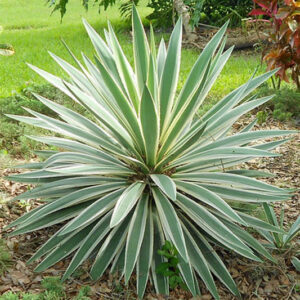
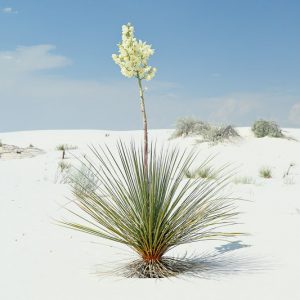
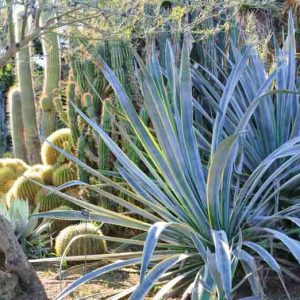
The plant forms a rounded rosette of rigid, powdery blue leaves. The foliage is the main event for most of the year, bringing structure in every season. In late spring to early summer, creamy white, bell-shaped flowers rise above the foliage, adding height, softness, and pollinator value to an otherwise highly architectural plant.
Dragon Slayer is a cultivated hybrid selection with North American yucca ancestry, reportedly involving several native species, including blue-leaved types such as Yucca pallida. It is not a wild species, but its garden performance reflects the ecology of many yuccas: full sun, open exposure, dry soil, and excellent drainage. Use it as an ornamental perennial rather than as a substitute for local native yucca in restoration plantings.
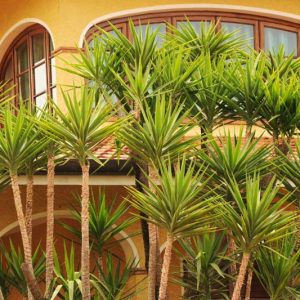
This yucca forms a dense, symmetrical, rounded rosette rather than a loose, floppy clump. Most garden listings place it around 24 inches tall in foliage and 30-36 inches wide at maturity. Flower stalks may reach up to 48 inches in bloom, creating a taller seasonal silhouette. The overall effect is clean, sculptural, and highly useful in designs that need strong form without constant maintenance.
The flowers are creamy white to white and bell-shaped, arranged on upright stalks above the foliage. Some descriptions note thick, cinnamon-red flower stalks, which create a striking contrast against the powder-blue leaves and pale flowers. Bloom is typically late spring to early summer, though timing varies by climate. After flowering, remove spent stalks at the base to keep the rosette tidy.
Design tip: Dragon Slayer looks best where its silhouette has breathing room. Give it gravel, stone, low grasses, or fine-textured perennials around the base so the blue rosette reads like living sculpture.
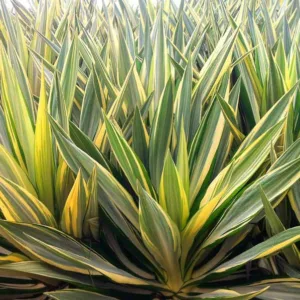
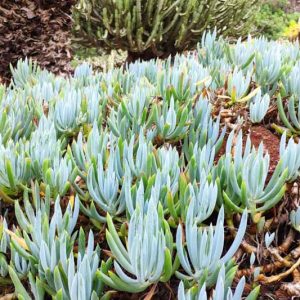
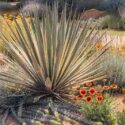
The foliage is rigid, sword-like, and powdery blue to blue-green, often with fine white filaments along the leaf edges. Because the plant is evergreen, it provides structure in winter when herbaceous perennials have disappeared. This makes Dragon Slayer especially valuable in minimalist gardens, dry borders, curbside plantings, and containers that need a strong permanent anchor.
In spring, the blue rosette sharpens as new growth expands. In late spring and early summer, flower stalks add height and creamy white bloom. In summer, the plant holds its form through heat and dry spells. In fall and winter, the evergreen foliage continues to provide color, texture, and structure, especially against gravel, snow, dormant grasses, or dark mulch.
Dragon Slayer is generally listed for USDA Zones 5-10. Like many hardy yuccas, it tolerates cold best when the soil drains quickly. Winter wet is more dangerous than winter cold. In colder or wetter climates, plant it high, use a raised bed, or choose a slope where water moves away from the crown.
Yucca flowers can attract bees, butterflies, and other beneficial insects. Yuccas are also famous for their relationship with yucca moths, one of the classic examples of plant-insect specialization. In ornamental gardens, Dragon Slayer contributes structure, flowers, and habitat value while requiring very little water once established.
Once established, Dragon Slayer is highly drought-tolerant. Water regularly during the first growing season to help roots establish, then reduce irrigation sharply. In the ground, established plants usually need water only during extended drought. In containers, water more often but always allow the mix to drain freely.
Dragon Slayer is generally resistant to deer and rabbits. The rigid, fibrous, sharply pointed foliage is not appealing to most browsers. No plant is completely deer-proof, but yuccas are among the more reliable choices for exposed, low-water landscapes.
Yucca may cause skin irritation or allergic reactions in sensitive people, so wear gloves, long sleeves, and eye protection when handling, pruning, or dividing Dragon Slayer. The sharp leaf tips can also cause physical injury, so avoid planting it close to narrow walkways, seating areas, play spaces, or high-traffic entries.
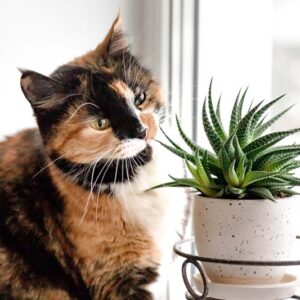
Yucca is also considered harmful to pets, including dogs and cats, if eaten. Keep pets from chewing the leaves, and contact a veterinarian if ingestion is suspected.
Dragon Slayer is a cultivated clump-forming yucca and is not generally considered aggressive in garden settings. Mature plants may produce offsets over time, gradually forming a larger clump. Remove unwanted offsets if needed, or allow them to develop for a broader architectural mass.
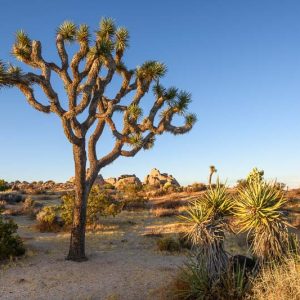
Yuccas range from compact rosette-forming perennials to dramatic trunked species. Choose hardy rosette types such as Dragon Slayer for cold-winter gardens, containers, xeriscapes, and architectural borders. Choose trunked species only where climate, space, and winter drainage are suitable.
Explore Yucca – Compare yuccas by foliage color, mature size, hardiness, flower display, and best landscape use.
Choose Dragon Slayer when you want a compact, hardy, blue-leaved yucca with year-round structure. Choose larger trunked yuccas when you need dramatic desert-tree architecture in climates that support them.
Full sun gives the best foliage color, densest rosette, and strongest flowering. Aim for at least 6 hours of direct sun daily. Part sun may be tolerated, especially in hot climates, but too much shade can make the plant looser, greener, and less floriferous.
Plant in average to lean, sharply drained soil. Sandy, gravelly, rocky, and raised-bed soils are excellent. Heavy clay must be improved before planting, or the yucca should be planted high so the crown remains dry. In containers, use a gritty, fast-draining mix and a pot with drainage holes.
Water regularly during the first growing season. Once established, water deeply but infrequently during prolonged dry spells. Avoid frequent shallow irrigation and never keep the soil soggy. Yuccas store water in their tissues and are adapted to dry cycles.
Feed lightly, if at all. A small amount of compost or a light, slow-release fertilizer in spring is usually enough. Overfeeding is unnecessary and can encourage softer growth that is less resilient.
Gravel mulch is ideal because it suppresses weeds, reflects heat, and keeps the crown dry. If using organic mulch, apply it thinly and keep it away from the base of the rosette.
Care tip: The fastest way to weaken a yucca is to treat it like a thirsty perennial. Give Dragon Slayer sun, drainage, and space, then water with restraint.
Dragon Slayer requires very little maintenance. Remove spent flower stalks after bloom by cutting them close to the base. Trim dead, damaged, or weather-beaten leaves as needed, but avoid cutting into the central rosette. Wear gloves, long sleeves, and eye protection when working around yuccas because the leaf tips are sharp.
Do not shear the plant. Its beauty comes from the natural symmetry of the rosette. If offsets develop and the clump becomes crowded, remove or divide them in spring.
Plant in spring after the soil begins to warm, or in early fall where winters are not severe. Space plants 30-36 inches apart. For specimen use, allow enough open ground around the rosette so the form can be appreciated. Do not place it too close to narrow paths, seating areas, or entryways.
In containers, use Dragon Slayer as a bold thriller. Choose a wide, stable pot because the rosette becomes broad and architectural. Pair it with trailing thyme, sedum, blue fescue, silver foliage, or other dry-garden companions that prefer the same sharp drainage.
Propagate by removing offsets when they develop. Let cut surfaces dry briefly before replanting in well-drained soil. Named cultivars should be propagated vegetatively to maintain their distinctive foliage color, habit, and performance. Seed propagation may not produce plants identical to Dragon Slayer.
Yucca ‘Dragon Slayer’ is generally tough and low maintenance when grown in full sun and sharply drained soil, but several pests and diseases can occur, especially where plants are stressed, crowded, overwatered, or grown in humid conditions.
Thrips may feed on yucca foliage, causing pale streaking, silvery scarring, distorted growth, or dark specks of frass on the leaves. Improve plant vigor, avoid excessive nitrogen, and monitor new growth during warm weather.
Scale insects may appear on yucca leaves, especially near the leaf bases and protected crevices. Inspect plants regularly and treat early before colonies become established.
Mealybugs may gather in leaf bases, crowns, or other sheltered areas. Small infestations can be removed with a cotton swab dipped in alcohol, while larger infestations may need repeated treatment.
Agave and yucca weevils may occasionally attack yuccas, especially stressed plants or those grown in poorly drained, overly moist conditions. Adults can damage crowns and leaves, while larvae may tunnel into plant tissue, leading to decline or collapse. Prevention is important: grow Dragon Slayer in full sun, sharply drained soil, and avoid overwatering established plants.
Brown leaf spot, often associated with Coniothyrium concentricum, can cause brown, rounded, or zoned lesions on yucca leaves. Remove badly affected leaves, avoid overhead watering, and provide good airflow.
Gray leaf spot, associated with Cytosporina species, may cause grayish or tan lesions on foliage, especially in humid or crowded conditions. Reduce leaf wetness, improve spacing, and remove infected debris.
Fusarium stem rot, caused by Fusarium species, can lead to stem decay, crown decline, wilting, or collapse. Prevention is the best control: plant in sharply drained soil, avoid overwatering, and remove severely affected plants.
Southern blight, caused by Sclerotium, can attack the crown and lower stems, especially in warm, humid, wet conditions. Look for rapid decline, rotting tissue, and sometimes white fungal growth near the soil line. Improve drainage, keep mulch away from the crown, and remove infected plant debris.
Poor flowering is usually caused by too much shade, excessive moisture, young plant age, or stress from poor drainage. Give Dragon Slayer full sun, lean soil, excellent drainage, and time to mature.
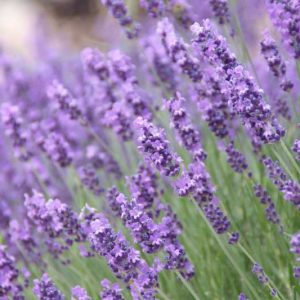
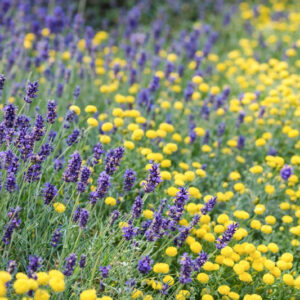
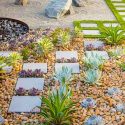
Use Dragon Slayer wherever you need evergreen structure, powder-blue foliage, and strong drought-tolerant form. It is especially effective beside pale gravel, boulders, stone edging, silver foliage, blue grasses, lavender flowers, and orange coneflowers. The clean rosette contrasts beautifully with fine textures, rounded forms, and soft flowering perennials.
For a modern dry garden, combine it with Sedum ‘Autumn Joy’, catmint, salvia, yellow coreopsis, and Russian sage. For a bold architectural planting, repeat it with ornamental grasses, agaves in mild climates, hardy cacti where appropriate, and gravel mulch. For containers, pair it with trailing thyme, creeping sedum, and silver-leaved drought-tolerant plants.
Best look: Give Dragon Slayer open space and a simple ground plane. Gravel, stone, and low companions let the blue rosette stand out as a living sculpture.
Yucca ‘Dragon Slayer’ is a compact evergreen hybrid yucca grown for powdery blue to blue-green sword-like foliage, a rounded architectural rosette, and creamy white flowers in late spring to early summer. It is drought tolerant, deer resistant, and well suited to sunny, well-drained gardens.
Yucca ‘Dragon Slayer’ typically grows about 24 inches tall in foliage and about 30 to 36 inches wide. Flower stalks rise above the rosette and can create a taller seasonal display.
Yes. Full sun is best for the bluest foliage, densest rosette, and strongest flowering. Part sun may be tolerated, but too much shade can make the plant looser and less floriferous.
Yes. Once established, Yucca ‘Dragon Slayer’ is highly drought tolerant and suitable for xeriscapes, gravel gardens, dry borders, slopes, and low-water landscapes. Water regularly during the first season, then water only during extended dry spells.
Yucca ‘Dragon Slayer’ usually blooms in late spring to early summer, though timing can shift into early to midsummer depending on climate. The flowers are creamy white to white and bell-shaped.
Yes. Yucca ‘Dragon Slayer’ can grow in large containers if the pot is stable, has drainage holes, and is filled with a gritty, fast-draining mix. Use it as a bold evergreen thriller with other drought-tolerant companions.
Yes. Yucca ‘Dragon Slayer’ is an evergreen succulent perennial. Its powdery blue sword-like foliage provides structure, color, and texture through winter in suitable climates.
Yucca ‘Dragon Slayer’ is generally deer and rabbit resistant because of its rigid, fibrous, sharply pointed foliage. No plant is completely deer proof, but yuccas are usually reliable in browsing-prone dry gardens.
Cut spent flower stalks at the base after bloom. Remove dead or damaged leaves carefully, but do not shear the rosette. Wear gloves, long sleeves, and eye protection because yucca leaves have sharp tips.
Rot is usually caused by poor drainage, overwatering, or wet winter soil. Move the plant to a sunnier, drier, better-drained site, plant high, and avoid keeping moisture around the crown.
Updated: June 2026 • Reviewed by Gardenia Editors
| Hardiness |
5 - 10 |
|---|---|
| Plant Type | Cactus & Succulents, Perennials |
| Plant Family | Asparagaceae |
| Genus | Yucca |
| Common names | Yucca |
| Exposure | Full Sun, Partial Sun |
| Season of Interest | Spring (Early, Mid, Late), Summer (Early, Mid, Late), Fall, Winter |
| Height | 2' - 4' (60cm - 120cm) |
| Spread | 2' - 3' (60cm - 90cm) |
| Spacing | 30" - 36" (80cm - 90cm) |
| Maintenance | Low |
| Water Needs | Low, Average |
| Soil Type | Chalk, Loam, Sand |
| Soil pH | Acid, Alkaline, Neutral |
| Soil Drainage | Well-Drained |
| Characteristics | Showy, Evergreen |
| Tolerances | Drought, Deer, Salt, Rabbit, Dry Soil, Rocky Soil, Heat, Fire |
| Garden Uses | Beds And Borders, Patio And Containers |
| Garden Styles | City and Courtyard, Gravel and Rock Garden, Informal and Cottage, Mediterranean Garden, Pollinator Garden |
| Toxic to Humans | No known toxicity |
| Toxic to Cats | Toxic |
| Toxic to Dogs | Toxic |
| Toxic to Horses | Toxic |


| Hardiness |
5 - 10 |
|---|---|
| Plant Type | Cactus & Succulents, Perennials |
| Plant Family | Asparagaceae |
| Genus | Yucca |
| Common names | Yucca |
| Exposure | Full Sun, Partial Sun |
| Season of Interest | Spring (Early, Mid, Late), Summer (Early, Mid, Late), Fall, Winter |
| Height | 2' - 4' (60cm - 120cm) |
| Spread | 2' - 3' (60cm - 90cm) |
| Spacing | 30" - 36" (80cm - 90cm) |
| Maintenance | Low |
| Water Needs | Low, Average |
| Soil Type | Chalk, Loam, Sand |
| Soil pH | Acid, Alkaline, Neutral |
| Soil Drainage | Well-Drained |
| Characteristics | Showy, Evergreen |
| Tolerances | Drought, Deer, Salt, Rabbit, Dry Soil, Rocky Soil, Heat, Fire |
| Garden Uses | Beds And Borders, Patio And Containers |
| Garden Styles | City and Courtyard, Gravel and Rock Garden, Informal and Cottage, Mediterranean Garden, Pollinator Garden |
| Toxic to Humans | No known toxicity |
| Toxic to Cats | Toxic |
| Toxic to Dogs | Toxic |
| Toxic to Horses | Toxic |
How many Yucca ‘Dragon Slayer’ (Adam’s Needle) do I need for my garden?
| Plant | Quantity | |
|---|---|---|
| Yucca ‘Dragon Slayer’ (Adam’s Needle) | N/A | Buy Plants |
Create a membership account to save your garden designs and to view them on any device.
Becoming a contributing member of Gardenia is easy and can be done in just a few minutes. If you provide us with your name, email address and the payment of a modest $25 annual membership fee, you will become a full member, enabling you to design and save up to 25 of your garden design ideas.
Join now and start creating your dream garden!
Create a membership account to save your garden designs and to view them on any device.
Becoming a contributing member of Gardenia is easy and can be done in just a few minutes. If you provide us with your name, email address and the payment of a modest $25 annual membership fee, you will become a full member, enabling you to design and save up to 25 of your garden design ideas.
Join now and start creating your dream garden!