Bring woodland romance home with pink Pinxterbloom Azaleas, fragrant lavender-blue Woodland Phlox, silver-patterned American Alumroot, and graceful Christmas Ferns. These native flowering shrubs, perennials, and evergreen ferns create a peaceful garden beneath deciduous trees, with blooms from spring to early summer and beautiful foliage interest throughout the growing season.
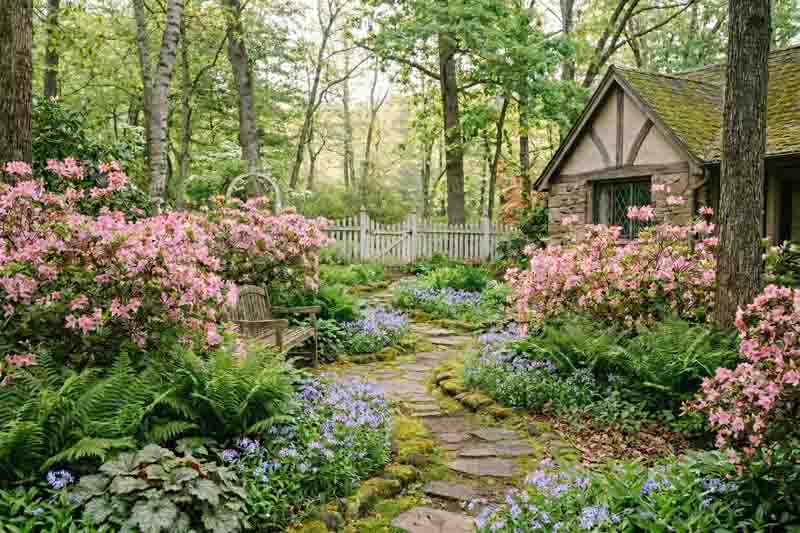


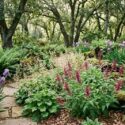
Imagine wandering along a moss-edged stone path beneath a canopy of mature trees, surrounded by clouds of pink azalea blossoms, fragrant lavender-blue woodland phlox, and graceful evergreen ferns. A weathered wooden bench invites you to linger, while a charming stone cottage and white picket gate give the garden an intimate, romantic atmosphere.
Four eastern North American natives create this beautiful planting: Rhododendron periclymenoides (Pinxterbloom Azalea), Phlox divaricata (Woodland Phlox), Heuchera americana (American Alumroot), and Polystichum acrostichoides (Christmas Fern). Their overlapping spring flowers, contrasting foliage, and woodland character create an inviting garden that supports native bees, butterflies, and other wildlife.
Main plants used: Rhododendron periclymenoides, Phlox divaricata, Heuchera americana, and Polystichum acrostichoides.
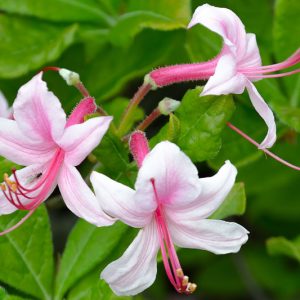
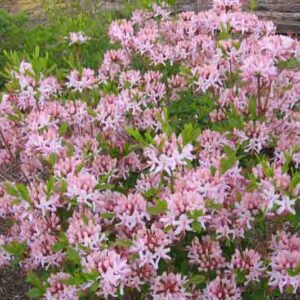
The romantic character begins with Rhododendron periclymenoides, a deciduous native azalea that produces clusters of delicate pink flowers in spring, often before its foliage fully develops. Its airy branching habit looks particularly beautiful beneath tall deciduous trees, where filtered sunlight encourages flowering.
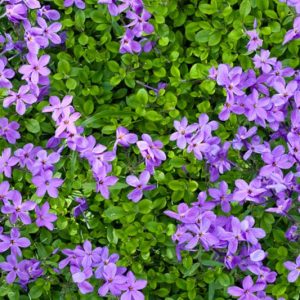
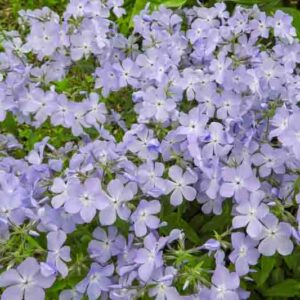
Below the azaleas, Phlox divaricata spreads into loose carpets of lavender-blue blossoms, frequently with a delicate fragrance. Flowering from mid-to-late spring, it creates a lovely transition between the shrubs, ferns, and winding stone path.
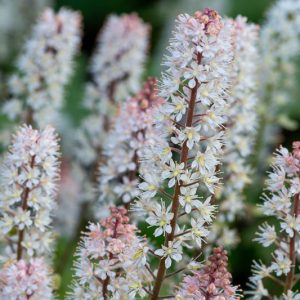
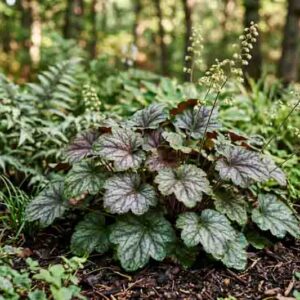
Heuchera americana contributes rounded, often silver-marbled foliage that contrasts beautifully with the narrow fern fronds. Its slender stems carry delicate greenish-white flowers in spring to early summer, adding texture without competing with the showier blooms.
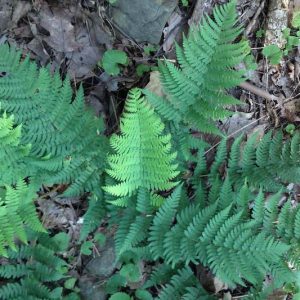
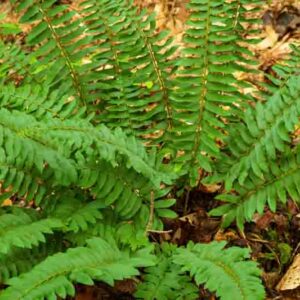
Polystichum acrostichoides provides dependable evergreen structure. Its arching fronds frame the walkway, soften moss-covered rocks, and remain attractive after the spring flowers fade.
The cottage, rustic bench, and white picket gate make the planting feel like a welcoming home garden rather than an untouched woodland. Repeating azaleas and phlox on both sides of the path ties the composition together.
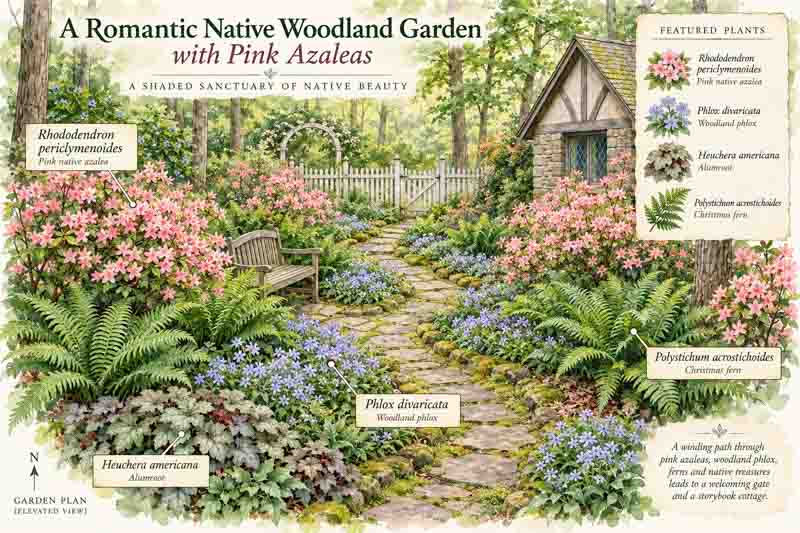
Create a romantic native woodland garden with flowering pink azaleas, lavender-blue groundcovers, attractive evergreen ferns, and a winding stone path leading toward a cottage garden gate.
Approximate visual proportions, not exact plant quantities. Allow substantial space for mature azalea shrubs.
Let the winding stone path connect the cottage, garden bench, and picket gate. Position Pinxterbloom Azalea in broad, acidic planting beds beneath high tree canopies, leaving room for its mature branches. Plant Woodland Phlox in generous drifts along the path, then add American Alumroot for contrasting foliage. Tuck Christmas Fern into sheltered pockets beneath the shrubs and around rocks, keeping the walkway clear and avoiding major tree roots.
Spring brings clouds of pink Pinxterbloom Azalea flowers, accompanied by fragrant lavender-blue Woodland Phlox. American Alumroot follows with airy flower sprays, while its patterned leaves and the evergreen Christmas Ferns provide foliage interest through summer and fall. In winter, the azaleas reveal their branching structure above the persistent fern fronds.
| Hardiness |
4 - 8 |
|---|---|
| Exposure | Partial Sun |
| Season of Interest | Spring (Early, Mid, Late), Summer (Early) |
| Maintenance | Low |
| Water Needs | Average |
| Soil Type | Clay, Loam, Sand |
| Soil pH | Neutral |
| Soil Drainage | Moist but Well-Drained |
| Characteristics | Cut Flowers, Showy |
| Native Plants | Alabama, Connecticut, Delaware, Georgia, Illinois, Kentucky, Maryland, Midwest, New Jersey, New York, North Carolina, Northeast, Ohio, Pennsylvania, South Carolina, Southeast, Tennessee, United States, Virginia, West Virginia |
| Tolerances | Drought, Clay Soil |
| Attracts | Bees, Butterflies, Hummingbirds |
| Landscaping Ideas | Beds And Borders |
| Garden Styles | Butterfly Garden, Informal and Cottage, Pollinator Garden, Woodland Garden |

| Hardiness |
4 - 8 |
|---|---|
| Exposure | Partial Sun |
| Season of Interest | Spring (Early, Mid, Late), Summer (Early) |
| Maintenance | Low |
| Water Needs | Average |
| Soil Type | Clay, Loam, Sand |
| Soil pH | Neutral |
| Soil Drainage | Moist but Well-Drained |
| Characteristics | Cut Flowers, Showy |
| Native Plants | Alabama, Connecticut, Delaware, Georgia, Illinois, Kentucky, Maryland, Midwest, New Jersey, New York, North Carolina, Northeast, Ohio, Pennsylvania, South Carolina, Southeast, Tennessee, United States, Virginia, West Virginia |
| Tolerances | Drought, Clay Soil |
| Attracts | Bees, Butterflies, Hummingbirds |
| Landscaping Ideas | Beds And Borders |
| Garden Styles | Butterfly Garden, Informal and Cottage, Pollinator Garden, Woodland Garden |
Recreate this garden. Specify the percentages you would like to have of each plant and input the dimensions of your garden space.We'll give you a shopping list so you know how many plants you need.
| Plant | Quantity | |
|---|---|---|
| Rhododendron periclymenoides (Pinxterbloom Azalea) | N/A | Buy Plants |
| Phlox divaricata (Woodland Phlox) | N/A | Buy Plants |
| Heuchera americana (American Alum Root) | N/A | Buy Plants |
| Polystichum acrostichoides (Christmas Fern) | N/A | Buy Plants |
Create a membership account to save your garden designs and to view them on any device.
Becoming a contributing member of Gardenia is easy and can be done in just a few minutes. If you provide us with your name, email address and the payment of a modest $25 annual membership fee, you will become a full member, enabling you to design and save up to 25 of your garden design ideas.
Join now and start creating your dream garden!